


Filter by Categories
Syncretismas!
Article by Martin G. CollinsChristmas, as it is celebrated today, represents a syncretistic blend of pagan rites and Christian themes, a mixture that is abhorrent to God. This holiday, flourishing in the materialistic Western world, has origins rooted in non-Christian traditions, drawing from ancient Babylonian practices involving figures like Nimrod and Semiramis, who were worshipped under various names across different cultures. Their rituals, tied to the winter solstice and symbolized by evergreen trees and gift-giving, were later merged with Christian elements during the fourth century under Emperor Constantine, who aligned the pagan festival of the sun god's birth with the celebration of the Son of God on December 25. This blending continued as the Roman Catholic Church officially designated this date for observing Christ's birth in the fifth century, adopting the day of the old Roman feast of Sol. In England, Pope Gregory I instructed missionaries to incorporate pagan practices into Christianity, further mixing traditions like the ancient Angli festival on December 25 with Christian observance. Over time, additional pagan ceremonies were introduced, despite opposition during the Reformation and Puritan eras, which sought to suppress these elements. In America, German and Dutch settlers brought customs such as the Christmas tree and St. Nicholas, integrating them into the holiday, which eventually became a national celebration marked by ancient pagan practices of feasting and gift-giving. This syncretism, evident in the holiday's history and customs, diverts focus from the spiritual truths God desires, leading instead to self-gratification and behaviors contrary to His will.
Fishy Syncretism
Commentary by Martin G. CollinsThe Philistines were a thorn in the sides of God's people all the way back to Abraham. Later, they continued their torment as a bitter enemy of the Israelites. Samson's epic story, in about the 12th century BC, ended with him dying while destroying the Philistines' temple of Dagon. A few years later, the Philistines attacked the Israelites and took the ark of the covenant; and again, Dagon, the god of the Philistines was a central figure. The Philistine fish god Dagon was an abomination to the God of Israel. God warns us that we are not to make or wear or use any symbol, image, icon, or emblem to represent Him or His church. No cross, no fish, and no Triquetra (i.e., Trinity knot). satan puts his mark on his counterfeit Christianity to claim and identify it as his. Since that is a fact, why would any authentic Christian identify himself with satan's counterfeit Christianity by using its symbols? Knowing the truth, an authentic Christian would not.

Christmas, Syncretism, and Presumption
'Personal' from John W. RitenbaughAdding to or subtracting from God's Word through the celebration of Christmas exemplifies syncretism, an attempt to merge foreign practices with the truth without determining if God would permit it. This syncretistic inclusion begins to dilute the purity of the God-given religion, and before long, other barriers fall, leading to a tolerance where absolutes become passé and perversions commonplace. Christmas, introduced into Christianity centuries ago as a ploy to win converts from paganism, represents a deliberate grab for power rather than a promotion of the true God and His way of life, leading people away from the truth. Scripture clearly shows that such additions are a snare, vanity, and spiritual death, emphasizing that God does not want us to presume we can alter His Word by incorporating practices like Christmas into worship. Once the truth is known, it becomes our responsibility to step away from such traditions, ensuring we do not let human proclivity lead us away from God and the future He has prepared for us.
Syncretic Use of the Cross
Sermonette by Martin G. CollinsThe process of syncretism, which involves the combination of different forms of belief or practice, is evident in the integration of pagan symbols like the cross into Christianity. This blending often occurs without logical coherence or concern for unity, as various beliefs and practices are attached to religion without regard for propriety or integrity. The cross, a prominent pagan symbol long before its association with Christianity, was introduced into Christian practice centuries after Christ, notably under Constantine, reflecting a syncretism driven by historical and cultural influences rather than divine approval. Such amalgamation of pagan elements with God's truth, as seen in the adoption of the cross, is viewed as a misrepresentation of true religion and a form of idolatry. Demonic forces are suggested to revel in this syncretism, as their symbol of the pagan god Tammuz has been imprinted onto mainstream Christianity, further obscuring the authentic message of Christ's sacrifice.

Cogitations on Christmas
Article by Richard T. RitenbaughChristmas is steeped in contradictions, particularly through the practice of syncretism, where pagan traditions are blended with the celebration of Jesus Christ's birth. In the early fourth century, the Catholic Church combined the Roman winter solstice festival, Saturnalia, with a commemoration of His birth to ease new converts into Christianity, despite the fact that Jesus was not born on December 25. The term "Yule," an alternate name for the season, originates from a pagan midwinter festival, and practices like the Yule log trace back to heathen customs of driving away evil spirits with bonfires on the winter solstice night. This blending of traditions continues because human nature justifies self-contradictory practices for the sake of enjoyment and perceived benefit, even when they conflict with truth. On one side, secularists reject God's presence in their lives, while on the other, mainstream Christians accept syncretism as a valid form of worship, yet both paths diverge from worshipping God as He desires.
Spirit and Truth
CGG Weekly by David C. GrabbeIn the ongoing cultural conflict over Christmas, a deceptive trap is set where neither side holds the truth. On one pole are the secularists, who aim to erase God from their lives. On the other pole are Christians who embrace syncretism, believing it is an acceptable form of worship by blending pagan practices with the worship of God. This fusion of traditions, however, strays from the specific ways in which God has instructed His people to honor Him. God warns against adopting pagan customs under the guise of worshipping Him, emphasizing that such practices are not worshipping in spirit and in truth. Thus, regardless of the outcome of this cultural battle, the trail of deception reveals the true influence behind these conflicting lies.
Reasons for Not Celebrating Christmas
CGG Weekly by John ReissWhy do we not keep Christmas? Jesus was not born on December 25, during Saturnalia, a pagan festival. It is a commercialized holiday rife with lies.

Is New Year's Eve a Pagan Holiday?
'Ready Answer' by Mike FordNew Year's Eve may seem like an innocuous, secular holiday, but it, too, has ties to ungodly, pre-Christian customs and religious practices.

The Plain Truth About Christmas
Herbert W. Armstrong BookletDid Christmas come from the Bible or paganism? Here are the origins of the Christmas tree, Santa Claus, mistletoe, the holly wreath, and exchanging gifts.

Presumption and Divine Justice (Part One)
'Personal' from John W. RitenbaughOrthodoxy in virtually every aspect of life has been discarded, indicating how perverse human nature is in its determination to rebel against God.
Christmas and Sun Worship
Sermonette by Mike FordChristmas, Easter, and Halloween all derive from sex, fertility, and sun worship. Christmas traces to the incestuous relationship of Semiramis and Nimrod.
The Cross: Christian Banner or Pagan Relic?
Article by Earl L. HennIs it alright to wear a crucifix? As it turns out, the cross was a pagan worship symbol long before Christ's death, and was never used by the first century church.
What's Wrong With Christmas?
Sermon by Martin G. CollinsThe Catholic Church mixed truth and falsehood to have the 'official' birthdate of the Son of God coincide with the rebirth of the sun, the winter solstice.

A Day of Lust, Not Love
Article by Martin G. CollinsValentine's Day, firmly rooted in paganism, concentrates on lust and sexual immorality, which are contrary to the way of life that pleases God.

Nicolaitanism Today
'Prophecy Watch' by Richard T. RitenbaughThe end-time church is warned against Nicolaitanism, for it exists today. The Scriptures, plus some first century history, reveal who the Nicolaitans are.
Satan's Pagan Holy Days
Feast of Tabernacles Sermon by Kim MyersNew Years, Christmas, Easter, Halloween and birthdays all originate in paganism. Satan entices many into accepting these pagan practices through emotional appeals.
Is Valentine's Day Really About Love?
Commentary by Martin G. CollinsSt. Valentine's Day started as a lewd, sensual, pagan festival in Rome. Lupercalia is a rite connected with fertility, honoring Venus, the goddess of sex.
Is Mary Worthy of Worship?
Article by David C. GrabbeThe Catholic Church places great importance on Mary, to the point that many Catholics are pushing for Mary to be recognized as 'Co-Redemptrix!
Truth-Based Worship Vs Spiritual Confusion
Sermon by Martin G. CollinsGod never accepts worship that comes from human reasoning and the traditions of man. The starting point for worship must always be God and His revelation.
Why Passover and Not Easter?
CGG Weekly by Richard T. RitenbaughThe early church kept Passover, not Easter. Christ tells us to remember His work of redemption from sin, enabling Christians to fellowship with the Father.
Israel, Selfies, and Idolatry
Sermonette by Mike FordThe religious hobbyist Micah practiced his own self-devised hybrid of religion, amalgamating some orthodox truth with abundant noxious, pagan admixtures.
True Worship of God
Sermonette by Craig SablichAny practice that does not give its loyalty to the Creator and is not devoted to His truth is nothing more than a method of worship created by men.
Hosea's Prophecy (Part Four)
Sermon by Martin G. CollinsBoth Israel and Judah during Hosea's time adopted paganism from the surrounding nations. Syncretistic religion blends paganism and Christianity.
Sincerity Without Truth Is Worthless
Sermon by Martin G. CollinsIt is dangerous to judge something on the basis of apparent 'sincerity,' which is often the opposite of godly sincerity. Godly sincerity is paired with the truth.
The Woman Atop the Beast (Part 1)
'Prophecy Watch' by Richard T. RitenbaughRevelation 17 depicts a fallen woman astride a beast, drunk with the blood of God's saints. Whom does this image represent? History makes the answer plain!
Prepare to Meet Your God! (Part Five): Religion and Holiness
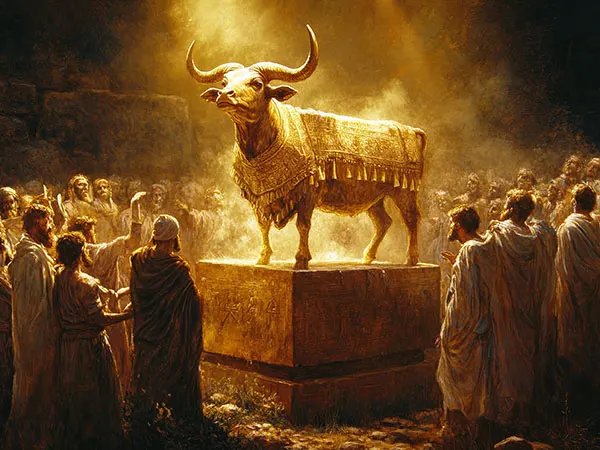
Article by John W. Ritenbaugh and Richard T. RitenbaughThe prophet Amos exposes the ancient Israelites' religion as syncretic, a blend of God's way and paganism, corresponding to this world's Christianity.
America's Goddess (Part Two)
Commentary by Martin G. CollinsPresident Grover Cleveland called the Statue of Liberty the United States' "peaceful deity—greater than all gods." Wiccans pray to her as a nature goddess.
Is the Cross an Acceptable Symbol?
Sermonette by Mike FordThe origin and use of the cross as a religious symbol illustrates a broader pattern of syncretism, whereby pagan beliefs and symbols were absorbed into professed Christian worship. Rather than being an original Christian emblem, the cross derives from the mystic tau, the ancient Chaldean and Egyptian symbol representing the initial letter of Tammuz, the sun god also identified with Nimrod. This symbol predates Christ by at least 1,500 years and appears across nearly every ancient religion except Judaism and Islam. This is not a genuine blending of two belief systems but rather a wholesale importation of pagan practice into professed Christian doctrine, done to increase the prestige and numerical strength of the apostate ecclesiastical system. This process is tied historically to the Roman emperor Constantine, whose supposed conversion to Christianity is called into question. Although tradition credits him with seeing a cross in a vision before battle, the symbol he actually adopted for his troops' shields was the Greek letter chi, standing for the name of Christ, not the pagan cross. Coins commemorating his victory confirm this. Constantine continued worshipping the sun god under the title Sol Invictus and later convened the Council of Nicaea in AD 325, a political maneuver to unify Rome's many competing religions into a single institutional body, the Catholic Church. This council, through compromise rather than genuine conversion, incorporated various pagan customs, including the eventual veneration of the cross, formally introduced in AD 431 and later sanctified as an object of worship by the sixth century. Scripture explicitly condemns such syncretistic practices. Exodus 20:4-5 forbids making or bowing to any carved image or likeness. This principle is illustrated through Israel's history: the bronze serpent Moses made in the wilderness, originally a means of healing through obedience to God, later became an idol that the Israelites worshipped for generations until King Hezekiah destroyed it in II Kings 18:4. This account demonstrates a human tendency to shift devotion from God to a physical object associated with His work, a mistake paralleling the veneration of the cross today. Ultimately, the argument concludes that debating the precise instrument of Christ's death—tree, stake, or cross—is not the essential issue. What matters is that Christ died for the sins of humanity, not the physical means of His death. Since the cross has no biblical connection to Christ but a well-documented pagan origin tied to Tammuz worship, displaying or venerating it does not honor Christ but instead constitutes idolatry, a modern parallel to Israel's worship of the bronze serpent and a clear violation of God's command against image worship.
Strategies for Interfacing with Babylon without Becoming Assimilated (Part Five)
Sermon by David F. MaasGod is not a closed triangular Trinity, but a family consisting of God the Father and God the Son, and will include billions of resurrected, glorified saints.
To Be, or Not To Be, Like Everyone Else?
Sermon by Martin G. CollinsTo keep from being swept up in the bandwagon effect of compromising with sin, we must make sure our convictions are not merely preferences.
Easter 2017
Commentary by Richard T. RitenbaughThe world's churches have adopted the fertility symbols of Easter bunnies, Easter eggs, and the traditional Easter ham from pagan, pre-Christian rituals.
Truth (Part 1)
Sermon by John W. RitenbaughIf we are going to search for truth, we should not be seeking it in the philosophies of men, but rather in the fullness of truth found in God's revelation.
Secession (Part Two): Spiritual Separation
Feast of Tabernacles Sermon by Martin G. CollinsAny syncretism with the world will lead to confusion. We must separate from the world in terms of its religious practices and its false gospels.
Preparing To Be King
Feast of Tabernacles Sermon by Richard T. RitenbaughOur life is intended to be preparation for rulership in the Kingdom of God. The Bible has included instructions for preparing for rulership.
Liberalism and Today's Christianity
Commentary by John W. Ritenbaugh (1932-2023)The Beast will deceive countless numbers of people, as can be illustrated by the recent syncretistic admixture of Christianity and Islam known as Chrislam.

'After Three Days'
Booklet by Richard T. RitenbaughWhen the facts are gathered from Scripture, the timing of Christ's death, burial, and resurrection resolves, and the Friday-to-Sunday scenario crumbles.
Sandcastle Virtues
Sermon by Mike FordModern Israel still worships Astarte, now known as "mother earth," and crusades on behalf of fornication and all forms of sexual perversion.