


Filter by Categories

Zephaniah (Part One): The Day of the Lord Is Near!
Sermon by Richard T. RitenbaughThe Day of the Lord stands as a central theme in this unfolding axial period, a time of profound change and judgment that echoes the historical pivots of ancient Israel and Judah. This day, heralded by the sounding of trumpets, marks a period of intense turmoil and divine intervention, as foretold in the prophecy of Zephaniah, where it is depicted as a time of great wrath and destruction. It is a day so near that the shouts of warriors can be heard at the gates, a day of trouble, distress, devastation, and desolation, cloaked in darkness and gloom, where widespread warfare devastates the earth as never before. Zephaniah warns of the Day of the Lord with urgent and chilling imagery, portraying a universal judgment that consumes all things—man, beast, birds, and fish—focusing particularly on Judah and Jerusalem. He declares that the Lord will utterly consume and sweep away everything, targeting idolaters, apostates, skeptics, and the apathetic, leaving only the loyal and faithful unscathed. His words convey a sense of finality, a complete end to the current order, signaling an axial shift where everything is destroyed to make way for something new. The proximity of this day is emphasized as the Lord has already prepared a sacrifice—His own people—and invited His guests, the agents of His wrath, to execute judgment. The Day of the Lord is not a distant threat but an imminent reality, with the Lord already on His way, His anger burning hot against sin. This period of judgment, lasting about a year following the Great Tribulation, culminates in the return of Jesus Christ, where He will take up His throne and establish His eternal reign, far surpassing any earthly empire. During this time, traditional securities like wealth will fail to protect, as the Lord searches with lamps into every corner, ensuring no one escapes His judgment. The only refuge lies in running to the Lord, living righteously, and seeking safety in His name, which stands as a strong tower for the faithful. Though His wrath is fierce and swift, He promises a speedy end to the earth's sinners, moving quickly to bless and preserve life, maintaining tight control over His judgment to prevent total destruction. The Day of the Lord, as linked to the Feast of Trumpets, encompasses both terror and victory, a process of warning and ultimate rejoicing at the return of Jesus Christ. It serves as a wake-up call, urging preparation and faithfulness amidst the accelerating changes of this axial period, ensuring that those who endure loyally will join the new civilization under His eternal rule.
Considering the Day of the Lord
Sermonette by David C. GrabbeThe ancient Israelites smugly believed that God was on their side, and that because He had not yet responded to their sins, they would be victorious.

Do You Desire the Day of the Lord?
'Prophecy Watch' by David C. GrabbeThe Day of the Lord will come as a thief in the night, as prophesied in II Peter 3:10, when the heavens will pass away with a great noise, the elements will melt with fervent heat, and both the earth and the works within it will be burned up. This period of judgment, just before the return of Jesus Christ, will be a time when He will judge in favor of some but against many more. Through the prophet Amos, God warns against the misguided belief that His intervention will automatically be in one's favor, as the Israelites of old assumed, not realizing that their covenant with Him made them more accountable. In Amos 5, God pronounces a woe against them for expecting to enjoy His judgment from a safe distance, when in reality, it will overtake them personally and painfully. Amos refers to the Day of the Lord as something already familiar to Israel, though it is curious that earlier prophets like Moses or Elijah do not mention it by name. Later prophets such as Isaiah and Joel speak of this day with vivid imagery, but at this early point, Amos presents it as part of the national consciousness. The Israelites, drawing from Scriptures like the psalms which speak of God's deliverance and judgment in the day of trouble, had concluded that His intervention would be spectacular, yet they overlooked what He required of them as His people. In Psalm 50, language befitting the Day of the Lord reveals Israel's deceitfulness and hypocrisy, with God declaring that His silence was not approval, but a delay in justice that they mistook for favor. This delay encouraged their wrong beliefs and behavior, leading to a Day that brought shame and defeat instead of glory. Similarly, in Revelation 1:10, the Day of the Lord serves as the setting for Christ's letters to the churches, where He warns the Laodiceans of their spiritual blindness, assuming they have no need while He sees them as wretched, miserable, poor, blind, and naked. Their lives, filled with distractions, lead them to believe He approves, yet His judgment will come as a shock. Christ's warning in the Olivet Prophecy emphasizes that the Day of the Lord will come unexpectedly on those focused on material cares, becoming a day of darkness and wrath rather than light. His advice to pray always is not merely to escape what lies ahead, but to spend quality time with Him, allowing Him to change those who come before Him, so they may be worthy. For those who persevere and tremble at His Word, as seen in Isaiah 66:2 and Psalm 34:7, He offers protection and deliverance. Though the Day of the Lord will be terrifying, for those with holy and godly conduct, surrendering their lives to Him, it will end in salvation and glory.
Holy Days: Trumpets
Bible Study by StaffAs we near the Feast of Trumpets, we must consider its sobering and even terrifying meanings, for it depicts a terrible time of judgment upon the people of this world, known as the Day of the Lord. Trumpets symbolize a loud, warning cry of impending danger, and the prophets impart a dire warning to those living in the end time, describing the Day of the Lord as a day of darkness, gloominess, and clouds over man's society. They strongly admonish the ministry to raise their voices as trumpets to warn of sudden, terrifying destruction. These warnings apply specifically to the called-out children of God, as we are the ones living in the end time with the understanding of God's plan, and we have the most to lose by ignoring these stern prophecies of death and destruction. The seventh seal, which includes the seven trumpets, announces the Day of the Lord and the return of Jesus Christ, marking a significant step in the plan of God as represented by the Feast of Trumpets. God will pour out His wrath on humanity, though the reasons are not fully known to us, and we trust that He will do it in love, desiring all to repent and attain His Kingdom. The church must prepare for this time, cooperating with God to become holy, righteous, godly saints worthy to marry His Son. As we anticipate the return of Christ, we must be busy repenting, overcoming, praying, and fasting, ensuring we are ready to help others recover from the terrible times of the Day of the Lord and to guide them as they strive to enter God's Kingdom.
Will God Shorten the Day of the Tribulation?
Sermonette by Clyde FinkleaZephaniah suggests that 'elect' may refer to a remnant called around the time of Christ's return, which God will give His Spirit and hide from the holocaust.
Are These the Last Days? (Part 1)
'Prophecy Watch' by Richard T. RitenbaughThe term "last days" is synonymous with the Day of the Lord, that day, or simply the day, as found throughout the Old and New Testaments. Depending on the context, it can refer to the specific day of Christ's return, the time of God's wrath, the Millennium, or the entire Christian era from the church's founding to eternity. Most frequently, when someone speaks of the last days, they mean the general period before the return of Jesus Christ. Peter warns that assuming world events will progress as they always have is a mistake, for when God's time comes, terrible and sudden changes will occur, and we, as His children, must be ready. Scoffers and skeptics will attempt to convince God's people that He will not return soon, despite all factors being in place. Herbert Armstrong often cited Matthew 24:22 as a key sign of the last days, stating that unless those days were shortened, no flesh would be saved, but for the elect's sake, those days will be shortened. The reality of apostasy and the need to hold fast to the revealed truths of God further add weight to the signs that we are indeed living in the last days.
How Long, O Lord? (1994)
Sermon by John W. RitenbaughThe Day of the Lord is a central theme tied to the prophetic significance of the Feast of Trumpets, heralding a time of immense importance and unparalleled events. It is depicted as a day of darkness and gloominess, a day of clouds and thick darkness, as described in Joel 2:1-3, where the trumpet sounds an alarm in Zion, signaling the approach of a devastating force that leaves desolation in its wake. This day, as foretold in Joel 2:11, is great and very terrible, with the Lord giving voice before His army, a time so severe that endurance is questioned. Zephaniah 1:14-18 further paints the Day of the Lord as near and hastening quickly, a day of wrath, trouble, distress, devastation, and desolation, marked by the sound of trumpet and alarm against fortified cities. It brings distress upon men, rendering their wealth useless against the Lord's consuming fire of jealousy, making speedy riddance of all who dwell in the land. In Zechariah 14:1-7, the Day of the Lord is portrayed as a time when nations gather against Jerusalem, leading to captivity and destruction, yet the Lord will intervene, fighting against those nations. His feet will stand on the Mount of Olives, splitting it to create a valley, and He will come with all His saints, amidst a day known only to Him, neither day nor night, until light emerges at evening. I Thessalonians 5:2-3 emphasizes the unexpected nature of the Day of the Lord, coming as a thief in the night, bringing sudden destruction when peace and safety are proclaimed, with no escape for those unprepared. This reinforces the need for vigilance, as the timing remains unknown, urging readiness at all times.
How Long, O Lord?
Sermon by John W. Ritenbaugh (1932-2023)The Day of the Lord, as heralded by the Feast of Trumpets, carries profound significance, marked by both sorrow and ultimate good. It is a day of darkness and gloominess, a time of clouds and thick darkness, as described in Joel 2:1-2, where the trumpet sounds an alarm in Zion, signaling the imminent arrival of this great day. This day is near and hastens quickly, a day of wrath, trouble, distress, devastation, and desolation, as Zephaniah 1:14-18 warns, with the noise of the Day of the Lord being bitter, causing mighty men to cry out. It is a day of trumpet and alarm against fortified cities, where distress will come upon men, and neither silver nor gold will deliver them from the Lord's wrath. Zechariah 14:1-7 further illustrates the Day of the Lord as a time when nations gather to battle against Jerusalem, leading to immense destruction, yet also marking the moment when the Lord will fight against those nations. On that day, His feet will stand on the Mount of Olives, splitting it in two, and a unique day will unfold, known only to the Lord, transitioning from darkness to light at evening time. This event signifies both cataclysmic judgment and the turning point toward salvation. The vivid imagery in Isaiah 63:1-6 portrays the Lord, with garments stained red from treading the winepress of wrath, executing vengeance in anger and fury, highlighting the intense destruction of the Day of the Lord. Similarly, Revelation 14:13-20 depicts a harvest of judgment, where the earth is reaped with a sharp sickle, and the winepress of God's wrath is trampled, resulting in blood flowing up to the horses' bridles. For those who submit to God, this day brings the best of times, a great victory; for those who do not, it is the worst of times, a grinding and painful judgment. Joel 2:3-10 paints a picture of a powerful army advancing, turning the land from a Garden of Eden into a desolate wilderness, with the earth quaking and heavens trembling before them. This destruction, spread over a period of time, underscores the prolonged nature of the Day of the Lord's judgment, possibly encompassing a year or more, as suggested in Isaiah 63:4. Ultimately, this day serves as a warning and a call to repentance, urging the meek to seek the Lord, righteousness, and humility, with the hope of being hidden from the Lord's fierce anger, as Zephaniah 2:1-3 encourages.
The Last Great Day
Feast of Tabernacles Sermon by John O. ReidThe Day of the Lord, as depicted in this profound vision, marks a pivotal moment of divine intervention and judgment. Behold, the Day of the Lord comes, when the spoil shall be divided in the midst of Jerusalem. God will gather all nations against Jerusalem to battle, with the city taken, houses plundered, and half the city going into captivity. Yet, the Lord shall go forth and fight against those nations, as He fought in the day of battle. His feet shall stand upon the Mount of Olives, which shall cleave in two, creating a great valley for escape. The Lord my God shall come, and all the saints with Him, signifying our active role as the first fruits in this monumental event. The Lord shall be King over all the earth, and a devastating plague will smite those who fought against Jerusalem, their flesh decaying while they stand, their eyes and tongues rotting in their sockets. A great tumult from the Lord shall cause them to turn against each other, marking our first contact as spirit beings in this transformative conflict.
The Days of Noah
Sermon by Richard T. RitenbaughThe Day of the Lord is portrayed as a time of sudden and catastrophic intervention by God, shattering the complacency of a world steeped in uniformitarian beliefs. As described in I Thessalonians 5:1-4, this day will come as a thief in the night, bringing sudden destruction when people are lulled into a false sense of peace and safety, leaving no escape for the unprepared. II Peter 3:7 and 3:10 further emphasize this, stating that the heavens and earth are reserved for fire until the day of judgment, when the Day of the Lord will arrive unexpectedly, causing the heavens to pass away with a great noise and the elements to melt with fervent heat, burning up the earth and all its works. Revelation 6:12-17 vividly illustrates the terror of this day, with a great earthquake, the sun turning black, the moon becoming like blood, and the stars falling, as the sky recedes and mountains and islands are displaced, prompting all people—from kings to slaves—to hide in fear from the wrath of Him who sits on the throne and the Lamb, acknowledging that the great day of His wrath has come, and questioning who can stand against it. This imminent catastrophe will jolt humanity out of its illusion of uninterrupted progress, revealing the reality of God's judgment as it did in the days of Noah, when unexpected destruction overtook a world unprepared for divine intervention.
The Ultimate Father's Day
Article by StaffThe Day of the Lord is a significant biblical period that precedes the ultimate Father's Day. It is a time when the world's focus will be on Jesus Christ and His work, marking it as His day. This day, also referred to as the Lord's day, will begin when Jesus Christ, the Son of God, initiates the final sequence of events in human affairs, starting one year before He touches down on the Mount of Olives and continuing until the end of the Millennium, His 1,000-year reign on the earth. With God, a day is as a thousand years, highlighting the vast scope of this period. The purpose of the Day of the Lord is to help everyone come to know God the Father. During this time, Jesus works to bring all humanity and creation into subjection to Himself. It is a period described in various ways, such as the day of Christ, day of salvation, day of trouble, and day of clouds and gloominess, reflecting its multifaceted nature. Ultimately, the Day of the Lord continues until Jesus turns over the reins of His Kingdom and the subjection of all things to the Father, setting the stage for the Father's presence on a purified earth.
Who Is on the Lord's Side?
Sermon by Richard T. RitenbaughThe Day of the Lord, as depicted in the context of choosing sides, is a profound moment of decision and commitment. It mirrors the essence of the Day of Trumpets, which is not merely about selecting a side but fully dedicating oneself to the chosen path, particularly to the Lord's side if the right choice is made. This day calls for a resolute answer to the question, "Are we on the Lord's side?" It demands proof of allegiance by giving everything to His cause. In Joel 3:14-17, the Day of the Lord is described as near in the valley of decision, a place of multitudes facing critical choices. The cosmic signs are evident as the sun and moon grow dark, and the stars diminish their brightness. The Lord will roar from Zion and utter His voice from Jerusalem, causing the heavens and earth to shake. Yet, amidst this upheaval, the Lord will be a shelter for His people and the strength of the children of Israel. This assurance culminates in the knowledge that He is the Lord their God, dwelling in Zion, His holy mountain, where Jerusalem will be holy, and no aliens shall pass through her again.

What a Difference a Day Makes
'Prophecy Watch' by Charles WhitakerThe Day of the Lord is marked by intense destruction and divine judgment, as depicted through powerful imagery of fire and hail. In Revelation 8:7, the first angel blows his trumpet, unleashing hail and fire mixed with blood upon the earth, resulting in a third of the earth, trees, and all green grass being burned up. This catastrophic event suggests a vast impact, potentially affecting staple foodstuffs like wheat and rye, which are grasses. Further, Revelation 16:8-9 describes the fourth angel pouring out his bowl on the sun, which is then allowed to scorch people with fierce heat, intensifying the fiery judgment. Revelation 18:8-9 illustrates the final destruction of Babylon through fire, emphasizing the pervasive role of this element in divine retribution during the Day of the Lord. Additionally, Isaiah 11:15 is referenced as possibly indicating intense solar activity during this period, underscoring God's control over such cataclysms. Throughout these events, God maintains precise control over life and death, ensuring His plans are executed with exactness, as echoed in Ezekiel 5:1-2 and Revelation 13:10. The giving and taking of life remains His prerogative, a authority He will not relinquish even during the Day of the Lord, as affirmed in Job 1:21 and Jeremiah 15:2.
The Fall of Jerusalem and the Coming of the Son of Man
Sermonette by Charles WhitakerThe formula 'the coming of the Son of Man' is code for 'the Day of the Lord.' The formula does not refer to the fall of Jerusalem in 70 AD, but the days ahead.
What Is Joel 2 Really About?
'Prophecy Watch' by Mike FuhrerThe Day of the Lord appears in Joel as a time of divine judgment executed through overwhelming forces that bring scarcity, destruction, and terror upon an unrepentant people. The prophet first presents a historical locust invasion as a singular event of such severity that it must be recounted to future generations, portraying the insects as a coordinated army that strips vegetation, ruins crops, and leaves storehouses and fields barren. This devastation, compounded by prolonged drought, prompts a call to fast, sanctify a fast, and gather for repentance so that the Eternal might show mercy before conditions worsen to the point of death. The account then shifts to describe the locusts in military terms, noting their swift advance like horsemen, their noise like chariots, their unstoppable march over walls and through windows, and their immunity to ordinary weapons, all underscoring that the Lord Himself leads this great army and that the day of the Lord is great and very terrible. The locust plague functions as a type of a future fulfillment. After the initial description and a renewed call to return to God, the narrative moves into future tense, promising restoration of grain, new wine, oil, pastures, and fruit trees once the people have endured the judgment. Yet this restoration does not produce national repentance. Instead, the prophecy advances directly into a gathering of all nations for judgment in the valley of decision, where Jerusalem faces invasion and half the city goes into captivity. Signs in the heavens—blood, fire, pillars of smoke, a darkened sun, and a blood-red moon—precede the great and awesome day of the Lord, while deliverance remains available only to those who call on the Lord and are found among the remnant in Mount Zion and Jerusalem. Thus the Day of the Lord is shown as both a past illustration of covenant consequences and an end-time event that follows failed restoration and leads to final divine intervention.
Trumpets: Soon To Be Fulfilled?
Sermon by Richard T. RitenbaughThe Day of the Lord encompasses the period immediately before and after Christ's return, the full year of that return, or the extended time of His rule, aligning closely with the last days, latter days, last times, or last hour described throughout Scripture. This era begins with intensifying signs that confirm its arrival, including religious deception, wars, famines, diseases, earthquakes, and especially humanity's newfound capacity since 1945 to annihilate all flesh through nuclear, chemical, biological, and other weapons, a development that fulfills the conclusive indicator in Matthew 24:22. The fig tree parable reinforces that those who observe these signs belong to the generation that will witness the Kingdom's establishment, narrowing the timeframe to the World War II generation and its immediate successors who have lived through escalating global troubles. Warnings from Peter and Jude highlight that scoffers will arise in these last days, dismissing the promise of Christ's coming by assuming events will continue unchanged and rationalizing delays of decades or centuries. Such attitudes mirror the perilous traits outlined in II Timothy 3, where the rising generation exhibits self-love, materialism, pride, disobedience, unthankfulness, and a form of godliness without power, all of which signal readiness for judgment. These conditions connect directly to the need for personal readiness, as the Day of the Lord functions as a time of fiery testing that reveals the quality of each person's work and may bring the Great Tribulation or even the Lake of Fire upon the unrepentant. The message culminates in repeated calls to repent, hold fast, and remain faithful, lest worse consequences follow, while also anticipating the joy of resurrection, change to immortality, and the establishment of God's government. Joel 2 portrays the day's awesome aspects of blood, fire, and cosmic signs yet immediately urges wholehearted return to the Lord so that deliverance may come to those whom He calls.
Caught Up in the Rapture
'Prophecy Watch' by Richard T. RitenbaughGod does not intend for His people to feel His wrath in the Day of the Lord. With His calling, Word, and Spirit they should instead remain soberly watchful of world events and the approaching crisis at the close of the age while daily applying the armor of God in preparation for their roles in the coming Kingdom. The faithful have therefore not been appointed to wrath, and God who has begun a good work in them will complete it until the day of Jesus Christ. As they abound in love, knowledge, and discernment they approve things that are excellent, remain sincere and without offense, and become filled with the fruits of righteousness to the glory and praise of God. Because they keep the command to persevere, Jesus Christ will keep them from the hour of trial that comes upon the whole world. Those who endure to the end and remain faithful will be among those caught up in the clouds to meet the Lord in the air at His return.

The End Is Not Yet
'Prophecy Watch' by Richard T. RitenbaughThe Day of the Lord is presented as a real, prophesied event distinct from the recent natural disasters that have struck various nations, disasters which should not be mistaken for signs that the end is imminent. Amos 4:6-12 establishes the pattern for understanding these calamities: God sent drought, blight, locusts, plague, and defeat upon Israel as precursor judgments meant to provoke repentance, yet the nation refused to return to Him. Because of this persistent refusal, God warned that a greater judgment would follow—the Day of the Lord itself, described in Amos 5:18-20 as "darkness, and not light." This establishes that the disasters of the present are warnings and prods toward repentance, not the ultimate judgment, which comes later and is fulfilled through real, visible, unmistakable prophetic events rather than speculation or hidden codes. Jesus Christ's own teaching in Mark 13:32-37 sets the ground rules for approaching this subject: no one knows the day or hour of His return, not even the Son, so believers are not to waste effort calculating timing but instead to "take heed, watch, and pray," remaining spiritually alert and prepared at all times. This spiritual vigilance, rather than fascination with disasters or theories, is what readies true Christians for the Tribulation and the Day of the Lord. Matthew 24 further clarifies the sequence leading to that day. Wars, famines, pestilences, and earthquakes are "the beginning of sorrows," not proof that the end is near, since such things have occurred throughout history. The preaching of the gospel worldwide is likewise not a precise marker of nearness. What is certain, however, is the coming Great Tribulation, described as worse than any suffering the world has known, followed immediately by cosmic signs—the darkening of the sun and moon, the shaking of the heavens—and then the visible, glorious appearing of the Son of Man, gathering His elect. This return will be public and unmistakable, not secret, and false claims of Christ having already returned are warned against as deceptions. Isaiah 66:14-16 parallels this description, portraying the Lord coming in fire and fury to judge all flesh, with many slain by His hand. This is identified as the Day of the Lord—a day of wrath following the completion and readiness of Christ's Bride, the church, for the Marriage Supper of the Lamb. It is not a time to be desired for its own sake, since it involves death, destruction, and the satisfaction of divine justice, but rather a "great and dreadful day," as Malachi describes it. The overall message ties these threads together: current disasters serve as warnings prompting self-examination and repentance, while the Day of the Lord remains a future, certain, and fearsome event whose timing cannot be calculated but whose reality demands watchfulness, prayer, and readiness so that believers might be found prepared when Christ returns in power and glory.
The Love of Christ
Sermon by Martin G. CollinsOnly with the help of God's Holy Spirit are we able to fathom the dimensions of width, breadth, length, and depth of Jesus Christ's and the Father's love.
Where the Eagles Are Gathered
Sermonette by David C. GrabbeThe Olivet Prophecy foretells a gathering of eagles or vultures in anticipation of God's judgment. Will they mistake us for the nearly-dead?

The Rapture and Trumpets
Sermon by Richard T. RitenbaughThe delusion of the pre-Tribulation 'rapture' concept, made popular by the Left Behind books and movies, hopelessly messes up the timing of Bible prophecy.
Coming to Know Him
Sermon by Richard T. RitenbaughWhen the fulfillment of the Feast of Trumpets occurs, we will see God directly when Jesus Christ returns, an event which will get everyone's attention.
The Seventh Trumpet
Sermon by Richard T. RitenbaughThe Feast of Trumpets is a memorial of blowing of trumpets, symbolizing the Day of the Lord, the real war to end all wars, when Christ will subdue the earth.
The Book of Joel (Part Three)
Sermon by Martin G. CollinsIn the fullness of time, God will pour His spirit on all peoples, including those who had formerly directed their hostility on God and His chosen people.
Post-Historic Cave-Dwellers
'Prophecy Watch' by Charles WhitakerThe Sixth Seal of Revelation details the reaction of some people to the amazing heavenly signs they witness, giving us insight into what lies ahead.
Safety in the Wrong Place
Commentary by Martin G. CollinsPentagon and government officials vainly regard man-made underground burrows as their 'place of safety' in the event of nuclear holocaust.
The Second Exodus (Part Two)
'Prophecy Watch' by David C. GrabbeThe timing of the regathering of Israel is uncertain, but here are the Scriptural markers that narrow the time frame to a significant prophetic event.
Christ's Second Coming
Sermon by Richard T. RitenbaughThe Feast of Trumpets memorializes God's deliverance of Israel beginning with Joseph, and looks forward to Christ's return when God will deliver His people.

Where is the Promise of His Coming?
Sermon by Martin G. CollinsDoubting that Christ will return has always been problematic for the faithful weak as well as a tool of the heretics denying the second coming of Christ.
Shrugging Off Scoffers (Part One)
Sermon by Martin G. CollinsPeter warns of scoffers in the church, apostate tares, devoid of God's spirit, ridiculing the doctrine that Christ would return or doctrines of judgment.
End-Time Cavemen
CGG Weekly by Charles WhitakerIn Revelation 6:16-17, Jesus Christ, the Revelator, quotes the words of some end-time cave dwellers. What do these two sentences tell us about them?
A Place of Safety? (Part 3)
Sermon by John W. RitenbaughPaul gives two signs of the Tribulation: The falling away and the appearance of the man of sin who sits in the temple in Jerusalem (II Thessalonians 2:3-4).
Fall Feast Lessons
Sermon by John W. RitenbaughThe world will learn that God judges—that He has the ultimate decision over everything. After Satan is bound, God will bring about seven reconcilements.
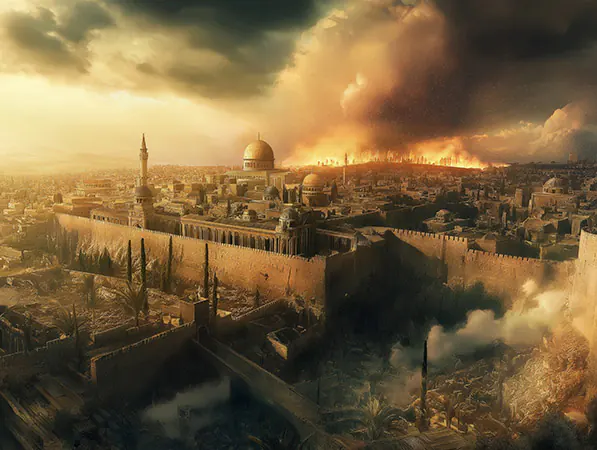
Jerusalem's Fall and Christ's Return
'Prophecy Watch' by Charles WhitakerSome interpreters, called preterists, mistakenly hold that the Bible's prophecies, such as Christ's return, were fulfilled before the first century ended.
God's Will in the End Time
Feast of Tabernacles Sermon by Richard T. RitenbaughGod does not like to inflict punishment on people, but because of sin, He is obligated to correct. But as quickly as God punishes, God restores and heals.
The Doctrine of Israel (Part Thirteen): Jacob's Trouble
Sermon by Richard T. RitenbaughDuring Jacob's Trouble, a confederacy of gentile peoples (particularly the offspring of Ishmael and Esau) will destroy the nations of modern-day Israel.
How Much Longer Do We Have?
'Prophecy Watch' by David C. GrabbeHow often have we heard—or cried ourselves—'How long, O Lord?' Our great hope is in Christ's return, but it seems as if that time is delayed.
The Book of Daniel (Part Eight)
Sermon by Martin G. CollinsSeveral types of the abomination of desolation have occurred in history, including the desecration of the temple by Antiochus Epiphanes and the Roman legions.
The Sixth Seal
'Prophecy Watch' by Richard T. RitenbaughThe Sixth Seal of Revelation foretells of the sun turning black and the moon turning red, stars falling, and a terrible earthquake that moves mountains.
Preparing to Rule!
'Personal' from John W. RitenbaughHave you ever considered what it will be like right after Christ returns? What will you do, as a king, to help and govern the people placed under you?
A Place of Safety? (Part 4)
Sermon by John W. RitenbaughThe prophecies concerning the Man of Sin refer to a person with great political power with global significance rather than to a leader of a small church.
The Paradox of Terror and Rejoicing
Sermon by Martin G. CollinsThe fullness of evil leads to destruction and divine judgment, describing the Great Tribulation caused by humanity's sin, culminating in the Day of the Lord.
The Patterns of God
Sermon by John O. ReidThe concept of God's wrath is a profound warning that reverberates through the prophetic messages of the scriptures, signaling the consequences of disobedience for Israel and the world. In Ezekiel 7:1-15, the Lord declares an end to the land of Israel, proclaiming, "Now has the end come upon you, and I will send My anger against you; I will judge you according to your ways, and I will repay you for all your abominations." His fury is unleashed as a singular disaster, with no pity spared, ensuring that all shall know that He is the Lord who strikes. This wrath manifests in violence, doom, and desolation, leaving none to escape the judgment. Further, in Ezekiel 7:19-27, God's wrath renders wealth useless, as silver and gold cannot deliver in the day of His anger. He turns His face from His people, allowing strangers to plunder and defile, bringing destruction and despair with no peace to be found. The Lord asserts, "I will do to them according to their way, and according to what they deserve I will judge them; then they shall know that I am the LORD!" Jeremiah 6:9-17 reveals the depth of God's fury due to Israel's refusal to heed His word. He is weary of holding back His anger and will pour it out on all, from children to the aged, for their covetousness and falsehood. Their unashamed abominations lead to their downfall, as the Lord declares, "At the time I punish them, they shall be cast down." In Zechariah 7:1-14, the great wrath of the Lord of hosts comes upon His people for refusing to hear His law and hardening their hearts. Their disobedience results in desolation, as He scatters them among unknown nations, making the pleasant land desolate. The Lord states, "Just as He proclaimed and they would not hear, so they called out and I would not listen." Amos 3:1-3 underscores the special relationship with Israel, saying, "You only have I known of all the families of the earth; therefore I will punish you for all your iniquities." This unique bond heightens the severity of His judgment due to their failure to walk in agreement with Him. In the book of Revelation, God's wrath reaches its culmination with the opening of the seals and the sounding of the trumpets. Revelation 6:16-17 depicts men hiding in fear, crying out, "Fall on us and hide us from the face of Him who sits on the throne and from the wrath of the Lamb! For the great day of His wrath has come, and who shall be able to stand?" The trumpet plagues, as detailed in Revelation 8 and 9, bring catastrophic destruction, with hail, fire, blood, and immense armies killing a third of mankind, yet survivors refuse to repent. Revelation 16:1-9 describes the bowls of God's wrath poured out, bringing sores, blood-filled seas and rivers, and scorching heat, yet men blaspheme His name, unyielding in their rebellion. The final battle at Armageddon, as foretold in Revelation 16:10-16, gathers the nations for the great day of God Almighty, where His indignation consumes the earth, as Zephaniah 3:8 warns, "All the earth shall be devoured with the fire of My jealousy." Joel 2:1-11 and 3:1-14 paint a vivid picture of the day of the Lord, a time of darkness and terror, with a great army bringing desolation, as the Lord judges the nations in the Valley of Jehoshaphat for their wickedness against His heritage Israel. Revelation 14:17-20 and 19:11-21 depict the winepress of God's wrath, with blood flowing up to the horses' bridles, and the return of the King of Kings to strike the nations with a sharp sword, treading the fierceness of Almighty God's wrath. Finally, in Revelation 16:17-21, the seventh bowl is poured out, concluding with a mighty earthquake and hailstones of immense weight, as God's wrath fully captures the world's attention, stripping away all false beliefs and hatreds. Through these dire warnings, the sound of the trumpet, though not literal today, should ring loud in our minds, urging urgency and change to avoid the impending tribulation and to recognize the gravity of His
The Future's So Bright I Gotta Wear Shades
Feast of Tabernacles Sermon by Richard T. RitenbaughThe Millennium will come about because Jesus Christ is faithful to rescue mankind from its own stupidity, putting an end to sin and rebellion.
Revelation 10 and the Laodicean Church
Sermon by John W. RitenbaughRevelation 10 and 11 describe a time before the Tribulation and the Day of the Lord, a time when the last of the seven thunders rumbles to a faint whimper.
The Goodness and Severity of God (Part Two)
'Prophecy Watch' by Charles WhitakerGod seems to display irreconcilable contradictions, such as great wrath and deep compassion. Yet these are not contradictory traits but rigorous responses.
Trumpets, Christ's Coming, and Works
Sermon by John W. RitenbaughBecause the exact time of Christ's return is not known, we must always be ready, as though His return is imminent. Those not prepared will be blindsided.
Shock and Awe - and Speed
Sermon by Richard T. RitenbaughThe world will experience the ultimate 'shock and awe campaign' at the second coming of Christ. When these events start, they will occur at meteoric speed.
A Place of Safety? (Part 1)
Sermon by John W. RitenbaughGod has the ability to protect and save in a variety of methods. The Scriptures reveal various purposes for intervention, protection, and prudent escape.
The Wrath of God
Sermon by Richard T. RitenbaughLove motivates the two intrinsic parts of God's holy character—goodness and severity, as He seeks to rescue humanity from the consequences of sin.
The Sixth Seal and Israel
Sermonette byEach depiction of the Sixth Seal also shows God's involvement with physical Israelites. John's vision precedes a glimpse of 144,000 of the tribes of Israel.
Where Is the Promise of His Coming?
'Prophecy Watch' by Richard T. RitenbaughAs this world keeps on turning, more people become skeptical about the return of Jesus. The Bible, however, insists that He will come again and quickly.
Shouting Gleanings and Singing Olives (Part Two)
Feast of Tabernacles Sermon by Charles WhitakerIsaiah's apocalypse resembles Exodus, as both begin with a narration of God's judgment on sinners and then move to a description of God's continuing work.
God and Reality
Sermon by John W. RitenbaughWhat God puts us through is designed to reveal reality to us. Accepting His doctrine without looking for loopholes will keep us true.
The Process of Righteous Judgment
Feast of Tabernacles Sermon by Martin G. CollinsWe share with Christ the prospect of preparing the earth for billions of people awaiting their opportunity for eternal life, assisting in the harvest.
1335
Feast of Tabernacles Sermon by Charles WhitakerTwo of Daniel's prophecies differ by 75 days, perhaps paralleling the 75 dramatic days between the resurrections of Lazarus and Jesus Christ.
Trumpets Means War!
Sermon by Richard T. RitenbaughWhen Jesus Christ returns, He will marshal an army of resurrected saints who will wage a just war against the Satan-inspired end-time rebellion.
The Goodness and Severity of God
Sermon by Charles Whitaker (1944-2021)On the heels of destruction will come the forces of reconciliation. The forces of destruction and construction will appear to be virtually simultaneous.
Zephaniah (Part Three): Quick Destruction, Eternal Restoration
Feast of Tabernacles Sermon by Richard T. RitenbaughZephaniah has messages for the remnant of physical Israel, the house of David, and for the faithful remnant from the Israel of God.
Shouting Gleanings and Singing Olives (Part One)
Sermon by Charles Whitaker (1944-2021)Isaiah 24 prophesies that God will preserve a remnant made up of grape gleanings (the His Church) and of olives (national Israelites) who will sing together.
Psalms: Book Four: He Is Coming!
Sermon by Richard T. RitenbaughThe Feast of Trumpets is like the opening salvo of the fall feasts, beginning with a blast of the trumpet or shofar, reminiscent of the event on Mount Sinai.
When Our Change Comes
Sermon by Richard T. RitenbaughRepentance and conversion leading to transforming into Christ's image depend on change. Christianity is a force for personal change, leading to universal change.

1335 (Part Two)
'Prophecy Watch' by Charles WhitakerThe apostle Paul, writing to Timothy, suggests loving Christ's appearing on day 1,335 (Daniel 12:12) should come first in our understanding of prophecy.
'As a Thief in the Night'
'Prophecy Watch' by David C. GrabbeChrist's second coming is described as being like 'a thief in the night.' Here is what it means for Christians living in the end times.
All About Edom (Part Three): Obadiah
'Prophecy Watch' by Richard T. RitenbaughThe Bible's most comprehensive prophecy about Edom appears in Obadiah. This "minor" prophet foretells the future for the descendants of Esau.
Learn to Fear God
Feast of Tabernacles Sermon by John O. ReidFearing God is equated with obeying or complying with God's instructions, voluntarily measuring all our thoughts and behavior against His Law.
A Place of Safety? (Part 5)
Sermon by John W. RitenbaughObsessing about the Place of Safety is a sure way to disqualify oneself from it. God calls some faithful, zealous ones for martyrdom during the Tribulation.
Lamentations (Part Three)
Sermon by Richard T. RitenbaughPersonified Jerusalem, whom God depicts as a grieving widow, blames others for her troubles while overlooking her own sins as the real cause of her sorrow.
Lift Up Your Voice Like a Trumpet
Sermon by Richard T. RitenbaughHardly anything is more dramatic than the blast of a trumpet. Alarm or warning is a primary function, and its other uses likewise culminate in the Feast of Trumpets.
Don't Be Indifferent (1995)
Sermon by John W. RitenbaughWe cannot allow ourselves to become surfeited with the world's distractions, being lulled off to sleep as the foolish virgins, wasting our precious time.
Don't Be a Prudent Agnostic
Sermon by John W. RitenbaughSome of us, facing the stress of the times, may simply be going through the motions but losing every vestige of faith. We must strengthen our convictions.
The Return of the Clouds
Feast of Tabernacles Sermon by Charles Whitaker (1944-2021)Clouds can be an emblem of God's ability to hide Himself from some and reveal Himself to others. God is in total control of what He reveals and hides at any time.
Psalms: Book Three (Part Five)
Sermon by Richard T. RitenbaughIf we would keep God's Feasts properly, we would be in sync with God's noble purpose for us, defending us from falling into apostasy and idolatry.
The Second Exodus (Part One)
'Prophecy Watch' by David C. GrabbeThe Bible tells us that the time is coming when God will regather Israel to the Land of Promise, a greater Exodus than that from the Land of Egypt.
What Is the Book of Revelation?
'Prophecy Watch' by David C. GrabbeThough the book of Revelation speaks of the end of the world using strange and fearsome symbols, the real subject of Revelation is readily apparent.
Don't Lose Your Focus!
Sermon by John W. RitenbaughPaul urged that we get our focus more balanced, emphasizing love over prophetic correctness, not remaining indifferent to what Christ deemed important.