


Filter by Categories
This Gospel of the Kingdom Shall Be Preached
CGG Weekly by David C. GrabbeMatthew 24:14 guarantees that the gospel of the Kingdom will be preached in all the world as a witness before the end, but it names no preacher, no length of time, and no method. God alone knows these. Jesus preached the gospel only because the Father had sanctified Him and sent Him, and both the content and the power of His preaching came from the Father. So whatever human instrument or method is used, it is the Father who preaches the gospel. Any effort that does not have Him as its source is a work of man, and its laborers toil in vain (Psalm 127:1). The gospel goes out through submission to God's leadership, not through human effort or will. As Tozer observed, the church's first obligation is to be spiritually worthy to spread the gospel. God also determines the results. For 1900 years He did not make a major witness a priority, and in the last century He ordained one. Differing results today reflect His priorities. A church that is not spiritually worthy, divided by pride and competition, could make a witness against God rather than for Him. Each servant must stay within the limits of what God has given him (II Corinthians 10:13-16). Believers should therefore focus on being sanctified and doing the Father's will as Jesus did, rather than on fulfilling the prophecy, because God is creating them in His image, and that is the greater work.
'This Gospel of the Kingdom Shall Be Preached'
'Prophecy Watch' by David C. GrabbeMatthew 24:14 is a prophecy of a definite future event, not a command. It says nothing about who will preach the gospel of the Kingdom, how long it will take, or by what means; it says only that it will be done before the end. The real Preacher is God. Jesus preached the gospel because the Father had sanctified and sent Him, and both the message and the power came from the Father (John 10:36-38; 5:19; 8:28; 12:49). Whatever human instrument or method God uses, the work is His. Preaching that does not have God as its source is human effort, and the workers toil in vain (Psalm 127:1). Even the disciples preached before they had the Holy Spirit because they had been set apart. The gospel is therefore proclaimed through submission to God's leadership, not human will. Spiritual preparation must precede activity, so the church's first obligation is to be spiritually worthy to spread it. God also determines the results, and His word accomplishes what He pleases (Isaiah 55:11). Weak results mean that something else is God's priority, not that effort is lacking. A church marked by strife and competition would make a witness against God even if it spoke the true gospel. Each believer's task is to grow in the sanctification God has already given and to do the Father's will, as Christ did, rather than to aim at fulfilling Matthew 24:14.
Why Preach the Gospel to the World?
CGG Weekly by Richard T. RitenbaughIn various settings, from street corners to revival tents and televised broadcasts, individuals passionately proclaim the message of God. A young man in threadbare clothes stands on a box in a crowded city, shouting to passersby to repent and return to God, warning of dire consequences. In a field, a tall man leads a crowd in song under a canvas tent, rallying them with spiritual fervor at a revival meeting. On screen, a well-groomed man urges viewers to give their hearts to Jesus, imploring them to commit their lives to Him with a sense of urgency and care. The drive to preach God's Word to the whole world and bring many into the church remains a significant endeavor. Jesus unambiguously commands in Mark 16:15 to go into all the world and preach the gospel to every creature. He instructs the apostles in Luke 24:47 that repentance and remission of sins should be preached in His name to all nations, beginning at Jerusalem. In the Olivet Prophecy, Jesus declares that this gospel of the kingdom will be preached in all the world as a witness to all the nations, and then the end will come. God desires the good news that His Son brought to humanity to be shared with everyone, making it a primary work of the church that Jesus founded and continues to head. He tasked His apostles with spreading it worldwide, a mission encapsulated in His directive to Paul through Ananias to bear His name before Gentiles, kings, and the children of Israel. The apostles felt compelled to undertake this service for their Master with extraordinary drive, as expressed in I Corinthians 9:16, where Paul states that necessity is laid upon him to preach the gospel. The purpose behind preaching the gospel is crucial. Jesus came to Galilee preaching the gospel of the Kingdom of God, declaring that the time is fulfilled, the kingdom of God is at hand, and calling for repentance and belief in the gospel, as seen in Mark 1:14-15. The gospel serves as a warning message of repentance, a call to turn from sin because God's Kingdom will soon be established. It is preached as a witness, providing evidence and testimony about who God is, His standards, what He is doing, and what is coming to fulfill His purpose. Through this preaching, God ensures humanity has no excuse when He brings destruction on this world for its sins and establishes His Kingdom. From among those who hear this warning, He chooses a few to respond in belief and enter the church for further teaching. In this age, He is training His little flock and warning the world through the preaching of the gospel that He is about to act in righteousness to bring justice and peace to the earth.
Should Christians Preach the Gospel Door to Door (Acts 20:20)?
Bible Questions & AnswersPaul taught the leaders of the church in their own homes. He did not go from house to house attempting to witness to or persuade whomever opened the door.
What Did Jesus Preach?
Bible Questions & AnswersThe announcement of 'good news' brought by the Messenger Jesus Christ from the Father was not about Jesus, but about the soon-coming Kingdom of God.
The True Gospel (Part 4)
CGG Weekly by Richard T. RitenbaughJesus frequently proclaimed the gospel of the Kingdom of God, modifying the term gospel solely with the phrase of the kingdom and directing His disciples to preach this same message of God's dominion, rule, governance, and realm. The Gospel writers consistently present this focus, recording Christ's references to the future establishment of the Kingdom on earth through parables and prophecies that describe His return in glory to reward each person according to works. At the same time the Kingdom already rules spiritually over those whom God has called, even though they remain flesh and blood and have not yet inherited it. These individuals await Christ's return at the last trumpet, when He will transform their mortal bodies into immortal spirit bodies like His own, enabling them to rule with Him. In its present aspect the gospel requires believers to submit to the laws and responsibilities of God's government while developing the character necessary for future service. As a future reality the message encompasses prophetic instruction concerning the second coming, the overthrow of all rebellion, the granting of eternal life to the saints, and the establishment of a millennial period of peace and spiritual growth. Thus the gospel of the Kingdom functions as a comprehensive term that includes the announcement of both the present and future dimensions of God's rule, the preparation of the elect for their roles, and the full revelation of God's counsel to humanity, all centered on the urgent call to repent and believe.
God's Powerful Gospel
Sermon by Richard T. RitenbaughThe true gospel includes the complete revelation of God of His plan to reproduce Himself. If a gospel does not produce repentance and faith, it is false.
False Gospels
Sermon by Richard T. RitenbaughA major clue for discerning false gospels is that any teaching attempting to change the nature of God or Christ or their doctrines is anti-Christ and false.
The True Gospel
Bible Study by Richard T. RitenbaughThere are many 'gospels' in the world but only one true gospel—the message that Christ brought about the good news of His coming Kingdom!
The Gospel of Freedom and Democracy
CGG Weekly by David C. GrabbeFor good or ill, John Winthrop's 'city on a hill' imagery has come to pass in the United States — but the light it is emitting is feeble at best.
Anniversary Message 2026
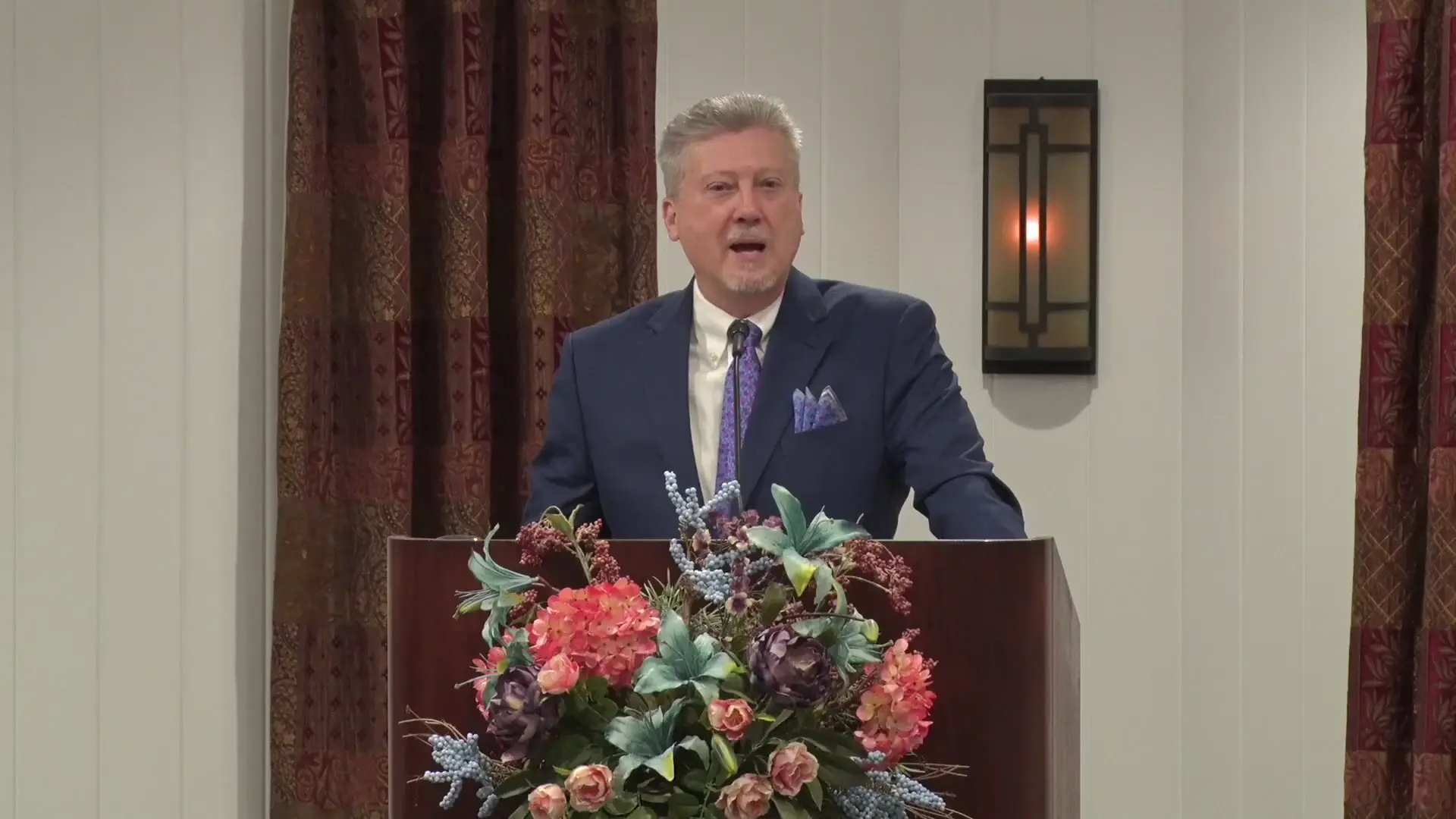
Commentary by Richard T. RitenbaughThe decision to establish a new organization arose when doctrinal shifts in another fellowship demoted the gospel of the Kingdom of God beneath emphasis on the gospel about Jesus and the gospel of grace. This change contradicted the foundation set in Mark 1:14, where Jesus came into Galilee preaching the gospel of the Kingdom of God and announcing another government and way of life. The priority therefore became preparing a convicted membership to reach that Kingdom rather than broadcasting the message to the world at large. Preaching the gospel to the public was never adopted as the central aim, because the membership at the time of division lacked sufficient grounding in the truth to carry out such a task effectively. Instead, resources were directed first toward feeding the flock, studying the truth in depth, and helping members practice it so they could stand firm. Any incidental reach to additional hearers through available tools such as the internet is accepted as value added, yet growth in numbers for the sake of larger media outreach has remained outside the stated purpose. The consistent focus has been to strengthen a smaller group of committed believers, described as the little flock, equipping them for the Kingdom rather than distributing simplified teachings to thousands. This approach inverts earlier patterns that placed public proclamation ahead of internal strengthening and continues to guide the work unless divine direction indicates otherwise.
CGG Anniversary: Summary and Thank You
Sermonette by John W. RitenbaughOn this 11th anniversary of CGG, John Ritenbaugh reflects on the expectations, the accomplishments, and the prospects for the future of our part of God's work.
Jesus Christ, the Head of the Church
Sermonette by David C. GrabbeIf we lose sight that Jesus is the head of the Church, we will forget that Christ is currently purifying His Church, sanctifying those called to be His family.
The Impossible Metric
CGG Weekly by David C. GrabbeMembers, coworkers, and subscribers can all be tallied, yet who but God can track the increase of faith or the building of a church member's character?
What Is the Church's Work Today (Part One)
Feast of Tabernacles Sermon by John W. RitenbaughPreaching the gospel to the world is not the work of God, and nowhere does the Bible say so; it is a work of the church that God allows us to share in. God's own work is creating, working salvation, and forming His image in people, and that begins at justification and continues for a lifetime. The view that preaching to the public is the central work grew out of Protestantism's once-saved-always-saved doctrine, which treats justification as salvation. Public proclamation is the smallest and easiest part of God's operation, since the hard part is changing us into Him. Preaching the gospel is also not mainly for the unconverted. The public receives only a small portion, enough to spark interest and bring people to justification. Paul wanted to preach the gospel to the already converted Romans, and he declared the whole counsel of God to the Ephesians. Continued preaching in ever greater detail is the strong meat that builds maturity, and the ministry is given to perfect the saints. Conversion is only conception, and the converted must grow to the fullness of Christ. Paul planted and Apollos watered, so both preaching and feeding the flock are works of the church. The church's operations change as God directs, as He led Israel by the cloud. When the sheep are scattered, the work is to gather them and correct what scattered them, and preparing booklets keeps the church ready to preach publicly later.
A View of the Work
Sermonette byJudging the quality of our work by numeric standards is not a measure of spiritual growth, and to equate it with spiritual growth in rank Laodiceanism.
What Is the Work of God Now? (Part One)
Sermon by John W. RitenbaughThe preaching the gospel to the world is at best the beginning of a complex process of creating disciples through steady feeding and encouragement to overcome.
Seeds and Seasons (Part Two)
CGG Weekly by David C. GrabbePreaching the gospel scatters seed that God alone waters. Throughout history He has sent preachers such as Noah, the prophets, the apostles, and His own Son, yet most of the seed they planted lies dormant because He waters only a few plants at a time. That seed may sprout during the Tribulation, the Millennium, or the Great White Throne Judgment, when the Holy Spirit becomes readily available to all, so the church must take the long view rather than chase quick results. The church's first responsibility is to publish truth and encourage belief among those God is already watering, since the church cannot open a single mind. Paul preached to the converted in Rome and carried the care of the churches. The commission to preach to the world still stands, but its effectiveness depends on how well the church serves those God has given her. God will not bless ministers who rule by their own power or prophets He did not send, so the key is the closest possible relationship with the Source of truth. A church scattered for sin must first be revived, with its faith restored by hearing the word of God. Every believer also preaches the gospel, often silently. Lamps do not talk, but they shine. Conduct, attitude, language, and regard for others as future family members plant seeds without a word about religion.
'Go Ye Therefore Into All the World...'
'Ready Answer' by StaffTo understand Jesus' command, we need to examine what else He said to the same people. We should also determine just whom He commissioned to preach.
What Is the Church's Work Today (Part Two)
Feast of Tabernacles Sermon by John W. RitenbaughThe easiest part of God's work is preaching the gospel to the world. Much more demanding is the feeding of the flock, producing life-changing faith.
Who Is Doing the Work of God?
'Personal' from John W. RitenbaughWe should concentrate on reversing the church's serious spiritual decline before we presume to go to the world.
Billy Graham's Death
Commentary by John W. Ritenbaugh (1932-2023)Billy Graham was dubbed 'America's pastor.' Four traits that endeared him to people were persuasive oratory, courage, morality and humility.
In Search of a Clear World View (Part Two)
Feast of Tabernacles Sermon by John W. Ritenbaugh (1932-2023)The true church is a unique educational institution, teaching the way of God and amplifying His Commandments, in contrast to the churches of this world.
Preparing the Bride
Booklet by John W. RitenbaughA Statement of Purpose and beliefs of the Church of the Great God.
Get the Church Ready!
'Personal' from John W. RitenbaughWhat should the church be doing during this time of scattering and doctrinal confusion? Is the gospel limited to preaching to the unconverted?
What Is the Work of God Now? (Part Three)
Sermon by John W. RitenbaughTo preach to the world and ignore a disintegrating flock is like a husband and wife paying attention to other people while the family is falling apart.
What Is the Church's Work Today (Part Three)
Feast of Tabernacles Sermon by John W. RitenbaughThe primary focus at this time is the repair of the faith once delivered that has seriously deteriorated because of heresy, apostasy, and Laodiceanism.
What Is the Work?
Feast of Tabernacles Sermon by John W. RitenbaughThe work of God does not always stay the same, continually shifting media, techniques, and approaches, similar to the Israelites following the Cloud.
Works of God
Sermon by Richard T. RitenbaughThe idea that the 'work of God' is equated with 'preaching the gospel around the world as a witness' severely limits the awesome scope of God's work.
What Is the Work of God Now? (Part Four)
Sermon by John W. RitenbaughThe scattering of the church was an act of love by God to wake us from our lethargic, faithless condition. The feeding of the flock is the priority now.
Acts (Part Thirteen)
Sermon/Bible Study by John W. RitenbaughIn Acts 13, the false prophet Elymas is cursed with blindness, providing the witness prompting the Proconsul Sergius Paulus to become converted.
Acts (Part One)
Sermon/Bible Study by John W. RitenbaughThe book of Acts could have been an exculpatory trial document designed to vindicate Paul and the early church, showing that Christianity was not a threat.
Suffering Disgrace For Christ's Name
Sermon by Martin G. CollinsWe can always expect new challenges, including persecution, and must never be content with standing still, but must press on to spiritual maturity.
Acts (Part Two)
Sermon/Bible Study by John W. RitenbaughOur historical and theological roots are advanced in a polished, chronological narrative (Acts), perhaps designed as a trial document authored by Luke.
What Is the Work of God Now? (Part Two)
Sermon by John W. RitenbaughThe largest portion of the great commission demands that the lion's share of time, money, or energy ought to be invested in feeding the flock.
Avoiding Superficiality
Feast of Tabernacles Sermon by John W. RitenbaughSuccess in spiritual things does not consist in growing large and powerful, but humbly living by faith, overcoming, and yielding to God's shaping power.
Acts (Part Eighteen)
Sermon/Bible Study by John W. RitenbaughOn Paul's second evangelistic campaign, he preaches in southern Turkey and western Greece. He tries to go north but is prevented.
In Search of a Clear World View (Part Six)
Sermon by John W. Ritenbaugh (1932-2023)The responsibility given to the church Christ has called out of this world is to expand His teachings, magnifying them and making them clear and honorable.
The Purpose of the Church
Feast of Tabernacles Sermon by John W. RitenbaughThe function of the church is like a teacher's college, preparing the firstfruits and providing them with the needed education and character development.
Acts (Part Twenty-Seven)
Sermon/Bible Study by John W. RitenbaughAgrippa was knowledgeable about Jewish customs, so Festus brought him in to hear Paul's case, which lincluded his conversion and ministry.
Hebrews: Its Background (Part Seven)
Sermon by John W. Ritenbaugh (1932-2023)The socio-cultural milieu before the writing of Hebrews created difficulties for the Jewish converts to the Gospel, who were deemed to be traitors.
What Is the Work of God Now? (Part Five)
Sermon by John W. RitenbaughNeglecting to feed the flock has been detrimental to preaching the gospel to the world. Because of neglect, members succumb to feeling insignificant.
Facing Times of Stress: When God is Silent (Part Four)
Sermon by Martin G. CollinsPaul demonstrated inner peace during turmoil, showing consistency in times of instability and faith in God during persecution, fulfilling the role God gave him.
Faith and Technology
Sermonette byAs technology becomes more available, the material world threatens to crowd God out of the picture. The information age will destroy us unless we manage it.
In Search of a Clear World View (Part Three)
Feast of Tabernacles Sermon by John W. Ritenbaugh (1932-2023)Each member has been gifted by Christ. We must not go beyond the gifts that have been given to us, but must use them humbly, employing them to edify.
Is the Christian Required To Do Works? (Part Five)
'Personal' from John W. RitenbaughJesus came with a message of salvation, called 'the gospel of the Kingdom of God.' Here is the relationship between the gospel and Christian works.
The Messenger of Christ
Sermon/Bible Study byHerbert W. Armstrong was single-minded about preaching the Gospel. The scattering of the church could have been caused by members making him a type of idol.
Acts (Part Twelve)
Sermon/Bible Study by John W. RitenbaughPaul and Barnabas developed the church in the cosmopolitan city of Antioch, the location from where the term 'Christian' originated.
Facing Times of Stress: When God Is Silent (Part Two)
Sermon by Martin G. CollinsWhat appeared to be a series of judicial set-backs for Paul was actually the outworking of God to place him before even higher levels of secular leadership.
His Eye is On the Sparrow (Part One)
Sermon by John W. Ritenbaugh (1932-2023)As God has His eye on the sparrow, He has had His eye on us through the entire process of scattering so the tests we have endured will bear good fruit.
Hebrews as a Sermon (Part One)
Sermon by John W. Ritenbaugh (1932-2023)Even as Hebrews prepared the first century church for persecution, so it is also relevant to today's church as it faces an increasing assault on God's law.
Where Did The Original Apostles Go?
Sermon by Martin G. CollinsThe Scriptures are largely silent about the exploits of the apostles other than Paul. We have only general comments concerning their spheres of activities.
In Search of a Clear World View (Part Four)
Feast of Tabernacles Sermon by John W. Ritenbaugh (1932-2023)Satan can fine-tune the course of this world (Zeitgeist), customizing it depending on whom he may seek to murder. We need to be thinking and vigilant.