


Filter by Categories
Admission of Sin
Bible Study by Martin G. CollinsMany believe that the existence of God's law creates the problem of sin, rather than the harm from illicit acts. Upon rejecting God's law, people often claim the freedom to decide right from wrong, refusing to confess or acknowledge their sinful acts due to enmity against God. A world without God's definition of sin may justify culture-sanctioned wrongs, losing a genuine sense of sin when His laws are deemed invalid. Sin is often seen as the result of impersonal, arbitrary laws from ancient times, meant to restrict enjoyment, leading many to undermine the credibility of sacred teachings. To confess sin means to acknowledge and admit it, taking steps to counter its addictive impact as part of overcoming it. All sin is committed against God, revealing its true seriousness, but it also harms oneself, as our bodies belong to Him, purchased by the blood of Jesus Christ. We must glorify God in our body and spirit, which are His. Sin's detrimental effect extends to others, beginning with family, friends, community, country, and the whole world, its cumulative impact causing immeasurable suffering. Each sin curtails freedom, weighs us down with bad habits, changes our character, and corrodes our potential, leading to self-absorption and a lack of proper love for God, oneself, or others. Ultimately, sin, when full-grown, brings forth death. Sin violates the connection with God, essential for true religion, akin to a deteriorating relationship between a headstrong child and parent, hindering growth without yielding. The solution lies in God's nature—love—which fulfills the law by doing no harm to a neighbor. Habitual sin enslaves, hardening the heart and lowering barriers of conscience to further transgression, much like chemical addiction. Jesus Christ warns to sin no more, lest worse consequences follow. This connection to God provides the moral compass to define sin and the standards to walk worthily, offering the ultimate solution to sin's addiction through His love. Each sin lowers inhibition to further wrongs, causes collateral damage to those close and beyond, and separates us from our Father and His love, without which we would be eternally lost. Yet, through our heavenly Father's powerful love, He has provided the perfect antidote to sinful habits in the life and blood of Jesus Christ.
A Sin Unto Death
'Ready Answer' by StaffSin carries grave consequences for those who stray from God's way of life. When individuals leave God's church due to offense or other reasons, there is little doubt that they have sinned. Any sin can be forgiven if sincerely repented of and confessed to our merciful God, for He is faithful and just to forgive and cleanse from all unrighteousness. However, sin can lead to eternal death if it remains unconfessed, unrepented, and is allowed to persist in a person's life. A sin not unto death is one that is confessed and repented of, without a willful violation of God's law. Conversely, a person has sinned unto death if he has willfully turned from God's way, voluntarily rejecting His truth. This willful turning away serves as a solemn and terrifying warning for any who might consider abandoning God's church. For those still within God's church, if a fellow member sins a sin not unto death, often out of ignorance or weakness, it is our duty to pray that God helps him recognize his error and repent. God will hear and answer such prayers, potentially granting life according to His will. Similarly, for friends and loved ones who have left God's truth, prayer remains a vital response, as the effective, fervent prayer of a righteous person avails much.
Sin
Sermonette by James BeaubelleOur carnal nature will always deceive the self, convincing us that our behavior is not so bad, but Paul realized the addictive, toxic nature of sin.
Are Some Sins Worse Than Others?
'Ready Answer' by Martin G. CollinsSin carries grave consequences, as the wages of sin is death. Although all sin merits the death penalty and requires the blood of Christ for expiation, some sins are indeed worse than others, bearing greater consequences to the sinner and to those affected by his actions. God's judgments reveal that certain sins bring stiffer penalties and greater condemnation. In the example of Israel's sin of idolatry with the Golden Calf, Moses declared they had committed a great sin. The Eternal proclaimed that whoever sinned against Him would be blotted out of His book, indicating the severity of this transgression. By this act, the Israelites disobeyed multiple commandments, turning from God, creating and worshiping an idol, misusing His holy name, and establishing their own day of worship to a false god. David's sin of faithlessness in numbering Israel demonstrated a lack of trust in God's power, relying instead on his own strength. This sin resulted in the death of 70,000 men, showing how a single act of sin can affect an entire nation with severe punishment. Jesus Christ Himself confirmed the existence of greater and lesser sins during His trial, stating to Pilate that the one who delivered Him had the greater sin, verifying that distinctions exist in the severity of sinful acts. The principle of proportionate punishment dictates that more serious sins require more severe penalties. In ancient Israel, punishments varied, with death for kidnapping and restoration for stealing livestock, ensuring the punishment matched the crime. God's judgments reflect this principle, applying greater and lesser punishments for greater and lesser sins. Christ emphasized that certain commandments and matters of the law, such as loving God completely and prioritizing justice, mercy, and faith, carry greater weight with Him. Greater sins cause more damage to spiritual character than lesser ones, though even the least commandments matter. A sin not leading to death is one genuinely repented of, where forgiveness is possible due to a meek and sorrowful attitude, encompassing both greater and lesser sins. However, a sin leading to death, often called the unpardonable sin, arises from an attitude of rebellion and defiance, denying Christ as Savior, hating one's brother, and refusing to obey God's laws. This can stem from willful sin after receiving truth or from continued neglect and apathy, risking permanent separation from God. All sin separates us from God, hiding His face so He will not hear. If unrepented, this separation becomes permanent, leading to eternal death. Overcoming all sin, especially the greater ones, is essential, and though impossible alone, strength through Christ enables us to prevail.

What Sin Is
'Personal' from John W. RitenbaughThe concept of sin is inescapable as long as humans exist, for none of us are perfect, and we all falter on occasion. Sin affects everyone, both when we err and when others do, yet the word itself has lost its emotional and intellectual force through overuse, becoming debased and distorted. To many, it lacks the immediate impact of crime, which prompts visible reactions like installing locks and avoiding certain areas, though most crimes are also sins. The world often recognizes only the most obvious sins, failing to see the delayed or hidden effects of less apparent ones, as seen in the long gap between Adam's disobedience and his death, making the connection between sin and its consequences hard to grasp for those living by sight. Sin is universal, as all have sinned and fall short of the glory of God, with death spreading to all because of it. It confines everyone under its power, holding sway as a dynamic and active force, ruling over humanity like a commander over an army. Sin is depicted as a living, malignant power that once had complete reign over us and continues to struggle for dominion even after conversion. It dwells within, permeating every fiber of our being, enslaving those who commit it and lying in wait to dominate if not resisted, as God warned Cain of its persistent desire to control. Sin is defined as lawlessness, a deviation from the right path, a failure to meet a standard, whether through commission or omission, in thought, word, or deed. It encompasses not just obvious wrongs but also hidden failures within the heart, touching every aspect of life from relationships to personal attitudes like pride and envy. The Bible views sin broadly as any failure to reach the perfect righteousness of Jesus Christ, making it as common as the air we breathe in a world swayed by self-serving nature. Yet, God's purpose is to eradicate sin in those He calls, urging His chosen to recognize and overcome their failings, striving toward the righteous character of our Savior Jesus Christ.
Sins in the Balance (Part Two)
CGG Weekly by David C. GrabbeSin, in its profound weight, marks the vast disparity between the offenses of one creature against another and the grave transgression of a created being against his Creator. God, in His boundless mercy, forgives our sins when we come under Christ's blood, yet He stipulates that we must also forgive others, reflecting His forgiveness in a dim mirror. If we refuse to forgive the minor debts owed to us, He holds the right to demand full payment of our life-debt, as illustrated in the Parable of the Unforgiving Servant. Jesus instructs in Luke 17:3-4 that if a brother sins against us and repents, we are obligated to forgive, even if the offense occurs repeatedly in a single day. He does not limit forgiveness to only those who repent, as seen in Mark 11:25-26, where He urges us to forgive anyone we hold a grudge against while praying, without waiting for their repentance, warning that our Father in heaven will not forgive us if we do not forgive others. Similarly, Paul in Ephesians 4:32 and Colossians 3:13 calls us to forgive one another as God in Christ forgave us, emphasizing that we must mirror Christ's forgiveness. Our human nature often resists forgiving until repentance is shown, yet God's approach reveals a deeper grace. When we first sinned, we incurred an unpayable debt, and though not struck dead instantly, God chose to overlook our offense, even before we repented or came under Christ's blood. This act of overlooking, though not eternal forgiveness at that moment, allowed a bridge across the impassable gulf our sins created. Jesus exemplified this by forgiving sins without waiting for repentance, as seen in the gospels and in His prayer on the cross, asking the Father to forgive His unrepentant torturers. Forgiving sins against us requires faith, as the apostles recognized in Luke 17:5, understanding it involves relinquishing personal justice and trusting God to handle the matter with perfect justice and mercy. Jesus, even as the Creator who became flesh, overlooked the reviling of His creation, committing Himself to the Father who judges righteously, demonstrating that we too should forgive without delay. Our carnal nature, however, clings to vengeance and keeps a mental tally of others' debts, often ignoring the greater debt we owe. A true awareness of our unpayable debt compels us to forgive, regardless of another's repentance, recognizing that our spiritual poverty and desire for God's mercy outweigh the sins committed against us.
Sin Defined and Overcome
Sermon/Bible Study by John W. RitenbaughThe Bible regards sin with utmost seriousness, portraying it as entirely detrimental to one's well-being, offering no good except fleeting pleasure. Its writers, from Genesis to Revelation, describe sin as heinous and tragic, urging a complete turning away from it at any cost. Sin is seen as a major impediment to achieving God's purpose for creating mankind, not merely a minor act but a profound failure in life's overall purpose. In Revelation 2:11, it is clear that overcoming sin is crucial, as those who overcome shall not be hurt by the second death. Sin is depicted as a battle for our very lives, a struggle against failure and defeat. Isaiah 59:1-3 highlights that sins separate us from God, hiding His face and preventing Him from hearing us, thus creating estrangement from the source of power to succeed and overcome. Sin destroys relationships, whether with fellow humans or with God, always producing separation rather than healing. Genesis 2:15-17 and 3:22-24 illustrate this through the original sin, where disobedience led to death and physical removal from God's immediate presence, emphasizing sin's role in creating estrangement. Revelation 22:18-19 reinforces God's seriousness about sin, warning that those dominated by sin will not be part of the holy city or the Book of Life. Genesis 4:7 portrays sin as ever-present, lying at the door with a desire for us, yet it is our responsibility to rule over it and resist its appeals. This battle against sin is a war for acceptance by God through our efforts to overcome. Sin's seriousness is evident in Luke 12:35-37 and 46-48, where vigilance against sin is urged, and judgment is individualized based on our abilities, gifts, dedication, and efforts to overcome, as God evaluates us according to what He knows we are capable of. In John 17:11, sin's gravity is tied to the purpose of becoming one with the Father and the Son, a high calling where sin is incompatible as They do not sin. Romans 3:20, 4:15, and I John 3:4 define sin as the transgression of the law, a deviation from what is good and right, providing clear knowledge of what we battle against. The Hebrew word for sin, hata (Strong's 2398, transliterated as khaw-taw), means to miss the mark or fail to meet a standard, as seen in Job 5:24, Judges 20:16, and Proverbs 8:36, often carrying moral and spiritual implications. Sin can be unintentional, as in Leviticus 4:2, indicating ignorance or straying, with God considering the context and circumstances in His merciful judgment, as reflected in Psalm 58:3-4 and Ezekiel 44:10. Even sins of weakness, though judged less harshly, can have devastating effects. Presumptuous sins, described by the Hebrew word pasha (Strong's 6588), imply rebellion or continuous breaking away, as seen in Amos 1:3 and I Kings 12:19, carrying a harsh judgment even for those ignorant of God's law due to the bold, vicious attitude. Amos 3:14 notes such transgressions in Israel and Judah, with Israel's sins characterized by persistent sneakiness and hardheadedness, still deemed presumptuous by God despite lacking overt violence, as further elaborated in Romans 10:1-3. Overcoming sin requires recognizing it and finding motivation through qualities enabled by God, with the fear of God being paramount. Psalm 2:10-12, Psalm 34:11, and Deuteronomy 6:1-2, 6:13 emphasize that fearing God, alongside loving Him, is essential and must be learned, even after conversion. This fear, distinct from worldly fears, motivates us to avoid sin due to awe of His power, as seen in Mark 4:37-41 and Hebrews 5:7, fostering a relationship where we emulate His holiness and strive to glorify Him, resisting sin to the utmost.
What Do You Mean . . . the Unpardonable Sin?
Herbert W. Armstrong BookletSin is the transgression of the law. The way of sin is the self-centered way of vanity, greed, and envy. It is the way of getting, taking, accumulating, competition, and strife. It is the way of satan. The carnal mind is hostile against God and is not subject to the law of God. Human nature pulls one toward sin. A person is a Christian only while the Holy Spirit dwells in him. If the Holy Spirit no longer dwells in him, then he is no longer a Christian. God's Spirit will not remain dormant within one. It flows out by fulfilling God's law. The fruit of God's righteousness must be produced in the Christian life. There is a limit where, unless one is definitely growing spiritually, God's Spirit will no longer dwell in him. If that time comes, one shall be ultimately cast into the final gehenna fire. It is a dangerous thing for a truly converted Christian to grow lukewarm and careless and become a passive Christian. Repentance is a change from the carnal attitude of hostility toward God and rebellion against God's law to the opposite attitude of love, submission, obedience, and worship of God. When one receives God's Holy Spirit, the old human nature with its pulls and temptations remains. The flesh lusts against the Spirit and the Spirit against the flesh. These are opposed to each other. If one through lack of vigilance relaxes and neglects to walk in the Spirit, one may yield to the pull of human nature and commit a sin. The apostle Paul experienced the struggle against sin even in his converted state. The pull of human nature did cause him to sin. Yet he did not sin willfully. The evil he did was the evil which he would not. His overall intention was to do the right of God's law. Such an experience if truly repented of does not condemn one. There is therefore now no condemnation to them which are in Christ Jesus. Many would try to argue that this abolishes God's law. It is just the opposite. The law of sin and death is the pull of human nature into sin. God's Holy Spirit sets one free from the law of sin and death in his members. A Christian may commit an act of sin and then repent. This is not the unpardonable sin. The determining factor is one's overall attitude. As long as God's Spirit is dwelling in him and his attitude is right, he is on the road to eternal life. He may stumble and fall down but he continues on this road to life. When one receives the Holy Spirit by God's grace, this Spirit dwelling in him is tentative and conditional salvation. If one again changes his mind and changes his life's goal, takes his eyes completely off the goal of God's kingdom, and fixes them purposely on going back to the way of worldliness and sin, then he has set his mind on determined, premeditated, deliberate willful sin. If he decides he no longer wants to go God's way, deliberately and intentionally changes his overall attitude, and desires and chooses the world and its ways, then that man either has done or is in danger of doing despite to God's Holy Spirit. Such a man is surely in grave danger of blasphemy against the Holy Spirit. This is not a mere stumbling while on the way on God's way. There are at least two ways in which a Spirit-begotten Christian may lose the gift of God's Holy Spirit. One is by deliberate choice. This may come from wrong reasoning or from allowing resentment in his heart toward either God or some person who may have wronged him. To allow resentment to embitter him until he comes to change his whole life course, turning from God, is spiritual poison. The converted Christian can lose the presence of God's Spirit by continued neglect of prayer, Bible study, and spiritual fellowship with God's people. Or by continuing too close a friendship with unconverted people, letting participation with them in material interests cause neglect of spiritual interests. If one leaves the way that God's Spirit is leading, then God's Spirit may leave him no longer dwelling in him. He will commit sins but he will not be sorry an
Original Sin and Holiness
Sermon by John W. Ritenbaugh (1932-2023)Sin is simply thinking and therefore acting and living like every other human being does rather than thinking and acting like God and His Son Jesus Christ. The human heart is deceitful above all things and desperately wicked to the point of being incurably sick. God did not create this evil heart in Adam and Eve. Satan is the source of the accusation that God created this mind. Mankind became corrupted through contact with Satan and his fellow demons and the worldly systems he created. All born from Adam and Eve also submitted to Satan. The Bible shows there was no sin on earth among humanity until Satan showed up and began sin's way through Adam and Eve. Sin is a vast contagious and forceful moral disease that affects the whole of the human race through the impulses that it motivates. Sin is much more than what is seen on the outside. Something produces and motivates missing the mark going off the path and trespassing. Sin is better understood as a motivating influence akin to spirit. This influential sinful nature is a product of the mind of Satan. Sin consists of thinking saying doing or imagining anything that is not in conformity with the mind and will of God. It is the outward and inward departure of exact agreement with God's revealed will and character. There are sins of omission as well as commission. The sin within motivates doing nothing. Even the converted admit to carnality as an influence present with them. Sin is referred to as an evil present with a person and as a law indicating an active force like gravity that is working constantly. Sin is an ever-present influence.
Sin, Christians, and the Fear of God
'Personal' from John W. RitenbaughScripture takes a very stern view of sin because it is failure to live up to God's standard and destroys relationships, especially our relationship with God.
Principled Living (Part Two): Conquering Sin
Sermon by Richard T. RitenbaughThe Feast of Unleavened Bread typifies coming out of a sinful, anti-God world. God Himself brought us out, doing all the work, yet we must walk out behind Him, which requires effort on our part. Our role is to rid ourselves of leavening, a type of sin and corruption, and to eat unleavened bread, a type of living righteously. At this time of year, God calls us to evaluate our lives seriously, to consider what we have done to rid ourselves of sin, how we have grown, and whether a persistent sin still tests us. God provides a way to escape the destructive effects of sin and the clutches of satan, urging us to rededicate ourselves to this fight against sin, to put leaven out of our lives in what must be total war. This fight against sin in all its forms is like a surgeon excising cancer completely, aiming to annihilate every last vestige of sin so it cannot resurge to tempt or terrorize us again. The wickedness of sin, as seen among the Corinthians, was so vile that it was unmentionable even among permissive Gentiles, yet the congregation's pride in their tolerance allowed this corruption to grow like cancer. We must purge out the old leaven, cleaning out thoroughly all abomination, filth, and impurity, removing sin completely, just as a cancer surgeon seeks to eliminate every cell. In spiritual warfare, the closer the sin is to us, the more harshly we must deal with it. There is no tolerance for sin at any level; even a far-away sin must be forced to conform to God's standards, and if it resists, it must be subdued and stripped of power. Sin within ourselves demands total war, where nothing that breathes remains alive; we are to utterly destroy it, for if left alive, it will return to turn us from God. God is serious about sin, finding it repulsive, and desires it absolutely destroyed. He cannot stand it and will not abide it in His presence. If we wish to be like Him and near Him for eternity, we must purge sin, remove all corruption completely, and apply harsh correction to ourselves. If we fail to scour our lives of sin, we risk dire consequences, allowing it to fester like undetected cancer that can kill. We must test ourselves often to identify and excise corruption thoroughly. Jesus Christ emphasizes the extreme measures needed to eliminate sin, urging us to root it out entirely, to be decisive, harsh, and sacrificial, willing to lose whatever it takes to bring sin under control. The heart is where this total war must occur, changing our minds and character through a scorched-earth policy. With God's help, we must be like the cancer surgeon, sacrificing whatever is necessary to eliminate sin. To overcome sin, we must take both physical and spiritual measures, avoiding situations that foster sin, removing all temptations brutally and uncompromisingly, and filling our time with wholesome pursuits to prevent idleness that leads back to corruption. Spiritually, we must pray fervently for God's help, study examples in Scripture, meditate on the roots of our struggles, and fast to gain humility and understand our corruption against His holiness. God hates sin more than we do and is willing to support our efforts to purge it entirely. Purging sin is an all-out effort; we must leave nothing on the table, using every resource at our disposal and all that God provides. We must be ruthless, fearless, and willing to make any sacrifice to cleanse ourselves completely. We are called to crucify our flesh, our sinful nature, in a painful and public battle, mirroring the extreme measures our Savior endured. Jesus Christ expects nothing less of us if we are to be His disciples. The choice is stark: to be overcomers who conquer sin and gain the everlasting joys of God's Kingdom, or to remain in sin and face annihilation. If we desire to be joint heirs with Christ, total war must be our watchword against sin, excising it like cancer from our bodies, minds, and hearts.
How Does Temptation Relate to Sin?
'Ready Answer' by Martin G. CollinsWe have been called to a life of avoiding, enduring and overcoming temptation. Here is the process of temptation, sin and their products, and destruction.
Sin (Part Four)
Sermon by John W. RitenbaughTrue Christianity is no cakewalk into eternal life, but a life and death struggle against our flesh, the world, and a most formidable spirit adversary.
Sin (Part Two)
Sermon by John W. RitenbaughThoughts, words, or behaviors not in alignment with the mind of God are also violations against God's law. Foolishness should never be part of our conduct.
Sin Is Spiritual!
'Ready Answer' by Richard T. RitenbaughSin, described as crime, error, foul, wrong, or vice, represents behavior that fails to meet an accepted standard. The great God of all established a code of law based on His perfect nature, with the penalty for its transgression being death. In His love, however, He provided payment for our sins through the sacrificial death of His own Son, an act we memorialize and apply personally each year at Passover. God defines sin as lawlessness or the transgression of law, implying His role as both Lawgiver and Judge who will evaluate each person according to the standards of His law. A rebellious attitude against what God appoints over us can lead to transgressing His law, as one who will not submit in one area often fails to submit in others. Breaking laws of physical health, such as neglecting exercise, rest, or proper nutrition, and abusing the body, may also produce spiritual effects. These types of sins are forgiven through our Savior's gift of His life, which covers all sin. Healing us of sickness is linked to God forgiving us of sin, showing a direct connection between sin, disease, obedience, and healing. God does not condemn us for sins beyond our control, yet some may feel guilty in such instances. Conduct that defiles the conscience, even if not truly sin, results in sin if not done in faith, leading us to condemn ourselves, though God may not. We have confidence toward God because He laid down His life for us in an amazing, priceless sacrifice that forgives all sin for all time. God makes no distinction between sins; all are covered by Christ's death on the cross. Sin, whether categorized as lawlessness, transgression of law, evil, or iniquity, has only one remedy—the ultimate sacrifice of God in the flesh, Jesus Christ. This gives us great confidence and hope, as we are clean of sin and can freely choose to live as God lives.
The Offerings of Leviticus (Part Six): The Sin Offering
'Personal' from John W. RitenbaughSin holds a central and somber place in the context of the sin and trespass offerings, distinct from the sweet-savor offerings where sin plays no role. In the sin offerings, sin is the core issue, rendering these offerings not a sweet savor to God. Though He is merciful and forgives based on Christ's sacrifice, which these offerings symbolize, He finds no satisfaction in sin, which is described as abominable, remarkably hateful, and evil to Him. Despite such strong descriptions, the sacrifice of Christ meets and covers sin, providing a means of atonement. In the sin and trespass offerings, atonement signifies a covering or payment for sin, akin to meeting a legal obligation to an authority. The Authority is God, whose law has been broken, and the wages of sin is death. When a person sins, the law demands a life as payment, and nothing less can expiate sin. Symbolically, in these offerings, the life of an animal is given, representing the transfer of sin from the offerer to the animal, which then dies to pay the penalty, breaking the law's power over the sinner. This ritual portrays the sinner coming before God to receive the judgment of death, yet through Christ's vicarious death, as the true offering, the sins are transferred to Him, atoning for and redeeming the offerer. The sin offerings, though not sweet savors, required the animal to be without blemish, mirroring Christ's sinlessness. Any imperfection, whether visible or hidden, disqualified the animal, just as Christ, in His perfection over 33½ years, never bore any moral or spiritual flaw, qualifying Him as the ultimate sacrifice for sin. His death paid for past sins and continues to cover sins committed after initial forgiveness, though sinning without serious regard for His sacrifice risks grave consequences. The inadequacy of animal sacrifices to fully pay for human sin underscores the immense value of Christ's sacrifice, as God gave the life of the Creator to meet the total indebtedness of mankind with one payment. Christ, as the sin offering, took upon Himself the sins of humanity, becoming sin personified. This caused Him to be cut off from God, judged, rejected, and slain, satisfying justice. Because the sins were transferred to Him, God can legally forgive, as the requirement of death for sin is met in Christ's judgment. This act freed humanity from the death penalty, with Christ being cast out of the camp, symbolizing His separation from God's presence during His sacrifice. The ritual of burning the sin offering outside the camp further illustrates this separation, emphasizing the gravity of sin and the profound cost of redemption through Christ's blood.
Sin (Part Three)
Sermon by John W. RitenbaughThough influenced by Satan and the world, sin is still a personal choice. Christ's sacrifice and God's Spirit provide our only defense against its pulls.
Sin (Part One)
Sermon by John W. RitenbaughThough relatively neutral at its inception, human nature is subject to a deadly magnetic pull toward self-centeredness, deceit, and sin.

What Sin Does
Article by John W. RitenbaughSin is driven by the attitudes of Satan, the Adversary of God and man, and it is the cause of the misery and destruction we witness everywhere.
Jesus Christ, the Bearer of Sin
Sermonette by David C. GrabbeThe Messianic prophecy in Isaiah 53, plus the testimony of Peter and the author of Hebrews, show that Jesus fulfilled the azazel goat's role by bearing sin.
Who Is Responsible For Sin?
Sermonette by David C. GrabbeThough Satan influences, the choices an individual make are totally his own, even for those without God's Spirit. We sin when we are drawn away by our own desires.
The Burden of Sin
Sermon by Charles WhitakerThe Scriptures prove that Christ alone bears our sins and takes them from us; we have no power to cast our burdens upon Christ, nor dump sins on the cross.
Sins in the Balance (Part One)
CGG Weekly by David C. GrabbeForgiveness is not a feeling that washes over us, but a conscious choice. It does not mean that the offense will never come to mind, nor that all the pain vanishes.
Whatever Became of Sin?
Feast of Tabernacles Sermon by David F. MaasJesus Christ did not preach collective salvation and did not remove the responsibility from any of us for overcoming or qualifying for His kingdom.
Sin Against God
Sermonette by Richard T. RitenbaughMore important than our offense against another human being is the offense we have committed against Almighty God.
Sex, Sin and Marriage
'Ready Answer' by StaffSin, particularly in the form of sexual immorality, pervades society with adultery, fornication, and various perversions becoming commonplace and even celebrated. This barrage of sensuality can jade us, deadening our resistance and causing us to lose sight of God's purpose for the seventh commandment and marriage. If we fail to resist, we risk overlooking how despicable these sins are to God, allowing the precious gift of sex to be cheapened. God's command against adultery extends beyond sex outside of marriage, encompassing all forms of sexual immorality such as premarital sex, homosexuality, incest, voyeurism, bestiality, and public nudity. Men and women are equally accountable, and God does not take these sins lightly, having historically punished such acts severely. Jesus taught that even lusting after another in one's mind is equivalent to committing the act, highlighting the depth of this sin's reach into our thoughts. The pervasive temptations of this world make obedience to God's commands increasingly difficult, yet we are urged to flee sexual immorality. Flirting with temptation can lead us to destruction, and God warns that the sexually immoral will face severe consequences alongside other unrepentant sinners. These sins prevent the holy purpose of marriage from being fulfilled, distorting the sacred union that should reflect the relationship between Christ and the church. Sexual sins, whether physical or mental, are ultimately acts of unfaithfulness to God, violating the vows made to Him. Physical adultery begins with spiritual adultery, a willingness to disregard God's commands about sex and marriage. When such sins occur, they create a damaging bond outside the marriage, inflicting severe harm on the relationship and showing infidelity first to God. Overcoming sexual sin is possible through repentance and recognition of our need for forgiveness. God sent His Son not to condemn but to save, offering forgiveness to those who acknowledge their sins and seek to change. We must stop feeding the sin by avoiding temptations, understanding that what enters the mind influences actions. Even if we stumble repeatedly, we must return to God, who offers mercy and strength to continue the fight against sin. Jesus demonstrated compassion toward repentant sinners, forgiving their sexual sins and urging them to sin no more. His gentle approach teaches us to forgive those who have committed such sins, allowing them to start anew without judgment based on their past. Through Christ, we are called to become a pure, spotless bride for Him, cleansed and purified, conducting our marriages in holiness to glorify God and produce righteous fruit for His Kingdom.
The Sin of Self-Deception
Sermon by John W. RitenbaughJeroboam's actions in establishing new centers of worship at Bethel and Dan, replacing the Levites with unqualified priests, and substituting the Feast of Tabernacles with a feast of his own design were steeped in sin, as they defied God's commands. This pragmatic approach, driven by convenience rather than principle, led the people of Israel into idolatry and Sabbath-breaking, major sins that ultimately resulted in their captivity. The people's willingness to embrace these changes, despite knowing God's will, revealed a carnal mind hostile to His ways, eager to overlook sin for the sake of ease. Even when God mercifully admonished Jeroboam through miracles and warnings, the king and subsequent rulers like Nadab, Baasha, Zimri, Omri, and Ahab persisted in the sin of Jeroboam, leading the nation further from God. This history demonstrates how a small turning away from God's truth, motivated by human desire for convenience, can grow into widespread sin, as the people individually allowed deception to take root in their lives. God shows that sin often goes unpunished immediately, giving time for repentance, but the penalty inevitably comes, as seen with Adam and Eve, who were convinced by satan that disobedience would not affect them, yet faced dire consequences. Human nature's deceitful tendency to justify sin, to evade truth out of fear of cost or pain, further compounds this departure from God's way, whether through lesser or greater sins like lying, stealing, or neglecting spiritual duties. God emphasizes individual responsibility, warning that even if spiritual leaders fail to point out sin, each person must still obey Him, as there is no hiding from His judgment. Trusting in God's truth and yielding to it in faith is the path to spiritual life, while departing from it through sin leads to decline and loss, as Israel's history vividly illustrates.
What Must We Do When We Recognize Our Guilt?
Bible Study by Martin G. CollinsWhen we do something against the law or our own conscience, guilt is triggered, and we suffer, not just a gut-wrenching emotion, but also a descent into sin.
Basic Doctrines: Salvation
Bible Study by Earl L. HennAre you saved already or are you being saved? What is salvation anyway? What part do we play? Here is a study of God's Word on salvation.
Saved By Faith Alone?
'Ready Answer' by Earl L. HennProtestantism is based on Luther's insistence that Christians are saved by faith alone. But is the really true? It is true of justification, not salvation.
Do We Have 'Eternal Security'?
'Ready Answer' by Richard T. RitenbaughAre we 'once-saved, always-saved'? Once God grants us His grace, are we assured eternal life? The fallacies of the doctrine of 'eternal security' are exposed.
God's Simple Commands
Commentary by John W. Ritenbaugh (1932-2023)God puts His commands in such clear terminology that no one can retort with 'yes, but....' We continue to sin because we do not really believe what He says.
Innocent Victims?
'Personal' from John W. RitenbaughThe wages of sin is death, and God, as the Sovereign Ruler of His creation, has every right to execute that penalty or allow it to occur on anybody at any time He deems appropriate. In so doing, He is perfectly just. God can claim our lives for any unrepented sin, showing how serious sin of any kind truly is. There is something radically wrong with man, as the heart conceals the exceeding sinfulness of sin and its tragic consequences, deceiving us into thinking it is not so bad or that God will overlook it. Sin has caused all the emotional and physical pain and death mankind has experienced since Adam, and each of us suffers from it to some degree right at this moment. There is only one way for sin to end in our lives, and that is to follow Jesus' advice: unless you repent, you will all likewise perish. When we repent and control ourselves to avoid sin, it will not stop sin in the world, but unless we stop sinning, sin will never be stopped. Each person must see that he is personally responsible for stopping sin in his own life, without waiting for others or the government to act. We cannot cheat God, for He sees not only our acts but discerns what is in our heart, whether our sin stems from weakness, a fierce struggle, or a deliberate self-centered choice. There are no truly innocent victims before God, as we have all sinned and deserve the death penalty. We must not take God's grace casually but fight sin with a seriousness that strives to match His own. A sinner will be unwelcome and out of place in God's Kingdom, just as satan is in the presence of holiness. Never allow yourself to be deceived into accepting the lie that a little sin does not matter.
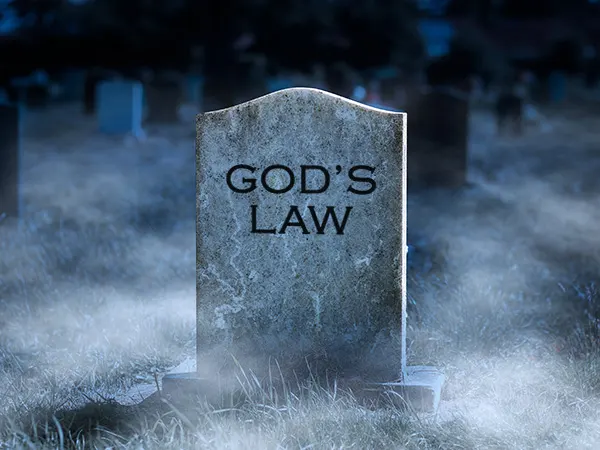
Dead to the Law?
'Ready Answer' by Earl L. HennIn Romans 6:3-7, Paul explains that through baptism, we have been buried with Christ, our old man has been crucified with Him, and we are freed from sin. He illustrates that we are now servants of righteousness, tasked with removing sin entirely from our lives, enabling us to produce godly fruit and grow spiritually. He reminds us that the wages of sin is death, but the gift of God is eternal life. In Romans 6:14, Paul declares that sin shall not have dominion over us, as our past sins are forgiven, and we have access to Christ's atoning grace for future sins, meaning sin no longer has the power to condemn us to death. In Romans 7:1, he clarifies that the law has power over a person only while he lives, indicating that it can condemn us as sinners and to death only during our lifetime. Once we die, the penalty for sin is paid, and the law loses its power to condemn. In Romans 7:4, Paul states that we have become dead to the law through the body of Christ. Just as a woman is no longer condemned as an adulteress if her husband dies, we are not condemned by the law because our old man of sin has died. At baptism, this old self was put to death, and since Jesus Christ died in our stead, the law regards us as having died, thus the penalty for sin is paid, and the law no longer has authority to condemn us. In verse 5, Paul notes that before conversion, our sinful natures placed us under the death penalty, as the carnal mind, hostile toward God, is stirred by knowledge of His commandments to commit even greater sins. In verse 6, he concludes that we are delivered from the law's power to condemn us to death because our old man of sin has died, and Christ has paid the penalty for sin in our place. With God's Holy Spirit, we now serve in the newness of the Spirit, keeping His laws in their full spiritual intent and purpose.
Is God a False Minister?
'Personal' from John W. RitenbaughThose who advocate doctrinal change portray God as a confused and false minister who lacks the power to instruct his chosen leaders to 'get it right.'
This Body of Death
Sermonette byIn ancient times, the corpse of a murdered person was attached to the murderer, allowing the body to decompose until the murderer was infected and died.
Holy Days: Unleavened Bread
Bible Study by StaffThe Feast of Unleavened Bread immediately follows the Passover. In it we see how hard it is to overcome and rid our lives of sin.
Leadership and Covenants (Part Seven)
'Personal' from John W. RitenbaughOur sinful nature drives us to disobey God's laws, just as Adam and Eve transgressed by choosing the way of death. Such choices have made this evil world.

Why We Must Put Out Leaven
Article by Earl L. HennThroughout the New Testament, God uses leaven as a symbol of sin and corruption. Jesus warns against the leaven of the Pharisees, which is hypocrisy. Paul emphasizes the danger of sin spreading by stating that a little leaven leavens the whole lump. He instructs that the purpose of keeping the Feast of Unleavened Bread is to remind us of our need to remove sin from our lives. Because of serious sins within the Corinthian congregation and their acceptance of such behavior, Paul advises them to use the Feast of Unleavened Bread to purge out the old leaven by examining their attitudes and removing these sins from their lives and the congregation. He reminds them that they are unleavened in the sense that they had repented and been justified through faith in the sacrifice of Christ, but since they had allowed leaven to return, they needed to get rid of it. Leaven represents sin, and deleavening our homes symbolizes purging sin from our lives. However, cleansing our lives of sin is a lifetime process that will not be completely fulfilled until we are resurrected and transformed into spirit. As long as we are flesh and blood, we will never be absolutely perfect or free ourselves completely of sin. This constant struggle to overcome human nature is called sanctification, and we must continually strive to conform to the image of Jesus Christ. God wants us to observe the Feast of Unleavened Bread year after year to remind us that we are not perfect and that our lives are a constant struggle against sin. When we deleaven our homes, we find that no matter how hard we try, we cannot find every tiny crumb, illustrating how deceitful sin is and teaching us that we must constantly examine ourselves to purge it from our lives. Removing sin is hard work, and the Days of Unleavened Bread remind us annually of this constant warfare that all Christians must wage throughout their lives. The symbolism of putting sin out of our lives will not be completely fulfilled until we are changed and inherit the Kingdom of God and become like Him who cannot sin.
God, Satan, and David's Numbering of Israel
Sermonette by David C. GrabbeAn apparent contradiction exists between I Chronicles 21:1 stating that Satan moved David to take the census while I Samuel 21:1 says that God did.
Jesus in the Feasts (Part Four): Atonement
Sermon by Richard T. RitenbaughIsaiah 53 and passages from the New Testament substantiate Christ's dual role in shedding His blood and bearing away sins, thereby reconciling humanity to God.
The Elements of Motivation (Part Seven): Fear of Judgment
'Personal' from John W. RitenbaughOur fear of being judged negatively by God should spur us to greater obedience and growth toward godliness. The fear of God is a fundamental mindset.
Reconciliation and the Day of Atonement
Sermon by John W. RitenbaughRepentance is something we must do with our God-given free moral agency. Reconciliation is an ongoing process that enables us to draw closer to what God is.
Death of a Lamb
Article by StaffSince the church no longer keeps the Passover with the slaughter of a lamb, we miss important and poignant details that could enhance our observance.
Wilderness Wanderings (Part One)
Sermon by John W. Ritenbaugh (1932-2023)Israel's trek was not only a physical journey, but a mental wandering caused by rejecting God's leadership. The potential to sin is a test of resolve.
Elements of Judgment (Part Two)
Sermon by John W. Ritenbaugh (1932-2023)None of God's law has been 'done away', though there is not always a literal application. Not every law of God has the same weight of importance.

The Christian Paradox (Part One)
Sermon by Richard T. RitenbaughSalvation is not merely self-identifying oneself as a saint, but it involves rigorously working with God in an arduous process of transformation.
Biblical Principles of Justice (Part One)
Sermon by Richard T. RitenbaughAll authority for law and justice resides in God; when God is taken out of the picture, darkness and chaos dominate. God's laws create a better life and character.
Should We Ignore Our Feelings of Guilt?
Bible Study by Martin G. CollinsMany try to undermine the credibility of Scripture. If they can overturn it, they reason, they will be free to have all the fun non-Christians supposedly have.
The Covenants, Grace, and Law (Part Sixteen)
Sermon by John W. RitenbaughRighteousness consists of applying the Law's letter and/or intent. Sin constitutes a failure of living up to the standards of what God defines as right.
Justice and Grace
Sermon by John W. RitenbaughSometimes we are disturbed, even angered, because an act of God seems unfair. We have difficulty because we do not understand holiness, justice, sin, and grace.
Leadership and the Covenants (Part Seven)
Sermon by John W. Ritenbaugh (1932-2023)All of the sufferings in the present had their origin in the Garden of Eden when our parents sinned, seemingly in secret. The effects of sins radiate outward.
Elements of Motivation (Part Six)
Sermon by John W. RitenbaughEven though sin offers fleeting pleasure, we must learn to intensely hate sin, regarding this product of Satan as a destroyer of everything God loves.
Four Views of Christ (Part 7)
Sermon by John W. RitenbaughOur lives parallel what Christ experienced: crucifixion, burial, resurrection, and glorification. The death of self must precede resurrection and glory.
Communication and Coming Out of Babylon (Part 3)
Sermon by John W. RitenbaughGod commands us to come out of Babylon, giving us spiritual resources to do so, including faith, vision, hope, and love. These come through knowing Him.