


Filter by Categories
Don't Go Out of the House!
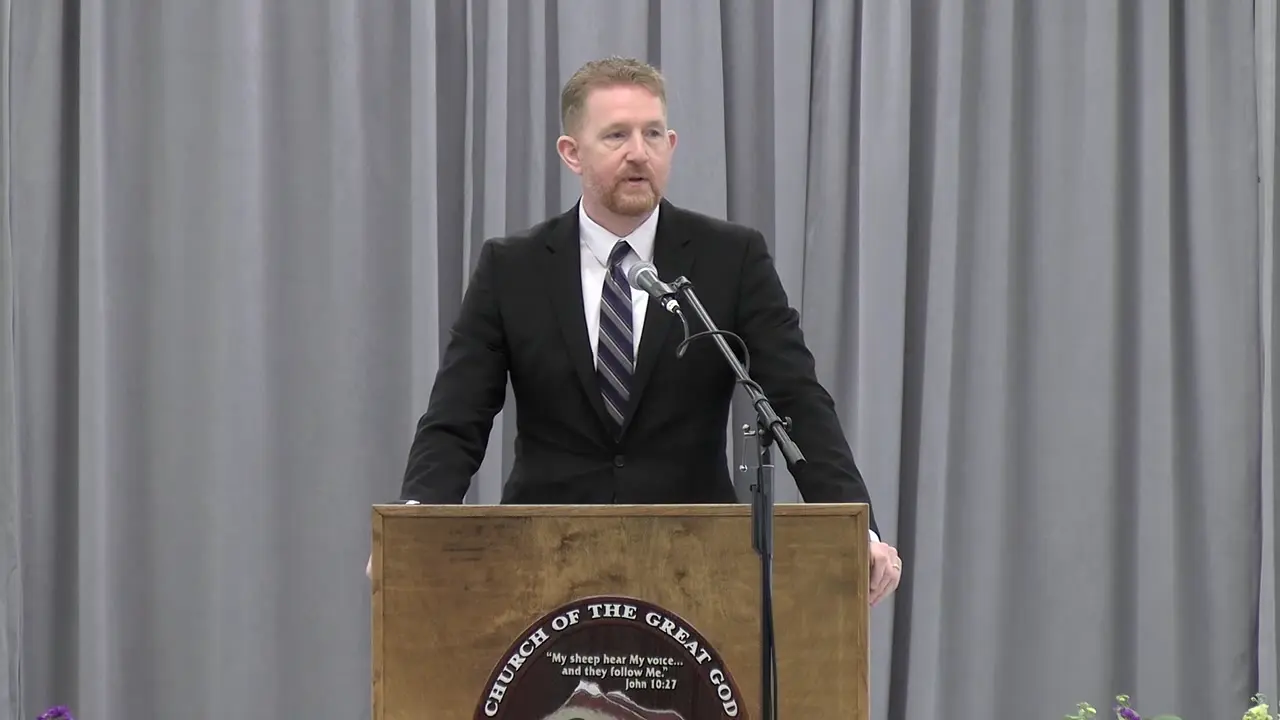
Sermon by John W. RitenbaughThe concept of "House, Symbol of" carries profound significance as a representation of spiritual truths and instructions for God's people. In Exodus 12:22-23, 27, the command "Go not out of the house" is given, where the house symbolizes a place of safety and protection under God's covenant. The door, often used to represent the entire house, underscores this protection, as the blood of the lamb on the doorposts and lintel prevents the destroyer from entering. This imagery illustrates that remaining within the house—spiritually understood as staying within God's will—is essential for safety and deliverance. The term "house" expands in meaning throughout Scripture, representing not just a physical structure but also family, household, dynasty, and kingdom. In Genesis 7, Noah's house refers to his family entering the ark, showing "house" as a container for those under God's care. In II Samuel 7 and I Chronicles 17, God's promise to build David a house signifies a dynasty and kingdom, revealing the broader spiritual implications of the term. This symbolism extends to I Peter 4:17, where God's house is identified as His family or church, the starting point of His judgment, emphasizing the importance of remaining within this spiritual household. Further, in I Peter 2:5, Christians are described as living stones built into a spiritual house, highlighting their integral role in a dynamic, living organism connected to Christ, the Chief Cornerstone. This house is a place of function and purpose, where spiritual sacrifices are offered. I Corinthians 3:9-17 reinforces this, portraying believers as God's building, co-laborers with Him, and a structure being built upon the foundation of Christ. The instruction remains clear: do not leave this house, as departing renders one useless and leads to spiritual death. In Ephesians 2, the metaphor evolves to a temple, a dwelling place for God by His Spirit, with Christ as the cornerstone and believers as fellow citizens in a spiritual community. John 10 introduces the sheepfold as another enclosed structure symbolizing the house, with Christ as the door, providing protection and abundant life to those who remain within. The church, as seen in I Corinthians 12 and Ephesians, is likened to a body with Christ as the Head, illustrating the vital connection and unity necessary for function and growth, further emphasizing the command not to leave. Ultimately, the house symbolizes the church, the family of God, a kingdom, and a living organism where believers are to remain until the morning—until the return of the Light of the world or their own passing. This enduring instruction, rooted in Exodus 12, warns against departing from this spiritual refuge, as there is no higher place on earth than to be within God's house.
Go Not Out of the House
Sermon by John W. RitenbaughThe symbol of a house in biblical context carries profound significance, representing an enclosure or container that holds and protects what is within. It begins with the literal command in Exodus 12:22, "Go not out of the house," given during the Passover instructions, emphasizing the safety found within the house as a place of divine protection. The house symbolizes a barrier against external dangers, ensuring that those inside remain secure if they adhere to God's command. This symbolism extends beyond a physical structure to encompass broader concepts such as household, family, posterity, and dynasty. In various scriptures, the term "house" is used as a metonymy, where the container represents what it contains. For instance, the "House of Israel" or "House of Judah" includes all descendants and kindred, illustrating an expansive spiritual and communal identity. God's house is described as His Family Kingdom, a dynasty that transcends a mere building to embody a spiritual family. The metaphor evolves further in the New Testament, where believers are depicted as living stones being built into a spiritual house, as seen in I Peter 2:5. This house is not static but a dynamic, living organism, with Christ as the chief cornerstone. It signifies that each member is an integral part of the structure, vital to its purpose and connected to the source of life. To leave this house is to risk spiritual death, as one becomes disconnected from the life-giving foundation. Additionally, the house transforms into other enclosures like a temple, a sheepfold, or even the body of Christ, as explored in Ephesians and I Corinthians. In each instance, the principle remains: the enclosure protects and contains, whether it is God's dwelling place, a protective fold for His flock, or the church as Christ's body. The repeated admonition is clear—do not go out of the house, for outside lies danger, while within is safety, purpose, and connection to God's eternal plan.
Don't Leave the House!
Sermon by John W. RitenbaughThe concept of a house in the biblical narrative carries profound symbolic weight, often representing more than a mere physical structure. A house symbolizes a receptacle or enclosure that contains and protects what is within, whether it be a family, a household, or a spiritual community. This idea is rooted in the origin of the word "house," which connects to concepts of hollow, cover, hide, or conceal, as seen in related terms like hole, helmet, and holster, all implying something contained or sheltered. In the context of the Passover, the house represents the entirety of the dwelling protected by the blood on the doorposts and lintel. The door, as a part of the house, stands for the whole through a literary device called metonymy, where one element symbolizes the entire entity. Thus, the blood around the door ensures the safety of the whole house from the death angel, signifying divine protection over all within. Throughout the scriptures, the term "house" is used interchangeably with "household," "family," "posterity," or "dynasty," as seen in references to the house of Israel or the house of David. It encompasses not just a building, but ancestors, descendants, and kindred, illustrating a living, dynamic group rather than a static structure. God's house, similarly, is identified with His children, a spiritual family under His judgment and care. The metaphor of the house extends to a spiritual structure composed of living stones, where each believer is integrated into a vibrant, living community. This spiritual house is built upon a foundation with Christ as the Chief Cornerstone, emphasizing a dynamic organism rather than a mere institution. Each living stone has responsibilities within this structure, contributing to its unity and purpose through spiritual sacrifices and proclaiming the praises of Him who called them out of darkness. The house also symbolizes God's dwelling place, akin to the Temple, where He resides by His Spirit. Believers, as part of this Temple, are co-laborers with God, working on themselves and the structure to become fit for His indwelling. This ongoing process highlights the house as a work in progress, a place of perfecting and polishing each stone to reflect His glory. Furthermore, the house imagery connects to other metaphors like a sheepfold, a body, or a tree, all emphasizing unity and vital connection. Whether as a shelter for sheep with one protective door, a body functioning under one Head, or branches bearing fruit only when attached to the trunk, the house underscores the necessity of remaining within the structure for safety, purpose, and life. To leave the house, to step outside the bloodstained door before morning, risks exposure to destruction, symbolizing the critical need to abide within God's protective enclosure until the ultimate dawn of salvation.

Biblical Symbolism (Part Four)
Bible Study by Richard T. RitenbaughGod employs the familiar imagery of a house to convey spiritual truths about His church. The apostles Paul and Peter use the metaphor of a house to describe the church as a place Christ has built for Himself to dwell. In Isaiah 5, God uses the imagery of a vineyard and a vine to represent the houses of Israel and Judah, later speaking of houses becoming desolate due to sin, particularly greed. From such Old Testament examples, we can discern what Christ, the same God, expects of a spiritual house He inhabits and how He responds if that house fails to meet His standards. Christ admonishes us not to build on sand, but on the Rock, Himself, emphasizing the importance of a firm foundation for the spiritual house.

My House or God's?
'Prophecy Watch' by David C. GrabbeThe symbol of "house" is developed through several biblical examples to illustrate a recurring spiritual danger: the misdirection of focus, energy, and priority away from God and toward personal comfort, security, and self-sufficiency. This theme begins with Christ's rebuke of the Laodiceans, whose self-satisfied claim of needing nothing reveals spiritual blindness requiring eye salve to correct. This same blindness appears in John 7:53-8:1, where the chief priests and Pharisees, unable to recognize Jesus Christ or His work, each "went to his own house," retreating to what was familiar and comfortable rather than following Him to the Mount of Olives—the very place where He will one day return to teach the nations. Their houses represent their concerns, wealth, positions, and sense of security, which they preserved by refusing to submit to Christ, even mocking Nicodemus and dismissing the officers who recognized that "no man ever spoke like this Man." A second illustration comes from Haggai, where God confronts His people for dwelling in their own "paneled houses" while His Temple lay in ruins. The issue was not the possession of houses but misplaced priority: the people neglected the true worship of God, symbolized by the Temple, in favor of personal pursuits. As a result, God withheld blessing from their labor, causing their wages, food, and harvest to amount to nothing until they returned to build His house. These examples extend to a broader application: houses can also represent physical church organizations. Though such organizations serve a necessary and beneficial role in spiritual growth, they must not become the object of focus in place of God Himself. The scattering of the Worldwide Church of God demonstrates that unity within a single organization does not guarantee proper focus on God, just as multiplicity of "houses" does not itself prevent it. The seven churches of Revelation and the seven lamps of Zechariah 4 suggest that the end-time church will not be corporately regathered into one house before Christ's return, yet the Spirit still unifies believers who each pursue right worship within their own settings. The warning drawn from both John 7 and Haggai 1 is that competition among corporate churches, or zealous labor to build up a particular organization, may mirror the ancient error of prioritizing one's own house over the spiritual Temple. The rebuilding of that spiritual Temple—true worship of God in spirit and truth—must precede and inform any structural or organizational efforts. Haggai's account closes hopefully, as the people ultimately obeyed, feared God, and returned to build His house, offering a pattern for correcting misplaced focus: when worship of God takes priority over the houses, in whatever form they take, God's blessing follows and all things are set in proper order.
The Feasts of Tabernacles and Unleavened Bread
Feast of Tabernacles Sermon by David C. GrabbeHouses represent dwellings made to last, complete with foundations that convey stability, certainty, and a settled base from which life proceeds. In the instructions for Unleavened Bread, God repeatedly requires the removal of leaven from houses and the eating of unleavened bread in all dwellings, underscoring that these structures symbolize the new spiritual home He provides after deliverance from Egypt. This home stands in contrast to the instability of spiritual bondage and offers greater permanence than anything the world supplies. The material identifies the spiritual house as Christ's own construction, with believers forming that house provided they hold fast their confidence and hope. Founded and upheld by the Son of God, the house shelters its members from external storms while remaining vulnerable to internal friction arising from remaining carnality. Its continuity across generations demonstrates a sure foundation that physical houses only approximate. The symbol of the house therefore directs attention to Christ as both builder and sustainer, supplying the internal peace and stability that reconcile the permanence pictured in Unleavened Bread with the temporary dwellings of Tabernacles. In both feasts the house imagery ultimately points to dependence on the Deliverer who grants stability amid life's pilgrimage.
Faith and the Christian Fight (Part Eight)
Sermon by John W. RitenbaughAbraham lived his entire adult life without building or owning a house, choosing instead to dwell in tents that lacked any foundation. This choice stood in deliberate contrast to the security, identity, defense, and comfort that houses commonly represent, and it prevented any badge of worldly accomplishment or social standing from defining him. Rather than seeking such things, Abraham regarded God Himself as his shield, exceeding great reward, provider, and protector, a conviction confirmed immediately after he refused the reward offered by the kings of the valley. His tent, pitched wherever he journeyed and always paired with an altar for calling on the Lord, expressed a heart fixed on things above rather than on material possessions or roots in the present world. This pattern revealed that Abraham viewed himself as a stranger and pilgrim whose true hope rested in a city with foundations whose builder and maker is God. Isaac and Jacob maintained the same pattern, never sinking into materialism or forming alliances that would tie them to the surrounding culture. By refusing to build a house, Abraham demonstrated that his loyalty belonged wholly to God and the heavenly country he sought, a disposition that enabled him to live by faith for one hundred years without cultivating friendship with the world. The absence of a house thus became visible evidence that his affections remained set on the Kingdom of God, not on earthly security or status.