


Filter by Categories
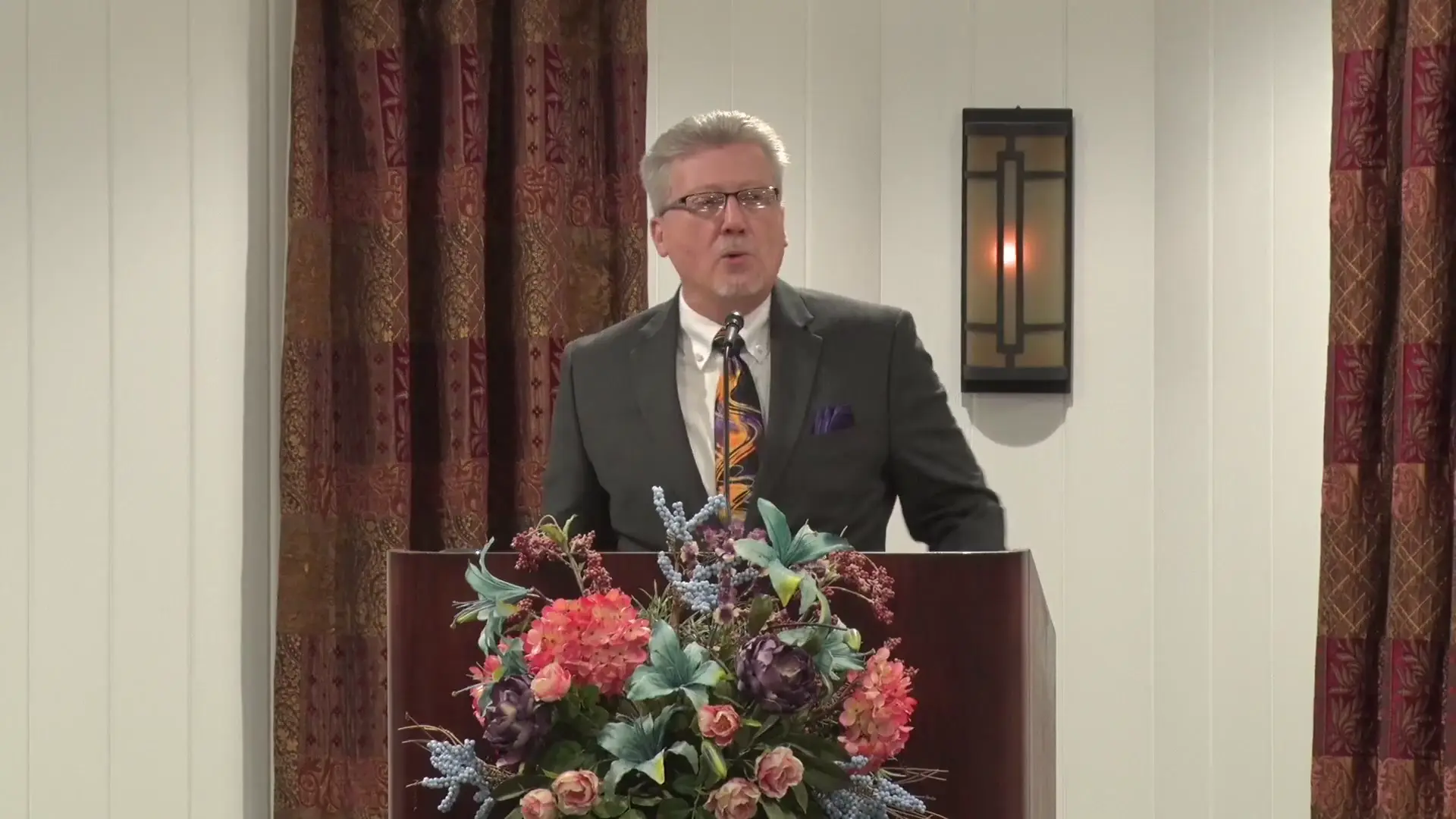
Joshua's Four Miracles (Part Two)
Sermon by Richard T. RitenbaughJoshua stands at the center of this exposition as "the servant of the Lord," a title given him twice in the book that bears his name, most notably in Joshua 11:15, where it is recorded that he left nothing undone of all that the Lord had commanded Moses. This faithfulness is confirmed again in Joshua 24:29-31, where both Joshua and the generation of elders who outlived him are commended for serving the Lord all their days. Joshua is presented as a clear type of Christ, sharing not only the same name but the same essential character: doing the Father's will completely, just as Jesus declared in John 6:38 that He came not to do His own will but the will of Him who sent Him. Joshua's conquest of Canaan is likened to Christ's own conquest over sin, Satan, and the world during His first coming. Yet Joshua is not a perfect type of Christ, for only Christ can perfectly embody Christ. His humanity surfaces clearly in Joshua 9, where he and all Israel were deceived by the Gibeonites into making an unauthorized treaty. This incident becomes a vehicle for four lessons about human leadership in the church: leaders are fallible and can be deceived despite good intentions; they sometimes trust outward appearances and persuasive words rather than investigating thoroughly, contrary to the principle in Proverbs 18:17; they can fail to consult God before making significant decisions, as Joshua neglected to do in Joshua 9:14; and both leaders and their people must live with the consequences of bad decisions, as Israel did for centuries because of the oath sworn to the Gibeonites. Despite this serious lapse, Joshua's single error did not disqualify him from God's service. His record of faithfulness far outweighed this one mistake, illustrating that God does not discard a faithful servant because of one failure, but requires that the consequences be lived out as part of correction and growth. Joshua's leadership becomes the bridge into the larger demonstration of God as divine warrior. Before Jericho fell, the Commander of the Lord's army appeared to Joshua, identifying Yahweh Himself as the true leader fighting Israel's battles. In the hailstorm at Beth Horon and the extended daylight at Aijalon, Joshua's role was to obey, march, and pray, while God Himself executed judgment on the wicked Amorites, fulfilling the prophecy of Genesis 3:15 that the seed of the woman would crush the serpent's head. Joshua's prayer in Joshua 10:12-14, met with the miraculous prolonging of light, demonstrates that God hears and answers the plea of His servant, supplying whatever is needed—whether time, light, or strength—to secure total victory. Ultimately, Joshua exemplifies both the pattern of Christ's obedience and the reality of human leadership under God: fallible, yet faithful; capable of error, yet still usable by God; a servant who left nothing undone of all that the Lord commanded him, and whose example calls others likewise to go forward and conquer.
Trumpets and the Fall of Jericho
Sermon by Richard T. RitenbaughOne major incident involving the blowing of trumpets occurred at the outset of Israel's incursion into Canaan, when God brought down the walls of Jericho.
We Will Serve the Lord!
Sermon by Martin G. CollinsJoshua's deeds were demonstrations of God's power. Joshua charged the leaders to remain courageous, love God and His Law, and serving Him with all their heart and soul.
Life Is Service (Part One)
Sermon by Richard T. RitenbaughThough the American mindset does not feel inclined to serve, outgoing service to others yields the maximum joy and fulfillment one can possibly attain.