


Filter by Categories
Knowing God: Formality and Customs (Part Five)
Sermon by John W. RitenbaughMeeting with God is portrayed throughout Scripture as an occasion demanding deliberate preparation, and the outward act of dressing up or cleansing oneself before entering His presence functions as a visible sign of the internal reverence and holiness such an encounter requires. This principle first appears when Moses, and some forty years later Joshua, were commanded to remove their shoes because it was not fitting for them to stand on holy ground in dirty-soled footwear; their unclean shoes were unsuitable for the presence of God. The same pattern is seen when Jacob, returning to his homeland and preparing to build an altar at Bethel in obedience to God's instruction, told his household to put away their foreign gods, to be clean, and to change their garments, evidently following an already-established custom of dressing appropriately before approaching God. This voluntary preparation contrasts with, yet parallels, the direct command given at Mount Sinai, where God instructed Moses to sanctify the people and have them wash their clothes in preparation for the third day, when He would come down in the sight of all Israel. In both cases, whether initiated by human custom or divine command, the washing of the body and the changing of clothing symbolize that the internal cleansing of the heart is either already accomplished or is in process, representing justification and sanctification. This same requirement governs the priesthood, whose elaborate garments were essential for ministering before God. Aaron could not perform his priestly service without his holy garments, made for glory and beauty, and his sons likewise required specific clothing, including linen breeches to cover their nakedness, so that when they came near the altar to minister they would not bear iniquity and die. The instructions make clear that not just any clothing would suffice for approaching God in worship and sacrifice; one had to be clean and dressed up, never dressed down, in His presence. Notably, as one drew closer to God—moving from ordinary humanity to priest to high priest—the clothing became progressively more distinctive and beautiful, symbolizing how one's character and image of God should likewise develop. This truth culminates in the transfiguration, when Christ appeared before Peter, James, and John in a dazzling, brilliant white so intense that they had to shield their eyes, illustrating the ultimate standard toward which such preparation points. These accounts collectively demonstrate that meeting with God has never been treated as an ordinary or casual occasion; it demands respect for His holiness and honors the dignity of His office as Creator and Ruler. The symbolism did not end with the Old Covenant but continues to instruct, showing that the outward reflects the inward and that God's people must be found properly clothed—spiritually and physically—when they come before Him, just as the fig leaves of Adam and Eve, or the guest lacking a wedding garment, proved insufficient for standing in His presence.
A God Near at Hand
Sermonette byDeists believe that creation proves the existence of God, yet they assert that God has left this marvelous and interdependent creation to manage itself.
Holiness (Part 2)
Sermon by John W. RitenbaughHoly things are set apart from the rest, consecrated, sanctified, and transcendentally separate. God wants to transform us into that very image.
Jesus in the Feasts (Part Three): Divine King
Sermon by Richard T. RitenbaughThe trumpet blast is both a memorial and a proclamation that Almighty God is present, powerful, and personal, reminding us how we must respond.
Sanctification and Holiness (Part 4)
Sermon by John W. RitenbaughThe bronze altar, made with the censers from the rebels, was a reminder of the folly of rebelling against holy things, replacing God's standards with human ones.
We Are Not Just Going Fishing
Sermonette by Mark SchindlerThe Feast of Weeks (Pentecost) calls each person to come before God with a thoughtfully determined offering reflecting both physical blessing and spiritual growth.
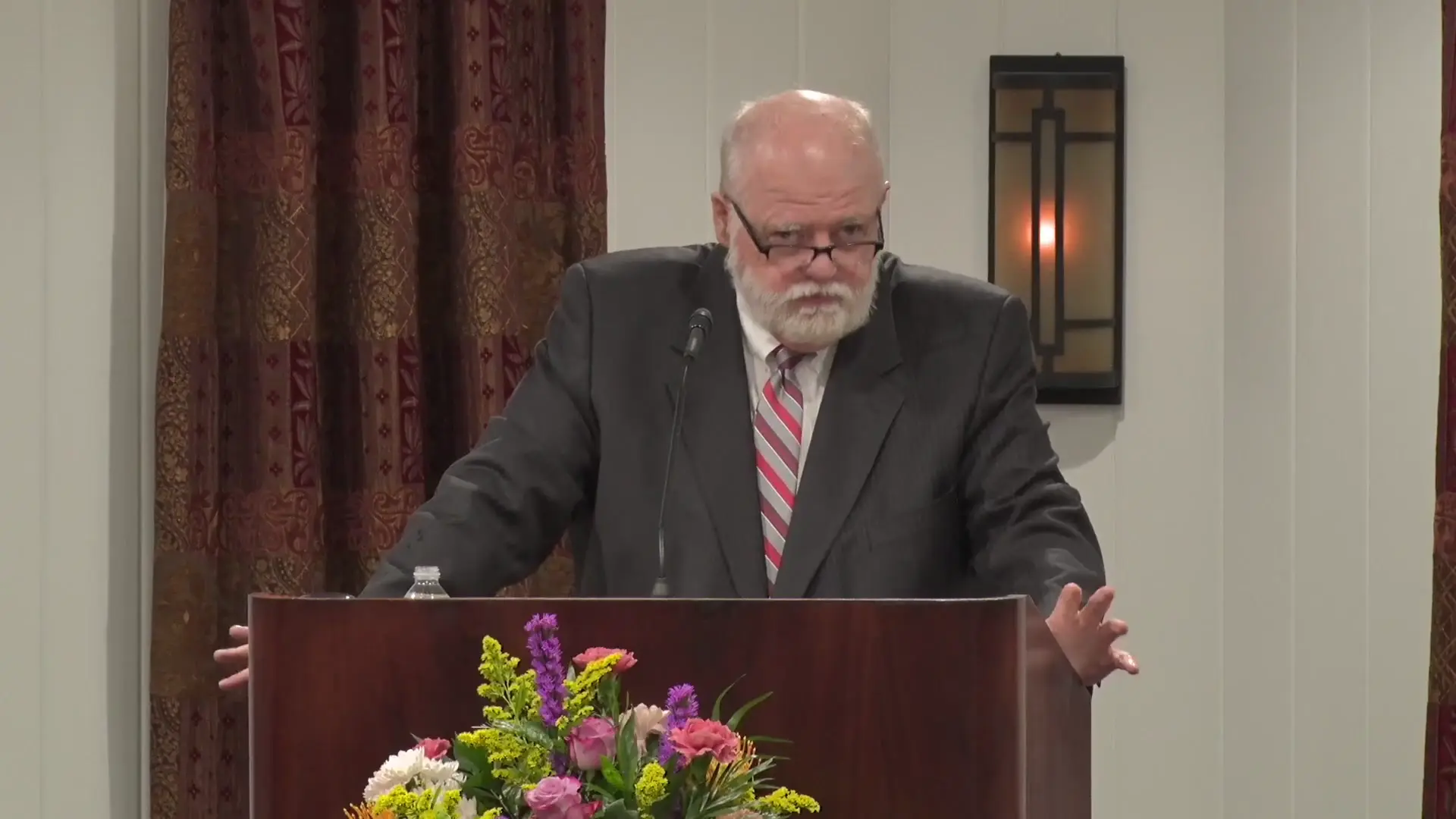
The Sons of Korah: Door Keepers
Sermon by Ted E. BowlingThe doorkeepers standing guard at the entrance of the Temple is a reminder to us today that communion with God is a privilege and should not be taken lightly. There was no need for restrictions into God's presence in the Garden until sin had entered Adam and Eve. The word keep is shamar; it means to keep, to guard and protect. Through the grace of God, He found a way still to have fellowship with man. When God had turned away Adam and Eve, He still found a way to commune with them. It was not directly anymore, but He did find a way to have fellowship with them because holiness demands respect. And through our sins, we could not come in direct contact with our God. So God made a way. For example, Moses when he was at the burning bush, he could only come so close; he had to take off his shoes because he was standing on holy ground. And then, when Moses spoke to God face to face, Moses could not see His face. He could only be so close. God at Sinai told Moses to put limits around the mountain because whoever would touch it would be put to death. And so, when they entered into the wilderness, God found a way to be in the midst of His people, and God instructed Moses to build the Tabernacle. This was to be a physical sanctuary so He could dwell directly with His people. This dwelling place functioned as actually a mobile meeting place, allowing God to lead them, interact with them, and reside in their midst. God established the means for fellowship despite our human impurity. God set apart the tribe of Levi to help the priests, to do the performances of the Tabernacle. And this is where the institution of the gatekeepers begin. Phinehas was zealous for God. Because he protected the holiness of the camp, the chief guard, this gatekeeper, it does have atoning value. Psalm 84 speaks of the devotion that the sons of Korah had for this dedication to their job and the seriousness of this duty. They understood that the most humble place that they could be is in the presence of the Almighty God. The sons of Korah countered it by displaying complete humility because they did not focus on position. They focused on service. Today in the New Testament, it says that the Temple of God is no longer a building. It is you. The apostle Paul tells us that our bodies are the Temple of God through His Holy Spirit. Now there is only one perfect doorkeeper. There is only one perfect gatekeeper and He loves us dearly. And that is Jesus Christ, because He laid down His life for us. Jesus Christ is the legitimate gate into God's presence. And He is a gatekeeper that will not allow any unclean thing. And it is by His sacrifice, by the shedding of His blood, that we even have the opportunity to come into God's presence. But every one of you is a spiritual gatekeeper. You should be on guard against the wickedness that we deal with on a daily basis. Through the Holy Spirit, you have been given discernment, the ability to recognize what comes from God and what comes from satan. And we must have the courage to slam the door on what comes from satan. Satan is working continually to capture us, to get in the gate and to corrupt us by attacking our senses to get into our heart, and he will use every tool he has to break through our will and break our relationship with God. Keep thy heart with all diligence; for out of it are the issues of life. Here, again, we have that word keep, and also it means, again, to protect and to watch over your heart with diligence. God shows us that He is our guard and protector. Through this chapter six times He uses the word keep or preserve, and it is that verb again for shamar, meaning to guard, to keep, watch over, preserve. We have a God that loves us so much, and it is beyond all human understanding. But we have a part to play. We must be active doorkeepers of our hearts. The sons of Korah learned that true honor is not fighting for the spotlight but in guarding the house, guarding the doors of God's presence. T
Pentecost and Time
Sermon by Richard T. RitenbaughBecause of our 'time-bound' state, unless we sync with God's timetable, we are squandering our God-given time to become members of His family.
Christ's Revelation of the Father
Sermon by Richard T. RitenbaughJohn 1:1-3 reveals Jesus' pedigree as the Logos (Spokesman), whose function was to declare or reveal the Father. He had existed with His Father from eternity.