


Filter by Categories
Baptism and the Last Day of Unleavened Bread
CGG Weekly by Ronny H. GrahamBefore Jesus Christ's ministry began, John the Baptist came preaching in the wilderness about repentance from sin and baptism. Water rituals like baptism were common in antiquity, and God instructed the Levitical priests to use water in many of the purification rituals, for instance in the cleansing of a leper. We tend to think of baptism as a New Testament thing, but it can be found early in the Old Testament. On the last day of Unleavened Bread, God symbolically baptized the children of Israel as they went down into the Red Sea during the night and stepped out of their watery grave the next morning. As they looked behind them in the dawn, hundreds of Egyptian soldiers and horses lay dead along the shore, and many others floated in the waves. They could literally see that God had destroyed those who had oppressed them for hundreds of years. The Egyptians would never again be able to afflict them in any way, as God had washed away and destroyed what had enslaved them. They were clean and free. Seeing this, the Israelites feared God and broke into a song of praise to the Lord. Even this baptism of the Israelites in the Red Sea was not the first baptism recorded in Scripture, although the earlier event is mentioned as a baptism only in the New Testament. The apostle Peter mentions Noah and his family being saved through water and Christian baptism being its antitype. In the Flood story is an example of baptism by water, when the world of that time was cleansed of sin by the destruction of all humanity but for eight people. The entire earth was plunged into a watery grave, and only Noah's family rose out of it to new life. There might have been an even earlier baptism when the earth was covered with water at Creation. God may have baptized the earth to cleanse it of the sins of the angels who did not keep their proper domain. Genesis 1:2 informs us that the earth was covered in water, and on the third day God gathered the waters into seas to let the dry land appear. Earth rose out of the water cleansed and prepared for new life. From these examples God seems to begin every instance of new life and new creation with a baptism, a cleansing in water for the remission of sins, making baptism an essential and vital early step in His creative work with humanity. The children of Israel were indeed baptized in the sea, and God swept their slavery away. They came up from the Red Sea singing for joy at the victory God gave them. But they could never see past their physical needs and fleshly desires. Almost none of them ever received the baptism of the Holy Spirit, and so, without genuine faith in God, they all died in the wilderness, never entering the Promised Land.
The Wonderful Ordinance of Water Baptism
Sermon by Martin G. CollinsBaptism symbolizes a burial and resurrection, or the crucifixion of the carnal self. After a person realizes his ways have been wrong, he should counsel for baptism.
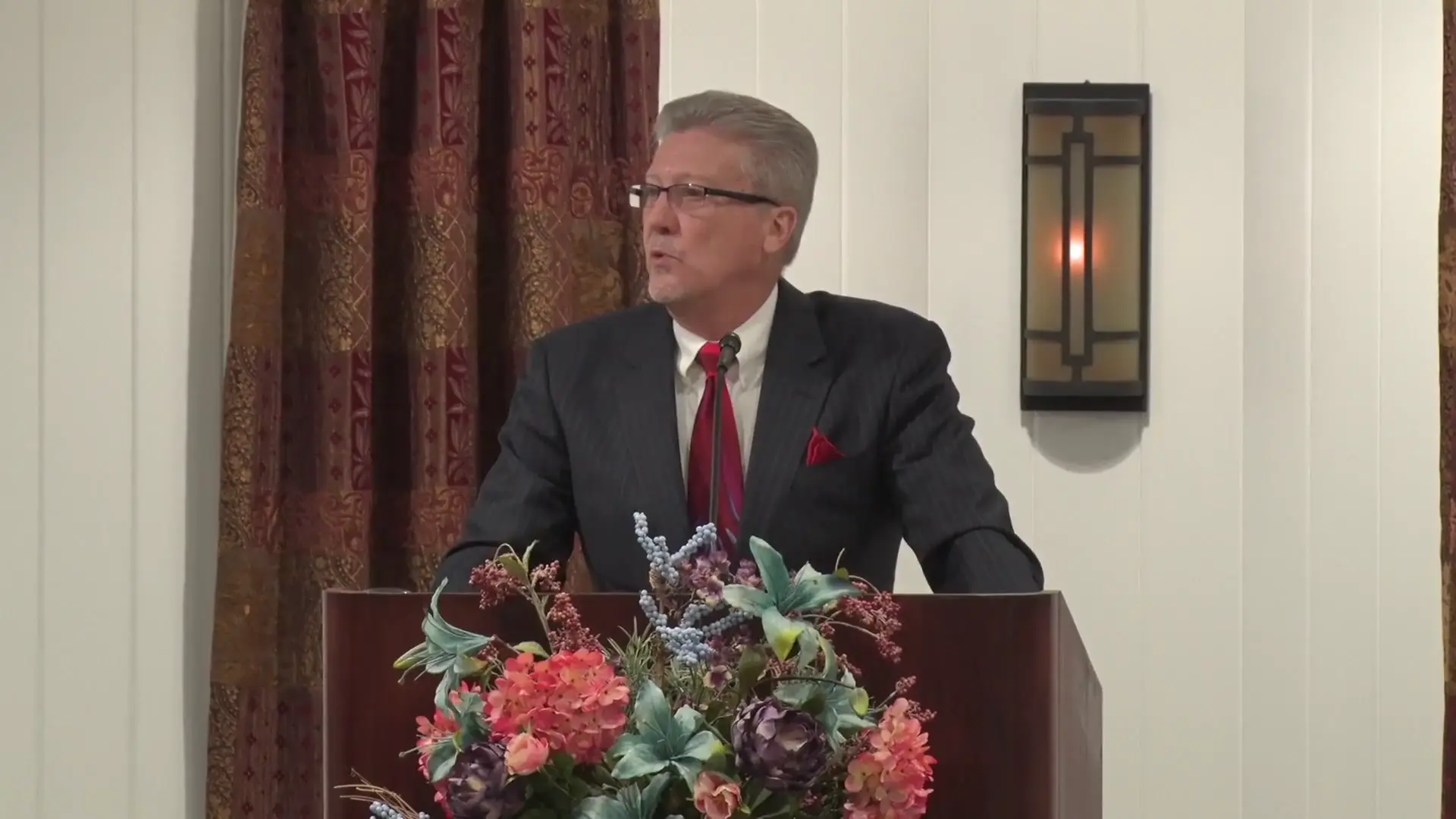
John 3:16 in Context (Part Two)
Sermon by Richard T. RitenbaughBaptism, as understood in relation to the Old Testament, receives specific treatment through the account of the dispute between John the Baptist's disciples and the Jews recorded in John 3:25-26. This dispute arose over the practice of purification, and it reveals crucial distinctions between Old Testament ritual washing and the baptism that Jesus Christ would later command His followers to perform. The Jews of that era did practice a form of baptism, but it served solely as ritual purification. They employed mikvahs, structures with steps leading down into water and up the other side, through which a person would pass to become ceremonially clean enough to enter the Temple and offer sacrifices. This practice paralleled other ceremonial washings mentioned in Mark 7:2-4, such as the washing of hands before eating, cups, pitchers, copper vessels, and couches. These were acts of ritual cleansing rather than anything connected to the forgiveness of sins. John the Baptist's baptism, by contrast, was described in Mark 1:4 as "a baptism of repentance for the remission of sins," the same type of baptism Peter later commanded in Acts 2:38. This represented something new in Judea. The Jews likely argued with John's disciples that such a baptism—one claiming to remit sin—had no basis in the Law, that nothing in the Pentateuch supported the idea that baptism could cleanse a person of sin. On this point, the Jews were correct: baptism itself cannot cleanse anyone of sin, only Christ can accomplish that, and indeed no explicit Old Testament command exists instructing baptism for the remission of sin. This distinction is clarified further through Paul's encounter in Acts 19:1-6, where he recognized that John's baptism, though pointing toward repentance, was merely symbolic and preparatory. It anticipated the coming of Christ but was not spiritually effective in itself, since it was not performed in Jesus' name nor connected to the remission of sins through His sacrifice. Consequently, those who had received John's baptism required rebaptism in the name of Jesus Christ, followed by the laying on of hands, in order to receive the Holy Spirit. John's baptism thus functioned as a forerunner and precursor to the true baptism practiced within the New Covenant church, foreshadowing but not accomplishing the actual spiritual transformation that comes only through belief in the Son of God. This distinction between Old Testament ceremonial washing and New Testament baptism unto salvation illustrates a broader principle emphasized throughout the study: that complex theological truths cannot be reduced to isolated proof texts. Just as John 3:16 alone cannot convey the entirety of the salvation process, understanding baptism requires tracing its development from Old Testament ritual purification through John's transitional baptism of repentance to its fulfillment in Christ, where true cleansing from sin and the receiving of God's Spirit finally become possible.