


Filter by Categories
Speaking With Boldness
Sermonette by Christian D. HunterWhen we speak and perform an action for God and His glory, we are to perform it with boldness, praying to have the courage of scriptural examples.
Dreaming Big
Sermonette by Hunter D. SwansonDreaming big does not have to mean desiring fame and fortune, but instead aspiring for a meaningful life that aligns to God's plan and trusting God's will for us.
What Do You Fear? (Part Two)
CGG Weekly by David C. GrabbeFear can be broken down into two broad categories: the fear of God and the fear of everything else. If we fear God, we will not need to fear anything else.
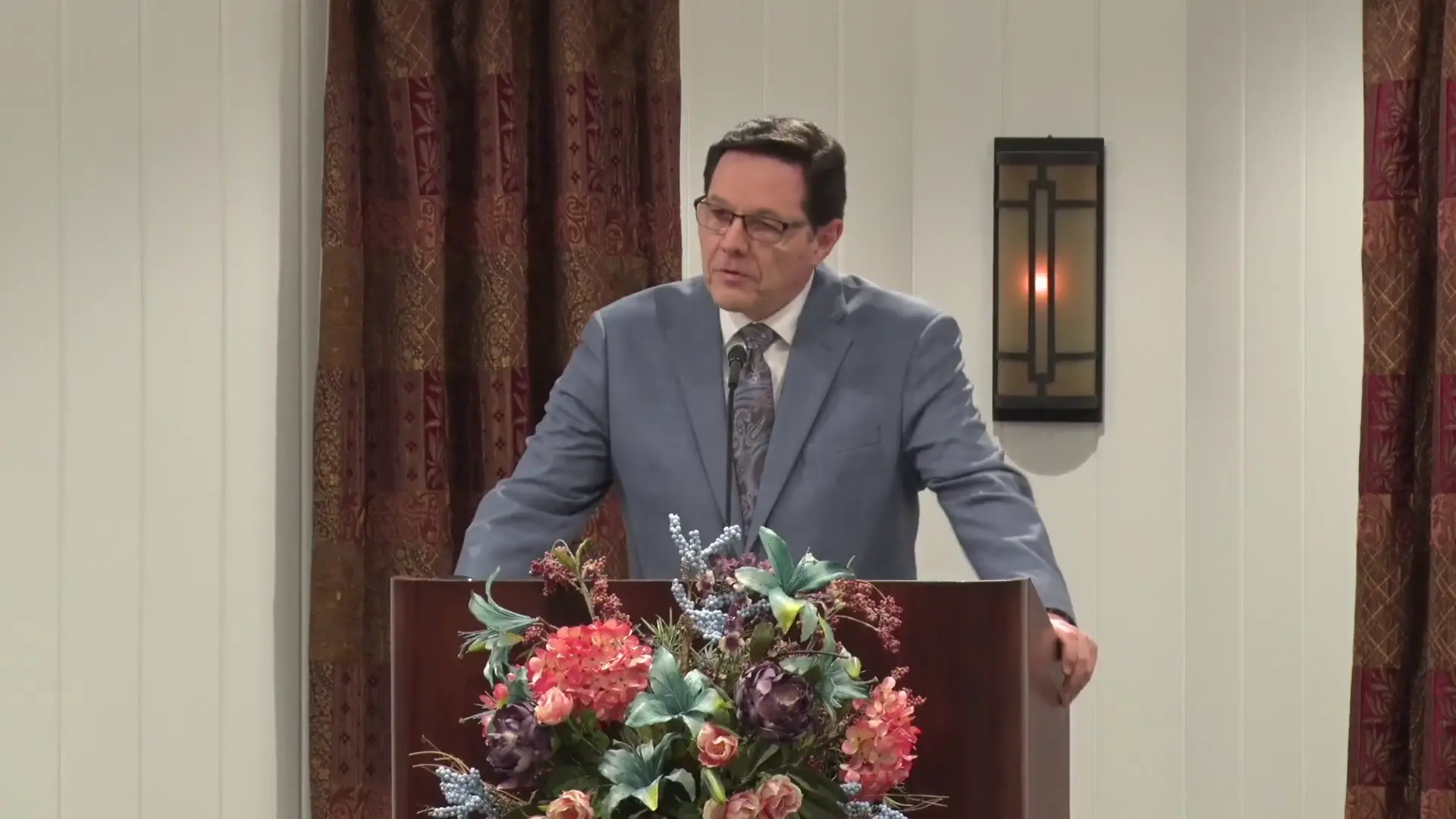
How Fear Resists Faith
Sermon by Martin G. CollinsGod has not given His people a spirit of fear but of power, love, and a sound mind. This truth counters the fear of the unknown that can grip even faithful believers, paralyzing faith and rendering them ineffective when facing uncertainty, future trials, or personal weakness. Fear arises naturally from human temperament, which varies widely among individuals and remains largely unchanged by conversion, though it must never control the Christian. Those prone to anxiety may dwell on potential failure, persecution, or the weight of their calling, comparing their limitations to the greatness of God's work and lapsing into self-focused worry that Scripture distinguishes from wise planning. The remedy lies in stirring up the gift of God already received. The spirit of power enables the timid to act with boldness, as seen when Peter, once fearful, stood before authorities filled with the Holy Spirit. The spirit of love shifts attention outward to God and others, displacing self-concern that fuels fear and freeing the believer to serve sacrificially without regard for personal loss. The spirit of a sound mind provides self-control, discipline, and balanced judgment, preventing the mind from being mastered by imagined threats or past failures. These provisions connect directly to the broader call to walk by faith rather than human reasoning. God remains faithful, having begun a good work and committed Himself never to leave or forsake His people. Therefore believers are to live fully in the present, relying on the indwelling Spirit to overcome temperament, endure opposition, and fulfill their responsibilities without being governed by anxiety about tomorrow.
The Essence of Servant Leadership
Sermon by Mark SchindlerFearlessness emerges as a defining trait of true self-sacrificial servant leadership, illustrated most vividly through the examples of Brigadier General Theodore Roosevelt Jr. and Sergeant Walter Ehlers during the D-Day invasion of Normandy on June 6, 1944. Roosevelt, described as "virtually fearless" and "immune to fear," exemplified this quality throughout his military career. Despite being fifty-six years old, suffering from crippling arthritis, and requiring a cane to walk, he repeatedly petitioned to join the first assault wave at Utah Beach rather than remain in safety. General Bradley warned him directly that he would likely be killed in the role, yet Roosevelt never replied to the warning, choosing instead to act on his conviction that his presence would steady untested troops. His fearlessness was not reckless but purposeful: he reasoned that if a general was willing to go in with the assault companies, the men would trust that "it can't be that rough." This willingness to face mortal danger for the sake of those under his care became a visible expression of his broader philosophy that "a good officer takes care of his men" rather than merely directing them from safety. Once on the beach, Roosevelt's fearlessness continued to manifest through calm, deliberate action under fire. He "calmly ignored enemy fire" while scouting for causeways, rallying disoriented troops, and personally leading a charge over the seawall—all while in visible pain from his leg. His steady presence, courage, and complete unconcern for personal danger inspired the soldiers around him to their own acts of self-sacrifice, directly linking his fearlessness to the effectiveness of his servant leadership. This fearlessness was not confined to a single day; even while hospitalized with pneumonia and a raging fever, he broke out of medical care to report for duty, refusing to let physical weakness prevent him from fulfilling his commitment to those he led. Sergeant Walter Ehlers demonstrated a parallel fearlessness on Omaha Beach, where he single-handedly charged an enemy patrol that had ambushed his platoon, killing four soldiers before the enemy could react, and then personally led a bayonet charge against two machine gun nests and a mortar position, destroying all three. Every man in his squad and platoon survived under his fearless, decisive leadership, even as he later learned his own brother had been killed on the same beach that same morning. Both examples reveal that fearlessness, when joined to humility and genuine concern for others, becomes an instrument of sacrificial service rather than mere personal bravado. This connects directly to the broader call for believers to practice self-sacrificial servant leadership after the pattern of Jesus Christ, who "gave up all His rights and privileges as God" and did not come to be served but to serve. Just as Roosevelt and Ehlers set aside concern for their own safety to protect and inspire those entrusted to their care, all who are called to servant leadership must learn to act without being paralyzed by fear, trusting that faithful, courageous sacrifice—regardless of the scale of one's gifts or position—produces an impact for the glory of God that may exceed even the most celebrated acts of human heroism.