


Filter by Categories
Did the Pharaoh of the Exodus Drown in the Red Sea (Exodus 14:28)?
Bible Questions & AnswersThe most conservative scholarship identifies the pharaoh of Egypt at the time of the Exodus around 1446 BC as Amenhotep II, who reigned from 1450 to 1424 BC. This ruler did not perish with his army during the pursuit of Israel. Psalm 136:15 records that God overthrew Pharaoh and his army in the Red Sea, employing the Hebrew term na'ar also found in Exodus 14:27. The word denotes a shaking off rather than drowning or tumbling in the water, as illustrated by its use in Nehemiah 5:13 to describe shaking out the fold of a garment. These passages therefore indicate that God shook off the Egyptians, Pharaoh included, from their pursuit of the Israelites without specifying who drowned. Exodus 14:28 states that the waters covered all the army of Pharaoh yet makes no mention of Pharaoh himself. Exodus 15:19 likewise notes that the horses of Pharaoh went with his chariots and horsemen into the sea and that the LORD brought the waters back upon them, referring to the collective forces belonging to Pharaoh without indicating that Pharaoh's own person or mount drowned. The absence of any reference to the death of so prominent a figure is noteworthy, since the Old Testament records the deaths of many less significant enemy kings. Archaeological evidence confirms that Amenhotep II continued to rule for approximately twenty-two years after the Exodus, aligning with the biblical portrayal of his survival.
Is the Passover Just a Sin Offering? (Part Two)
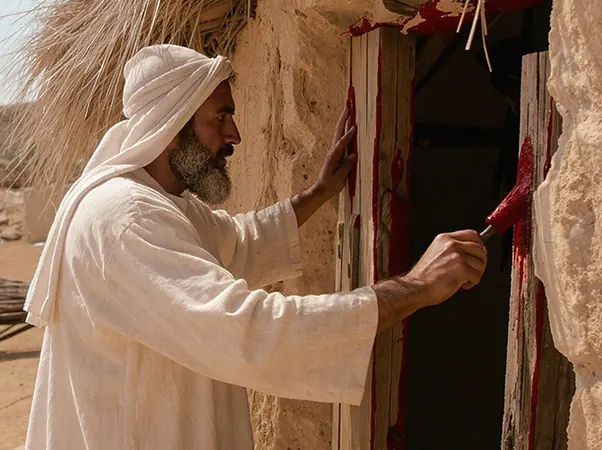
Article by David C. GrabbeThe material presents Pharaoh as the figure from whom Israel was redeemed during the Exodus, establishing that the Passover blood on the doorposts signified deliverance from bondage rather than atonement for sin. Scripture consistently describes Israel's redemption in terms of being purchased or bought back from Pharaoh, never as being redeemed from sin through the Passover itself. This distinction is foundational to understanding the true meaning of the Passover blood. The relationship between Israel and Pharaoh is explained through Israel's legal condition in Egypt. Under Joseph's administration, Pharaoh became the sole owner of all Egyptian land, seed, and people, and though Jacob's household enjoyed favor while Joseph lived, a new king arose after Joseph's death who did not know him. This new Pharaoh, fearing Israel's growing numbers, subjected them to harsh slavery. Israel's gradual subjugation may have stemmed from their own idolatry, yet God eventually heard their groaning and remembered His covenant with Abraham, prompting His intervention. The confrontation with Pharaoh becomes central to the Passover narrative through God's declaration to Moses: Israel is My son, My firstborn... let My son go that he may serve Me. But if you refuse to let him go, indeed I will kill your son, your firstborn. This sets up the direct conflict between God's claim on Israel as His firstborn and Pharaoh's claim on Israel as his subjects and property. When Pharaoh refused to release Israel, the judgment of the firstborn extended to all in the land of Egypt, placing Israelite firstborn under the same threat unless marked by the blood. The blood on the doorposts thus functioned as the sign distinguishing those redeemed from Pharaoh's dominion from those under Egypt's judgment. Without the blood, Israelite firstborn would have shared in Egypt's fate; with it, they had life and were spared. This redemption was not a payment for Israel's sins but a legal transfer, a buying back of Israel from Pharaoh's ownership so that they might serve God instead. The Hebrew term for Passover, pecach, meaning exemption or pretermission, reinforces this idea that God passed over and overlooked Israel's transgressions during this deliverance without addressing atonement. This redemption from Pharaoh is portrayed as an act of mercy rooted in God's covenant faithfulness to Abraham rather than in Israel's righteousness. God's promise to curse those who cursed Abraham's descendants found fulfillment in His judgment upon Egypt and Pharaoh, while His promise to bring Abraham's offspring out with great possessions was fulfilled through their deliverance from Pharaoh's bondage. Paul's reference in Romans to God raising up Pharaoh to display His power and make His name known further ties Pharaoh's role to God's larger redemptive purposes rather than to a system of sin-payment. Ultimately, Pharaoh represents the oppressive power and legal claim from which God redeemed His firstborn nation, Israel, in fulfillment of His covenant with Abraham. The Passover blood marked this redemption from Pharaoh's authority and impending judgment, not the removal of sin, distinguishing the Exodus Passover from a sin offering and pointing instead toward a different sacrificial category tied to covenant deliverance.
Moral Purity
Sermon by James BeaubelleThe urgency to live righteously, striving for godly character is a continuous, ongoing, and vital pursuit not concluded until our death and resurrection.
Seeing the Invisible
Sermon by Richard T. RitenbaughImagination, coupled by the power of the Holy Spirit, helps us to understand the power and reality of the invisible. Faith as a concept is immaterial.

Spiritual Blindness (Part Three): Choosing a Curse
'Prophecy Watch' by David C. GrabbePharaoh of the Exodus illustrates the principle that sin produces spiritual blindness, which God may then intensify as a curse. Pharaoh first exercised his free moral agency by choosing to continue the oppression of Abraham's descendants that his predecessor had begun, persisting in this course for multiple decades without any divine interference in his decision. In response, God hardened Pharaoh's heart, a form of blindness that caused him to make repeated poor choices leading to his own destruction, even as Pharaoh also hardened his heart through his own actions. This sequence fulfilled God's earlier promise to harden Pharaoh's heart and aligned with the divine commitment to curse those who curse Abraham's descendants. Pharaoh's desire to dominate and control God's people became a snare from which he could not later escape, demonstrating that individuals may select their course but cannot dictate its consequences. His example connects directly to the broader pattern in which rejection of truth leads to darkened understanding, whether through self-blinding or God's judicial response of giving people over to further delusion and debased thinking.
A Contrast of Kings
Feast of Tabernacles Sermon by Richard T. RitenbaughPharaoh appears in the narrative as the Egyptian term for king, denoting the ruler over the greatest house of the kingdom. In the account from Genesis 12, Pharaoh learns of Sarai's beauty while she is sixty-five years old and takes her into his harem, acting as a kidnapper with evil intentions toward her. This episode is presented immediately after the description of Nimrod's expansion of his realm through coercion and warfare, establishing Pharaoh as a second example of a carnal ruler who seizes what he desires by force. The text places both figures before the first explicit use of the word king in Genesis 14, showing that the initial biblical portrayals of kingship involve rebellion against God, theft, and domination. These actions illustrate the broader pattern of earthly monarchs who expand control, plunder, and subjugate others to increase their own power and wealth. The account then contrasts such rulers with the godly kingship modeled by Melchizedek, who serves and blesses rather than takes, thereby setting the standard that God's called servants must follow if they are to exercise righteous and peaceful leadership in His kingdom.
Godly Sorrow
Sermonette by Martin G. CollinsPeople may feel grieved about loss of friendship, property, feel shame, disgrace, and even guilt, but if the behavior doesn't change, it is unproductive.