


Filter by Categories
Happy Father's Day
Commentary by Mike FordFathers play a crucial role in the family as part of God's plan, intended to love and respect their wives while leading the family in following Him. However, the modern world often portrays fathers negatively, depicting them as inept, bumbling, or uncaring, which undermines their importance. Many children grow up without fathers, facing increased risks of poverty, drug use, violence, lower academic performance, and suicide. Despite these challenges, even a poor father is seen as better than no father at all, as he can grow into the role and improve, God-willing, providing a presence that a mother alone struggles to fill. Fathers are essential, bearing the responsibility to be godly husbands and fathers, taking accountability for their actions. Father's Day serves as a meaningful occasion to recognize fathers and father figures for their contributions to families and society, acknowledging their vital presence even when they may feel overlooked.
Fatherhood
Sermonette by Ryan McClureWhen we were single, we had all the answers to the art of parenting, but actual practice humbles us as to how ill-equipped we are for this task.

Father Knows Best
'Ready Answer' by Mike FordWhat has happened to fathers in our society? The role of fathers has diminished significantly in Western civilization, with many men reduced to mere sperm banks. The basic building block of society, the family, is being destroyed, and much of the blame falls on fathers who fail to fulfill their responsibilities. Increasingly, families lack a father, or if present, he does not properly fulfill his role. In many cases, one-parent families are led by the mother, with 90% of divorces in America awarding sole custody to mothers. Some 35% of children live apart from their biological fathers, and the likelihood of a child living continuously with a biological father through age 18 is alarmingly low. Husbands and fathers have abandoned their God-given responsibilities as leaders, guides, and maintainers of standards in their families, leaving wives and children to fill the void. Without fathers as the final arbiter, families become chaotic, and children grow out of control, often becoming insolent toward elders. While mothers handle much of the day-to-day childrearing, the support and strength of a father are essential to raise balanced, obedient children. Fatherlessness consigns children to poverty, increases the likelihood of hypermasculinity and violence in boys, and deprives neighborhoods of the stabilizing presence of good family men. Fathers face subtle undercutting from society, with media portrayals often showing them as bumbling idiots or uninterested in fatherhood, while wives are depicted as smart and kind. Fathers have been given the responsibilities of providers, protectors, and leaders, roles that can be thankless and grueling, yet they need support, understanding, and appreciation from wives and children. Fathers must fill their role with self-control, not provoking their children to wrath, but raising them with discipline, instruction, and guidelines in the way they should go, ensuring they do not depart from it even in old age. How well fathers fulfill these responsibilities will partly determine their place in the Kingdom of God. In families, fathers must stand firm in God's Word, ignoring a society that has largely replaced them with welfare systems, and pray daily for God's Holy Spirit to grant the strength and wisdom to do their jobs correctly.
Why Bother With Fathers?
CGG Weekly by Richard T. RitenbaughSociety's definition of fatherhood seems to be dwindling toward the idea of sperm donation and little more. The father might be replaced or not, depending on the whim of the mother. God did not create the family to work this way. He is very clear in establishing the marriage relationship as the basis of the family. Like mothers, fathers are a vital part of the equation whose sum is a well-rounded, secure individual. True, not all fathers are good fathers, but more often than not, a father in the home creates a better environment for raising children than a home that lacks one. And the more the home's father and mother love each other and expand their love to their children, the better the environment becomes.
Fathers Provoking Children
Sermon by Richard T. RitenbaughFathers hold a significant role in the family structure, carrying immense power and responsibility over their children. They are instructed not to provoke their children to wrath, but to bring them up in training and admonition, balancing their authority to avoid abuse or neglect. This means setting limits on their power, ensuring they do not overburden or enslave their children with excessive demands, which could lead to anger or other negative emotional responses. Fathers must be cautious in how they wield their authority, recognizing that constant provocation can cause a spectrum of reactions, from wrath to discouragement, potentially leading to behavioral issues or deep-seated emotional problems like depression or lack of confidence. The responsibility of fathers is monumental, as they can shape or break their children's character and attitudes. Children often view their fathers as figures akin to God in their early years, completely trusting and looking up to them for guidance, discipline, and example. Fathers' moods, attitudes, and actions serve as models that children emulate and pass on to future generations, making parenting a vital and weighty task that demands constant attention and prioritization. However, the example of King David illustrates the consequences of neglectful parenting. Despite being a man after God's own heart, David failed to rebuke or question his children's actions, remaining uninvolved and prioritizing his kingdom over family. This benign neglect contributed to severe character flaws and tragic outcomes in his children, such as Absalom's rebellion and narcissism, Amnon's predatory behavior, Tamar's withdrawal, Adonijah's scheming, and Solomon's self-indulgence. David's lack of discipline and presence in their lives bore significant responsibility for their negative paths. Fathers can provoke their children through various detrimental behaviors: being absent physically, emotionally, or spiritually, which drives children to act out due to lack of guidance; acting solely as disciplinarians without showing love or multidimensional personality, breeding anger; taking more than giving, focusing on personal gain rather than the child's needs; criticizing more than encouraging, deflating a child's spirit; publicly humiliating them, causing hurt and resentment; being stingy with time or resources, making children feel worthless; and failing to admit mistakes, appearing hypocritical. Instead, fathers should be involved, encouraging, generous, and humble, fostering a positive environment for their children's growth.
The Bible's Roles for Men
CGG WeeklyThe Bible provides specific guidance for fathers in their roles within the family. Fathers are instructed to nurture and guide their children with care, as seen in Ephesians 6:4 and Colossians 3:21, ensuring they raise them in a manner pleasing to God. Additionally, in I John 2:13-14, fathers are encouraged to be examples of spiritual strength and maturity. These instructions emphasize the importance of a father's role in maintaining a balanced and godly household, prioritizing family alongside devotion to God, work, and the church.
Boys to Men: The Father-Son Crisis
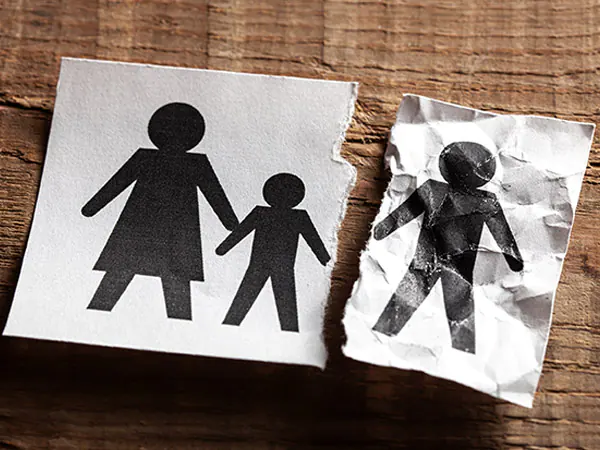
'WorldWatch' by Joseph B. BaityYoung men and boys in America are facing a crisis, struggling to find their God-ordained roles in society, exacerbated by the absence of biological fathers in many homes. Statistics reveal that nearly one in three children, with higher percentages among African-American and Hispanic communities, grow up without their fathers, leading to increased risks of truancy, criminal activity, substance abuse, unemployment, and poverty. This absence contributes to generations of boys who are over-mothered and under-fathered, lacking strong male role models. As a result, these young men face academic challenges, social disconnection, and higher rates of depression and suicide, while modern culture often portrays men negatively and undermines traditional gender roles. The solution lies in returning to God, recognizing that He created male and female in His image, and declared His creation very good.
Our Father
Feast of Tabernacles Sermon by John O. ReidThe absence of fathers has reached epidemic proportions in society, producing a generation lacking respect and moral grounding. Fathers must move beyond their common self-image as mere breadwinners and embrace their fuller responsibilities as nurturers, disciplinarians, mentors, and moral instructors. Through distinctive rough-and-tumble play, fathers arouse intense emotions in children, training them to regulate feelings essential for social harmony. When fathers are actively involved, children remain longer in school, cope better with frustration and failure, sustain relationships and marriages longer, and develop higher self-esteem; the fathers themselves become happier and more stable at work and home. Scripture underscores this priority by declaring that before the great and dreadful day of the Lord, hearts of fathers must be turned to their children and the hearts of children to their fathers. God sent John the Baptist in the spirit and power of Elijah to begin this restoration, and Jesus Christ came specifically to reveal the Father so that those called might understand the intimate relationship God desires. As a father, God provides instruction, equips His children through chosen servants, corrects them for their profit that they may share His holiness, and gradually relaxes direct control as they mature, expecting them to stand on their own while remaining under His authority. This training produces the same mind, character, and service seen in Jesus Christ, preparing each one to be fully conformed to the Father's nature.
Parenting (Part 2): Fathers
Sermon by Richard T. RitenbaughThe role of fathers centers on imitating God the Father, who has revealed Himself as the head of the divine family and the source from whom the entire household in heaven and earth derives its name. Human fathers serve as the central authority in the physical family, positioned under Christ, with ultimate responsibility to lead, provide for, and ensure the physical and spiritual well-being of wife, children, and dependents. This patriarchal structure places the father at the head, where he holds final decision-making authority while exercising sacrificial love modeled after Christ's care for the church, nourishing and cherishing his wife as his own body and bringing up children in the training and admonition of the Lord without provoking them to wrath. Fathers must rule their own households well, demonstrating blameless character, temperance, and the ability to maintain children in submission with reverence, a qualification required for any man serving as elder or deacon in the church. Their primary duty is to teach God's commandments diligently to their children and grandchildren at all times, embedding His law in their hearts so that successive generations learn to fear the Lord, keep His statutes, and walk in righteousness and justice. This instructional role extends from the covenant sign given to Abraham, which set apart every male as a reminder of the responsibility to transmit divine truth to the next generation. Proper order requires placing relationship with God first, then the marriage relationship, and finally the children, ensuring that submission flows mutually in the fear of God while each fulfills the distinct duties assigned by divine design. Through these responsibilities fathers reproduce God's character in the family, preparing members for the Kingdom and reflecting the pattern of Christ and the church.
Focus on the Father
Article by StaffInstead of some grandiose title, God asks us to call Him simply "Father." We have human fathers, church fathers and since our calling, a spiritual Father.
Are We Losing Our Children?
CGG Weekly by David C. GrabbeThe demands of life leave most adults gasping for breath and struggling to shoulder the load. But what effect is this pace having on the next generation?
The Century of the Child
'Prophecy Watch' by Martin G. CollinsSelf-appointed experts insist that rapid technological change requires a transfer of influence over children from 'ill-prepared' parents to 'Those Who Know Better.'
A Heritage and a Reward
Sermon by Martin G. CollinsAmerican society is cursed because the family, its most important component, is dysfunctional. It is impossible to raise families without God.
The March Toward Globalism (Part Six)
Sermon by John W. Ritenbaugh (1932-2023)While God expects parents to cultivate sound-mindedness, balance, and self-control in our children, Satan has been shaping young minds his own way.
Mightier Than The Sword (Part Eight)
Commentary by John W. Ritenbaugh (1932-2023)Rousseau crafted the blueprint followed by proponents of socialist/communistic governments, disparaging private property, free enterprise, and the family.
The Handwriting Is on the Wall (2005)
Feast of Tabernacles Sermon by John W. RitenbaughThe family is under savage attack, with more and more children born out of wedlock. With the destruction of the family, we are witnessing the death of the U.S.
The March Toward Globalism (Part Seven)
Sermon by John W. Ritenbaugh (1932-2023)Neither permissiveness nor harshness are endorsed by God; sound-mindedness in child-rearing requires control and measured justice while avoiding extremes.
Remember the Rechabites!
Sermonette by Ted E. BowlingJonadab, who demonstrated his zeal toward God by assisting Jehu in ridding Israel of idolators, is one of the finest examples of fatherhood in the Bible.
Perfect, Gentle Courtesy (Part 3)
Sermon by Martin G. CollinsParents are obligated to teach God's laws to their children. According to Emily Post, good manners are to the family what good morals are to society.
Prove Yourself A Man!
Sermon by Martin G. CollinsMasculine leadership is demonstrated by men who embrace God's commandments, love and protect their wives, and instill a love of God's truth in their children.
To Whom Honor Is Due
Sermon by Martin G. CollinsDishonoring one's parents is a serious abomination, considered a capital offense by God. Fathers must be worthy of honor, teaching their children to honor God.
The Commandments (Part Eleven)
Sermon/Bible Study by John W. RitenbaughHonor of parents is the basis for good government. The family provides the venue for someone to learn to make sacrifices and be part of a community.
Our Part in the Sanctification Process (Part Two): Cultivating Love
Sermon by David F. MaasThe opposite of selfishness is not self-hatred, but mature self-love, loving ourselves as a responsible, caring parent would (or should) love a growing child.
The Fifth Commandment
Sermon by John W. RitenbaughThe fifth commandment teaches our responsibility to give high regard, respect, and esteem to parents and other authority figures, leading to a prosperous life.
Childrearing (Part Five)
Sermon/Bible Study by John W. RitenbaughWe must not leave child rearing to chance, but ought to bend the tender twigs entrusted to us toward God's purpose, training our children in righteousness.
Have You Had Your Manna Today?
'Ready Answer' by StaffGod gave Israel manna to eat every day for forty years. Today, we have God's Word as our daily bread. Are we taking advantage of it, or are we allowing it to spoil?

Where Are the Children?
Sermon by Ronny H. GrahamMalachi 4:5-6 predicts a horrible curse if the hearts of the fathers are not turned to the children and the hearts of the children turned to their fathers.
Childrearing (Part Four)
Sermon/Bible Study by John W. RitenbaughChildren do not initiate love but reflect it. If a child does not receive a convincing demonstration of this love, he will not become a conductor of love.
The Meekness and Gentleness of Christ
Sermon by Martin G. CollinsJesus demonstrated His meekness in His treatment of many with whom He interacted. Balancing firmness and gentleness, He seeks to save rather than destroy.
A Leader in Every Man!
Sermon by Martin G. CollinsAs Joshua felt fearful at assuming leadership, most men also feel the same trepidation, but God Almighty has placed in their DNA the ability to lead.