


Filter by Categories
Growth
CGG Weekly by David C. GrabbeIn the world of money, growth is of supreme importance, with stock prices and economic ratings hinging on revenue and asset increases. Countries are judged by their yearly or quarterly economic growth, where a lowered forecast is bad news and an increased forecast is good news. Similarly, within Christianity, success is often measured by numeric growth in income, membership, and new converts, though these are unreliable indicators. Megachurches, defined as attracting at least 2,000 weekly worshippers, exemplify this trend, with some boasting attendances of 30,000 and incomes of $55 million, quadrupling since 1999. However, God's focus is not on unrestrained numeric growth of His church. The Father restricts the number of those who can come to the Son, and numeric growth in membership is not a true measure of success. Church size and income fall under God's sovereignty, as He knows the number of the Bride of His Son and how and when that number will be filled. What He prioritizes is individual growth into His character image, rather than numeric expansion.
Parables of Matthew 13 (Part Four): The Parable of the Mustard Seed
Bible Study by Martin G. CollinsThe Parable of the Mustard Seed reveals the church's growth from humble, small beginnings, likened to a tiny mustard seed, symbolizing the smallest measure. This seed represents the church as an instrument for spiritual growth, expanding in preparation for the Kingdom of God. Jesus Christ, the Son of Man, sows this seed in the world, and though the church starts as a little flock, it is designed by God to remain small and not become a physically powerful organization. Despite its modest design, the parable warns of abnormal growth, as the mustard plant, naturally an herb with thin stems, grows into a large tree, far beyond its intended size. This unnatural expansion signifies a perversion of the church's purpose, transforming it into something God never intended. As it grew into a large tree, it became a counterfeit of the true church, deviating from its original form and doctrines. When this mutation occurred, God replanted His true church elsewhere in the field, restarting the process to maintain its characteristic as a small herb, spiritually nourishing the few chosen for the Kingdom of God.
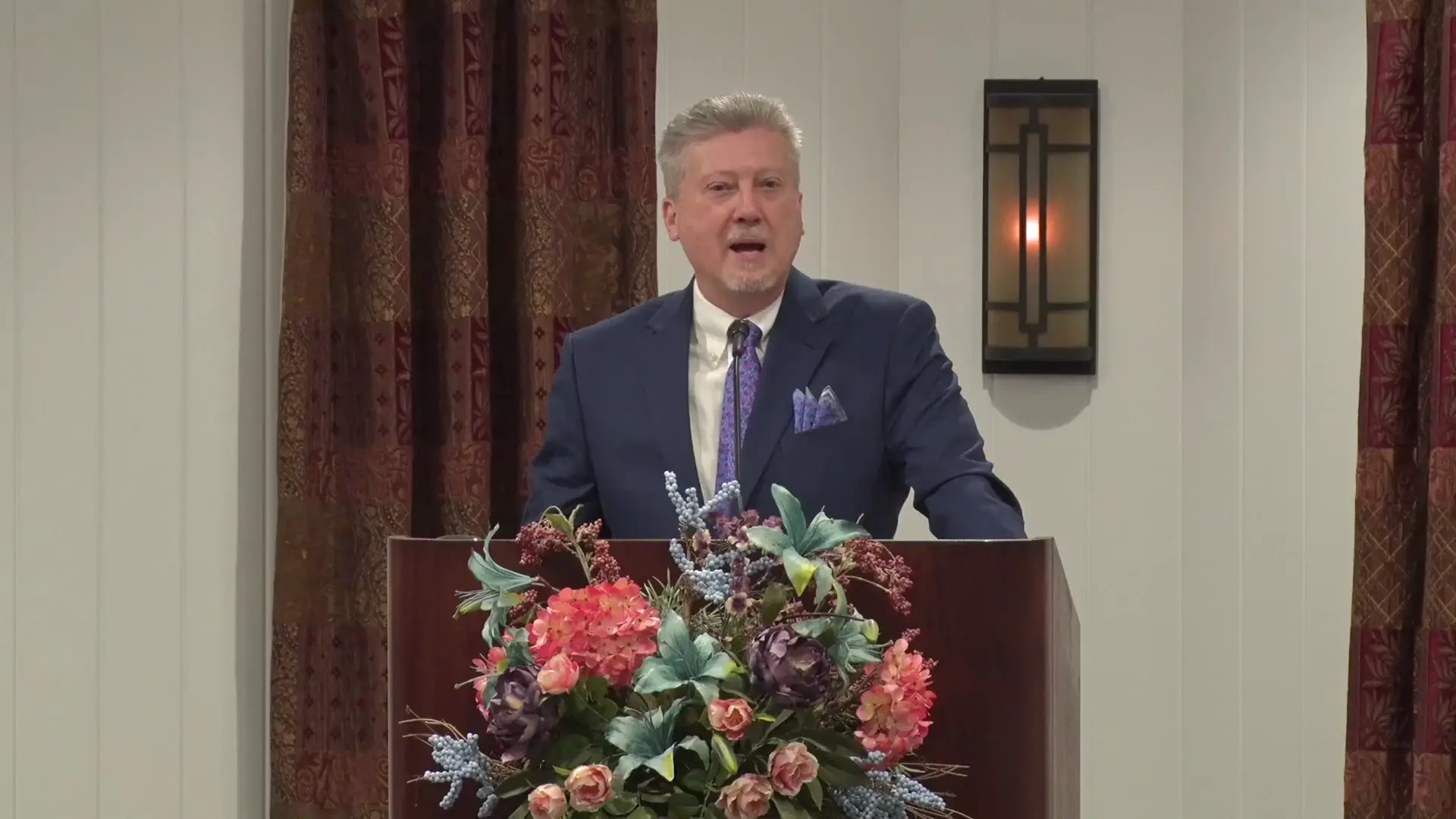
Anniversary Message 2026
Commentary by Richard T. RitenbaughOver the past 34 years, since our founding in 1992, we have maintained a steady core of about 400 members in Church of the Great God. Though we started with just 19 individuals at our first Sabbath service, our numbers have seen little increase despite our efforts. Growth in membership has never been our primary aim. Instead, our focus remains on feeding the flock and ensuring a deep commitment to the truth among our members. God seems to have approved of this approach by keeping our numbers stable, allowing us to prioritize spiritual depth over numerical expansion. We believe that preparing a small, convicted flock for the Kingdom of God is more valuable than spreading basic teachings to thousands.
Franchising the Faith
Commentary by John W. Ritenbaugh (1932-2023)An increasing number of preachers are using American business strategies to build their congregation's membership, focusing on numeric growth. A young preacher even copied Starbucks' business procedures, giving away coupons valued at $10 for a free Starbucks coffee to attract attendees to services. These promotions lack any reference to God's sovereignty over the church or to biblical guidance on how God produces church membership. The format of their services, reminiscent of the purpose-driven church movement, emphasizes bands, singing, and slide shows, resembling a pep rally more than a spiritual gathering. Due to the American people's limited knowledge of biblical content, these business entrepreneurs in religion succeed, as attendees go along with what is happening and often enjoy it. Through their participation, people dictate the terms of their supposed relationship with God, reversing sovereignty and forcing themselves as though they were in control. This approach does not bode well for a true relationship with Him, as it mirrors Israel's refusal to enter the promised land on God's terms, leading to defeat when they acted on their own.
Dissatisfaction
Commentary by Martin G. CollinsA strange distortion of truth has spread through churches worldwide, calling God's people to embrace change from the world's perspective and fuel transformation. This Church Growth Movement uses familiar words to persuade, conforming God's Word and human thinking to politically correct views of unity, community, service, and change. Worldwide Christian networks provide trained leadership and management consultants to guide God's people along a superhighway to a new world order, hoping to popularize Christianity so effectively that whole nations join their crusade. They aim to re-cloak the church in a permissive, appealing image, marketed as a safe place, purged of moral standards that stir conviction of sin. Doug Murren, a former pastor, explains the process of managed change, drawing from social psychologist Arnold Mitchell of Stanford University, who identifies three ingredients for change: dissatisfaction, emotional and physical energy, and a well-conceived strategy. Effective change agents assess and deliberately develop dissatisfaction within a group to create potential for change. Positive change focuses on creating a better future rather than returning to the past. The process involves assessing attitudes and values, stirring dissatisfaction with old ways, and offering an inspiring vision of a here-and-now future that man can create, driving transformation through collective efforts.
Purpose-Driven Churches (Part 3)
Sermon by John W. RitenbaughThe Outcome-Based religion, as exemplified by the Saddleback Community Church in Anaheim, California, has experienced significant numeric growth after transitioning from the Southern Baptist Convention to the New Paradigm church model. This shift, while still technically tied to the Southern Baptist Convention, represents a theological departure that has led to a mushrooming in congregation numbers. Their focus on church membership growth, coupled with the pursuit of increased financial growth, suggests an exploitation of the brethren, prioritizing numerical success over spiritual fidelity. This pattern of growth through compromise mirrors historical examples of apostasy, where the desire for expansion often overshadows adherence to foundational truths.
Purpose-Driven Churches (Part 4)
Sermon by John W. RitenbaughThe Outcome-Based religions, also termed New Paradigm churches, exhibit a striking attractiveness through their rapid membership growth, evident in their huge congregations and high Sunday service attendance. This numeric expansion is further highlighted by the extensive media coverage they receive, with significant attention paid to their leaders and programs, such as Rick Warren of Saddleback Community Church and initiatives like Forty Days of Community and Forty Days of Peace. The commotion surrounding these organizations consistently draws public interest, and their influence continues to grow without subsiding. In contrast, the Church of God, described as small in number by worldly standards, does not naturally attract carnal people, often seeing declining attendance in comparison to the increasing numbers at events led by figures like Billy Graham. The leadership of these Outcome-Based religions has crafted a package that effectively produces the desired outcome of massive growth, with potential for even greater expansion as they are only beginning to tap into their capabilities. This phenomenal growth has already extended beyond the United States, impacting regions like Canada, Australia, and England, where Israelitish populations are significant, indicating a broadening influence in American life and beyond.
Parables of Matthew 13 (Part 2): Leaven
Sermon by Richard T. RitenbaughIn the Parable of the Mustard Seed, we see a picture of unnatural growth in the church. The mustard seed, representing the church, is expected to grow into a modest plant, but instead, it becomes a tree, far exceeding its natural bounds. This transformation, described by the Greek word "ginomai," implies a change or turning into something it was not meant to be, much like water turning into wine. The church, intended to remain small and structured as God designed, grows beyond His intended limits into something large, strong, and worldly. This abnormal growth allows the birds of the air, identified as satan by Jesus Himself, to nest in its branches, indicating an infiltration of negative influence. Jesus warns through this parable that the church must not seek material greatness or influence beyond preaching the gospel and feeding the flock, as such expansion opens the door to corruption. Instead, He will add to the body as He sees fit, without the need for the church to become a worldly power to accomplish His work.
Habakkuk: A Prophet of Faith (Part Three)
Sermon by Martin G. CollinsThe prophecy of Habakkuk reveals the Chaldean-Babylonians as ruthless conquerors and oppressors, embodying the persecution of God's people. In the taunt song of Habakkuk 2:6-20, a five-fold woe is pronounced upon these wicked oppressors, reflecting the misery of a nation that believes it can thrive without God. Among the woes, the third stanza in verses 12-14 addresses their tyrannical oppression through violence and exploitation. Their cities were built with blood, using the wealth gained from bloody wars and captive labor to construct grand structures. Yet, the Eternal has decreed that such labor will not endure; it will be consumed by fire, bringing the Chaldean-Babylonian empire to an end. Their work is in vain, as it exalts man rather than God, and what is built by wrong means will pass away. Even when applied to building a church, growth achieved through secular means—catering to worldly desires rather than adhering to God's way—may appear successful but will not last. A church built on God's principles, though its growth may be slow and its path harder, will endure through adversity, standing as a source of blessing.

Wandering or Pilgrimage?
Sermon by John W. RitenbaughIn the American religious scene, a report covering 34 denominations and 60% of Protestant membership reveals a troubling trend of numeric decline. More Protestant churches are closing than opening, a pattern persisting for five consecutive years. In 2019, nearly 3,000 new Protestant churches began services, yet this was overshadowed by 4,500 closures in the same year, resulting in a net loss of 1,500 congregations. The last year of notable growth was 2014, when around 4,000 new congregations started, but even then, 3,700 closed, indicating a continued waning interest in spiritual matters. In a historical context, the journey of the Israelites through the wilderness involved a vast number of people, conservatively estimated at 2 to 3 million. This massive group, largely unconverted and newly freed from slavery, faced immense uncertainty and fear, contributing to potential conflicts and squabbling. The sheer size of this population, thrown together in an unfamiliar and chaotic movement, underscores the challenges of managing such a large, untested community. Using a conservative figure of 2 million, over 40 years or 14,730 days, an average of 136 people may have died each day in the wilderness. If the estimate is raised to 3 million, as some sources suggest, the daily death rate increases to approximately 203 individuals from the original group, highlighting the staggering scale of loss during this journey.
In the Wake of An Unnatural Disaster (Part Five)
Commentary by John W. Ritenbaugh (1932-2023)In the Charlotte area, there is a large, popular mega-church group led by a charismatic personality that exemplifies the mindset of many Americans regarding spiritual and moral issues. This group is experiencing rapid numeric growth, having opened what is believed to be its sixth congregation in the general area, with the referenced congregation established in Gastonia, North Carolina. The church's popularity seems tied to its rapid expansion, drawing crowds with services that resemble concerts, complete with live rock bands and filmed segments. The pastor, in a radio advertisement, invites people to attend services scheduled at 5:00 p.m. on Sundays, deliberately set to accommodate personal activities like gardening, shopping, golfing, and sports, before fitting in time for fellowship with God. This scheduling reflects a trend where God appears to be prioritized after personal interests, squeezed between morning activities and evening rest.
How to Survive Exile
Feast of Tabernacles Sermon by Richard T. RitenbaughIn this time of spiritual exile, God calls us to grow numerically as part of our journey toward restoration. Through the words of Jeremiah, we are encouraged to increase and not be diminished, to expand our numbers as a reflection of spiritual vitality. This growth is not merely about adding members, but about fostering true conversion, bringing others into the flock of God. While the primary focus remains on overcoming sin and strengthening our spiritual condition, if resources allow, we are to seek increase through meaningful connections, whether by nurturing new believers or welcoming those called by God from the world. This numerical growth, though secondary to personal and communal spiritual renewal, is a sign of the life and purpose God intends for us, even in exile. As we build these ties, we trust that He will multiply us in His time, ensuring that our increase aligns with His plan to bring us back to Him with a whole heart.