


by John W. Ritenbaugh and Richard T. Ritenbaugh
Forerunner,
January 28, 2026
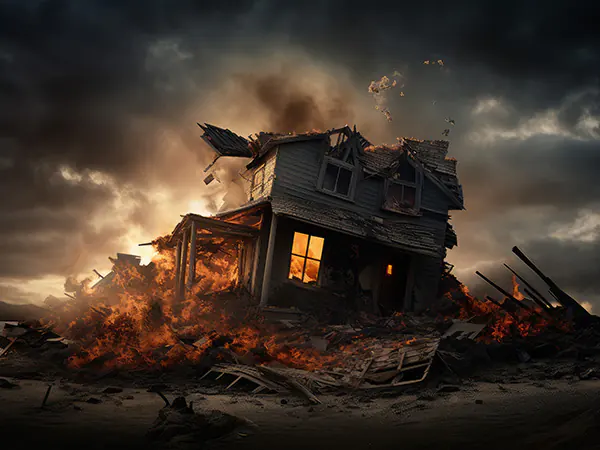
By refusing to repent of their apostasy from God’s way of life, the Israelites could only expect the coming of God’s fearsome punishment.
Hear this word which I take up against you, this lamentation, O house of Israel: The virgin of Israel has fallen; she will rise no more. She lies forsaken on her land; there is no one to raise her up. For thus says the Lord GOD: “The city that goes out by a thousand shall have a hundred left, and that which goes out by a hundred shall have ten left to the house of Israel.” (Amos 5:1-3)
The people of Israel would recognize these words as a funeral dirge, a lamentation said over the dead. Amos speaks, not as if it were yet to occur, but as if it had already happened. This death came when Assyria conquered Israel from 721 to 718 BC and deported her people to foreign lands.
Israel is pictured as a virgin, though not a spiritual virgin. God frequently calls her an adulteress, harlot, and fornicator (Jeremiah 3:1-13; Ezekiel 16; Hosea 2:2-13), but He uses “virgin” here because Israel was cut off seemingly in the bloom of youth—before she could produce what she had the potential to produce. In a literal family, God could have expected a happy marriage and children from her (Isaiah 5:1-2). Israel, surrounded by luxury and prosperity, should have produced God’s personality and character, but she failed miserably.
Proof of Their Destruction
Thus says the LORD: “As a shepherd takes from the mouth of a lion two legs or a piece of an ear, so shall the children of Israel be taken out who dwell in Samaria—in the corner of a bed and on the edge of a couch!” (Amos 3:12).
Amos refers to part of the Old Covenant: “If it is torn to pieces by an animal, then he shall bring it as evidence, and he shall not make good what was torn” (Exodus 22:13). If a lamb was stolen from the flock, the shepherd had to repay the owner for it. If a lamb was attacked and devoured by a beast, however, he had to bring proof that he had not stolen it himself. He had to show evidence that what had previously existed had been destroyed.
Whenever Israel is destroyed, the evidence of her demise will not be a leg or part of an ear, but bits of furniture like couches and beds. When others look for proof of this great nation’s fate, they will find all the accouterments of opulence, luxury, self-indulgence, and indolence—products of their self-concern and self-satisfaction. But they will find no effects of godly spirituality—righteousness, justice, and mercy.
The illustration of the bed and couch may be an ironic reference to Israelite sexual exploits with temple prostitutes and other ritual sexual practices (Isaiah 57:3-9). Additionally, God shows Israel committing spiritual adultery by trusting in other nations rather than God (Isaiah 31:1-3), and the destroyed bed and couch would depict His destruction of the nation for her unfaithfulness.
“For behold, the LORD gives a command; He will break the great house into bits, and the little house into pieces” (Amos 6:11). “The great house” refers to the noble or wealthy family in society, and these “big names” will certainly be destroyed along with the common folk. The rich and powerful will not be able to escape the dreadful punishment God promises. God makes it clear that He has commanded their destruction.
We should never forget that God’s punishment falls upon Israel because of disobedience, rebellion, and sin. America and the British nations are rapidly following ancient Israel’s example as they spiral downward to their destruction. We can see this pattern in the murder on the streets, bloody crimes like rape and mutilation in our once peaceful towns, sexual diseases that run rampant among all sectors of society, not to mention sexual deviancy, perverse music, self-indulgence, drugs, and alcohol abuse. Wealth is being funneled into the hands of the few, and the poor and weak keep becoming poorer and weaker. These nations may look fine on the outside, but the cancer has spread from head to toe, and they have only so long before the disease proves fatal (Isaiah 1:5-6).
Visions of Total Destruction
Amos warns Israel of the coming destruction in three visions recorded in Amos 7:
-
The Vision of the Locusts.
-
The Vision of the Fire.
-
The Vision of the Plumb Line.
The first two have two points in common: Israel’s total destruction and Amos’ intercession.
Thus the Lord GOD showed me: Behold, He formed locust swarms at the beginning of the late crop; indeed it was the late crop after the king’s mowings. And so it was, when they had finished eating the grass of the land, that I said: “O Lord GOD, forgive, I pray! Oh, that Jacob may stand, for he is small!” So the LORD relented concerning this. “It shall not be,” said the LORD.
Thus the Lord GOD showed me: Behold, the Lord GOD called for conflict by fire, and it consumed the great deep and devoured the territory. Then I said: “O Lord GOD, cease, I pray! Oh, that Jacob may stand, for he is small!” So the LORD relented concerning this. “This also shall not be,” said the Lord GOD. (Amos 7:1-6)
Given insight into what God planned to do, Amos was distressed over whether Israel could survive. God relented both times, probably as a result of Amos’ prayer. But because of His earlier pronouncements and the people’s lack of repentance, a sense arises that God would not postpone Israel’s punishment much longer.
The first vision in Amos 7 may be a natural calamity: locusts rising out of the earth and destroying the crops and the grasslands “after the king’s mowings,” a practice akin to our income tax. Without the late crop, the first cutting for the king would be sparse, and without produce for their personal needs, the people would starve. God decided that Israel would be protected from natural calamity in the main, but a few people may suffer badly and may even die.
The second vision, a divine fire, could be literal fire on the earth. “For the LORD your God is a consuming fire, a jealous God” (Deuteronomy 4:24; 29:20). Fire, in biblical symbolism, is a purging and purifying punishment against sin (Malachi 3:2-3; Hebrews 12:29). To save and turn the people back to morality and obedience, God decrees a purifying fire to come upon Israel, perhaps in the form of a divinely inspired war. Again, God relents, giving the nation another chance to repent.
This exchange between God and Amos illustrates a wonderful method He uses to teach us what we need. God sometimes leads us into situations that force us to decide what we really need. We ask Him for it, and then He gives it to us. We think He answered our prayer—and He did—but He also led us to pray the prayer (see Romans 8:26)! He guides these situations so that we come to think like Him! When He wants to produce character in us, He will work in whatever way is necessary to build it.
We can learn much from this technique. In our earnest prayers, we cry out to Him, believing we truly need what we have requested. We should also pray to understand how God is working, molding, shaping, and leading us to grow and overcome. When we finally see things from His perspective and pray that prayer, He will respond.
That is what He wanted from Israel: He desired that the Israelites understand that they should return to Him. However, Amos 7:9; 8:3, 10; and 9:1 indicate their destruction would be total because the people did not respond.
The example of ancient Israel’s shortsightedness has present-day implications for spiritual Israel—God wants His people to look through the coming crisis and see that He brings it to pass, controls it, and sets its limits. He will use it to bring about His purpose in individual lives or in the life of the nation. Soon, conditions will become so difficult that, if possible, even the elect will be deceived—“but for the elect’s sake those days will be shortened” (Matthew 24:24, 22).
The Plumb Line
The two previous visions, depicting devastation to Israel, offered no test of her people. God turns to a third vision, which contains a test to determine whether they are really His people.
Thus He showed me: Behold, the Lord stood on a wall made with a plumb line, with a plumb line in His hand. And the LORD said to me, “Amos, what do you see?” and I said, “A plumb line.” Then the Lord said: “Behold, I am setting a plumb line in the midst of My people Israel; I will not pass by them anymore. The high places of Isaac shall be desolate, and the sanctuaries of Israel shall be laid waste. I will rise with the sword against the house of Jeroboam.” (Amos 7:7-9)
In construction, the plumb line tests whether what was erected is perpendicular to the square, that is, if it is straight up and down, if it is upright. It provides a standard against which a builder can measure what he has built. Metaphorically, when God draws near with the plumb line, He is looking for those people—from top to bottom—who are living and abiding in His grace and His law. The Israelites’ moral standards had degenerated, so their religious profession was not verified by the right kind of works. They were not upright; they failed the test.
Amos has no opportunity to intercede at this point. God will no longer relent. “I will not pass by them anymore” means that God would no longer overlook their sins. And, if He will not pass by them, He must pass through them. The plumb line shows that He will pass through “with the sword” in judgment. His patience and forgiveness have finally ended; He could no longer defer the punishment for their sins—the time had come to destroy them.
God passes through by destroying “the high places of Isaac,” the altars and idols of the false religions responsible for the moral, spiritual, and ethical decline of the people. They worshipped Baal and a host of other foreign deities (Judges 10:6). They set up sacred pillars and idols throughout the land (I Kings 14:23; II Kings 17:10-13). Some of them even burned their sons in the fire to Molech (Ezekiel 16:20-21). Through their spiritual harlotry, they abused grace—the free, unmerited gift of God, including His pardon—and rejected His law.
“The sanctuaries of Israel,” the religious shrines of Bethel, Dan, Gilgal, and Beersheba, would be among the first to fall. They were the fountainheads of the nation's attitudes. In them, the people were taught to seek the material prosperity that characterized the nation. In part, they sought this physical abundance through cultic fornication and fertility rituals done blasphemously in the name of the Eternal God. The religions taught the people how to sin and do it religiously.
Next, “the house of Jeroboam” would fall through war. Amos refers to Jeroboam I, after whom Jeroboam II was named, and worse, after whom he followed in his sins. God selected Jeroboam I to become king of the northern ten tribes of Israel after Solomon (I Kings 11:29-31), but He made the continuance of Jeroboam’s dynasty contingent upon his obedience (verse 38).
But Jeroboam did not trust God. He thought that the religious festivals and sacrifices would entice Israel to return to David’s line in Judah (I Kings 12:25-27). To counter that possibility, he set up counterfeit shrines in Bethel and Dan and changed the Feast of Tabernacles from the seventh month to the eighth (I Kings 12:27-33). Jeroboam turned away from the law of God, causing the people to sin.
Historians examine economic and social conditions and military strength to determine what causes the rise or fall of nations, but God shows that His purpose and the morality of the people are the true causes. Thus, God makes sure that the two major motivators of Israel’s spiritual decline, the religious and political leadership, would feel His wrath first (Isaiah 9:13-16).
A Basket of Ripe Fruit
Amos 8 begins with a fourth vision:
Thus the Lord GOD showed me: Behold, a basket of summer fruit. And He said, “Amos, what do you see?” So I said, “A basket of summer fruit.” Then the LORD said to me: “The end has come upon My people Israel; I will not pass by them anymore.” (Amos 8:1-2)
Because we read the Bible in English, puns and other wordplay are lost in translation. Understanding this vision depends on a play on the Hebrew words translated “summer fruit” and “end.” Amos answers God’s question by saying he saw ripe fruit. But when God responds, He uses a similar-sounding word to suggest the time was ripe for His people.
The fruit represents people. If ripe, they were either ready to use or to rot. God says the time is ripe for picking Israel. God had tried to get the people to repent, but in their hardheaded, hardhearted way, they would not.
John the Baptist uses a different metaphor for the Jews of his day: The ax is about to fall: “And even now the ax is laid to the root of the trees. Therefore every tree which does not bear good fruit is cut down and thrown into the fire” (Matthew 3:10). God’s patience had run out. He would “not pass by them anymore.” In their spiritually oblivious state, disaster would take them by surprise—and it did in AD 70.
Could we be taken by surprise?
But concerning the times and the seasons, brethren, you have no need that I should write to you. For you yourselves know perfectly that the day of the Lord so comes as a thief in the night. For when they say, “Peace and safety!” then sudden destruction comes upon them, as labor pains upon a pregnant woman. And they shall not escape. But you, brethren, are not in darkness, so that this Day should overtake you as a thief. You are all sons of light and sons of the day. We are not of the night nor of darkness. Therefore let us not sleep, as others do, but let us watch and be sober. (I Thessalonians 5:1-6)
This passage sounds strikingly similar to Amos 8. Could we be lulled into complacency? Is God’s hand involved in world events, while we think we have plenty of time before the end? Are we motivated to make use of the time left to us? God says the time is ripe. He gives us time to repent, but that time grows shorter by the day.
Joy Turned to Grief
Now that He has announced Israel’s imminent calamity, God begins to show how His punishment would alter the lives of the people. “And the songs of the temple shall be wailing in that day . . .. Many dead bodies everywhere, they shall be thrown out in silence” (Amos 8:3). Notice the dramatic change of the people’s attitude. The songs of His Temple would ordinarily be happy and joyous songs of praise to God, but He will turn the songs of their temple—sung to Baal in the name of the Lord—to wailing, for the numbers of the dead will be unimaginable.
Because of their self-absorption, God’s “sudden” punishment will stun the people of the United States, Canada, Britain, Australia, and the other nations of modern Israel, including some members of the true church. In their spiritually unaware state, they will be incredulous at God’s punishment for “such a little bit of sin.” But God has a different perspective; He says they are wretched, miserable, poor, blind, and naked (Revelation 3:17).
Because of their self-procured wealth and affluence, they think they are being blessed with material things. They see themselves as following the way of God, but their religion has deceived them by failing to teach them His truth. They think that what they are doing is right, but they are deceived. However, God still holds them responsible because the truth is available. He views them as personally rejecting Him and His Word.
Today, some evangelicals attempt to prepare the people for what is to come, but their teaching is a mixture of right and wrong. Jesus says, “They are blind leaders of the blind. And if the blind leads the blind, both will fall into a ditch” (Matthew 15:14). In their ignorance, the people do not realize the terrible calamity coming soon upon modern Israel. It will be far more terrible than anything ever seen on this earth!
Pride and Instability in Israel
God squarely places the blame for their punishment where it belongs, on Israel’s pride:
The LORD has sworn by the pride of Jacob: “Surely I will never forget any of their works. Shall the land not tremble for this, and everyone mourn who dwells in it? All of it shall swell like the River, heave and subside like the River of Egypt.” (Amos 8:7-8)
In Amos 4:2, God swore by His holiness, that is, all of His moral integrity, His very nature. He also swore by Himself (Amos 6:8), indicating everything that He is and His sovereignty over all creation. Israel was not impressed. So, God says, “Look, I have sworn by My holiness and by Myself, and that failed to carry any weight with you. So now I will swear by something so great—your own pride—that you cannot refuse!” What irony! God says if He swears by something of theirs, it may mean more to them than if He swears by something of His!
This passage also shows that when man gets out of step with God, then nature, too, begins to suffer. Beauty begins to give way to ugliness. We start to see huge piles of slag, polluted rivers, foul-smelling garbage dumps, expanding deserts, and denuded forests. Finally, when the land begins to vomit the people out (Leviticus 18:24-28), they may show a belated interest in God and His truth, but it will be too late to stop the destruction. The time is right—the fruit is ripe—so God will punish them.
Consider what is currently happening in our Western nations of Israel. God shows a connection between nature and human morality: “Natural” disasters are acts of God in response to the moral condition of the people. If men will treat other men, created in the image of God, in an immoral way, how will they treat the land, forests, rivers, lakes, and oceans? Because these things seem unable to fight back, man will abuse them with no fear of reprisal. But God says that the environment will fight back and vomit them out!
Instead of rain falling in a gentle mist, it will roar like an avalanche until the inhabitants cannot cope with it. The rivers will swell and flood the land in anger, washing the topsoil into the sea. In other areas, fire will sweep over forests and farmlands, destroying everything in its path. Windstorms like hurricanes and tornadoes will devastate the cities and countryside, endangering the lives and livelihoods of the people. Earthquakes will increase in both frequency and power, costing thousands of lives and billions of dollars of damage. These disasters will mount to such an intensity that the people of modern Israel may seek repentance, but it will be too late. God will not pass by anymore.
“And it shall come to pass in that day,” says the Lord GOD, “that I will make the sun go down at noon, and I will darken the earth in broad daylight; I will turn your feasts into mourning, and all your songs into lamentation; I will bring sackcloth on every waist, and baldness on every head; I will make it like mourning for an only son, and its end like a bitter day.” (Amos 8:9-10)
These are signs of a “ripe” society, indicating profound instability. When an earthquake strikes, a person feels profoundly unstable because he is not sure if the building will collapse and kill him. A similar type of instability occurs when society is rocked by crime, violence, immorality, and injustice. Amos describes the insecurity, bitterness, and death that result from failing to hold to God’s absolute standards.
Within living memory, most Americans could leave their houses unlocked. But when society became unstable, they had to start locking their doors. Until the middle of the last century, Americans infrequently read about violence on the streets. Now society is so unstable that violence fills the news reports, and this constant source of worry produces more instability.
In such a nation, all kinds of unstable factors constantly increase as everyone runs here and there in confusion. The confusion results from the lack of absolute standards of what is right and wrong, moral and immoral, ethical and unethical. Thus, everybody does his own thing. Violence, divorce, deviance, suicide, and mental illness increase. We see this in our societies every day.
Terrors of the Day of Judgment
What will the time of Jacob’s trouble—the Great Tribulation—really be like? Amos describes their reaction to the coming punishment to make the ancient Israelites aware of what their mental state would be—the torment, fear, and hopelessness. This emotional picture made the prospect of experiencing God’s judgment much more terrifying than just knowing what would happen.
Therefore the LORD God of hosts, the Lord, says this: “There shall be wailing in all streets. And they shall say in all the highways, ‘Alas! Alas!’ They shall call the farmer to mourning, and skillful lamenters to wailing. In all vineyards there shall be wailing, for I will pass through you,” says the LORD. (Amos 5:16-17)
The farmer, accustomed to facing all the vagaries and insecurities of nature, like flooding and drought, is less likely to cry and mourn. The professional mourners, who cry at the drop of a hat, typify the other extreme. In their grief and despair, people will wander from one place to another looking for water, food, stability, hope, an organized city, or a functioning society. All they will find is anarchy. Will God be walking beside them? No, He inspired Amos to say, He would walk right through them!
Amos is not argumentative with them; he is not trying to prove anything to them anymore. He merely shows them what the Day of the Lord will be like. He paints a vivid, stark picture of the horrors in their future to make them evaluate the present state of their relationship with God.
“Woe to you who desire the day of the LORD! For what good is the day of the LORD to you?” (Amos 5:18). It is always a prophet’s responsibility to remind the people that the future is inextricably bound to the present. What one does today affects the course of events as time marches on.
Malachi asks, “But who can endure the day of His coming? And who can stand when He appears?” (Malachi 3:2). No such doubts assailed these people at all. They were confident that things would be all right. They felt they would stroll right through the day of their judgment because they were His chosen people.
But when Amos looked at his times, he became frightened:
It will be darkness, and not light. It will be as though a man fled from a lion, and a bear met him; or as though he went into the house, leaned his hand on the wall, and a serpent bit him! (Amos 5:18-19)
There is no escape! People living in complacency think everything is fine. But the day of judgment will come upon them unexpectedly, and in utter hopelessness, they will start running for their lives. They will escape one terror only to be confronted by another! And just when they think they are finally safe, they will receive a mortal wound!
But the prophet is not yet finished! “Is not the day of the LORD darkness, and not light? Is it not very dark, with no brightness in it?” (Amos 5:20). Wailing and inescapable judgment are followed by darkness. In their complacency, the people think it logical to conclude that, since everything is presently all right, they must have overcome those things which plagued them. With that behind them, they think their future is full of gladness and good times. Amos disagrees! He accuses them of feeding themselves false hopes. When God comes, he writes, He will be their enemy!
Famine of the Word
Unfortunately, during these terrible times when God’s Word is most needed to help the people come to repentance, it will be almost impossible to find:
“Behold, the days are coming,” says the Lord GOD, “that I will send a famine on the land, not a famine of bread, nor a thirst for water, but of hearing the words of the LORD” (Amos 8:11).
When the people finally realize that God wants them to repent, it will be too late. The seeds of their destruction have been sown, and the crop is already ripe. The only truth available to them in the tumult of God’s judgment is what they can remember. It is for this reason that God warns us in these times to “[redeem] the time, because the days are evil” (Ephesians 5:16).
If our hope in the Kingdom of God, the resurrection of the dead, and sharing life with God eternally are not sufficient to motivate us to repent, perhaps fear of a terrible calamity, the Great Tribulation, the Day of the Lord, or being spewed from God’s mouth as a Laodicean will move us to use the present to secure the future! God prophesies to motivate us to cling to Him and His Word right now, and He is willing to scare us nearly to death to save us.
During this famine, “They shall wander from sea to sea, and from north to east; they shall run to and fro, seeking the word of the LORD, but shall not find it” (Amos 8:12). Amos probably refers to the Dead Sea and Mediterranean Sea, east to west, and adds “north to east,” describing a triangle with the south direction left out. Why would he do this?
On a map of the land of Israel, the Dead Sea lies to the east, the Mediterranean to the west, and the nation of Israel to the north. What lies to the south? Jerusalem, where the truth was! In Amos’ day, the truth was taught in God’s Temple in Jerusalem.
Israelites wanted to be known as seekers of the truth, but in reality, they did not want it. Their pride would not allow them to make a pilgrimage to Jerusalem for the truth, for that would mean they would need to humble themselves before the Word of God.
Wander in this verse can be rendered “stagger” like a drunk or “tremble” like lips quivering in agitation because one is so angry or fearful that he is unable to speak. It shows the people in a state of panic and intense agitation. They are desperately searching for what they had regarded so lightly: God, the Bible, His truth. But they cannot find them anywhere!
Thus, like desperate people, they will seek any port in a storm—any religion, and many will fall prey to false ones. This scenario is already happening in modern Israel. New Age, mystical, and Eastern religions are growing steadily, and many “Christians” feel free to borrow “truth” from other religions. They even turn science and technology into religions. Additionally, in recent years, ecumenical movements have risen within a broad spectrum of religious bodies.
In that day, the fair virgins and strong young men shall faint from thirst. Those who swear by the sin of Samaria, who say, “As your god lives, O Dan!” And, “As the way of Beersheba lives!” They shall fall and never rise again. (Amos 8:13-14)
When the famine of the Word of God occurs, the youth of Israel will fall most readily into the trap. There will be a tremendous revival in false religions, especially of the great false church. Where else can the young turn? They will be more susceptible because their parents failed to provide a solid foundation of truth on which to base wise, spiritual decisions. The young only know what the older generation has taught them.
The Punishment Descends
The vision in Amos 9 is different from the four visions in chapters 7 and 8. There is no conversation between God and the prophet. The time for talk is over. God simply acts. The situation has moved beyond Amos’ ability to intercede—God’s time to act has come, and He will not relent.
The background of this final vision is interesting. To make his rule more secure, Jeroboam I devised what the Bible calls “the sin of Jeroboam,” the use of religion in the service of politics. Using the system in place in Judah, he counterfeited the holy days, the priesthood, and the Temple ritual. On his altar, his priests offered sacrifices to the two golden calves, and the king stood by the altar to burn incense (I Kings 12:26-33; 13:1). It apparently became a custom for the king to stand on the right-hand side of the altar at his counterfeit feast in the eighth month.
Who is standing beside the altar in Amos 9? Not Jeroboam, but the Lord!
I saw the Lord standing by the altar, and He said: “Strike the doorposts, that the thresholds may shake, and break them on the heads of them all. I will slay the last of them with the sword. He who flees from them shall not get away, and he who escapes from them shall not be delivered.” (Amos 9:1)
Instead of officiating, God is destroying everything in sight!
Amos also draws on the story of Samson destroying the temple of Dagon by toppling the supporting pillars. If a man tries to pull a house down with his bare hands, he must undermine it from the bottom, but God is not restricted like a man. He strikes the house down from the top! God, as the Supreme Omnipotent One and the Sovereign Lord, has every right to crush the house of Israel. Since the people had ignored all the numerous warnings He had sent for them to repent, He is now fulfilling His promise.
In the type, the temple of Dagon fell on everyone’s head; no one survived (Judges 16:30). The same holds true in this destruction. No matter where the people of Israel flee in the day of calamity, they will not find any rest, ease, safety, or security (Amos 9:2-6). They had tried to get security by building multiple homes for themselves, but God will wipe away this assurance by smashing their houses to bits. Anything they thought would provide them security in the day of punishment, God will destroy.
God is omnipotent. When He decides to judge His people in this very painful way, there is no escaping it. He reminds His people of the covenant they made with Him, that He called them to His service, yet He is also the God of all the earth and Lord of every nation (verse 7). In other words, He has the same responsibility to judge and punish them as He has to the other nations of the world. The Philistines and Syrians, also mentioned in this verse, are two of the nations He judges in Amos 1. Here, God is judging Israel in the same manner.
We find a manifestation of Israel’s problem—false reliance that the covenant would save them—in modern-day “Christianity.” Many professing Christians believe in the doctrine of eternal security, commonly referred to as “once saved, always saved,” a devastatingly subtle deception of Satan the Devil. It is a belief that one can never fall out of favor with God, no matter one’s behavior or attitude.
As members of the true church, we need to beware lest we bring this false idea into the church with us. When God called us, chose us, and granted us repentance, we were baptized. But that does not exclude us from His scrutiny. He is no respecter of persons; He will judge us as justly as He does anyone else on earth.
That we chose to follow God’s way of life is good, but having that fact on our spiritual resume is not enough. God is not interested in past actions but in present performance. What is happening today? Are we living righteously each day? Or have we fallen from our past performance and profession? What God did in the past to give us the opportunity for salvation does not absolutely bind Him to work everything out to our benefit if we do not produce the corresponding good works, character growth, and obedience He expects (Ezekiel 18).
He wants us to see that we should not make the same mistake ancient Israel made—that is, take His salvation for granted. We can rely on Him and trust Him, but we also have a responsibility to submit to and obey Him. We must strive to produce the best character possible and be a light so He can say of each of us, “That’s My son! He looks and acts like Me! He is definitely part of My Family.”
The Hedge Removed
A prophecy in Isaiah 5:5 parallels this last vision of Amos:
And now, please let Me tell you what I will do to My vineyard: I will take away its hedge, and it shall be burned; and break down its wall, and it shall be trampled down.
The vineyard is Israel, and “its hedge” is whatever protects it, anything from material resources to God’s Word. What happens to a nation when it loses its defenses? It becomes subject to invasion, since the wall that protected it from marauders, wild beasts, and evil influences is now gone. The Bible depicts the Gentile nations as beasts that rush in when God’s people look weak (Isaiah 30:6-7; Jeremiah 50:17).
Amos paints a stark and terrifying picture of life during the time of Jacob’s Trouble. On the one side, natural disasters wreak havoc on the land, and society becomes unstable. On the other side, foreign armies invade, destroying cities, killing indiscriminately, and taking the survivors into captivity. Though the physical necessities of life are scarce, the real famine is of the Word of God—truth cannot be found, and repentance is thus all but impossible.
It appears to be an utterly hopeless situation. God is passing through, and His anger is just and terrible. But He promises an end—His anger will be spent, and He will spare a remnant. He “will show mercy on whom [He] will show mercy” (Exodus 33:19, KJV).
| The Plumb Line: A Test Against the Standard A major proof of false religion is that it cannot validate its effectiveness before the witness of man, but God can and does validate the true religion. He produces evidence of His righteousness, power, purpose, and way in many forms. God has performed miracles, signs, and wonders in the sight of thousands of witnesses. Without objective assurance from time to time, we would be living in a world of religious make-believe. God sometimes validates Himself before man by demonstrating His power through an undeniable event such as Jesus’ resurrection (I Corinthians 15:1-8). Men have verified the truths of God through observation and experimentation (I Kings 18:30-39). Man is thus without excuse (Romans 1:18-25). On occasion, God also verifies our personal relationship with Him by immediately answering a prayer or miraculously saving us from harm. On the other hand, if He needs to get our attention, He will shake us awake by allowing a test or trial to warn us that the relationship is degenerating. Because we are assured that God is with us, the testing is good. It keeps us from sinking into complacency and pride, both of which will separate us from Him. This testing is what God is addressing in the principle of the plumb line. Amos understood that God was using it to test the spirituality, morality, and genuineness of the people against the standard. The test answers the question, “Are they really God’s people?” God wants to know if they are exhibiting His characteristics. This idea of a spiritual standard of measure was directly transferred into the New Testament church. God uses similar imagery, a measuring rod, in Revelation 11:1. To the Laodicean church (Revelation 3:14-22), God uses fire to refer to a test instead of a plumb line. As we can see from these examples, the end-time church will be tested. How are we going to build? What will the test reveal about our Christian growth (I Corinthians 3:9-16)? We are commanded to grow “to the measure of the stature of the fullness of Christ” (Ephesians 4:13). From this, we see that the plumb line is God’s revelation of Himself as the standard. At first, God’s revelation of Himself was direct, visible, and personal, but later, as Israel grew, He revealed Himself more verbally through the prophets. They recorded His revelation for all time and for all people, and we read it in our Bibles today. God’s law is the primary vehicle He uses to reveal His nature; it defines how He lives. If we want to be in His Kingdom and live as He does, we must obey His law, but obeying God’s law in no way minimizes grace. God revealed Himself to Israel first as Redeemer and then as Lawgiver. He freed His people from their slavery in Egypt before He gave them the standard of His law. Grace precedes law. God gives grace first, but He does not leave His people ignorant of the life that pleases Him, which is revealed in His law. The plumb line combines grace and law, and God will test us against both. If we rely on His grace without law, or on His law without grace, we will not pass the test. If either is abused, we will not measure up to the standard. Leviticus 19 shows that the revelation of the law is important because it is a verbal description of God’s nature. Our God is a holy God (verse 2), and He expects His representatives to be holy also. But how do we become holy? After God redeems us from sin and extends to us His Spirit and grace—His free, unmerited election, He expects us to follow His instructions. The remainder of Leviticus 19 fills in the details—we become holy by doing these things. These actions reflect God’s nature. Since God is holy, His law is holy, and if we follow His holy law, we can—with the indwelling of His Holy Spirit—grow to be holy like our holy God. God chose Israel and extended the offer for a relationship with Him, to walk and fellowship with Him. After Israel rejected it, He has now extended this offer to those He has specifically called and chosen (John 6:44; I Corinthians 1:26-29). God loves His people and gives them redemption, grace. He expects it will result in obedience to His law, the reflection of His nature, so on occasion, He holds a plumb line against them to check their progress. But when He sees that they have rejected His way of life, He has no choice but to try to guide them to repentance—by any means necessary. |