


by Richard T. Ritenbaugh
Forerunner,
"WorldWatch,"
July 1, 2026
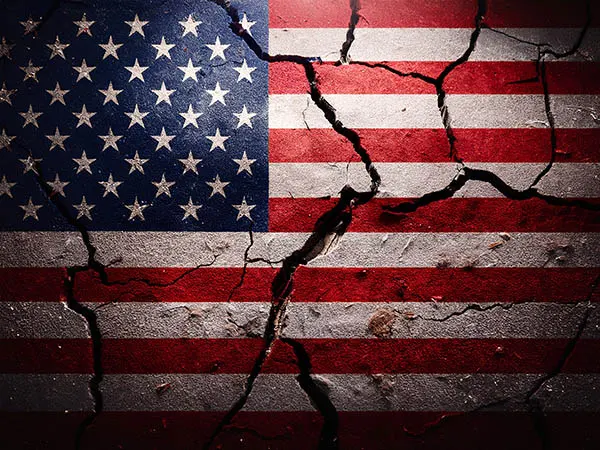
The United States of America has reached its semi-quincentennial—250 years of nationhood since the signing of the Declaration of Independence on July 4, 1776. Perhaps it sounds grander to say that America has been a nation for a quarter-millennium, but grand or not, its age makes it a relatively young country. Compared to ancient nations like Greece and Egypt, the U.S. is but a child.
Still, it is an accomplished and powerful child. No nation on earth can rival it, though some are gaining on it little by little. Its political reach encircles the globe, influencing and dictating the behaviors of faraway nations to suit its interests. Its people consume goods from nations big and small, acting as the fuel for a vast economic engine that circulates wealth throughout the world. America’s culture, for good or ill, influences culture globally.
This “first among the nations” status derives from its restless, forward-looking, pioneering, independent people, whose Founding Fathers gave the nation governing ideals that make free thought, trailblazing, innovation, and rapid progress possible. Before the Depression and World War II, government was smaller and less regulatory, so thinkers and inventors had the freedom to develop new ways of doing things, more efficient processes and products, and new areas of study, refining and perfecting their ideas for the market.
Not excessively inhibited by tradition or precedent, America’s market was built from the ground up. Because the land was so vast and rich in resources, it was wealthy from the beginning, and through bold innovation, that natural wealth was turned into prosperity for a broad swath of its citizens. Its businesses became international powerhouses, which built agricultural, transportation, and communications systems unparalleled in world history.
Of course, through taxation, that monetary wealth has given the federal government huge budgets to build highly effective armed forces, weapons, bases, and technologies that have, so far, outpaced those of its rivals. While the government now groans under massive debt, it remains powerful domestically and internationally, as its navy controls the seas, and its army has a presence in dozens of bases around the globe, ready to keep the peace or strike as the situation warrants. One should not forget that America possesses a nuclear deterrent and the singular historical precedent of using nuclear weapons in warfare.
However, the freedoms America’s Founders bequeathed to the nation possess a dark side: They come with few constraints. Such constraints, as John Adams noted, had to be supplied willingly by “a moral people,” those with taught and trained moralities that would inhibit excesses and restrain forays into detrimental areas of life. Regrettably, with the dilution of Christian morality over the last one hundred years, the putrid underbelly of “the American experiment” has been exposed.
Politically, culturally, and religiously, America’s unity and strength have been undermined by the ultimate human freedom: “Everyone did what was right in his own eyes” (Judges 21:25). It is a blessing that the fundamental principle of the rule of law has not yet been abandoned. Otherwise, the disastrous notion of freedom without personal or social responsibility would have ended this nation in chaotic self-destruction, fracturing into dozens of warring states trying to survive in a Balkanized America.
At 250, America appears strong, wealthy, and influential. Internally, however, it is divided, bankrupt, and immoral. And despite recent surges in patriotism and spirituality among some groups, as well as a few favorable political decisions on moral issues, the prognosis is, sadly, not a return to fitness and good health but to continued decline. A nation’s health is determined not by its outward image but its internal virtue, and America’s moral state is at a historical low—and sinking.
The Bible records the origin, rise, and fall of ancient Israel, which can provide insight into America’s condition. Why did Israel fall? The prophet Isaiah provides the answer in Isaiah 1:4:
Alas, sinful nation, a people laden with iniquity, a brood of evildoers, children who are corrupters! They have forsaken the LORD, they have provoked to anger the Holy One of Israel, they have turned away backward.
A nation is composed of people. If citizens forsake God and the truth He reveals about the right way to live, their corruption soon affects others and, ultimately, the whole nation. Each additional person going his own way into evildoing adds to the weight of sin so that, in time, the burden of iniquity becomes so great that its doom is sealed, and no recovery without wholesale repentance is possible. Isaiah describes this condition in the next two verses.
Why should you be stricken again? You will revolt [against God] more and more. The whole head is sick, and the whole heart faints. From the sole of the foot even to the head, there is no soundness in it, but wounds and bruises and putrefying sores; they have not been closed or bound up, or soothed with ointment. (Isaiah 1:5-6)
The terrifying result?
Your country is desolate, your cities are burned with fire; strangers devour your land in your presence; and it is desolate, as overthrown by strangers. (Isaiah 1:7)
Later in the chapter, God gives the simple but difficult remedy:
“Wash yourselves, make yourselves clean; put away the evil of your doings from before My eyes. Cease to do evil, learn to do good; seek justice, rebuke the oppressor; defend the fatherless, plead for the widow. Come now, and let us reason together,” says the LORD, “though your sins are like scarlet, they shall be as white as snow; though they are red like crimson, they shall be as wool. If you are willing and obedient, you shall eat the good of the land; but if you refuse and rebel, you shall be devoured by the sword”; for the mouth of the LORD has spoken. (Isaiah 1:16-20)
Other prophets like Ezekiel, Hosea, and Amos say similar things. When a people forsake righteous living, they will be destroyed unless they repent, returning to God and His teachings. God, being merciful, typically gives that people many years to realize their sinfulness and change their behavior, but there comes a time when His patience reaches an end, and He must act to punish and restore righteousness (see Isaiah 1:21-26).
It cannot be known where the U.S. stands on this timeline. No one knows how much time is left to “the land of the free.” However, we know that national repentance—like national iniquity—begins in individuals, which could spread to become a groundswell of repentance among the people. Such a thing happening in our time seems a dubious, though not impossible, proposition. Yet it is the only viable solution for such a nation as the United States of America at 250.