


Filter by Categories
Attitudes of Returning to Egypt
Sermonette by Jared M. EllisBrethren, the longing of Israel to return to Egypt reveals a recurring lack of faith in God, a pattern seen across several accounts. In Exodus 16:2-3, the children of Israel complained against Moses and Aaron in the wilderness, lamenting, "Oh, that we had died by the hand of the LORD in the land of Egypt, when we sat by the pots of meat and when we ate bread to the full! For you have brought us out into this wilderness to kill this whole assembly with hunger." They chose the illusion of comfort over trust in God, preferring a fabricated memory of ease in slavery to the challenges of spiritual growth. In Numbers 14:2-3, Israel again expressed their desire to return to Egypt, saying, "If only we had died in the land of Egypt! Or if only we had died in this wilderness! Why has the LORD brought us to this land to fall by the sword, that our wives and children should become victims? Would it not be better for us to return to Egypt?" Faced with the report of giants in Canaan, they rejected the responsibility of freedom, unwilling to exert the effort and faith required to claim the land God promised. Despite Joshua and Caleb's encouragement to trust in the LORD, who was with them, Israel resisted, craving reward without responsibility. Finally, in Acts 7:39-40, Stephen recounts how Israel, in their hearts, turned back to Egypt, saying to Aaron, "Make us gods to go before us; as for this Moses who brought us out of the land of Egypt, we do not know what has become of him." Their fear of the unknown overpowered their fear of God, leading them to resist Him and choose other gods when Moses did not return on their expected timetable. This stubborn resistance highlights their choice of fear over faith, a decision to stagnate rather than trust in God's plan. Brethren, these examples of Israel longing to return to Egypt serve as warnings to us. We must strive to avoid their mistakes, choosing growth, true freedom, and faith over stagnation, slavery, and fear.
You Have Not So Learned Christ
Sermon by Martin G. CollinsWhile the truth of Christ has the power to elevate, our worldly orientation blinds us, dulls our minds, and pulls us downward to abject slavery to sin.

Unleavened Bread Basics
Sermon by David C. GrabbeThe Feast of Unleavened Bread memorializes God's deliverance from the environment of sin rather than our coming out of sin. Christ embodies sincerity and truth.
Preventing the Warfare State
Sermon by John W. Ritenbaugh (1932-2023)Satan has taught mankind the craft of war between nations, within families, in politics, and in sports. We must resist being dragged into partisan battles.
Are You Ready For Kingship?
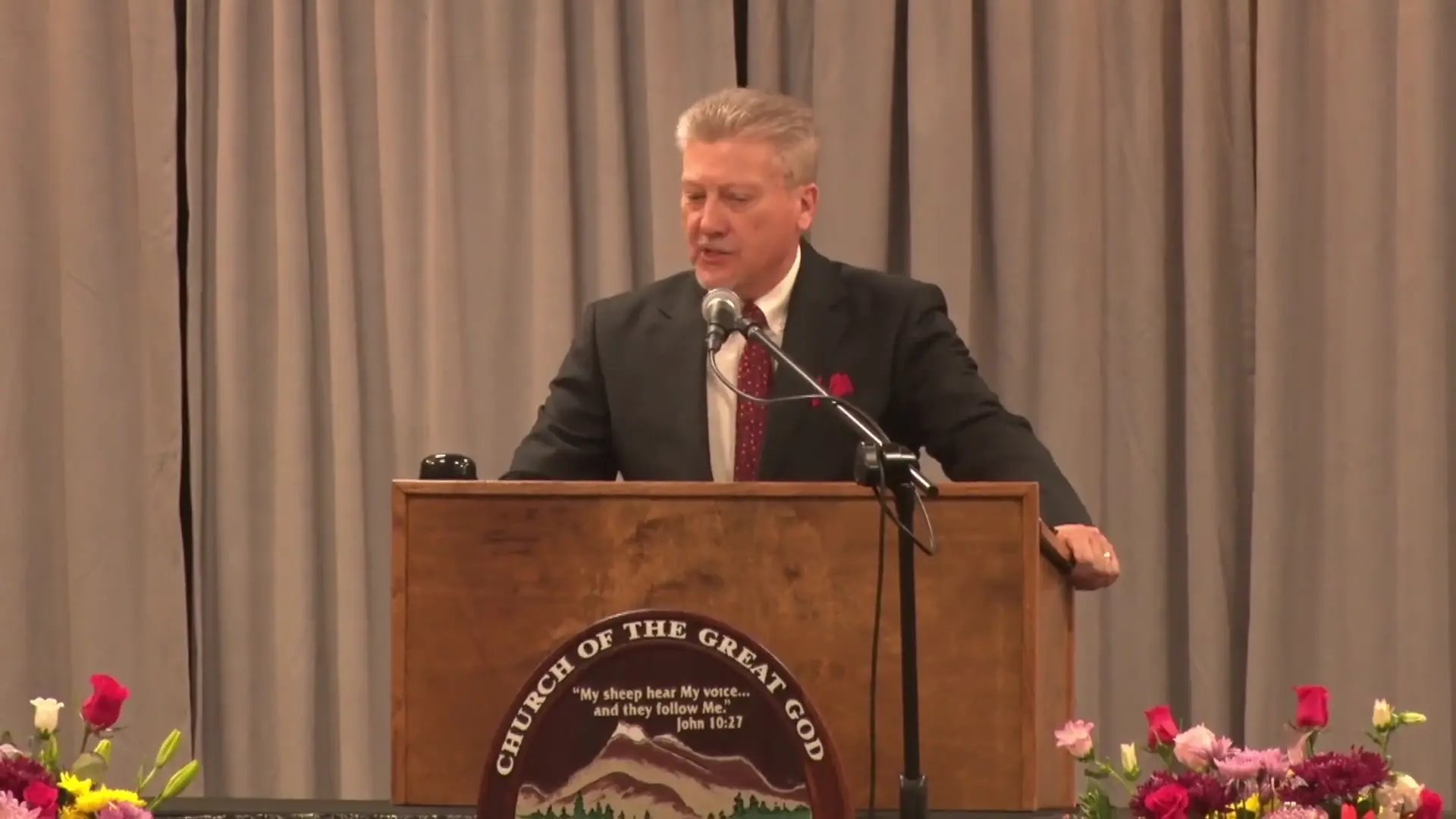
Feast of Tabernacles Sermon by Richard T. RitenbaughRevelation 5:10 declares that God has made His people kings and priests who will reign on the earth. This is not a figurehead role like modern constitutional monarchies, but genuine ruling authority, symbolized by a rod of iron. The question naturally follows: are God's people actively preparing for this kingship? John 14:1-3 reveals that Christ, since His ascension, has been preparing a place, an office, for each of His followers. At His return, He will resurrect His firstfruits and invite them to join Him in ruling the earth. The Bible itself serves as the royal instruction manual, containing the laws, principles, and character of God that future kings will need. Deuteronomy 17:14-20, titled "Principles Governing Kings," provides five foundational lessons for those being prepared to rule. First, the king must be an Israelite whom God chooses. Spiritually, this refers to God's calling and election. Those called, baptized, and Spirit-led become the spiritual Israel of God. The name Israel means one who prevails with God, pointing to the essential character trait of an overcomer. Revelation 2 and 3 confirm that those who overcome will be granted thrones and share in Christ's inheritance. Second, the king must not multiply horses. Horses represent military power and worldly ambition. God's instruction is to avoid trusting in carnal methods of gaining power and instead trust Him to fight spiritual battles. As Exodus 14 and 23 demonstrate, God promises to be an enemy to His people's enemies. The real battle is spiritual, fought against sin and false beliefs, and victory comes little by little through faith and endurance. Third, the king must not multiply wives. In the ancient world, kings used marriages to forge political alliances. Spiritually, this warns against forming covenantal ties with worldly beliefs and distractions that compete with loyalty to God. God
The Gifts We've Been Given
Sermonette by Ryan McClureThe gift of the Holy Spirit, leading to an intimate relationship with God, eternal life in the God family as called out firstfruits, is priceless.
Abraham (Part Five)
Sermon/Bible Study by John W. RitenbaughWe learn from Abraham's experience to trust God even when we have incomplete information. When we attempt to take the expedient way out, we will run into trouble.