


Filter by Categories
The Last Adam
Sermonette by Ryan McClureThe first Adam yielded to sin and brought death upon humanity; the last Adam beat sin and is on course to permanently destroy death.
Letters to Seven Churches (Part One): Introduction
Sermon by Richard T. RitenbaughThe title "Alpha and the Omega" appears at a pivotal moment in Revelation 1:8, immediately following a crescendo of greetings from the Father, the seven Spirits, and Jesus Christ, and directly after the dramatic announcement, "Behold, He is coming with clouds." This declaration serves as the answer to the troubling reality just described—that Christ's return will be accompanied by great tumult, natural disasters, and worldwide anger directed at God's people because humanity cannot strike out at God Himself. In response to this coming difficulty, Christ identifies Himself: "I am the Alpha and the Omega, the Beginning and the End, says the Lord, who is and who was and who is to come, the Almighty." This title functions as the assurance that believers will get through the terrible times ahead, because the One on their side is incomparably more powerful than any opposing force. The phrase "Alpha and Omega," along with the parallel expressions "Beginning and End" and "First and Last," is explained as a merism—a literary device using two opposite extremes to represent the whole and everything in between. Thus, Christ is declaring that He is everything to His people, encompassing all that exists from start to finish. This title, then, is not merely descriptive but functional: it is meant to secure, sanctify, and save those who trust in Him. The title recurs in Revelation 1:11 and 1:17-18, where the glorified Christ, appearing amid the seven lampstands (representing the seven churches), again identifies Himself as "the Alpha and the Omega, the First and the Last," adding "I am He who lives, and was dead, and behold, I am alive forevermore... I have the keys of Hades and of Death." This repetition reinforces that the One giving instruction to the churches through the letters in chapters two and three is this same eternal, all-encompassing, resurrected Being who holds ultimate authority over life and death. This connects to the broader purpose of the introduction to Revelation: establishing that the entire book, and particularly the letters to the seven churches, comes with the highest possible authority and personal significance. The title "Alpha and the Omega" grounds the reader's confidence that despite the severity of the Day of the Lord and the trials it brings, the eternal, almighty Christ who spans all time and holds all power is personally present, working within His church, and fully capable of bringing His people safely through to His Kingdom. The self-identification as Alpha and Omega thus frames the letters that follow not as abstract prophecy but as personal, authoritative communication from the One who is himself the totality of the answer needed to endure the coming trials.
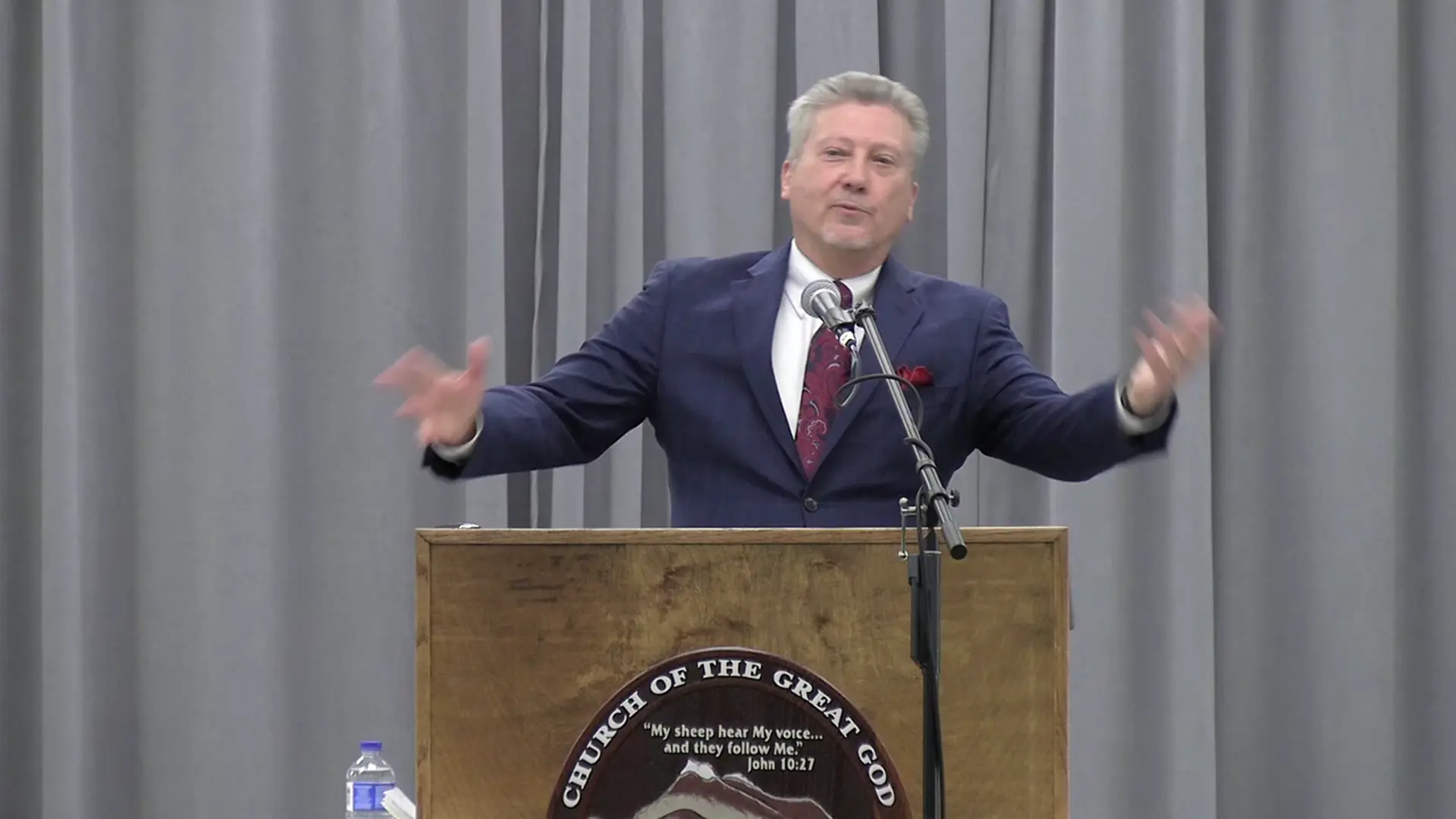
Jesus in the Feasts (Part Six): The Eighth Day
Feast of Tabernacles Sermon by Richard T. RitenbaughThe title "Alpha and the Omega" appears within a broader discussion of the Eighth Day of the Feast of Tabernacles as the festival on which Jesus Christ is revealed as our "all in all," the culmination of everything the holy days teach about Him. This title, drawn from Revelation 1, is presented as a merism—a rhetorical device in which two opposite extremes represent an entire spectrum, such as "heavens and earth" in Genesis 1:1 signifying all creation. Since Alpha is the first letter of the Greek alphabet and Omega is the last, Christ's declaration "I am the Alpha and the Omega" means He is everything in between as well; He encompasses the totality of all things. This title is paired with related merisms in Revelation 1:8, 11, and 17-18: "the Beginning and the End" and "the First and the Last." Together these phrases confirm that Christ is present and active throughout the entire span of God's plan, whether one considers the whole scope of salvation from its conception to its fulfillment, or an individual believer's journey from calling to glorification. He is always there, always working, and never gives up. These titles also point to Him as the eternal "I AM," described as "Him who is and who was and who is to come." John introduces Christ with this language as a comforting assurance to the seven churches, following a recounting of Christ's accomplishments—His sinless life, His sacrificial death, His resurrection, His conquest of death, and His ascension to divine authority. Because He is the Alpha and Omega, believers need not fear the world's rejection of Him, coming tribulation, persecution, or even death, since He has already conquered the grave and holds the keys of Hades and Death. His sovereignty is absolute; no earthly or spiritual power can diminish it. This theme connects directly to the Eighth Day's significance as pointing to Christ as the believer's everything—the source of all wisdom, righteousness, holiness, and power needed to attain God's Kingdom. Just as Ephesians 1 describes believers as the body of Him "who fills all in all," the Alpha and Omega title reinforces that Christ lacks nothing and therefore believers, united with Him, lack nothing either. The repetition of "Alpha and the Omega" in Revelation 22:13, alongside "the Root and the Offspring of David" and "the Bright and Morning Star," reaffirms this same truth at the very close of Scripture: Christ is the sum and totality of all that is needed for salvation, urging the faithful to endure, remain close to Him, and trust in His complete sufficiency until His promised return.
Then Comes the End
Sermonette by David C. GrabbeChrist's return marks the beginning of the end of mankind's problems. However, His return will not be the final end, which comes when God is all in all.

Teachings from Tabernacles
Feast of Tabernacles Sermon by David C. GrabbeThe temporary dwellings remind us that nothing earthly is permanent nor our true inheritance, and that our focus must be on what God is doing.
The All-Important Introduction to Revelation
'Prophecy Watch' by Richard T. RitenbaughSkipping the first chapter of Revelation deprives us of vital information necessary for understanding the rest of the book.
Time and Life
'Ready Answer' by Richard T. RitenbaughThe title "Alpha and the Omega" appears directly connected to the discussion of how God relates to time, drawn from Revelation 1:8, where the Lord declares, "I am the Alpha and the Omega, the Beginning and the End," who "is and who was and who is to come, the Almighty." This declaration corresponds to the meaning behind the divine name Yahweh, translated LORD, which signifies "He who is." Isaiah's statement that God "inhabits eternity" (Isaiah 57:15) reinforces this concept, suggesting that God moves freely through time, since He created it and holds power over it. Because Hebrew possesses no general word for time, the term used by Isaiah, ad, conveys duration, perpetuity, and continuity rather than a linear sequence of moments. Moses expresses a similar idea in Psalm 90:2, declaring that God exists "from everlasting to everlasting." Together, these passages establish that God is, has always been, and always will be, regardless of how human beings perceive or measure time. This eternal nature is further illustrated by the name I AM (Exodus 3:14), which points not merely to God's existence but to the unsearchable depth of His being, echoing Paul's exclamation in Romans 11:33 concerning the unsearchable riches of God's wisdom and knowledge. Because God is unconstrained by time, He is able to work out His entire plan across the whole span of history, declaring "the end from the beginning" and bringing to pass what He purposed from ancient times (Isaiah 46:9-11). This timeless power over history gives deeper meaning to Jesus' words that "with God all things are possible" (Mark 10:27), since only a Being untouched by the limitations of time could prophesy an event in the distant past and fulfill it in the present. Psalm 90 draws out the practical implications of this eternal perspective by contrasting God's view of time with man's. To God, thousands of years pass "like yesterday" or "like a watch in the night," and He is able to resurrect the dead after long ages have passed, demonstrating that time and death present no barrier to His power. Man, by contrast, experiences life as brief and full of labor and sorrow, fearing death because of unbelief in God's power to save (Psalm 78:22). This eternal, all-powerful identity of God as the Alpha and the Omega therefore forms the foundation for hope: because He who is, was, and is to come has promised salvation, believers can face death without terror, trusting that the same God who spans all time will raise them to eternal life at the appointed time.