


Filter by Categories
Our Part in the Sanctification Process (Part Five): Cultivating Patience
Sermon by David F. MaasThrough yielding to the grueling sanctification process, we are also learning to be obedient, reflecting the very character of Almighty God and are sharing with our Elder Brother the privilege to glorify our heavenly Father. As Jesus, while a human, was purified through suffering, our sanctifying process does the same thing to us as we patiently weather the trials of our spiritual pilgrimage. We must refrain from resisting or running away from the tests that God is putting us through but must paradoxically welcome, even embrace these character-building trials as part of the magnificent workmanship God is shaping in us. In II Peter 1, the apostle Peter gives us some incremental steps to grow in grace and knowledge, attaining the mirror image of Jesus Christ. Notice again how patience and self-control (the fourth and ninth of the spiritual fruits listed in Galatians 5:22) are inextricably intertwined. James 1:4 teaches us that if we allow God to test us, letting endurance and steadfastness and patience have full play and do a thorough work, we would be perfectly and fully developed with no defects, lacking in nothing. Likewise, Paul placed self-control at the very end of the list of spiritual fruits, indicating that the perfect character of Christ cannot be developed in us unless we cooperate with our Creator, exercising maximum effort, tending to our part in the sanctification process. We see that God Almighty always gives us a life raft to take hold of amidst a trial, but He expects us to exercise effort to take hold of this assistance trusting His unfailing providence. Notice that humility connects to patience as pride connects to impatience. One cannot expect to carry out Christ's mandate to forgive others as our heavenly Father has forgiven us unless we reciprocate this love by forgiving others. Some of these strategies include: learning to despise the victim mentality (encouraged by the liberal media-industrial complex), self-reflexively responding instead of automatically reacting, replacing pride with humility, welcoming trials and tests as opportunities for physical and spiritual growth, and committing the future to God Almighty. We, of course, realize that while we may meticulously and diligently make plans, God will ultimately direct and establish our steps (Proverbs 16:9), and when we do commit our ways and delight ourselves in the Lord, He will give us the desires of our heart (Psalm 37:4). We need to imitate our Trailblazer and Elder Brother, refusing to ever wear the filthy, polluted rags of victimhood, exchanging them for a faithful acceptance of certain victory as we proactively yield to God's creative workmanship and purpose for our lives. Like the paragon of patience, we know as Job, we often are not in control of our experiences, but we not only have the capability of controlling our evaluations, but are commanded to do so, learning to mindfully respond to all our circumstances instead of fearfully and automatically reacting to them. With the continued learned practice of regular systematic meditation, we learn to turn stressful situations into quietude and oases of tranquility. The Scriptures reveal that emotional control is something that people learn from modeling behavior from other people. Our family, our friends, the media we watch all mold our emotional repertoire. Anger and impatience are learned emotions just as contentment and patience are also learned emotions reinforced by diligent practice. All of us, having garden variety human nature, would like to run away from stressful or unpleasant situations, resisting any event which threatens to destroy our sense of equilibrium. The difference between the two, she claims, lies in, a deep breath, a pause, or a brief moment of mindful presence. That moment can mean the difference between sending the entire situation or relationship soaring to greater heights or falling down a precipitous slippery slope. Reactions, she states, are purely instinctual and ste
Like a Growing Seed (Part One)
CGG Weekly by Richard T. RitenbaughIn this parable, Jesus uses the natural process of plant growth to explain how those whom God calls develop spiritually in this world. The process is quite simple, paralleling the growth of a seed into a full-grown, food-producing plant. Just like the growth of a plant, it happens invisibly and somewhat mysteriously too. One becomes spiritually mature in a similar way; the spiritual process contains many parallels. The sower sows the seed and goes his way, sleeping and rising, watching how things are going, but he really does not know how these things work. He knows that they happen, and he trusts that they will. This brings out the fact that the sower in this parable is not Christ but a human. If it were Christ, it could not be said that He does not know how they grow. This sower is a man whom God uses to sow the seed. He scatters the seed and then goes about his other tasks. Soon, the seed sprouts due to the resources that God provides; at a certain time, He supplies the light, warmth, water, and nutrients, and the seed germinates. The sower does little more than cast the seed. All that the sower—a minister—does is to speak a word, write an article, or preach a sermon. The recipient is attracted by it, but it is God who does the bulk of the work. Ministers are not aware of all the ways that God is working behind the scenes to bring a person to the knowledge of the truth. They understand that He does it but not the mechanics of how He opens an individual's mind, turns him to the truth, and allows him to begin to accept His way of life. Ministers, like the sower, just go to bed at night and get up the next morning to continue to do His work. God does the rest, working invisibly and mysteriously to bring forth a productive plant. His work goes far beyond just helping the plant to sprout, for He also wants to see the head, after that the full grain in the head. He is looking forward to the fully developed plant, along with ripened, finished fruit—spiritual maturity. A Christian develops spiritually in the same way as we see in this analogy. God will use whatever method He chooses to get a person's attention. It might be something insignificant that we might not think would catch anybody's eye, but in God's hand, it is sufficient to lead the individual to the truth. That is just the beginning. God continues to work with him in ways that are beyond human discernment. A minister can be highly instrumental in feeding and cultivating the individual, but he cannot see the invisible, spiritual ways that God is developing that person for His Kingdom. He may have a long experience in the churches of God, but it is not necessarily the case that a minister will be able to see someone's spiritual growth in detail. In the same way as the plant's growth is described in the parable, a minister may be able to see major changes, but they are crude gauges of all the development that is taking place. He cannot discern each individual's efforts to grow. Growth is taking place despite it being unseen. If a person inspects his plantings each day, he will see almost no growth from the day before, but if one waits a few days or week between inspections, it is amazing how much they have grown. Similarly, each Christian grows in stages and at a slow enough pace that it can seem like no growth at all. But God is working, and He is aware of the growth and that should be very encouraging.
Like a Growing Seed (Part Two)
CGG Weekly by Richard T. RitenbaughLike its physical counterpart, spiritual growth happens slowly. A newly baptized Christian will not produce the fruit of the spirit as easily as a mature one.
Lessons From Roots (Part Two)
CGG Weekly by David C. GrabbeIn John 15, Jesus teaches that God wants us to produce much fruit, but we can do it only if we continue in Him, the Vine, which is an extension of the roots. As Colossians 2:7 says, we are rooted and built up in Him. Christ, along with the Father in heaven, is our source of strength, stability, and every resource we may require to produce fruit. We also found in the Parable of the Sower (Matthew 13:3-9, 18-23) that roots are necessary to keep us viable and growing during adversity. If the roots are not strong and deep, blazing sun or violent wind or excessive rain will make quick work of a weak plant. Instead, we want to be like the deeply-rooted tree described in Jeremiah 17:7-8, a metaphor for the man who trusts in the LORD. We can combine this with another biblical principle, that fear and love are opposites (II Timothy 1:7; I John 4:18) and counteract each other. If we, then, eliminate fear and anxiety by putting our trust in God, we will be able to love without the fear of being vulnerable or without the fear that we will not have enough for ourselves. When we are confident that God will make it right if we do our parts and trust Him, we will not fear the heat of adversity, as in the Parable of the Sower. We will not panic when drought strikes and everything is drying up around us because we will be tapped into the Source of living water. But it all comes back to the roots to the growing connection with God. It takes time for this to develop. Sometimes we get discouraged because we fall short, and perhaps we just cannot seem to produce the right kind of fruit, even after years in the church. But fruit is not produced overnight. We must remember that producing godly fruit is part of a larger overall process, one that takes time. A variety of Chinese bamboo exhibits a growth pattern that should be encouraging to us. Shortly after this bamboo is planted, a small shoot with a leaf emerges from the ground. The diligent grower persistently waters it, weeds around it, and cares for it. At the end of one year, there is still nothing more than the small shoot, so the grower must keep watering and tending it for a second year. At the end of the second year, it still has nothing to show for itself, except the tiny shoot which frankly tells the grower little more than that the bamboo is alive. The grower needs to resist despair and care for the little shoot for a third year and then a fourth. Still it displays no other sign of visible growth. The process must be continued for yet one more year. The grower has cared for this bamboo for five years, and he has nothing more to show for his time and efforts than the little shoot he started with. Discouragement is bound to set in. But after the five years have passed, one day the grower will visit the bamboo shoot and find that it is almost two feet tall essentially overnight. When he returns the next day, it is nearly four feet tall, and over the span of the next six weeks, that reluctant bamboo shoot grows to be over 80 feet tall. During those years, when no one could discern that anything was happening, the root structure was being developed underground. There was no visible growth, but growth was nonetheless taking place. When the time was right, the little bamboo plant came into its own in a dramatic way. God is always working, and what He is working on is us (John 5:17; Genesis 1:26; Ephesians 2:10). We may get discouraged when we stumble, feeling cut off and despairing that we are not making any progress. Yet, if we are still abiding in Him and continuing in that relationship, growth will be taking place. And when the time is right no matter how long we must diligently persevere in cultivating our relationship with God we will bear fruit, and God will be glorified. If we are intent on bearing fruit, we can do some things to make sure that we are not inhibiting the process. In this parable, the owner represents the Father. The keeper represents Jesus Christ, the Advocate and Interces
What Is Real Conversion? (Part Two)
CGG Weekly by Richard T. RitenbaughSome in Antioch believed the preaching of the persecuted Christians, and they not only agreed with the teaching but also changed or transformed their lives.
Growing to Perfection
Article by Charles WhitakerSpiritual growth mimics our physical growth to maturity. If we continue in the process, we will 'grow into' our potential as God's children.
Perfection...Piece by Piece
'Ready Answer' by Mike FordWhat is perfection? Does God require perfection of us? The Bible defines perfection in a surprising way, and tells to what standard God holds us accountable.
Magic Doesn't Work (Part Three)
Sermon by Richard T. RitenbaughMagic is always used as some kind of weapon, but not to build or develop moral strength or character. God chooses a life-long process of sanctification.
Patience
Sermonette by James BeaubelleBecause none of us know when Christ will return, we must ask God for patience for the changes that work to build our future in the Kingdom of God.
God's Creation and Our Works
Sermon by John W. RitenbaughLike Joseph, we need to realize that God—not ourselves—is the Creator, engineering events that form us into what He wants us to become.
The Endurance of the Firstfruits (Part One)
CGG Weekly by David C. GrabbeThe seven Sabbaths in the count to Pentecost represent the process of the firstfruits becoming spiritually complete, that is, perfect and blameless.
Holy Days: Unleavened Bread
Bible Study by StaffThe Feast of Unleavened Bread immediately follows the Passover. In it we see how hard it is to overcome and rid our lives of sin.
Still Producing Fruit?
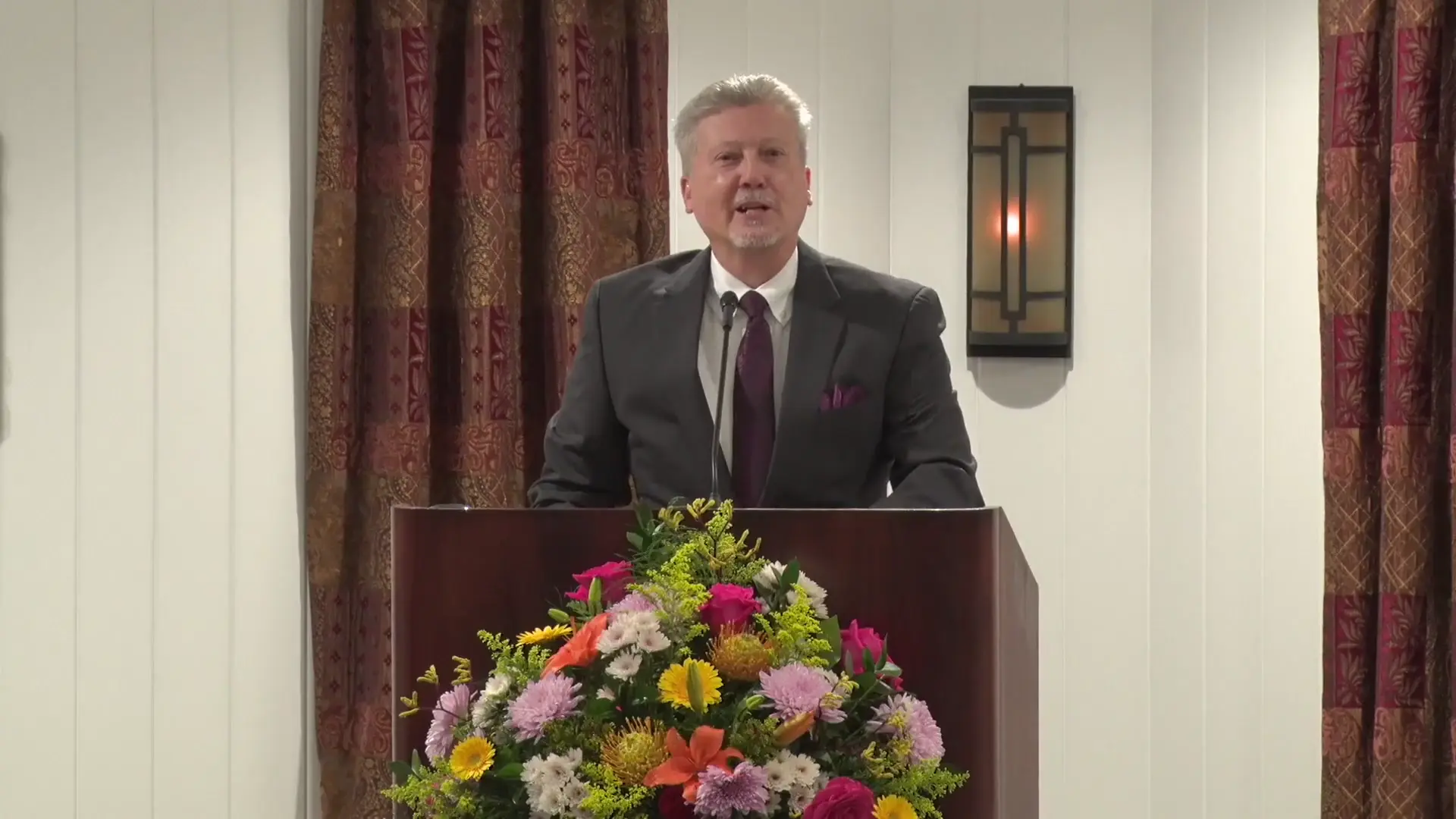
Sermon by Richard T. RitenbaughSpiritual growth is the process of producing fruit throughout the years of conversion. God describes this period through the fifty days counted to Pentecost. These days represent the time of labor in the field until the harvest. The process requires abiding in Christ to bear much fruit. Without this connection nothing can be accomplished. The individual must receive the word with a noble and good heart. Such a heart keeps the word and bears fruit with endurance. The process includes being filled with the knowledge of the divine will in wisdom and spiritual understanding. It advances to a walk worthy of the Lord that is fully pleasing. Fruitfulness appears in every good work while knowledge of God increases. Strength grows according to divine power for all patience and longsuffering with joy. Thanksgiving rises to the Father who qualifies for the inheritance. The process demands patience as the farmer waits for the precious fruit of the earth. Endurance continues until the coming. The fruit of the Spirit must be cultivated daily. These fruits are love, joy, peace, longsuffering, kindness, goodness, faithfulness, gentleness, and self-control. They must appear in the walk. The process cycles through knowledge applied in service. Service yields experiential knowledge that refines approaches to others. Character solidifies so that the way is never abandoned. The result is much fruit that remains and glorifies the Father.
Principled Living (Part Three): Growing in Righteousness
Sermon by Richard T. RitenbaughGod's law—the unleavened bread of righteousness—needs to be ingested into our minds as we purge sin, resulting in righteous thoughts, words, and deeds.
The Offerings of Leviticus (Part Nine): Conclusion (Part Two)
'Personal' from John W. RitenbaughThere must be something to prove we are one with Christ and in union with the Father and the Son. That something is the manner in which we conduct our life.
Christ Our Standard
Sermon by Richard T. RitenbaughKnowledge of God's truth is useless unless it is acted on. God will only accept children who follow Christ's example and conduct their lives by His high standards.

Five Teachings of Grace
'Personal' from John W. RitenbaughProtestantism unthinkingly presents grace as "free." However, Scripture shows that God expects a great deal of effort from us once we receive it—it is costly.
The Covenants, Grace, and Law (Part Nineteen)
Sermon by John W. RitenbaughThe spirit of the law does not do away with the letter of the law; without the letter, there is no spirit because there is no foundation. Examples show God's will.
A Seed of Highest Quality
Sermon by Martin G. CollinsGod calls Israel a seed of highest quality, but she turned into a degenerate vine, bearing bitter fruit, rejecting God and relying on her own resources.
From Rubble to Utopia
Feast of Tabernacles Sermon by Richard T. RitenbaughThe World Tomorrow is not going to happen because of an instantaneous miracle. God takes His time to produce both physical and spiritual changes.
Abraham (Part Nine)
Sermon/Bible Study by John W. RitenbaughGod helps us to overcome our problems in an unraveling process, sometimes taking us back through the consequences of the bad habits we have accumulated.