


Filter by Categories
God's Powerful Gospel
Sermon by Richard T. RitenbaughThe gospel, as presented by God, is not a matter of argument or debate but a powerful declaration. He does not cajole or compromise; He simply announces the message, giving the hearer the choice to accept or reject it. As Jesus instructed His disciples, they were to proclaim the gospel in a place, and if it was not received, they were to move on without pleading or bickering. This approach remains unchanged today, with the gospel offered as a non-negotiable package—either accepted wholly or not at all, with no alternative paths to the Kingdom of God. The gospel is the power of God to salvation for those who believe. It is not merely words but a dynamic force, embodying God's means to teach, motivate, and create salvation. This power, rooted in the Greek term "dunamis," conveys explosiveness, akin to dynamite, working both constructively and destructively. It destroys sin and ungodliness while building righteousness and holiness, actively transforming the believer into the image of God. The gospel is living and powerful, piercing deeply to discern thoughts and intents, cutting away what is not of God and making room for what is holy. This transformative power operates continuously, never static, always driving toward the goal of eternal life. It bridges the gap between death and life, revealing God's way of life to humanity through a lifelong process of growth. The gospel moves believers from faith to ever-increasing faith, aiming to shape every thought, word, and deed by faith in Him. It is a relentless force, like ocean waves, persistently working to perfect and fulfill God's purpose in us, leading to salvation and entrance into His Kingdom.
The Greatness of God's Power
Sermon by Martin G. CollinsTrue power belongs to God alone, and His greatest demonstration of power is in the area of salvation and individual calling to His truth. In the New Testament, the emphasis of God's power shifts to the spiritual, as Christ, having all authority from His Father, used it to forgive sins and cast out evil spirits, giving authority to His disciples to share in His work. The apostle Paul, in his letter to the Ephesians, emphasizes the immeasurable greatness of God's power working in believers, not as something they achieve, but as God's power residing within them, assuring true Christians of confidence in His promises. Paul sees the gospel as the means by which this power operates in people's lives, with the resurrection of Christ as the primary evidence of God's might, illustrating that this same power is at work in us. Salvation is not a result of human effort combined with God's power, but entirely the result of God's power working in and through us. Paul prays for the Ephesians to advance in understanding what God is working out in them, countering human doubts and weaknesses that arise from the pressures of life, worldly distractions, and the subtle influences of a powerful spiritual enemy. Despite these challenges, God's power surpasses all obstacles, as Paul describes it as an exceeding greatness, an energy of strength and might that overcomes all resistance, working dynamically in believers. The process of Christian conversion and ultimate salvation is a demonstration of God's power within us, as no human can make themselves a Christian; God alone accomplishes this. Through the preaching of Christ crucified, God calls people by opening their eyes of faith to believe the gospel, a supernatural work of the Holy Spirit bringing deep conviction. Paul underscores that Christians are God's workmanship, with His power beginning and completing the good work in them until the day of Jesus Christ. This power transforms believers into a new creation, regenerated with new life, not merely remade, but fundamentally changed by God's mighty action imparting a new disposition that governs their faculties in a different direction. The resurrection of Christ serves as the ultimate proof of God's power, demonstrating that every obstacle and enemy, including death, is overcome. By raising Christ from the dead, God shows that nothing can withstand His might, ensuring that His purpose for believers will be fulfilled. This power makes us alive together with Christ, imparting a new Spirit of life, renewing us daily, and countering the former state of spiritual death. As a new creation in Christ, believers see and understand differently, not due to changed faculties, but because of a new governing principle resulting from God's power. Thus, the gospel embodies the power of God for salvation, working in us to overcome all hindrances and lead us to the glory for which we are destined.
The True Gospel (Part 3)
CGG Weekly by Richard T. RitenbaughThe gospel of Christ is the power of God to salvation for everyone who believes, serving as the means or vehicle that God uses to save us as long as we live by faith. This power, derived from the Greek word dunamis, conveys an idea of stored energy ready to burst into action, propelling a believer to eternal life through the dynamic message Jesus Christ preached. However, the gospel is not universal in its application, as it will not save even those who profess Christ if they do not believe. True belief involves not just agreement with Christ, but also doing what He says, living like Him, and walking by faith. The gospel reveals the righteousness of God from faith to faith, instructing us in doing what is right, godly, and faithful.
Importance of the True Gospel
Feast of Tabernacles Sermon by Richard T. RitenbaughThe gospel, as brought by Jesus Christ, embodies the power of God unto salvation for everyone who believes. This message is not merely words, but a dynamic force, akin to dynamite, propelling the faithful toward eternal life. Within the gospel, God's righteousness is revealed, not as a static concept, but as an active, motivating power that works to move believers toward salvation. This revelation comes by faith to the faithful, urging them to live by faith and fulfill God's righteousness in their lives. The gospel contains everything needed to achieve this ultimate goal, serving as the vital understanding that Jesus brought, entrusted to Him as the supreme Messenger by God Himself. It is a comprehensive gift, teaching believers to reject evil, embrace righteousness, and focus on the glorious appearing of our great God and Savior, Jesus Christ, while providing the vision of the Kingdom of God as the ultimate destination.
Seeking God's Will (Part Five): Goodness
Sermon by Richard T. RitenbaughGod employs goodness when He shakes us out of complacency and directs us toward repentance. God's goodness is there to take advantage of if we trust Him.
Works of God
Sermon by Richard T. RitenbaughThe idea that the 'work of God' is equated with 'preaching the gospel around the world as a witness' severely limits the awesome scope of God's work.
God's Perseverance With His Saints (Part Two)
Sermon by Martin G. CollinsWe seriously err if we rely on the secular media to give us spiritual understanding. God sends strong delusion to those who do not love the truth.
What Do We Have to be Proud Of? (Part One)
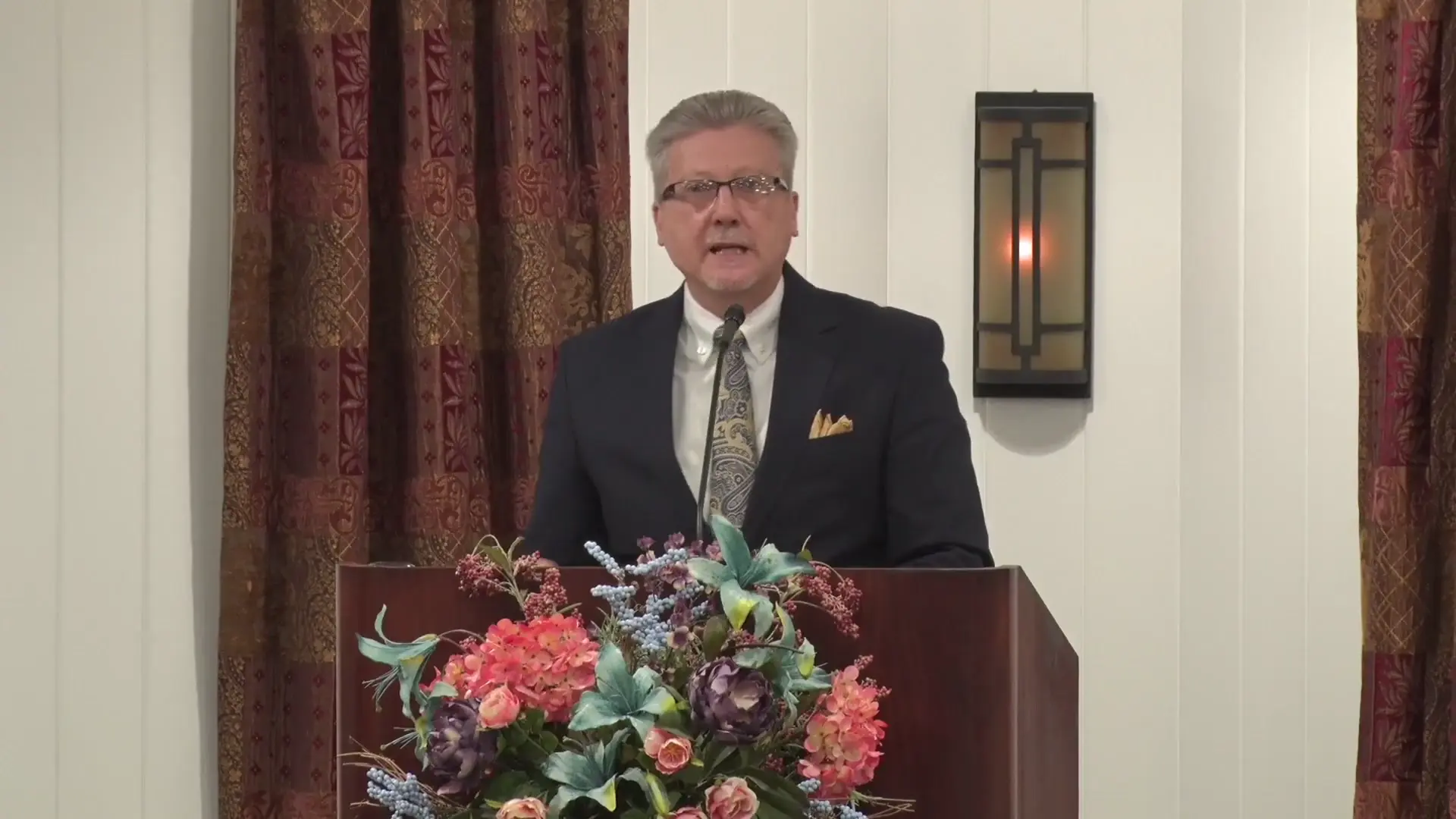
Sermon by Richard T. RitenbaughThe gospel occupies a central place in Paul's argument to the Corinthians, functioning as the dividing line between worldly wisdom and godly wisdom. Paul introduces this concept directly in I Corinthians 1:18, declaring that "the message of the cross is foolishness to those who are perishing, but to us who are being saved it is the power of God." This statement establishes a fundamental dichotomy: the same gospel produces opposite reactions depending on whether one has been called by God. Those who are spiritually dead view the message of Christ's death as foolish and illogical, while those who have been called into God's church recognize it as the very power of God unto salvation. This truth directly addresses the Corinthians' core problem—their prideful conviction that they possessed superior wisdom, knowledge, and judgment. Paul demonstrates that both major worldly groups, Jews and Greeks, reject the gospel precisely because neither possesses the capacity to understand it. Jews demanded miraculous signs, while Greeks sought polished philosophical reasoning; neither group desired the actual power of God unto salvation, preferring instead their own methods of achieving self-styled wisdom. Paul insists that both groups are unqualified to judge the gospel because their mental and spiritual faculties cannot access spiritual truth. Christ crucified—the gospel message itself—is deemed a stumbling block to Jews and foolishness to Greeks, yet to those who are called, "Christ the power of God and the wisdom of God." This power operates through the Holy Spirit, which God gives to believers so they might comprehend "the deep things of God." Paul explains that natural human intellect, however impressive in worldly matters, cannot grasp spiritual truth because such things are spiritually discerned. Only those possessing God's Spirit alongside their human spirit can understand the gospel's true significance. This is why the gospel functions as saving power exclusively for the called—it requires spiritual equipment that the unconverted simply do not possess. Paul reinforces this by reminding the Corinthians that they themselves were not called from among the wise, mighty, or noble of the world, but were themselves "foolish, weak, and lowly" before their calling. Their only genuine distinction rests in being "in Christ Jesus, who became for us wisdom from God." This directly counters their inflated self-image, showing that whatever spiritual understanding they possessed came not from their own faculties but from the saving power of the gospel working through Christ. The gospel's power to salvation thus becomes Paul's foundational corrective throughout these chapters. By establishing that salvation comes through a power fundamentally beyond human wisdom, accessible only through the Spirit and centered entirely in Christ crucified, Paul dismantles the Corinthians' partisan boasting in human leaders like Paul, Apollos, and Cephas. Since salvation itself operates through divine power rather than human wisdom, no minister deserves the glory the Corinthians had assigned them—all credit belongs to God, who alone gives the increase.
Israel's Restoration and the Zeitgeist of Zeal
Sermon by Charles Whitaker (1944-2021)After the Tribulation, God promises to restore Israel to the promised land where she will have a chance to learn and live God's truth in the Millennium.
Works of Faith (Part One)
'Ready Answer' by StaffMany think works and faith are incompatible, but the Bible tells us to do works of faith. What are they? These are things we must do during the salvation process.
Facing Times of Stress: Persecution
Sermon by Martin G. CollinsPersecution involves a wide spectrum, ranging from torture, physical beating, social excommunication, imprisonment and death. Our boldness should match Paul's.
Don't Give Up!
Commentary by John W. Ritenbaugh (1932-2023)We must reorient our focus onto God's Word and His message of hope, never giving up our quest for righteousness and integrity in the midst of immorality.
Will Jesus Be Ashamed of You?
Sermon by Martin G. CollinsWe are never to be ashamed of God's truth no matter what the consequences. For those who keep this charge, God will reciprocate with honor.
The Holy Spirit and the Trinity (Part Five)
Sermon by John W. RitenbaughGod's Spirit is the essence of His mind rather than a third person. With this Spirit, God opens our minds, dwells in us, and transfers His nature to us.
Guard the Truth!
Booklet by John W. RitenbaughThe true church of God is an invisible, spiritual organism, of those people that have and are led by the Spirit of God, who hold fast to apostolic teaching.
Made Alive by Exceeding Greatness!
Sermon by Martin G. CollinsGod granted humans a limited measure of power and dominion at creation, but not until the Day of Pentecost of 31 AD did their potential become fully operative.