


Filter by Categories

The Model Prayer (Part One): Introduction
Bible Study by Richard T. RitenbaughPrayer is a genuine, one-on-one conversation with a real Person who desires a real relationship with those He calls. Jesus models it by speaking to His Father often, rising well before dawn, withdrawing to private places, and sometimes praying all night before significant decisions. He instructs His disciples to pray always, making it a consistent and regular part of worship, and to ask the Father in His name, since through prayer they have direct access to the Father, who responds in love as He did to Christ. The Pharisees' public prayers, offered for the approval of men, are hypocrisy, so Jesus directs His followers to a private place away from an audience. Equally wrong are vain repetitions and memorized rote prayers, which treat God like an unhearing idol of wood, stone, or metal. We should speak reverently and respectfully, yet personally. The model prayer is not to be recited mindlessly. It is an outline on which to hang our own far longer, deeper, and more personal words as circumstances warrant. It begins and ends with praise of the Father, gives priority to His Kingdom and will, and places in the middle our daily needs, forgiveness, and help against trials and Satan.
Avoiding Prayer? Consider Carefully
CGG Weekly by Richard T. RitenbaughIn the rush of modern life, prayer often suffers, yet it remains a vital part of the Christian walk. Prayer, at its core, is communication from human beings toward God, a means of speaking one on one with the great God of all the universe. It is far more than asking for things; it is a way to acknowledge and praise God for His holiness and perfect character, fostering a humble and deferential attitude before Him. Through prayer, we express solidarity with His plan of salvation by stating, "Your kingdom come," recommitting daily to His purpose and orienting our lives toward eternal life in His Kingdom. We also submit to His will, declaring, "Your will be done on earth as it is in heaven," rising from prayer with a determination to fulfill His purpose in every thought, word, and deed. The benefits of prayer are immediate, personal, and primarily spiritual, focusing us on our relationship with God, reminding us that He is in charge and has everything under control. Done right, time spent speaking with God reorients us toward Him and His work, strengthening and preparing us for the day ahead. Avoiding prayer signals a weakening heart and prioritizes other things over our relationship with Him, doing a grave disservice to our Christian growth. Instead, we must right the ship with sincere, fervent, and regular prayer, trusting God to bring us safely to port.

The Model Prayer (Part Two): Our Father in Heaven
Bible Study by Richard T. RitenbaughPrayer is a form of communication from subject to Sovereign, where the former requests aid from the latter, much like supplicants approaching a king's throne for a boon. It aligns with the idea of making requests known to God, emphasizing a humble beseecher asking for help from the Most High. Jesus instructs that prayer begins by addressing God as "Our Father in heaven," setting the tone of reverence and identifying the august Recipient of our petitions. This salutation establishes the proper frame of mind for the requester, acknowledging a unique relationship with God as Father, shared among a special group who can claim Him as such through a spiritual connection. This connection allows for effective communication between earth and heaven. Addressing God as "our Father in heaven" also lifts our focus from the earthly to the heavenly, inspiring a mindset centered on spiritual matters and reminding us of our true position with Him, encouraging a godly way of life as we communicate with Him.
Unanswered Prayer
Sermonette by James BeaubelleEven though we often must wait for a response, God listens closely to our prayers from the heart and is looking out for our best interests.
Out of the Abundance of Our Prayers
'Ready Answer' by John O. ReidPrayer as conversation with God is a vital aspect of our spiritual journey. Initially, speaking to God for extended periods felt daunting, leaving us wondering what to say after the first few minutes. Over time, however, we have grown to understand that prayer is not just a duty but a direct line to God the Father's presence, made possible through the sacrifice of Jesus Christ. We can now approach His throne with gratitude for His grace, expressing our deepest thoughts and desires. In this conversation, the abundance of our heart speaks, as Jesus Christ taught that our words reflect our inner treasure. Just as we guard our speech with others, we must consider what we say to God. Do we organize our requests thoughtfully? Do we approach Him with the right attitude, recognizing the value of this dialogue? God knows every thought and emotion, seeing both our tender concern for others and our selfish tendencies. He discerns whether we truly value time spent in prayer or merely go through the motions. God shapes us for future roles in His Kingdom through these conversations. He listens to our words, evaluates our hearts, and considers our reasoning. While perfection in prayer is not required, striving to align our words and motives with His will should be our goal. Our prayers reveal our spiritual state, showing whether we focus on ourselves or extend concern for others, reflecting our growth and transformation into His image.
Agur's Prayer
Sermonette by Cody FordAgur presents prayer as an ongoing conversation with God that maintains balance and dependence rather than serving as a means to request personal success or material gain. After acknowledging his own limitations and the purity of God's words, Agur offers the only prayer recorded in Proverbs, requesting simply that falsehood be removed from him and that he receive neither poverty nor riches but only the food allotted to him. This concise petition reflects awareness of human tendencies toward extremes, where abundance can lead to denial of God and lack can lead to theft and profaning His name. The request demonstrates humility by seeking the minimum necessary to remain faithful rather than pursuing excess. Such an approach aligns with the principle that God supplies needs and that placing Him first allows all other matters to fall into place. The material extends this example into the broader practice of continual communication, noting that short, sincere exchanges build relationship just as a brief note from a child is welcomed by a parent. Constant contact prevents drifting into self-reliance, allows frequent requests for guidance and forgiveness, and reduces the likelihood of slipping into sin. Effective, fervent prayer, whether brief like Agur's or longer, is shown to avail much, as illustrated by Elijah, confirming that the essential element is ongoing dialogue with the Father rather than length or frequency of requests for personal advantage.
What Is Prayer?
Sermon by John W. RitenbaughPrayer is one side of a conversation with God that develops into intimate fellowship. The Greek term for this form of prayer originally described simply meeting someone along the way, then meeting and conversing, and finally sharing intimate fellowship. This progression shows that prayer places the one praying directly in God's presence rather than at a distance, allowing His character to shape the mind and heart through ongoing association. Such fellowship supports the larger work of reproducing God's holiness in His children. Just as human companions influence one another's character, conscious fellowship with God through prayer enables His nature to rub off on the believer, transforming perverse human tendencies into transcendent purity. The same word later took on the sense of presenting a petition to a king, indicating that this intimate access carries both privilege and the power that flows from the King Himself. Because prayer is conversation, it occurs in every emotional state and circumstance. It may be calm or urgent, thankful or pleading, and it always reveals what is truly in the heart. God intends these exchanges to be two-way: He supplies His thoughts through His Word, and the one praying returns those thoughts in the form of reasoned requests aligned with His will. This reciprocal communication supplies spiritual strength for overcoming, teaches sound judgment, and advances the purpose of perfecting holiness so that the believer may see the Lord.
Faith and Prayer
Sermon by John W. RitenbaughReal faith in the invisible God naturally expresses itself in talking to Him, because anyone who truly believes "He is" will draw near and seek Him out, as Hebrews 11:6 and Enoch's walk with God show. Knowing the true God, who has freely revealed Himself as a distinct personality for the sake of mutual trust, requires talking with Him and walking with Him daily, so prayer is the means by which a relationship is built and kept alive. Faith gives birth to prayer, and prayer in turn sustains and grows faith. Praying in faith means asking in line with God's will and purpose, as Jesus always did, and growing close to God is what lets a person know that will. Such praying expects an answer, for God cannot lie, and He is more willing to give than a father is to give good gifts (Matthew 7:7-11). Faith also obeys and waits patiently through delays, as with Lazarus and with Jacob's twenty years of waiting for reconciliation with Esau, because God's purpose comes first and He is working with others too. The Lord's Prayer's request for daily bread, patterned on the manna, teaches that prayer is a daily task and that the present belongs to us while the future belongs to God. Unnurtured, the relationship drifts, but fellowship, study, and trial strengthen it.
Prayer and Fervency
Sermon by John W. RitenbaughPrayer is fellowship with a living, dynamic Personality, not recitation to a set of doctrines, and it grows out of faith: "When we fellowship with Him, we talk to Him, and He talks to us." Faith, which is an operation of God and best understood as trust, clears the way to the throne of grace. Hebrews 4:14-16 invites believers to draw near with confidence, which carries the sense of speaking freely, because Christ the High Priest was tempted in all points yet without sin and can sympathize with human weakness. Believers can therefore open up to Him honestly, and He in turn encourages, exhorts, and comforts. Jesus' exchange with Martha in John 11 shows the point: He turned her from a mere fact about the resurrection to Himself as the Personality who makes it true. Trust in a Personality energizes prayer and brings firsthand knowledge of Him, so prayer's greatest fruit may be understanding what He is like. Prayer also springs from desire, which is born of an awareness of need and gives prayer its fervency. Prayer is the spoken expression of that desire. Examples include David's longing in Psalms 42 and 27 and Jacob's wrestling with God. The Laodiceans, proud and unaware of their need, had no desire, no prayer, and no relationship. The proper remedy is to ask God to impart fervency and to pray for His own qualities, not merely for material things.
Back to Basics
Sermon by Richard T. RitenbaughIncreasing knowledge without the capacity to process it leads to insanity. To combat information overload, we must get back to the basics of Christianity.
Do We Know God?
CGG Weekly by Pat HigginsHow can we build a relationship of such intimacy that God and Christ know it is a relationship that will last for an eternity?
Vain Repetitions
CGG Weekly by Richard T. RitenbaughPrayer is a formal conversation with the divine Governor of the Universe, so it should be neither a performance nor a recitation. Jesus warns against two mistakes: making prayer about ourselves, as hypocrites do when they pray publicly to be seen, and making it meaningless through vain, thoughtless repetition, which is heathen. The so-called Lord's Prayer is really a model prayer, a guideline for the attitude and subjects of our private prayers, not words to be rattled off mindlessly. Public prayer itself is not forbidden, and Scripture gives proper examples. We come before God to praise Him, thank Him, and ask help for others and ourselves, not for our own gratification and glory. A friend who greeted us every morning with the same words, droning on without pause, would be a bore whose one-sided talk we would tune out. God is far more patient than we are and hears us whether we are eloquent or incoherent (Romans 8:26). Because the Father knows what we need before we ask, there is no need to meander, be vague, or use rhetorical devices to impress or persuade Him. He wants us to speak as family members do, with proper reverence. What He looks for is a poor and contrite spirit that trembles at His word (Isaiah 66:2). A humble attitude focused on His will and plan will be heard and answered, and it draws us closer to Him and shapes us in His character.
Are We Laodiceans?
CGG Weekly by Pat HigginsAt day's end, ask how much time we spent communicating with God and Christ and how much time They were in none of our thoughts (Psalm 10:4).
Strategies for Escaping Babylon (Part Eight)
Sermon by David F. MaasThe most effective way to develop a relationship with God is by developing a continuous prayer dialogue, conversing with Him through Bible study and prayer.
Praying Always (Part Two)
Article by Pat HigginsPrayer is conversation with God, and conversation is how any relationship is built. Humans build trust, faith, and loyalty through repeated, close, and frequent contact over time, and the same holds with God. Prayer supplies the continual contact needed to know Him, which sets in motion the process leading to the gift of faith. The prayerful person becomes the faithful person. When Christ says to pray "always" (en pantí kairoó, "in all times"), He speaks of the frequency of prayer, not only its practice. A husband and wife who only mumbled a little to each other morning and night would have a relationship in trouble, and God sees the same weakness when He receives only a brief morning or evening prayer while being absent from the rest of the day's thoughts. Laodiceans have such a lukewarm relationship, so Christ knocks at the door and offers to dine with them, as close friends share a meal and talk. Rebuilding a weak relationship requires considerable conversation at all times of the day. Scripture urges praying without ceasing and offering prayer continually (1 Thessalonians 5:17; Hebrews 13:15). Herbert Armstrong advised daily, long, private talks on bended knees, unburdening the heart and bringing every problem and plan to God. He also advised talking with God while working, walking, or driving, and he was reported to pray short prayers thirty or forty times a day.
Praying Always (Part Four)
Article by Pat HigginsPrayer is consciously choosing to have a conversation with God, and that deliberate effort puts Him front and center in the mind rather than leaving Him vague and in the background. Praying always means communicating with God about what we are doing and why, and asking Him for guidance. Because we are then aware that we stand in the plain view of our spiritual Father, our behavior, words, and especially thoughts change, just as a child behaves differently when parents are watching. Such conversation is also fellowship. God designed prayer as an act by a free-moral agent who chooses to be with Him in order to develop the relationship, and knowing Him is salvation (John 17:3). In that presence God rubs off on us, like iron sharpening iron, so that His character is stamped on us as a seal presses its impression into wax, which requires contact. Prayer is also the mechanism by which much of His thinking is communicated to ours, so that His thoughts become our thoughts. God is always near, since His Spirit dwells in His children, so the question is never whether He is present but whether we acknowledge Him. Prayer brings that acknowledgment, and with it peace, joy, and confidence, or humility and repentance when God exposes sin. Human nature resists, preferring to leave God out and avoid submitting, but choosing to pray always is choosing to run to the light.
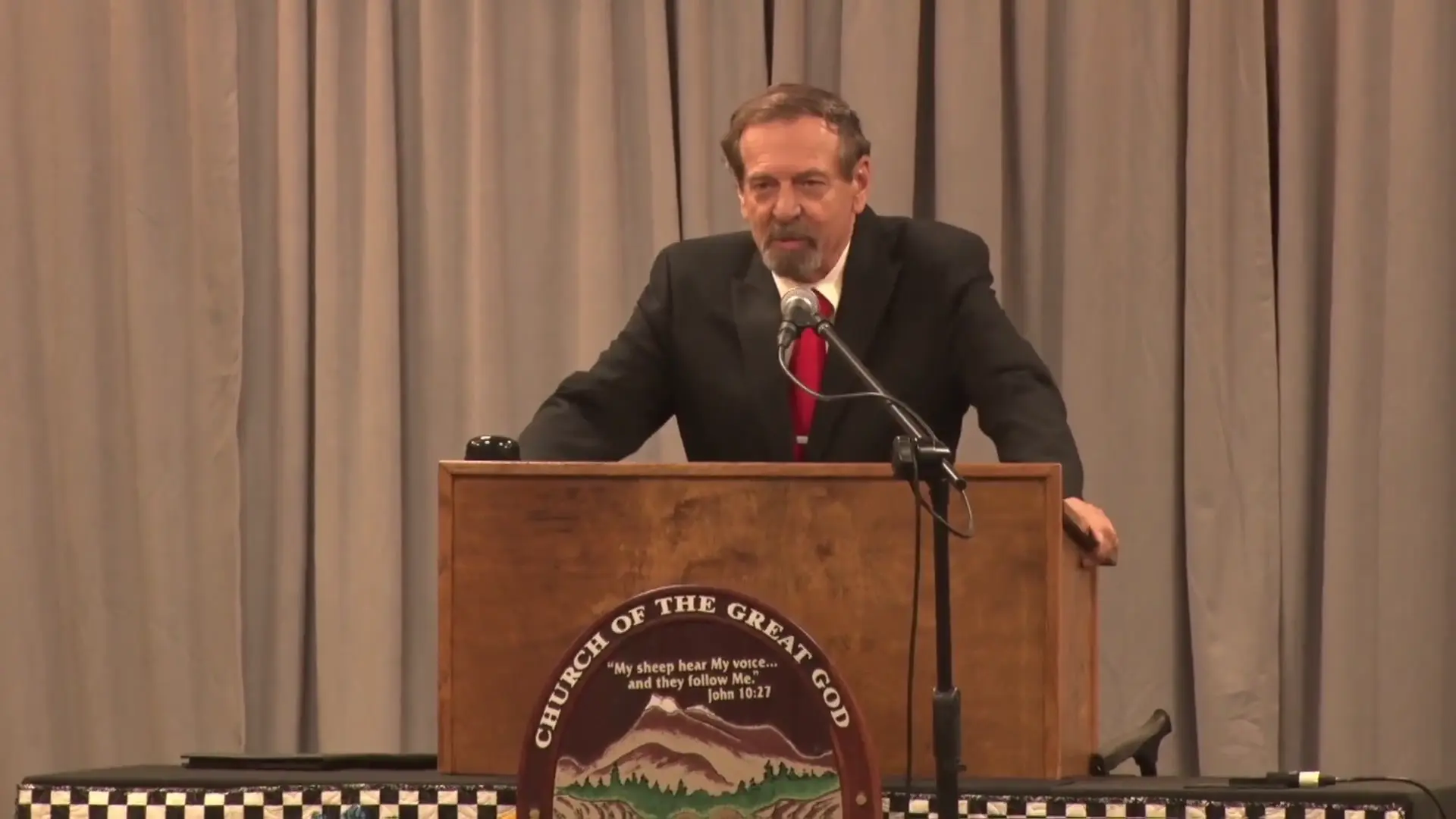
The Habit of Praising God
Feast of Tabernacles Sermon by James BeaubelleThe habit of praising God stands out as a disciplined, daily practice that flows from a humble, grateful heart rather than mere ritual or flattery.
Praying Always (Part Five)
Article by Pat HigginsDeeply examining ourselves for flaws and shortcomings, as we do each year before Passover, helps us to accomplish Christ's command to watch and pray always.
Facing Times of Stress: Always in God's Presence
Sermon by Martin G. CollinsWe can maintain spiritual contact using David's tactic of continually maintaining the Lord before him in his thoughts, prayers, and meditations.
The Grand Secret!
Sermon by Martin G. CollinsGod reveals a grand secret through David: namely, that spiritual growth will come to people who set the Lord before oneself continuously.
Matthew (Part Eight)
Sermon/Bible Study by John W. RitenbaughWe should not seek material rewards under the New Covenant, though God may sometimes bless us physically. Our focus should be on spiritual rewards.
Whatever We Ask
Sermon by Martin G. CollinsPrayer comes under attack if we live double-lives, giving us a guilty conscience, not practicing what we have been taught, allowing our hearts to condemn us.
God's Will
Feast of Tabernacles Sermon by Richard T. RitenbaughPraying according to God's will is sometimes ambiguous. Yet as we respond positively to His covenant, He reveals more and more of His secret plans.
The Book of Daniel (Part Four)
Sermon by Martin G. CollinsSin, the real opiate of the people, makes us oblivious to danger, giving us a debased and reprobate mind. It is not static, but leads to destruction.
Our Part in God's Will
Sermonette by Austin Del CastilloWhile it is good to acknowledge God's will in our prayers and know that His decisions will stand, we must also remember that God's mind can be changed.