


Filter by Categories
The Sacrifices of Leviticus (Part 2)
Sermon by John W. RitenbaughThe entrails of the burnt offering symbolize the emotional quality of life, specifically the feelings and inner affections that must be surrendered without reservation. In the detailed instructions for preparing the sacrifice, these organs are washed with water along with the legs before being placed upon the altar, indicating that the emotions require cleansing so that nothing impure hinders the offering. This element forms part of the complete identification between the offerer and the animal, where every aspect of the person is given as a voluntary gift to God. The entrails thus represent the affective dimension of total devotion, complementing the head as a symbol of thoughts, the legs as a symbol of conduct and daily walk, and the fat as a symbol of strength and vigor. When these components are offered together, the sacrifice portrays a life in which feelings are fully aligned with God's will rather than retained for selfish purposes. This portrayal directly connects to the broader pattern of the burnt offering, which depicts both Christ's entire life of wholehearted service and the parallel requirement for those who follow Him to present their emotions as part of a living sacrifice that is sweet and acceptable to God.
Offerings (Part One)
Sermon/Bible Study by John W. RitenbaughThe entrails of the burnt offering symbolize the emotions of the offerer. In the instructions for preparing the sacrifice, the priest washes the entrails along with the legs before placing them on the altar to be consumed entirely by fire as a sweet aroma to the Lord. This act forms part of the complete devotion represented by the offering, in which the head stands for thoughts, the legs for conduct, the fat for health and vigor, and the entrails for emotions. The material presents the burnt offering as showing Christ giving Himself wholly to God as the portion that satisfies Him, with every aspect of life directed by love. The entrails therefore indicate that emotions must likewise be brought into alignment with the character of God, so that the offerer's inner feelings are fully devoted rather than reserved. This requirement connects directly to the larger purpose of the burnt offering, which calls for total surrender in which love dominates emotions, directs thoughts, and supplies the dynamic for all actions, thereby producing the life that is well pleasing to God.
The Offerings of Leviticus (Part Two): The Burnt Offering
'Personal' from John W. RitenbaughThe burnt offering is completely consumed on the altar. This type of offering teaches us about Christ's total dedication to God—and how we should emulate it.
Is the Passover Just a Sin Offering? (Part Three)
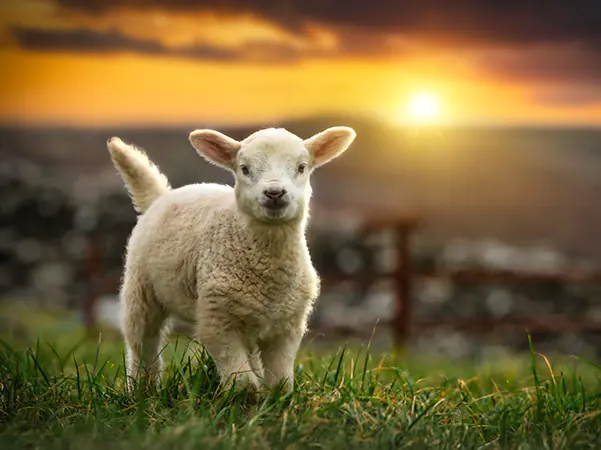
Article by David C. GrabbeThe entrails of the sacrificial animal function as one of three symbolic elements—alongside the head and legs—that distinguish the Passover offering from the sin offering, revealing that the Passover was never intended to picture atonement for sin. In the sin offering, the head represented a person's thoughts, the legs represented one's conduct or walk in life, and the entrails represented the emotions, or one's inward feelings. In that context, these parts of the animal symbolized the source and expression of the sin that necessitated the offering, and for this reason the priest was required to burn the head, legs, and entrails outside the camp, as far from God's presence as practically possible. By contrast, Exodus 12:9 explicitly commands that the Passover lamb be roasted whole, including its head, its legs, and its entrails, and that these parts be included in the household meal rather than discarded or burned away from God's presence. This deliberate inclusion signals that the same symbolic components—thoughts, conduct, and emotions—were being highlighted for an entirely different purpose in the Passover than in the sin offering. Rather than representing sin needing to be purged and removed from God's presence, the entrails, head, and legs in the Passover context represented these same aspects of a person's life being consumed as part of a relationship God was establishing with His people. It was acceptable, even fitting, for the entrails and the other parts to be eaten that evening because the Passover was not about propitiation but about fellowship and thanksgiving. This detail reinforces the broader argument that the Passover sacrifice cannot be reconciled with the pattern of the sin offering and instead aligns far more closely with the peace offering, which pictures communion and satisfaction between God and man rather than payment for transgression. Just as the peace offering represented a shared meal in which both God and the worshiper were satisfied, so the Passover meal—complete with its inclusion of the entrails—pictured Israel's thoughts, actions, and emotions being symbolically given over to and consumed within the relationship God was graciously initiating with them. The treatment of the entrails, therefore, serves as compelling evidence within the larger comparison of offerings that the Passover was fundamentally a celebration of God's favor and fellowship rather than a ritual of atonement for sin.
The Sacrifices of Leviticus (Part 3)
Sermon by John W. RitenbaughVarious animals were used in the burnt offering—bullocks, lambs, doves, and goats. Each depicts some characteristic of Jesus that we must emulate as we serve God.
The Offerings of Leviticus (Part Nine): Conclusion (Part Two)
'Personal' from John W. RitenbaughThere must be something to prove we are one with Christ and in union with the Father and the Son. That something is the manner in which we conduct our life.