


Filter by Categories
Freedom Isn't Free
Commentary by Ryan McClureIn a famous speech titled The Lyceum Address, delivered on January 27, 1838, Abraham Lincoln warned of the potential for America's destruction originating from within. He stated that if danger were to approach, it would spring up amongst the nation itself, not from abroad. Lincoln emphasized that if destruction were to be the fate of the United States, the nation would be both its author and finisher. He suggested that as a nation of freemen, America must endure through all time or perish by its own hand, highlighting the internal challenges to maintaining the freedom and independence that had been declared.
Lest We Forget
Commentary by Mark SchindlerRonald Reagan warned that America's freedoms and informed patriotism are extremely fragile and will not last if they are not taught to each generation.
Thanksgiving
Sermonette by Ryan McClureWe cannot emulate the nine ungrateful lepers, but must be proactive in our expressions of thanksgiving, such as making lists of things for which we are thankful.

Who Is America's Greatest Enemy?
'WorldWatch' by Richard T. RitenbaughThe United States stands weakened by worldwide conditions, but its foreign enemies cannot match its power. Its real foe lies much closer.
Socialism is Mob Rule (Part Two)
Commentary by John W. Ritenbaugh (1932-2023)Many religious people realize that liberals threaten adherence to the moral principles taught in God's Word, and that Satan is the poster child of liberalism.
Proverbs 31 and the Wife of Christ (Part Four)
Sermon by Mark SchindlerAbraham Lincoln appears in the sermon as the subject of Aaron Copland's 1942 Lincoln Portrait, whose narrative quotes are examined for their stirring call to self-sacrifice amid national division. Lincoln's words on history, the fiery trial through which a people pass, the need to think and act anew when old dogmas prove inadequate, the eternal struggle between right and wrong, and the resolve that government of, by, and for the people shall not perish are presented as lofty expressions of honor and integrity that can be applied to personal responsibility. The account notes Lincoln's quiet, melancholy character, his six-foot-four stature, and his birth in Kentucky, upbringing in Indiana, and residence in Illinois. These elements are introduced while reflecting on the United States' approaching 250th anniversary and the self-sacrifice of earlier generations who lacked the truth yet served kin and country. The speaker acknowledges personal affection for Lincoln and for the nation under God's sovereign allowance, yet states that Lincoln's conclusion is ultimately mistaken: no earthly government founded on choices apart from God's Word will endure, because the present world is passing away owing to the pattern of disobedience that began with the two trees in Eden. This portrayal of Lincoln therefore serves to illustrate both the appeal of human ideals formed outside divine revelation and the necessity of redirecting affection and effort toward the heavenly country, the coming Kingdom, and the preparation to become the Proverbs 31 wife of Christ by consistently choosing what God's Word defines as right rather than what merely appears good to human judgment.
The Problem Of Leadership
Sermon by John W. Ritenbaugh (1932-2023)The demise of society is caused by the lack of leadership within the family. The breakdown of society derives from the breakdown and of the family.
Profanity (Part One)
Sermon by Richard T. RitenbaughChrist's blood makes us holy; we are a new creation, having an intimate relationship with God. We need to change our behavior to reflect this new status.
There Was No King in Israel
Sermon by Mark SchindlerTwo days ago marked the anniversary of Abraham Lincoln's birth on February 12, 1809. As a significant figure in American history, his birthday was once observed as a day of remembrance in many states, though not as a national holiday. Schools and local government offices often closed, and educational efforts focused on memorializing Lincoln and the era he shaped. From 1879 through 1970, his birthday held importance across the United States, though it was never federally recognized as a holiday. Despite common belief, the Uniform Monday Holiday Act of 1968, which shifted Washington's birthday to the third Monday in February, did not combine Lincoln's birthday with it, nor did it rename the day as President's Day. Many still mistakenly refer to this holiday as President's Day, assuming it honors both Lincoln and Washington, but it remains officially Washington's birthday. Lincoln's legacy is notably tied to his Gettysburg Address, delivered on November 19, 1863, at the dedication of the cemetery at Gettysburg. In this speech, he declared, "Four score and seven years ago our fathers brought forth on this continent a new nation conceived in liberty and dedicated to the proposition that all men are created equal." He spoke of the ongoing Civil War as a test of whether such a nation could endure, urging the living to dedicate themselves to the unfinished work of those who died, ensuring that the nation, under God, would have a new birth of freedom and that government of, by, and for the people would not perish. This address, particularly the Bliss copy—written in 1864, signed and dated by Lincoln, and etched into the Lincoln Memorial—remains one of the most recognizable speeches in American history. Senator Charles Sumner, in his 1865 eulogy, called it a monumental act, noting that the world would never cease to remember Lincoln's words, despite Lincoln's own prediction to the contrary. The Bliss copy, requested by historian George Bancroft for a soldier fundraiser, included the phrase "under God," which scholars believe was not in the original speech delivered at Gettysburg. This addition may have been a strategic move by Lincoln, aware of Bancroft's perspective on providence and divine destiny in American history, to align with the historian's views. Lincoln's careful preparation of major speeches, evident in his steady script, contradicts myths of him composing the address hastily on a train. Multiple copies exist, named for their recipients—Nicolay, Hay, Everett, Bancroft, and Bliss—with the Bliss copy being the most widely recognized. Historically, memorializing Lincoln in schools involved memorizing the Gettysburg Address, reflecting on his era, and understanding the complexities of the Civil War. While many assume the war was solely about slavery, it was primarily driven by economic differences between the agricultural South and industrialized North, as well as Lincoln's belief in preserving the Union at all costs, even if it meant prioritizing a unified democracy over states' rights. This perspective shifted the form of government, highlighting how remembrance of historical truths can fade over time when not properly maintained.
Poor Choices
Sermon by Richard T. RitenbaughHuman beings with carnal minds, when faced with a choice between God (or a God-fearing man) or Satan (or a scoundrel) will automatically choose the scoundrel.
Distress of Nations
Sermonette by Clyde FinkleaBefore Christ's return, we will see dramatic signs in the heavens, while on earth distress of nations and uprisings will be symbolized by roaring waves.
Entanglement with the Yoke of Bondage
Sermon by Martin G. CollinsNo civilization has escaped the scourge of slavery, although Gentile administration has always been more cruel and severe than Israelite administration.
Are Your Beliefs Preferences or Convictions?
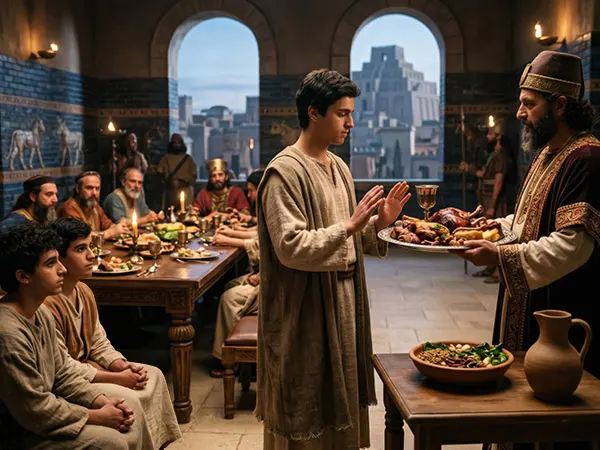
'Personal' from John W. RitenbaughConviction is vital to Christian living, sanctification, and faithfulness to God. The strength of our convictions will determine whether we compromise.