


Filter by Categories
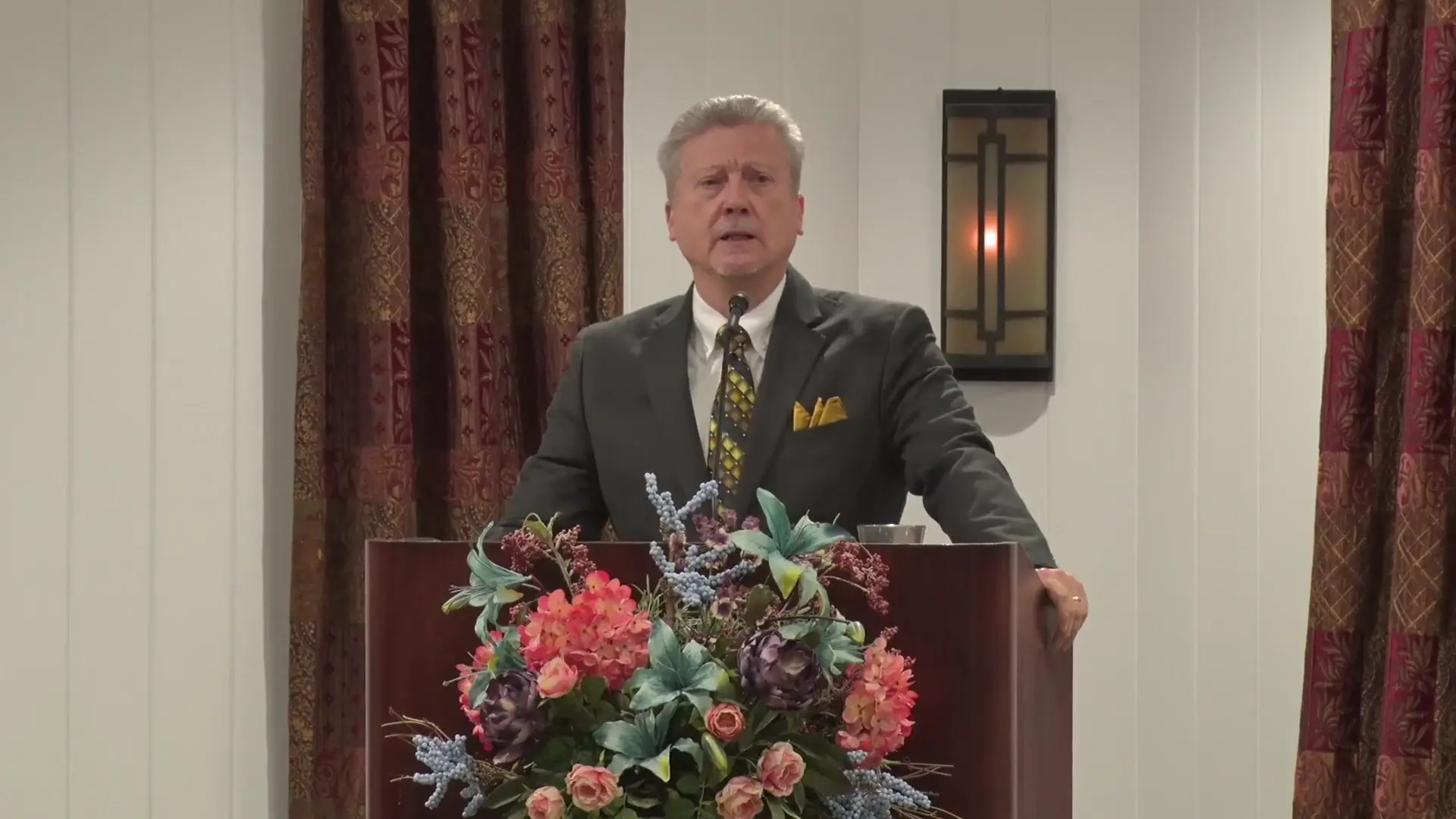
John's Feeding of the 5,000
Sermon/Bible Study by Richard T. RitenbaughThe feeding of the 5,000 is the fourth sign in John and the only miracle recorded in all four gospels, so God means for us to contemplate it. John bookends the passage (John 6:2, 14) with the word "signs," and a sign is a miracle by which God authenticates the One He sent. This sign is paired with "I am the bread of life" and reveals God's providence: He supplies physical food, spiritual food, and everything we need. It falls at the third Passover, a year before Christ's death, marking the height of His popularity and the beginning of its end. The crowd followed for the spectacle and a full belly, not for truth. Jesus tested Philip and Andrew. Philip answered with cost, and Andrew with a boy's meager lunch, so both thought physically and did not factor in God's power. Jesus ordered the crowd, gave thanks, and multiplied five barley loaves and two fish to feed perhaps 20,000 people. Twelve baskets remained, so nothing was wasted and the disciples were rewarded. The crowd rightly called Him the Prophet like Moses but still sought a physical king and more bread. Jesus corrected them: the Father gives the true bread from heaven, and that bread is Christ Himself. For us the sign shows that He is the abundant source of all saving knowledge and grace, so we should ask God for great things and keep our relationship with Him firm and growing.
John (Part Eleven)
Sermon/Bible Study by John W. RitenbaughThe fourth sign occurs when Jesus multiplies five loaves and two fishes to feed more than five thousand people in Galilee. This act reveals God as one who generously augments the limited resources His people bring while remaining economical and refusing to permit waste. The sign identifies Jesus as the Prophet foretold by Moses and points to His identity as the Word made flesh who supplies what human effort alone cannot achieve. Those who witness the miracle interpret it through carnal expectations and attempt to force Him into kingship for material provision rather than spiritual transformation. Their response exposes the same pattern of rejection seen earlier in Judea, where tradition rather than the Word of God shaped judgment. The sign therefore advances the larger theme of belief and unbelief by demonstrating that genuine faith must rest on Christ Himself rather than on physical benefits or inherited customs. When the crowd later confronts Him in Capernaum, Jesus redirects attention from perishable food to the enduring sustenance He alone can give, underscoring that spiritual needs cannot be satisfied by physical means. The episode illustrates that conversion requires examining every attitude against the foundation of Scripture so that conduct ceases to be aimless and becomes rooted in the will of God.
John (Part Ten)
Sermon/Bible Study by John W. RitenbaughThe fourth sign in the Gospel of John centers on the healing of the man who had suffered an infirmity for thirty-eight years, encountered by Jesus near Jerusalem during a fall festival season—most likely the Feast of Trumpets. This healing stands apart from others because Christ Himself initiated it; the man made no request and showed no clear recognition of who Jesus was. Christ's question, "Do you want to be made whole?" carries deep implications, since healing would require the man to abandon a mindset shaped by dependency and assume the responsibilities of wholeness. This mirrors a broader spiritual principle: every blessing from God—whether physical healing, forgiveness, or understanding—brings with it the responsibility to use that gift rightly and to remain grateful, as Deuteronomy 8 warns against forgetting the Source of one's blessings. Christ then commanded the man to do what seemed impossible—rise and walk despite atrophied limbs. The man's determination combined with God's power accomplished what neither could achieve alone, illustrating that human effort, however small, must be joined to divine power for true overcoming. This healing precipitated a Sabbath controversy, since the man was seen carrying his pallet in violation of the Jews' extensive regulations. Jesus defended His action in John 5:17 by declaring that His Father never ceases working, and that He works in the same way. This defense reveals that God's Sabbath-keeping is not idleness but continuous activity motivated entirely by love, since all His works are acts of mercy, kindness, and care. Because Jesus shared this same nature, His Sabbath activity was likewise pure love. This principle also explains why God's people are always occupied with much to do—they are in training to become like a God who never stops working, tempered by their physical need for rest. The Jews immediately recognized that Jesus was equating Himself with the Father, which intensified their hostility. In the extended discourse that follows (John 5:19-47), Jesus reveals His Messianic identity through several markers drawn from the Old Testament: calling Himself "Son of Man" (echoing Daniel 7:13), performing healings reminiscent of Isaiah 35, claiming power to resurrect the dead (paralleling Deuteronomy 32:39), and asserting authority to judge (recalling Deuteronomy 1). His judgment is righteous specifically because He seeks only the Father's will, unlike human judgment, which is corrupted by pride, prejudice, envy, and ignorance. Jesus also presents multiple witnesses to His identity: John the Baptist, His own works, the Father's testimony, and the Scriptures themselves—particularly the writings of Moses. Despite this array of evidence, the religious leaders rejected Him because they searched Scripture to support their own theology rather than to know God, and because they sought honor from one another rather than from God. Their pride blinded them to the very Scriptures that testified of Him. This fourth sign, then, is developed not merely as a display of miraculous power but as the occasion for one of Christ's clearest early self-revelations, linking the themes of divine work, Sabbath meaning, righteous judgment, and the necessity of humble submission to God's Word as it prepares the way for the next sign—the feeding of the multitude in John 6.

The Miracles of Jesus Christ: Feeding the Five Thousand (Part One)
Bible Study by Martin G. CollinsChrist's miracle of feeding the 5,000 is the only miracle that all four gospels record. Jesus used the circumstances to teach His disciples lessons for after His death.

The Miracles of Jesus Christ: Feeding the Five Thousand (Part Two)
Bible Study by Martin G. CollinsThe feeding of the 5,000 tells us far more than that Jesus was a miracle-worker. It also reveals Christ's compassion on those who hunger, plus His ability to teach.
Back to Life (Part Five)
Sermon by Martin G. CollinsAll of us who are called by God are so precious in His sight that Jesus Christ, before we were even born, died for us, saving us from oblivion.