


Filter by Categories
Christ Our Standard
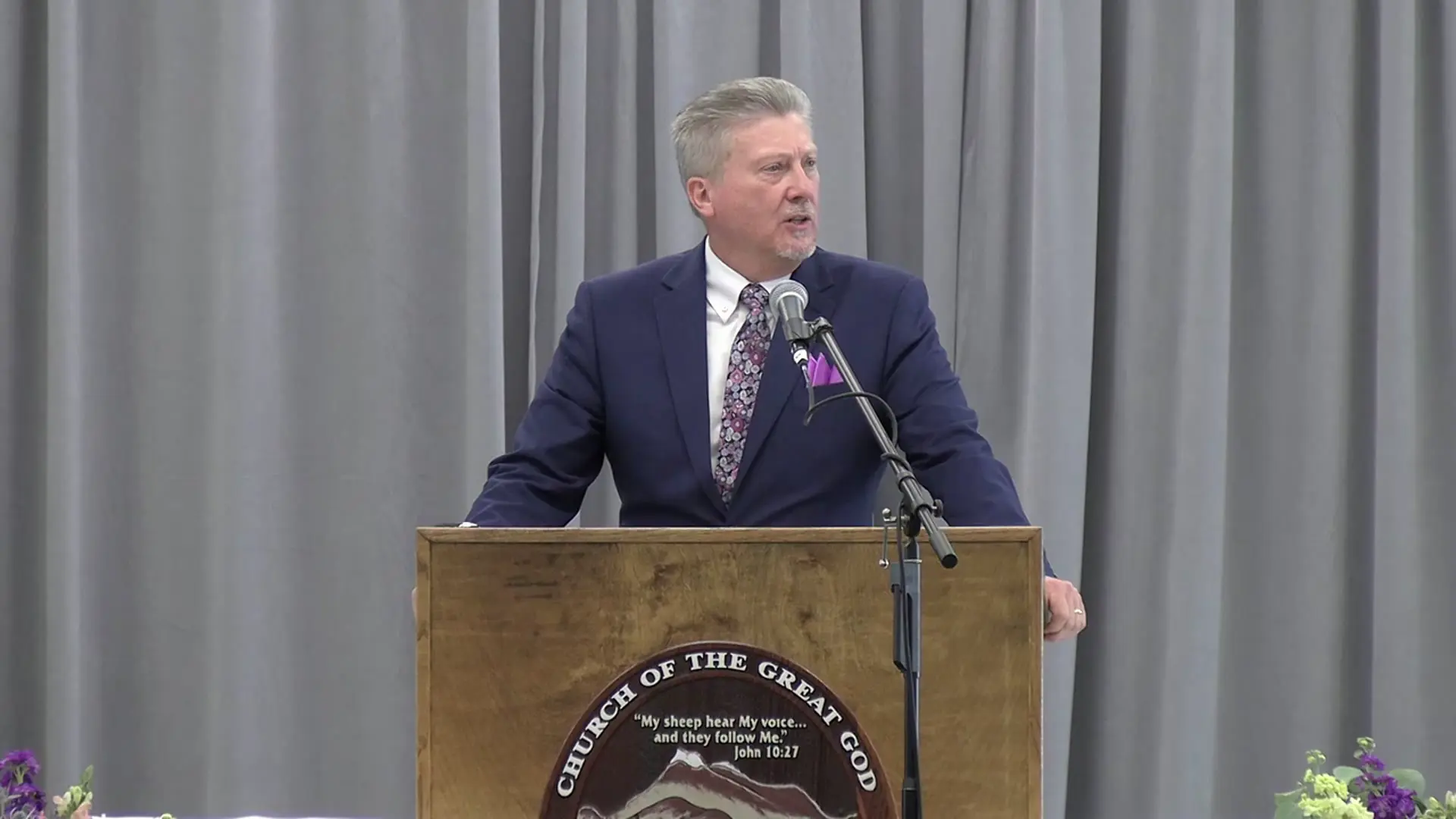
Sermon by Richard T. RitenbaughApproaching the Passover season calls for genuine self-examination, and Paul provides the test in II Corinthians 13:5: "Examine yourselves as to whether you are in the faith... Do you not know yourselves, that Jesus Christ is in you?" The proof of true conversion is not found in comparing ourselves to others, since Paul warns that measuring ourselves by ourselves is unwise, but in whether the evidence of Christ's life is visible in our daily conduct, relationships, and actions. This standard is set impossibly high in Ephesians 4:13 and 15, where believers are called to grow "to the measure of the stature of the fullness of Christ" and to "grow up in all things into Him." This goal has both depth—coming to the same knowledge and understanding Christ possessed—and breadth—acting as He acted in every situation, at every moment, without exception. This abiding relationship is not merely intellectual. James 4:17 warns that to know the good and not do it is sin (hamartia, "to miss the mark"), showing that head knowledge alone fails the test of whether Christ truly lives in us. The Parable of the Talents reinforces this: God expects growth and application of what has been given, not passive possession. Hebrews 5:12-14 illustrates the danger of stagnation—those who never apply truth regress into spiritual infancy, while those who exercise their spiritual senses through use mature into solid food. Growth happens only through application; understanding follows obedience, not the reverse. John 15:1-8 makes the abiding relationship explicit: Jesus declares Himself the true vine and commands, "Abide in Me, and I in you." Fruitfulness is impossible apart from this union—"without Me you can do nothing." Yet Christ demands not merely fruit but "much fruit," reinforcing that knowledge must be transformed into sustained righteous action, for this is what glorifies the Father. Branches that fail to abide are cast out and burned, underscoring that abiding is not optional but essential to salvation. Peter's summary of Christ's life in Acts 10:38—"He went about doing good"—demonstrates what abiding in Christ produces practically. Christ's relentless, hectic pace of healing, teaching, and serving, illustrated repeatedly in Mark's Gospel through words like "immediately," left no room for sin to enter; His life was so filled with good works that sin was crowded out, much as water displaces air in a jar. This is the pattern Days of Unleavened Bread signifies: putting out sin by actively doing good, following Christ's example. Ultimately, abiding in Christ means imitating Him as "the way, the truth, and the life," the only path acceptable to the Father, since children must bear the Father's and Son's character to gain entrance to the Kingdom. This abiding relationship, beginning with those closest to us and extending even to enemies, is how believers move toward the perfection Christ commands in Matthew 5:48—becoming like the Father because Christ, our Standard, already is.
Jesus in the Feasts (Part Five): Tabernacles
Feast of Tabernacles Sermon by Richard T. RitenbaughWe should consider the temporary dwellings as a foreshadowing of Christ as our ultimate Tabernacle—the divine presence with and within His people
Do You Really Want Just Any Eternal Life?
Sermon by Martin G. CollinsWe have a natural desire for eternal life, but living endlessly would not be a blessing if our circumstances were miserable. Eternal life means quality of life.
He Will Never Forsake Us!
Sermonette by Richard T. RitenbaughIn Hebrews 13:5, there are five extremely emphatic negatives, indicating that God will never, never, never, never, never leave us.
The Absence-Presence Dichotomy and God's Spirit
Sermon by Charles Whitaker (1944-2021)Paul's use of the presence-absence dichotomy clarified that absence does not materially affect the Work of God because the same Holy Spirit is always present.
Saved By His Life
Sermonette by Austin Del CastilloContrary to the belief that most of the Christian professing world hold that we are saved by the death of Jesus Christ, in reality we are saved by His life.
The Mystery of the Church (2005)
Sermon by Martin G. CollinsPaul's body analogy illustrates the interconnectedness of all members to Jesus Christ and to each other. Not one is unimportant or useless.
All Sifted Like Wheat (Part Three)
Sermon by Mark SchindlerThe peace of Christ does not take place in a democratic compromise and tolerance of evil as the politics of the world advocates, but in submitting to God.
For the Love of God
Sermonette by Austin Del CastilloWe are royalty, part of the highest Family in all creation. We can take great comfort in knowing who it is we really are and that the Father greatly values us.
The True Savior of the World!
Sermon by Martin G. CollinsGod the Father sent Jesus as the true Savior of the world to heal the sick, to comfort the broken-hearted, and to liberate the captives.
Do You See God?
Sermon by John W. RitenbaughUnless we acknowledge God's sovereign authority in our lives, following through with the things we learn from scripture, we, like atheists, will not see God.