


Filter by Categories
Sin, Christians, and the Fear of God
'Personal' from John W. RitenbaughSin is portrayed with grave severity by the Bible's writers because it creates a profound separation from God. Isaiah 59:1-2 declares that iniquities separate us from our God, hiding His face so that He will not hear. This estrangement is critical, as our relationship with Him is the source of our power to succeed in His purpose. God created us for an everlasting relationship of peaceful and productive harmony, but sin destroys this bond. As sinners, we cannot fit within a non-sinning relationship, for sin always works to produce division, never healing or improving matters. A continuing life of sin destroys any hope of oneness with Him, ensuring that lasting success and sound relationships are never achieved through transgression.

A Hidden Mystery in God!
Sermon by Martin G. CollinsThe world is plagued by suffering, wars, and unsolvable social difficulties, leaving many bewildered about the state of humanity. This confusion stems from a spiritual root: mankind's rebellion against God. Humans were designed to find true contentment and happiness only through fellowship with Him, but refusal to submit to His will results in confusion and misery. This rebellion, initiated by Adam and Eve, introduced a wrong kind of fear, leading to jealousy, envy, and a cycle of sorrow that persists across generations. The world, under the sway of the wicked one, lies in a state of separation from God, incapable of righteous behavior and drowning in sin. Without a right relationship with Him, there can be no lasting hope or true joy, only shallow, fleeting moments of happiness. Sin forms a barrier between God and humanity, as He, being holy, cannot casually overlook it. This separation breeds a guilty conscience, causing people to view God with unfair thoughts, disagreement with His laws, and a lack of respect or trust. The world lives in opposition to genuine fellowship and unity with Him, resulting in contention, wars, lies, and confusion. Man rises against man, and nation against nation, because they do not recognize God. True reconciliation among people is impossible without first being reconciled to Him; diplomatic efforts and treaties fail as they are not grounded in a relationship with God. The ultimate need of the world and individuals is true knowledge of God and a real unity with Him. God has designed something within humanity that remains restless until willingly submitted to a right relationship with Him. Sin, however, stands as a wall to this fellowship, keeping humanity outside the life of God. Only through the removal of this obstacle can true fellowship be restored, allowing humanity to escape the hopelessness and despair of a world separated from Him.
Sin: The Wall That Separates
Sermonette byOur sins separate us from God; if we want to walk with God, it must be without sin. It is for our benefit that God holds such a high standard.
What Is the Work of God Now? (Part Four)
Sermon by John W. RitenbaughThe greatest and most significant breach within the church is the separation from God, lying at the foundation of all current problems. A large number of individuals have drifted from Him, marked by a loss of faith and devotion, as well as a neglect of duty. This separation is evident in the confusion, uncertainty, and sometimes outright antagonism that has arisen from drifting away from the foundational doctrines. Scriptures highlight the severity of this breach, portraying it as vast as the ocean, with God questioning who can heal such a wide split. The imagery of broken walls and breaches illustrates how sin creates vulnerability, allowing the enemy to stream in and diminishing protection, peace, and security. Spiritually, a repairer of breaches is one who restores the right way, beginning with personal repentance and rebuilding a relationship with Him, thereby closing the gap in the wall. The messages in Revelation 2 and 3 reveal a common thread of advice to return to what was previously given, emphasizing the need to hold fast to past teachings and devotion. For Ephesus, God urges a return to their first love and initial zeal. Smyrna is encouraged to remain faithful to what they had been given. Pergamos is called to repent for drifting into wrong relationships despite holding to doctrines. Thyatira is admonished to hold fast to what remains, avoiding further drift into worldly ties. Sardis is urged to strengthen what little remains of their past relationship with Him. Philadelphia, despite weakness, is told to hold fast to prevent further slipping. Laodicea, nearly devoid of any connection, is simply called to repent, with little left to hold onto. This crisis of faith within the church stems from a loss of loyalty to what was once delivered, resulting in confusion, doubt, and frustration. God's solution is clear: hold on to what was given, rebuild faith, and return to the zeal and practice of the foundational doctrines. He remains a forgiving God, ready to receive and love those who turn back to Him with a change of heart and mind.

Did God the Father Forsake Jesus Christ?
Sermon by David C. GrabbeThe concept of separation from God emerges as a profound consequence of sin, deeply rooted in His holiness and purity. In Matthew 27:45-46, Jesus cries out, "Eli, Eli, lama sabachthani?" which translates to, "My God, My God, why have You forsaken Me?" This anguished plea during the darkness over the land from the sixth to the ninth hour reflects a moment of profound separation, highlighting the gravity of sin's impact. This separation is not merely emotional but is tied to God's nature, where unholiness repels Him, necessitating a withdrawal when sin reaches a threshold. Scripture reveals that God does forsake as a righteous response to sin. In Deuteronomy 31:16-18, the Lord declares that when Israel forsakes Him by breaking His covenant, He will hide His face and forsake them, allowing evils and troubles to befall them as a consequence of their rebellion. Similarly, II Chronicles 15:1-2 emphasizes a reciprocal relationship, stating that the Lord is with those who are with Him, but if they forsake Him, He will forsake them. This principle underscores that separation results from human sin, not from any unfaithfulness on God's part. Furthermore, God's withdrawal can serve purposes beyond punishment, such as testing. In II Chronicles 32:30-31, God withdraws from Hezekiah to test him and reveal what is in his heart, demonstrating that such separation can be a trial. Applied to Jesus, who was tested in all points yet without sin, this suggests that the Father's withdrawal during the crucifixion was necessary to manifest what was in Christ's heart and complete His experience as a Man. The crucifixion intensifies this theme of separation as Jesus becomes a representation of sin. Galatians 3:13 states that Christ became a curse for us, being hanged on a tree, which, according to Deuteronomy 21:23, signifies being accursed of God. II Corinthians 5:21 further reveals that He who knew no sin was made to be sin for us, identifying Him with sin's consequences. This identification includes experiencing separation from God, as sin's effects encompass more than death—they involve being forsaken, a reality Christ endured as part of bearing humanity's iniquities. Symbolism during the crucifixion reinforces this separation. The crown of thorns, pressed onto Christ's head in John 19:1-2, recalls the curse of thorns from Genesis 3:17-18, representing sin's piercing effects and the resulting hard life of disobedience. The darkness over the earth from the sixth to the ninth hour, as noted in Luke 23:44, symbolizes God's withdrawal of light, indicating judgment and a lack of what is good. This widespread darkness, unlike localized instances where God is present in thick darkness, fittingly represents the Father withdrawing as His justice is satisfied through Christ's suffering. Ultimately, sin's opposition to God's nature necessitates this separation, even when His own Son becomes the representation of it. Jesus endured this forsaking not because of His own sin, but because He took humanity's place, bearing the worst effects of sin, including separation from God, the source of all good. This act, though painful, was integral to overcoming the estrangement caused by sin, aligning with God's eternal purpose and justice.
God Gives Grace to the Humble
Sermon by Martin G. CollinsWe know that sin separates us from God, and if pride is such a horrible sin, then it is dramatically separating us from Him. A proud heart shuts itself off from God for several reasons. It does not know how much in need it is, admiring itself so much that it fails to recognize its lack of virtue and remains in a miserable condition. A proud heart treasures its own independence, feeling no obligation or gratitude to anyone, not even to God. Additionally, it does not recognize its own sin, being occupied with thoughts of its own goodness and never realizing it has sin from which it needs to repent and be saved. A proud heart cannot receive help because it does not know it needs help and, therefore, cannot ask for it. In contrast, the humble heart knows its need and has access to God, finding mercy and grace in time of need through submission and obedience.
Choices and a Man After God's Own Heart: Turn, Turn, Turn
Sermon by Mark SchindlerSeparation from God emerges as a central thread running through the choices human beings make within the "merisms" of life described in Ecclesiastes 3—the times to be born and die, to weep and laugh, to war and make peace. These paradoxical seasons of existence create the arena in which every person must choose either to walk in step with God or to drift away from Him. The account of the Garden of Eden establishes that this separation is not an accident or a "Plan B" but part of God's sovereign design: Adam and Eve's choice to eat from the tree of the knowledge of good and evil demonstrates how quickly humanity fell into division from its Creator, teaching two enduring lessons—the pain of living apart from God's perfect law, and the necessity of grace alone to restore what was lost. This separation is intensified by the recognition that those called into the Body of Christ are, by nature, "base" and "despised"—ignoble, contemptible, lacking in nobility of character. Unlike a purely altruistic human figure who might naturally make right choices, those whom God calls have no innate compulsion toward righteousness; their natural condition apart from Christ is one of estrangement from God. Isaiah 59 makes this explicit: "your iniquities have separated between you and your God, and your sins have hid His face from you that He will not hear." Sin defiles communication with God, silencing the very strength needed to overcome, because that strength flows only from an unhindered connection to Him. The account of David's census sin illustrates how even a man after God's own heart can fall into this separation through pride and carnal impulse, resulting in national calamity. Yet David's response—confessing sin without excuse, blaming no one else, and casting himself entirely on God's mercy—reveals the path back from separation: repentance. Ezekiel 33 reinforces that God takes no pleasure in the death of the wicked but calls repeatedly for a "turn" away from the road leading to death, without specifying how far one must turn, only that turning itself reopens the way to life. This theme of turning becomes the resolution to the entire discussion of separation. True godly sorrow, as contrasted with mere self-pity over consequences, produces the turn that restores fellowship with God, while worldly sorrow—concerned only with personal discomfort—works death because it produces no actual turning. Jesus Christ stands as the perfect example of unbroken communication with the Father, never separated from Him because He always sought and did the Father's will. Though believers fall short of this perfect example, the grace given through Christ, combined with sincere repentance, continually closes the gap that sin creates. Thus separation from God is portrayed not as a permanent condition but as a recurring crisis met by God's unchanging invitation to turn, restoring the despised and base into the fellowship of His Son and setting them on the path to becoming people after His own heart.
God Works in Mysterious Ways (Part One)
Sermon by John W. RitenbaughOur carnal nature's desire to satisfy an addictive self-centeredness can eventually overrule the Christian's loyalty to God and His commandments.
Peace with God Through Christ
Sermon by Martin G. CollinsThe only possibility of attaining peace is a relationship with God—peace with God through our Lord and Savior Jesus Christ, which must continually be refined.
Peace, Peace (Part One): Peace with God
Sermon by Richard T. RitenbaughHumanity has sinned and become guilty before God. Mankind's mounting sins indicate that people are not at peace with God. They are perpetual enemies of God due to their rebellious nature against God and His law. Their iniquities have separated them from God and created a chasm between humanity and God. There is no peace for the wicked. This separation results from sin, making peace impossible until the penalty is addressed.
Prepare to Meet Your God! (Part Five): Religion and Holiness
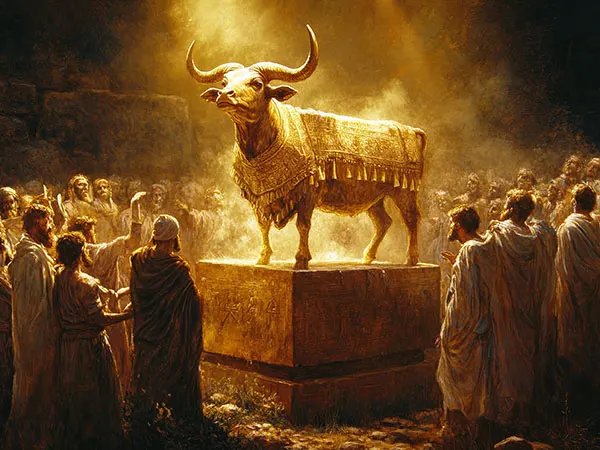
Article by John W. Ritenbaugh and Richard T. RitenbaughThe prophet Amos exposes the ancient Israelites' religion as syncretic, a blend of God's way and paganism, corresponding to this world's Christianity.
Genesis 3:20-24: Consequences for God and Man
Sermon by Richard T. RitenbaughWhen Adam and Eve were given the death sentence by God, they also received hope that through the offspring of Eve a Savior would be born to crush the serpent.
Fellowship With God
Sermon by Martin G. CollinsOnly those who have fellowship with God can have any hope, understanding, peace, or rest. The world remains under the sway of Satan, unable to live righteously.
God Works in Marvelous Ways (Part Two)
Feast of Tabernacles Sermon by John W. RitenbaughGod's mysteries have been in plain sight from the beginning of time, but carnality has obscured them from mankind.
Hosea, Gomer, God, and Israel
Sermon by Kim MyersTo dramatize the perennial harlotry of Israel and the incredible love God exhibits toward His people, He commands Hosea to marry a harlot, Gomer.
Boundaries, Incursions, Migrations, and God (Part Two)
Feast of Tabernacles Sermon by John W. Ritenbaugh (1932-2023)Even though the way God exercises His sovereignty is inscrutable to us , calling the foolish to confound the wise, all He does fits perfectly into His plan.
Fellowship and Fellowshipping Are Very Important to God
Sermonette by Gary GarrettIf we lack love for our brethren who live in the presence of God, we are emulating Cain. It is God's desire that we stay in the fellowship.
Humble Your Hearts and Be No Longer Stubborn
Sermonette byThe peace that passes all understanding comes from yielding to God's will, asking Him for a soft, pliable heart to replace the hard heart of stubbornness.
Reconciliation and the Day of Atonement
Sermon by John W. RitenbaughRepentance is something we must do with our God-given free moral agency. Reconciliation is an ongoing process that enables us to draw closer to what God is.
The Case Against Pride
Sermonette byThree symptoms of pride include (1) lying to protect our self-image; (2) competitiveness; (3) believing our personal ideas are more valuable than God's Truth.
Parables of Luke 15 (Part Three)
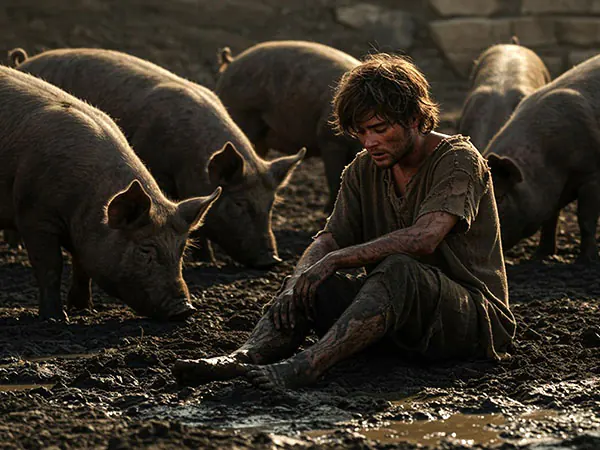
Bible Study by Martin G. CollinsThe three illustrations in Luke 15 justify Christ's conduct in receiving sinners, and show that to rejoice over their return is good and proper.
What We Can Learn From This Day of Atonement
Sermon by John W. RitenbaughGod's solution to mankind's separation was sending a second Adam, Jesus Christ, to make reconciliation possible. Fasting shows our dependence on God.
The Fruit of Justification
Bible Study by Martin G. CollinsThe subject of justification confuses a great many people. In fact, much of nominal Christianity, even theologians, do not understand the Bible's teaching on it.
What is Atonement?
Sermon by John W. Ritenbaugh (1932-2023)Man's estrangement from God is wholly man's fault. Atonement denotes the way harmony is achieved, making the entire world at one or reconciled with God.
Unity and Unleavened Bread
Sermon by John W. RitenbaughAs members of Christ's body, we must function for the good of the whole body, not competing with other parts. We must continually function as a son of God.
Our Apostasy
Feast of Tabernacles Sermon by Charles WhitakerThe subtle and deceptive apostasy upon the church became so pervasive that God couldn't find anyone to serve as an intercessor.
Sin Defined and Overcome
Sermon/Bible Study by John W. RitenbaughSin creates estrangement from God, causing us to fail in everything we attempt. Sin always produces separation; it never heals, but causes death.
Satan, Division, and Humility
Sermon by John W. RitenbaughCompetition is the root cause of war, business takeovers, and marital discord. Solomon describes man's rivalry with one another as a striving after wind.
Communication and Leaving Babylon (Part Three)
'Personal' from John W. RitenbaughChristians must continue to fight against self-centered and deception long after their calling to deepen and strengthen their relationships with God.
Searching for Israel (Part Twelve): The Sign
Article by Charles WhitakerMost Israelites are blind to their origins, thinking that only Jews are Israelites. Here is why Israel has forgotten its identity.
What Is Propitiation? (Part Two)
Bible Study by Martin G. CollinsChrist's propitiatory sacrifice satisfied both the law and God's holiness, allowing Him to extend mercy to believing, repentant sinners.
Ecclesiastes Resumed (Part Fourteen)
Sermon by John W. RitenbaughSolomon ruminates about life being seemingly futile and purposeless. A relationship with God is the only factor which prevents life from becoming useless.

Pride, Humility, and the Day of Atonement
'Personal' from John W. RitenbaughThe Day of Atonement, when God commands us to afflict our souls, is a day of self-evaluation and repentance to seek unity with Him and our brethren.
Division, Satan, Humility
Sermon by John W. RitenbaughThroughout the course of Biblical history, whenever sin appears, confusion, division and separation are the automatic consequences.
The Great Mystery
Sermonette by Gary GarrettAdam and Eve originally had a most enviable relationship with the Creator, as well as access to the Tree of Life, if they had chosen it.
The Presence of the Eternal
Sermonette by Martin G. CollinsOur offerings should consist of prayer, service to others, as well as material or monetary contributions, reflecting our gratitude for blessings.
Understanding Unity
Feast of Tabernacles Sermon by John W. RitenbaughWe must separate ourselves from the world, sacrificing ourselves to God's purpose to become at one with God, waiting for Him to unify us to others.
Unity (Part 6): Ephesians 4 (C)
Sermon by John W. RitenbaughUnity has to come from the inside out, with God raising a leader which His people, having their minds opened by His Spirit, will voluntarily submit to.
A Time To Scatter
Sermonette by David C. GrabbeWhile we yearn for the church to be re-united, until our own personal walk with God is attained and we intently seek Him first, church unity will not happen.
Who Fulfills the Azazel Goat— Satan or Christ? (Part Four)
'Ready Answer' by David C. GrabbeThe Day of Atonement is not fulfilled with the binding of Satan. Rather, there are numerous prophecies of God atoning for the sins of physical Israel.
Communication and Coming Out of Babylon (Part 3)
Sermon by John W. RitenbaughGod commands us to come out of Babylon, giving us spiritual resources to do so, including faith, vision, hope, and love. These come through knowing Him.
Deuteronomy (Part 1) (1994)
Feast of Tabernacles Sermon by John W. RitenbaughDeuteronomy could be considered the New Testament of the Old Testament, serving as a commentary on the Ten Commandments. It gives vision for critical times.
Thankfulness (1986)
Sermon/Bible Study by John W. RitenbaughWe need to give thanks for everything, blessings and trials. Christianity ought to be an exhilarating experience, but it depends on our outlook on life.