


Filter by Categories
Unity and Godly Diversity in One Body
Feast of Tabernacles Sermon by Mark SchindlerBrethren, we have the unparalleled opportunity to learn and live the very mind of God, apart from this evil world, in service to the Body of Christ, using the diversity of God-blended gifts. As we look forward to the return of Jesus Christ, we recognize this difficult time for the unique body of believers called out of this world—a diverse group chosen by God to be His from all walks of life, miraculously changed to be of one mind while utilizing a diversity of God-given gifts in service to one single-minded Body of Christ. There is a diversity that produces unity, but only through the diversity of God-given gifts to serve a body in unity under the tender care of a ministry set apart to help the wheat grow straight and tall according to truth. Our High Priest Jesus Christ is consecrated, setting apart His whole Body in unified service to Him and one another for the glory of His Father. We must be one unified body, set apart from this world and all that moves it toward the disastrous time precipitating Jesus Christ's return. God has set the members, each one of them, in the Body just as He pleased. Now you are the Body of Christ, and members individually. And God has appointed these in the church: first apostles, second prophets, third teachers, after that miracles, then gifts of healings, helps, administrations, varieties of tongues. All these gifts lead to something better, completely out of sync with this world, producing the love of God within all as we serve the Body according to the Word of God. There is one Body and one Spirit, just as you were called in one hope of your calling; one Lord, one faith, one baptism; one God and Father of all, who is above all, and through all, and in you all. But to each one of us grace was given according to the measure of Christ's gift. He Himself gave some to be apostles, some prophets, some evangelists, and some pastors and teachers, for the equipping of the saints for the work of ministry, for the edifying of the Body of Christ, till we all come to the unity of the faith and of the knowledge of the Son of God. This is the real diversity that produces unity in one Body that will fight the good fight together in love under the revealed Word of God.
Jesus Christ, the Head of the Church
Sermonette by David C. GrabbeIf we lose sight that Jesus is the head of the Church, we will forget that Christ is currently purifying His Church, sanctifying those called to be His family.
Gifted (Part Two)
Sermonette by Ronny H. GrahamSome may feel that they have not been gifted by God, yet God has gifted every saint. All gifts are from above and are meant to be mutually complementary.
The Unleavened Vanguard with Christ
Sermon by Mark SchindlerThe Father has set each one of us into the vanguard with His Son, in the places He has determined from His perfect perspective. Within our carefully appointed positions in this vanguard with Jesus Christ, we are called to serve faithfully, each dedicated to unleavened lives as we carry out the small part God has given us within the Body of Christ. As many members in one body, though not all having the same function, we are one body in Christ, individually members of one another. Having gifts differing according to the grace given to us, we must use them diligently—whether prophecy, ministry, teaching, exhortation, giving, leading, or showing mercy—serving the Lord with fervor and without hypocrisy. Each of us must present our bodies as a living sacrifice, holy and acceptable to God, transformed by the renewing of our mind to prove His good, acceptable, and perfect will. We are to be of the same mind toward one another, associating with the humble, abhorring evil, clinging to good, and living peaceably with all men as much as depends on us. Through Jesus Christ, we grow together to the measure of the stature of the fullness of Christ, fulfilling our responsibilities within the places God has set us, looking beyond ourselves to the care of others in the Body.

Mutability and Our Christlike Response
Sermon by Richard T. RitenbaughThe Body of Christ is characterized by diverse positions and stages of life within the church, each requiring specific approaches and interactions. The apostle Paul, in his counsel to Timothy and Titus, emphasizes the importance of recognizing these differences. In I Timothy 5:1-2, he instructs to treat older men as fathers, younger men as brothers, older women as mothers, and younger women as sisters, with all purity, acknowledging distinct relational dynamics based on age and gender. Similarly, in Titus 2:1-8, Paul provides a curriculum for teaching various church members according to their roles, urging older men to be sober, reverent, and temperate, and older women to be reverent and teachers of good things, guiding younger women in family responsibilities. Young men are encouraged to be sober-minded and exhibit integrity in doctrine. Paul's guidance highlights the necessity of tailoring instruction to where individuals are in their spiritual journey and life circumstances, ensuring that teaching benefits them most effectively. This principle extends to fostering unity within the church, as seen in Philippians 2:1-4, where Paul calls for like-mindedness, love, and humility, urging members to esteem others better than themselves and to look out for others' interests. This approach, rooted in godly love, spiritual fellowship, compassion, and mercy, reflects the character of Christ and is essential for maintaining peace and unity. Paul further connects this way of living to working out salvation, emphasizing that interacting with others in this manner is integral to spiritual growth and sanctification. Additionally, I Thessalonians 3:12-13 and 5:14-15 reinforce an outward focus in sanctification, encouraging love toward one another to establish blameless hearts in holiness, and exhorting brethren to warn the unruly, comfort the fainthearted, uphold the weak, and be patient with all. This other-focused interaction, without meddling, involves meeting people where they are in their current state and circumstances, imitating Christ's example of compassion and forbearance. By doing so, members of the Body of Christ contribute to a supportive and unified church environment, fulfilling the call to treat others as they would wish to be treated, in accordance with the Golden Rule found in Matthew 7:12.
Four Views of Christ (Part 7)
Sermon by John W. RitenbaughOur lives parallel what Christ experienced: crucifixion, burial, resurrection, and glorification. The death of self must precede resurrection and glory.
'Before the Foundation of the World' (Part Two)
CGG Weekly by John ReissWe all have a part to play in the construction of the church. The apostles and the prophets laid its foundation, but we are fellow workers, building the edifice.
Eating Out on the Sabbath
Sermon by John W. RitenbaughIn the gray areas of applying God's Law, extending mercy and easing of burdens trumps legalism and hairsplitting.

Titus (Part Four): Traits of a Healthy Church
Sermon by Richard T. RitenbaughTitus 2 gives specific instructions to senior members of the congregation, followed by instructions to the youth, explaining their responsibilities.
Letters to Seven Churches (Part Ten): The Church
Sermon by Richard T. RitenbaughUps and downs, blessings and trials, have characterized every era of the church. God's people are always battling something negative between the brief highs.
A Survey of God's Gifts to Us
Sermon by Martin G. CollinsThe apostle Paul inventories spiritual gifts that God has given for the edification of the church, including ministry of the word and practical service.
Living by Faith: Humility and God's Justice
Sermon by John W. Ritenbaugh (1932-2023)Humility, poverty of spirit, and acknowledging our total dependence on God are of the utmost importance. God responds to those who are humble.
Serving the Brethren Through Prayer
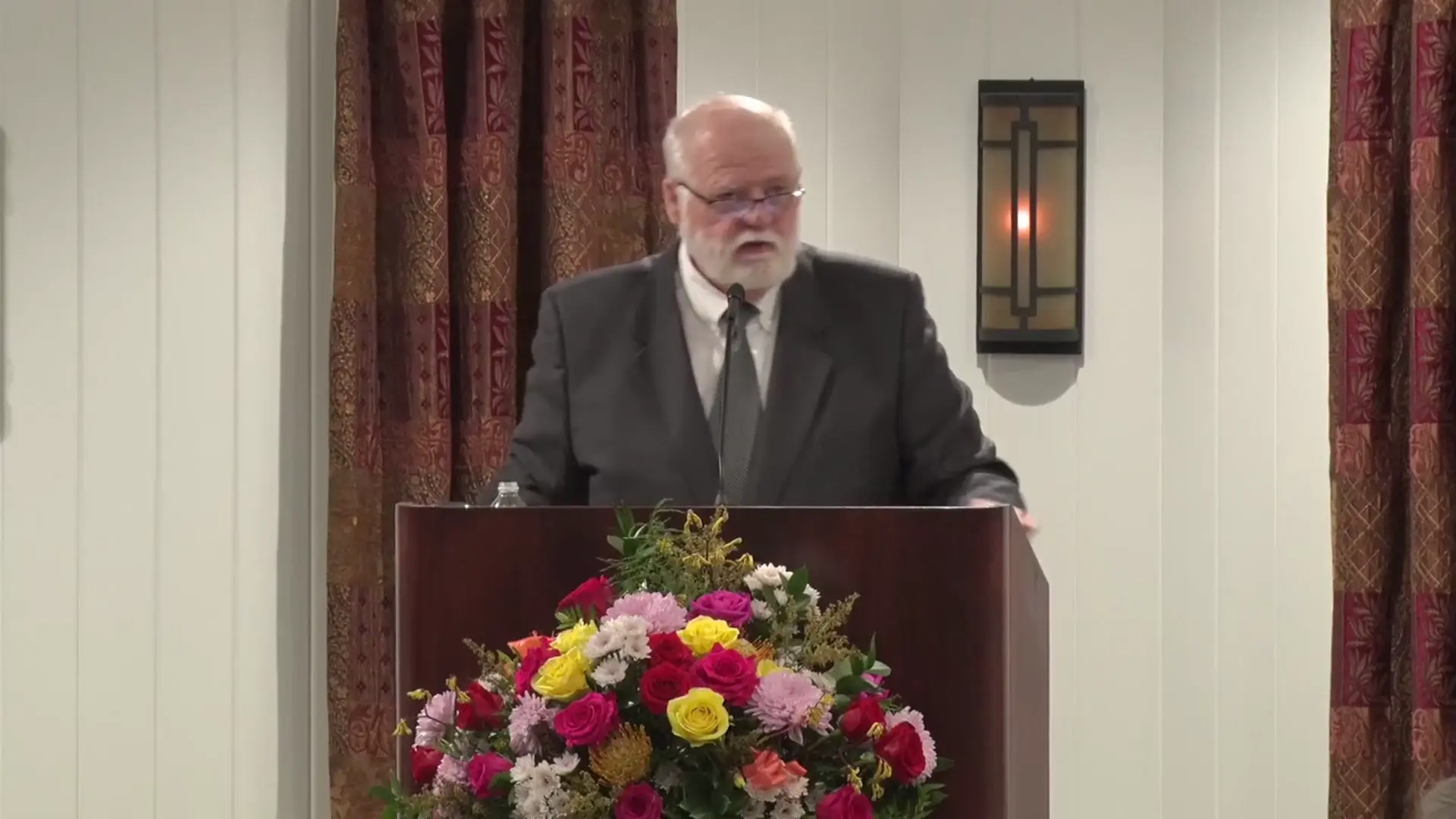
Sermon by Ted E. BowlingThe church is the Body of Christ with Jesus Christ as the Head. Members are adopted into God's heavenly Family and given responsibility to the Body and to each part of that Body. The Body consists of many members yet remains one Body. Each member has a part to contribute to the whole. No member can say it has no need of another. Weaker members are necessary. God composed the Body to give greater honor to parts that lack it so that there should be no schism and all members should have the same care for one another. If one member suffers all members suffer with it and if one member is honored all members rejoice with it. Members are the Body of Christ and individuals within it. Each member has an important part to fulfill regardless of how great or small the position appears. All members have a function. Contributions may occur behind the scenes and remain unseen by others yet they do not go unnoticed by God. Members must stand together as the Body of Christ. Every member has a responsibility to serve the brethren through gifts given by God to enhance service to the church. Prayer constitutes one such responsibility and gift that unites the Body fosters humility and invites God's power.
Sanctification and Holiness (Part 2)
Sermon by John W. RitenbaughDathan and Korah agitated for a democratization of priestly responsibilities. God shows that not everybody set apart is holy in the same way.
Themes of I Corinthians (Part 5)
Sermon by Richard T. RitenbaughI Corinthians gives ready instruction in the order and decorum that is fitting for church organization, as well as the Passover and weekly service.
Unity (Part 3): Ephesians 4 (A)
Feast of Tabernacles Sermon by John W. RitenbaughGod alone chooses the servants through whom He works His will. Sometimes the rationale God uses for selecting His vessels defies worldly wisdom.
A Trustworthy Relationship
Sermon by Mark SchindlerWe have been given an incredible privilege to be placed within the Body of Christ. This same privilege applies to our fellow saints as well.
Using Power Righteously (Part Two)
Sermon by John W. Ritenbaugh (1932-2023)God has singled each one of us out individually, calling us, gifting us with capabilities, and preparing us for eternal life as members of His family.
Unity and Unleavened Bread
Sermon by John W. RitenbaughAs members of Christ's body, we must function for the good of the whole body, not competing with other parts. We must continually function as a son of God.
Life Is Service (Part Two)
Sermon by Richard T. RitenbaughA culture of slavery pervaded life in the early Christian church, forcing Paul to pen instructions accommodating this practice in the context of love.
Where Do We Fit?
Feast of Tabernacles Sermon by John W. Ritenbaugh (1932-2023)The church exists because of what God has purposed and done, not because anything we have done. When pride exists within us, God can do nothing with us.
The Ministry
Feast of Tabernacles Sermon by John O. ReidThe church has lost faith in God to work through His ministry. We must develop a balanced insight into the function of the helpers of our joy.
Think Soberly (Part One)
Sermon by Mark SchindlerAs we examine our spiritual gifts, we must avoid any presumption that we alone carry exclusive knowledge that other church groups are too blind to see.
Think on These Things
Sermon by Mark SchindlerThe epistle of Philippians contains some valuable advice to God's people today, having suffered some grievous trials which have bonded them together.
Many Are Called, But Few Are Chosen (Part Eleven)
Sermon by Martin G. CollinsThe Parable of the Talents teaches the need for diligence in using the gifts of God. God expects us to use our talents to His glory and in the service of others.
Leadership and the Covenants (Part Thirteen)
Sermon by John W. Ritenbaugh (1932-2023)God is at work producing leadership in an organization that will follow Him, calling people into His family, carefully crafting it into a perfect organism.
Hope to the End
Sermon by John W. RitenbaughPeter, while warning about impending suffering, nevertheless distinguishes himself as the apostle of hope, keeping our minds on what is to be rather than what now is.
Countering Presumptuousness
Sermon by Richard T. RitenbaughKorah, Dathan, and Abiram were not content with where God had placed them, but, in a spirit of pride, wanted to arrogate to themselves the office of Moses.
Liberty vs. Independence
Sermon by Richard T. RitenbaughWe have been liberated from the degeneration of sin, the fear of death, corruption, and the elements of this world. If we live righteously, we remain free.
God's Workmanship (Part 2)
Sermon by John W. RitenbaughWorks are not the cause of salvation, but instead are the effect of God's creative efforts at bringing us into His image—a new creation.
Hebrews: Its Background (Part Three)
Sermon by John W. Ritenbaugh (1932-2023)The book of Hebrews clarifies that the persecution on the early church did not come directly from God, but He did stir the pot that caused the persecution.
The Priesthood of God (Part Nine)
Sermon by John W. Ritenbaugh (1932-2023)The jeweled arrangement on the breastplate in Exodus 28, arranged in marching order, symbolizes differences in gifts and responsibilities of the tribes.