


Filter by Categories

What Do We Have to Be Proud Of? (Part Two)
Feast of Tabernacles Sermon by Richard T. RitenbaughBelievers often rely on worldly philosophy rather than divine revelation, ignoring the fact that all gifts and abilities are received from God rather than earned.
Narcissists! Get Real!
Commentary by Martin G. CollinsPride in the Bible is always on the verge of being humbled and eventually brought low. If we desire to avoid being brought low by God, we must work at humbling ourselves daily. We must constantly monitor our motivations, judging our own thoughts and actions before God has to intervene and bring us down in a painful manner. The apostle James advises us to humble ourselves in the sight of the Lord, and He will lift us up. Similarly, the apostle Peter instructs us to humble ourselves under the mighty hand of God, that He may exalt us in due time.
From Pride to Humility
Sermon by John O. ReidPride emerges as the defining spiritual danger of the Laodicean era, a subtle but deadly attitude that God hates and that, if unrepented, will bar entrance into the Kingdom. Living in a wealthy, self-sufficient, anti-authoritarian nation fosters the same lukewarm self-satisfaction condemned in Revelation 3, where material abundance breeds the delusion of needing nothing, including God. This attitude mirrors the arrogant worshippers of Isaiah 66, who wished to build God a temple while relying on their own ways rather than God's, offering hollow, lifeless sacrifices. God's response established the enduring principle that He values a humble, contrite heart that trembles at His word far above any external show of worship. Pride is identified as possibly the very root of sin, rebellion against God because it claims for self the glory due only to Him. It resides deep in the heart, tied to what is called the "empirical self"—one's identity built from personal experience, possessions, and achievements—which resists replacement by God's mind and ways. Satan, called "king over all the children of pride" in Job and depicted in Ezekiel 28 and Isaiah 14, is identified as pride's father, having been corrupted by his own beauty and abundance and desiring to exalt himself above God. Scripture repeatedly warns that pride precedes destruction and is an abomination to God, illustrated through Nebuchadnezzar's fall, the Pharisee's self-congratulatory prayer contrasted with the humble tax collector, and Jeremiah's linen sash symbolizing the ruined pride of Judah. Pride manifests practically in refusing correction, defending sin, judging others harshly, and resisting God's instructions in marriage, doctrine, and daily conduct. Since the heart is "deceitful above all things," pride often hides even from its possessor, making self-examination essential through two tests: how one esteems and treats others, and how fully one obeys God's commandments. Overcoming pride requires recognizing the necessity of humility, exemplified in Micah 6:8's call to walk humbly with God, and cultivated through fasting, prayer, and submission, which "pokes a needle" in pride's inflation. Becoming like a humble, teachable child is presented as the path to greatness in the Kingdom. Paul's example shows that legitimate satisfaction in a life of obedience differs from self-righteous pride, since credit belongs to God's work within a person. Ultimately, since believers are being built into God's Temple, pride's defilement threatens that sacred purpose, while the humble and contrite are the very ones God chooses to inhabit and honor.
Pride, Humility, and Fasting
Sermon by John W. RitenbaughPride stands revealed as the fundamental barrier separating humanity from God, a theme rooted in Psalm 10:4, which states that the wicked, through the pride of his countenance, will not seek after God, because God is not in his thoughts. For those already called, seeking God does not mean finding Him for the first time, since He has already revealed Himself, but rather striving daily to become like Him. Pride obstructs this process by generating self-sufficiency; the proud, believing they lack nothing, feel no need to seek what they do not think they require. This self-sufficiency mirrors the Laodicean attitude of being rich and increased with goods, needing nothing, an attitude that flourishes even within God's church. Pride's origin traces back to Satan, described in Ezekiel 28:17 as having his heart lifted up because of his beauty, corrupting his wisdom through brightness. Job 41:34 identifies him as king over all the children of pride, the source generating pride in human beings. His pride deceived him into believing he could defeat God and take His place, the ultimate expression of vanity, ignoring the reality that he was merely a creation compared to his infinitely superior Creator. Scripture consistently links pride to destructive fruit: it resists God rather than seeking Him, persecutes the poor through selfish disregard for others, and produces an unruly tongue that curses, lies, and destroys reputations, causing more offense within the church than perhaps any other cause. Pride manifests as arrogance and stoutness of heart, fuels wrath, and even underlies drunkenness and addiction, as seen in Isaiah's condemnation of the crown of pride among Ephraim's drunkards. Daniel 5:20 shows pride preceding Nebuchadnezzar's fall, hardening the heart against both God and man. Proverbs 21:4 declares pride itself sin, comparing it to plowing, the very thing that prepares the ground for sin's harvest. Pride's deepest danger lies in its power to deceive, as shown through Edom's false confidence in its mountain stronghold and Zophar's warning that the hypocrite's excellency, or haughtiness, leads to sudden downfall. Proverbs 11:2 notes that pride, a boiling up of vanity, precedes shame. The parable of the Pharisee and Publican illustrates this vividly: the Pharisee's self-congratulation and contempt for the sinner reveal how pride deludes one into a false righteousness while blocking genuine access to God, whereas the Publican's honest self-condemnation and plea for mercy find justification instead. The Day of Atonement directly addresses this problem. The command to afflict one's soul, using the Hebrew anah, emphasizes humbling the spirit rather than merely fasting. Since pride caused the original separation from God, humility, being poor in spirit, becomes its remedy. Fasting serves as a self-imposed discipline to deflate pride, paving the way toward at-one-ment with God. Isaiah 66:2 summarizes this: God looks upon him who is poor and of a contrite spirit, showing that humility is the key to oneness with both God and one's brothers, undoing the very pride that Satan introduced into creation.
Living by Faith: Human Pride
Sermon by John W. RitenbaughOur human nature is pure vanity with a heart that is desperately deceitful and wicked, motivated by self-centeredness, a deadly combination for producing sin.
Faith (Part Seven)
Sermon by John W. RitenbaughPride is a perverted comparison that elevates one above another. Because of its arrogant self-sufficiency, it hinders our faith. Faith depends on humility.
New Covenant Priesthood (Part Seven)
Sermon by John W. RitenbaughPride is an invisible, internal spiritual condition that originated in Satan and is communicated to mankind. Its core is a perverted comparison: the proud fail to see God as beyond comparison, and so exalt themselves above Him and others. Proverbs 21:4 shows pride preparing the way for sin as plowing prepares the ground, and Paul's word in 1 Timothy 3:6 for "puffed up" literally means "wrapped up in smoke," insubstantial and vain, yet disorienting and suffocating like smoke in a house fire. Ezekiel 28 and Isaiah 14 show pride driving Satan to rebel against his Creator, while Adam and Eve likewise took sovereignty for themselves. Only Jesus refused, saying, "Not My will, but Yours be done." Psalm 10 shows the proud as aware of God yet pushing Him aside. They exploit the weak, boast, covet, lie to protect their image, use sarcasm and scorn, and assume God will not punish. Scripture shows other fruits: contention and contempt (Proverbs 13:10), as with Eliphaz and Job; knowledge that puffs up and wounds weaker brethren, as at Corinth, where the congregation was complacent about sin; seeking one's own glory; laziness; and the haughty display of Zion's daughters. By contrast, Moses humbly admitted he did not know and listened to the women who came before him. God resists and scorns the proud but gives grace to the lowly. The proud also resist correction, since they think they already know.
New Covenant Priesthood (Part Nine)
Sermon by John W. RitenbaughPride elevates one above God, denigrating any dependence upon God, replacing it with self-idolatry. We ought to boast or glory in the Lord instead of ourselves.

The Christian Walk (Part Four): Mutual Submission in Godly Fear
Sermon by Richard T. RitenbaughAmericans have a hard time submitting to authority and like to consider themselves as sovereigns, having the last say over anything including church doctrine.
Abomination
Sermonette by Martin G. CollinsThe common synonyms for abomination include loathing, hateful, abhorrence, evil anathema, repugnance, and disgusting. It is something which ignites hatred.
Atonement, Fasting, and Isaiah 58
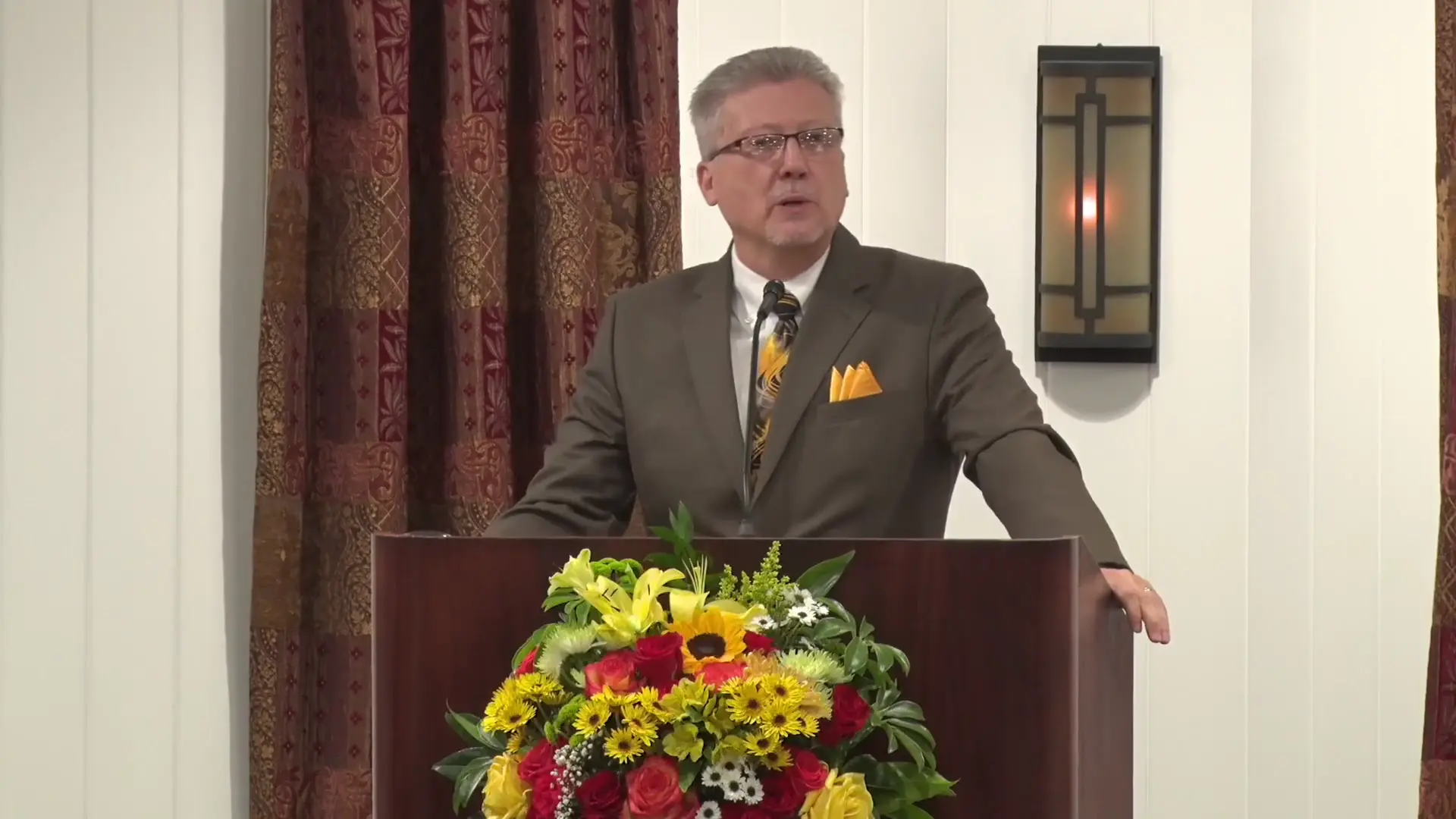
Sermon by Richard T. RitenbaughTrue fasting is not outward ritual but inner transformation: breaking sinful patterns, seeking reconciliation, and preparing to serve others selflessly.
Spiritual Renewal
Sermon by Martin G. CollinsPaul admonishes the Corinthians to resist contentions, outbursts of wrath, selfish ambition, backbiting, whispering, slander, conceit, and agitation.