


Filter by Categories
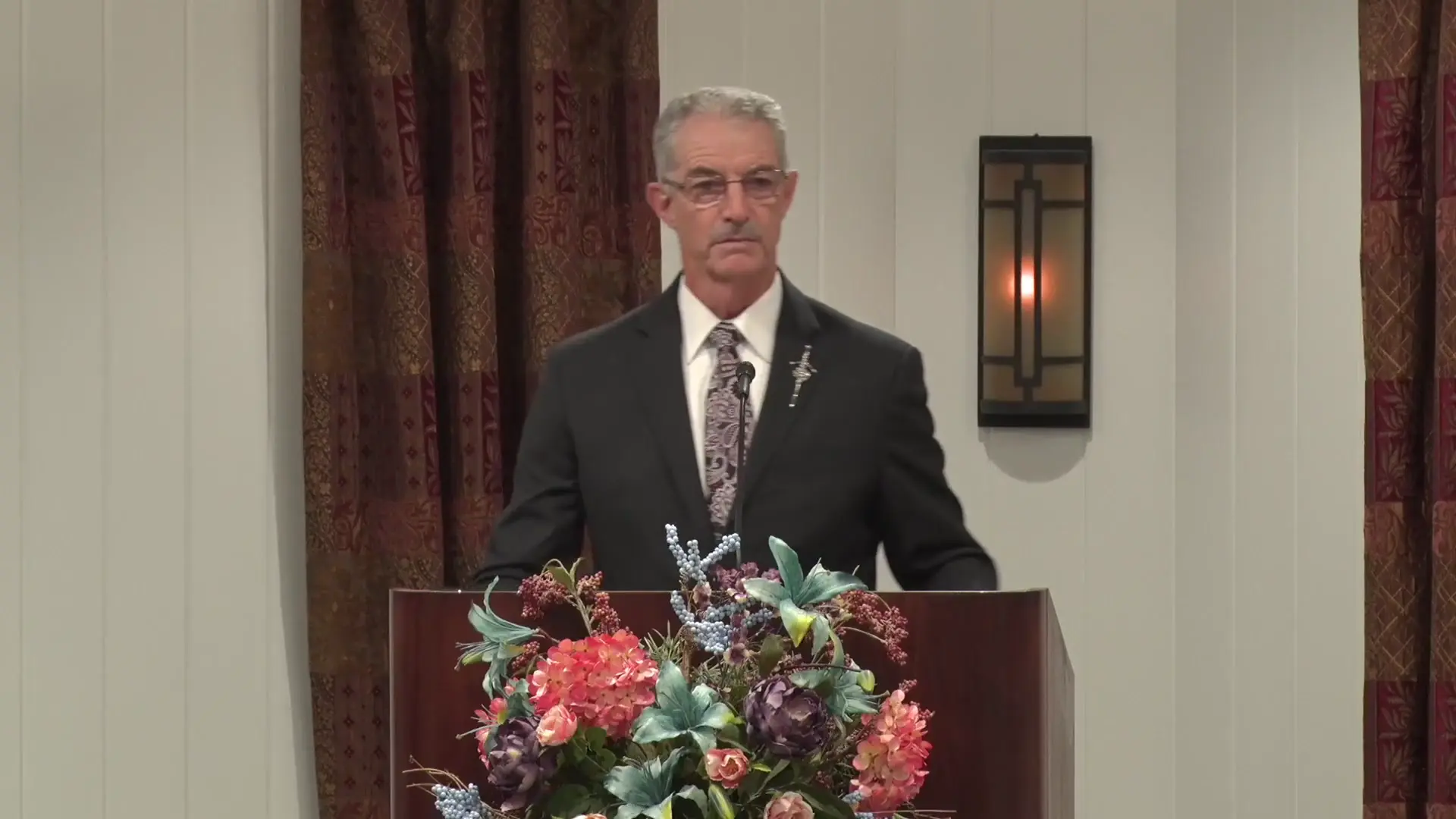
God's Spiritual House
Sermon by Ronny H. GrahamWe should recognize our purpose, embrace our role in God's plan, and continually strive to become a dwelling place worthy of Him.
Worshipping the Temple (Part One)
CGG Weekly by David C. GrabbeGod founded the church as the spiritual Temple, a community of called-out believers given His Spirit. It is a spiritual organism, not confined within a physical organization, and its purpose is to perfect, or complete, the saints so they grow into the image of God. Like the physical Temple, it is a means to facilitate proper worship of God, and it serves a vital role, for God does nothing on a whim. But Israel and Judah turned the physical Temple into an idol. They called it their arrogant boast, the desire of their eyes, the delight of their soul, their stronghold, their joy, and their glory, when God Himself should have been all of these. For this reason God promised to profane and break His own sanctuary and scatter the people. The same danger faces the spiritual Temple. Because other believers and church organizations are visible and tangible, they can grow larger in our minds than God. Fellowship with the Body can displace fellowship with Christ, trust in an organization can replace trust in the God who led it, and security in membership can replace knowing God. When the means becomes the end, God is willing to dismantle violently what He commissioned if it draws His people away from Him. The church is not immune to this, and its scattering into hundreds of groups reflects this kind of idolatry.
Living Stones in God's House
Article by StaffSolomon's Temple was a type of the true House of God, the church, in which God dwells by His Holy Spirit just as His glory once hovered over the Mercy Seat. Believers are living stones, called from every background, personality, and race, being built into a spiritual house on the foundation of the apostles and prophets, with Jesus Christ as the chief cornerstone and the Rock on which the church stands (Ephesians 2:19-20; I Peter 2:4-5). Just as Solomon's stones were finished at the quarry so that no hammer was heard at the building site, God now cuts, shapes, and polishes each stone where we are, through trials, correction, and suffering, and we must give up habits, values, and ways of thinking to become gems fit for the Master. Jesus Himself was perfected through suffering. The work does not depend on the stone; as the Potter shapes clay, the Master Artisan will finish what He began, and He speaks of it as already accomplished (Romans 8:28-30). At Christ's return the dead in Christ are raised, the living are changed, and all the stones are gathered and quietly assembled, each fitting perfectly into a preordained place as floor, wall, support, or pillar. The Temple will then be dedicated in glory, with a marriage supper for the Son and His Bride, far surpassing Solomon's dedication.
A Time to Build Up
Sermonette by Christian D. HunterThe building of Solomons' Temple began in the month of Ziv. Ziv occurs in the springtime when the sun is in the sky for longer, enabling working in the light.
Building With Integrity
'Ready Answer' by Mike FordBelievers together form a spiritual Temple, a habitation for God, and its soundness depends on the integrity of each member. Drawing on Ephesians 2:19-22 and 1 Peter 2:1-5, the building metaphor presents the saints, the apostles and prophets, and Christ the Cornerstone as the foundation, with each Christian a "living stone" fitted to its neighbor. Gentile and Israelite converts alike are equal pieces of this structure, whatever their backgrounds. Integrity has a second meaning of structural wholeness and soundness: a building is sound only when it is built of solid materials, is complete and undivided, and rests on a firm foundation. A weak stone can crack or crumble and endanger the whole structure, so each believer must be honest, upright, principled, and righteous. The collapse of the Ted Williams Tunnel ceiling in Boston, caused by shoddy materials and fraud, illustrates how a lack of integrity in the parts destroys the whole. Being "rooted and grounded" (Ephesians 3:17-19) expresses the same idea of standing firm on a solid foundation. Each Christian is responsible to develop the character God has given the skills for, so that together believers fit as a Temple with integrity, a suitable dwelling for God by His Spirit.
Will the Church of God Be Thrown Down? (Part One)
CGG Weekly by David C. GrabbeJesus Christ, in His prophecy, spoke of the physical Temple's destruction, declaring that not one stone would be left upon another. While this primarily refers to the physical structure, the concept of a spiritual Temple emerges through the apostle Peter's depiction of believers as living stones. In contrast to the physical Temple's stones being separated, these living stones of God's spiritual house are being built up. Jesus Christ, the Chief Cornerstone, affirmed that He will build His church, and the gates of Hades shall not prevail against it. This spiritual organism continues to grow, with a sense of positive progress, ensuring that it will always exist in some form, never to be completely dismantled as individual stones scattered apart.
Don't Go Out of the House!
Sermon by John W. RitenbaughThe concept of a spiritual temple emerges as the sermon traces how the word "house" expands in meaning throughout Scripture, moving from a literal structure to represent family, household, dynasty, kingdom, and ultimately the dwelling place of God Himself. This progression culminates in the New Testament identification of the church as God's spiritual temple, built not of literal stone but of living believers joined together through Christ. Drawing on 1 Peter 2:4-5, the picture is given of Christians as living stones being built into a spiritual house, constituted as a holy priesthood offering spiritual sacrifices acceptable to God through Jesus Christ. Adam Clarke's observation that in Hebrew the words for son, daughter, house, and stone all derive from the same root reinforces this connection between the believer and the building being constructed. Peter's addition of the word "living" clarifies that this is not a static structure but a dynamic organism, with Christ as the Chief Cornerstone. A stone apart from this building is useless and, having been wrenched from its source of life, suffers a lingering death—illustrating that there is no such thing as an independent, free-lance Christianity. 1 Corinthians 3:9-17 deepens this picture by identifying believers as God's building, with Christ alone as the foundation. Paul's warning about building with gold, silver, and precious stones versus wood, hay, and straw draws on the contrast between the Temple, embellished with the finest materials as a dwelling for God, and the common houses of ordinary people. The passage explicitly states that believers are the temple of God in whom His Spirit dwells, and that defiling this temple invites destruction, since the temple is holy. The Greek root of the word "temple" itself means "to dwell," confirming that the Old Testament Temple—small in size, not a place of public assembly but a place of sacrifice and of God's literal dwelling—corresponds to believers as the place where God's Spirit now resides. Ephesians 2:19-22 advances the metaphor further, describing believers as fellow citizens of God's household, built upon the foundation of the apostles and prophets with Christ as the chief cornerstone, growing into a holy temple in the Lord and being built together for a dwelling place of God in the Spirit. This growth is an ongoing process, paralleling Christ's promise in John 14:23 that He and the Father would make Their home with the one who loves Him and keeps His word. The temple, then, is not merely a static building but a living, growing sanctuary being continually shaped for God's indwelling presence. This entire development connects back to the foundational command in Exodus 12 not to leave the house once the blood had been applied to the door. Just as the Israelites were protected by remaining within the blood-marked house, believers are warned not to depart from the spiritual temple—the church—since it is there, and only there, that God's Spirit dwells and sacrifices of praise are offered. To leave this temple is to become like a stone removed from the building, cut off from the source of life found in Christ, the foundation upon which the entire spiritual structure depends.

Biblical Symbolism (Part Four)
Bible Study by Richard T. RitenbaughUnderstanding biblical symbols gives a reader insight into what God is teaching His people through common metaphors. It also aids in opening up prophecy.

Living Stones
Sermon by Ted E. BowlingI Peter 2:9 reveals how precious we are to God, a chosen generation, a royal priesthood, and a living stone fitted to join our spiritual siblings.

God Our Provider
Article by Charles WhitakerGod's providence in building the Tabernacle of Meeting serves as an encouraging example for modern Christians collaborating with God to build His church.
Be Prepared
Feast of Tabernacles Sermon by John W. Ritenbaugh (1932-2023)God has given us clear records of what has occurred in the pass, enabling us to bind time, profiting from the past and preparing for the future.

Be Strong and Work
Feast of Tabernacles Sermon by David C. GrabbeWhile the returned Judean exiles prioritized their own houses over building the temple, we should understand that it is always time to work on God's house.
Christ, the Chief Cornerstone
Sermon by Richard T. RitenbaughIf a foundation is flawed, the building cannot stand. God built His spiritual temple on the prophets and the apostles, and Jesus Christ is the chief cornerstone.
Born Again (Part 1)
Sermon by John W. Ritenbaugh (1932-2023)Baptism and being born again were already understood by the Jews, but the traditions had evidently blinded people to some additional spiritual nuances.
Knowing Christ (Part 2)
Sermon by John W. RitenbaughChrist's sacrifice was not merely substitutionary, but representative, with Christ giving us a pattern for life - mortifying our flesh and putting out sin.
Bezaleel of the House of Judah
Sermonette by Ted E. BowlingGod augmented Bezaleel's natural abilities, not only in physical craftsmanship, but also in the soft skills of management, patience, and longsuffering.
The Church, One Body
Sermon by Richard T. RitenbaughGod's call to learn from the ant does not teach us to yield to a hierarchical system, but to participate in a community with the goal of edification.
The Priesthood of God (Part One)
Sermon by John W. RitenbaughIt is time to prepare ourselves for the role of a priest, teaching a way of life to the world, serving as a mediator, blessing or conferring good upon people.
Born Again (Part 3)
Sermon by John W. Ritenbaugh (1932-2023)We have been adopted into the family of God and have become members of God's Kingdom. The Kingdom is here in the same way the church is a spiritual entity.

Fully Man and Fully God?
'Personal' from John W. RitenbaughJesus Christ is called both 'Son of Man' and 'Son of God,' raising weighty questions about His nature. Could He have both full humanity and full divinity?
Born Again (Part 2)
Sermon by John W. Ritenbaugh (1932-2023)Things pertaining to the New Covenant can only be understood by those who have been circumcised in the heart, which equates to having been born again.