


Filter by Categories
The Great White Throne
Feast of Tabernacles Sermon by Richard T. RitenbaughThe concept of white garments is deeply symbolic in the context of the Great White Throne Judgment. White represents righteousness, purity, and cleanliness, untainted by the sin of the world. This symbolism extends to the throne itself, which is described as white, signifying that the Judge who sits upon it is holy, righteous, and pure. The purity of white also implies joy and happiness, stemming from the knowledge that God accepts the works of those who follow His way. Just as Christ and those who return with Him are depicted as clothed in white, showing their cleanliness and purity, so too does the white throne reflect the perfect and unerring nature of the judgments made from it. Those who come before this throne need not fear an unjust decision, for the One who sits upon it embodies holiness and righteousness, ensuring that every decree is just and proper.

The Four Horsemen (Part Two): The White Horse
'Prophecy Watch' by Richard T. RitenbaughBiblically, white is a color with varied significance. In Ecclesiastes 9:8, Solomon advises, "Let your garments always be white," which is often understood to symbolize the joy, purity, and beauty of a righteous, godly individual. The Shulamite describes her Beloved, a type of Christ, as white in Song of Songs 5:10, suggesting His spotless and holy character. Similarly, Daniel sees the Ancient of Days clothed in a garment white as snow in Daniel 7:9, echoing John's vision of the glorified Christ in Revelation 1:13-16. In Revelation, white predominantly carries positive connotations, often associated with God, Christ, glorified saints, or objects like the Great White Throne, suggesting purity, righteousness, holiness, glory, victory, and perfection. Despite these associations, the white horseman of Revelation 6:1-2, while appearing glorious, embodies a deceptive force, using his whiteness as a façade to conceal a deadly, unholy purpose of conquest through false religious communication.
Vision and Reflection
Sermonette by Martin G. CollinsThe white radiant garments worn by the resurrected saints symbolize the righteousness of the saints, made possible by the indwelling of the Holy Spirit.
The Fifth Seal (Part Two)
'Prophecy Watch' by Richard T. RitenbaughIn the vision described, the souls under the altar, who have endured persecution and martyrdom, are each given a white robe as a symbol of salvation. The white color of the robe signifies purity, righteousness, joy, victory, and perfection, marking their status as redeemed through their suffering. This act precedes God's response to their cry for justice, affirming their ultimate reward despite their current state of rest in death.
Color In Scripture
Sermon/Bible Study byThe Hebrews perceived color differently than we do, assigning symbolic significance to a number of different colors as they associate with concrete objects.
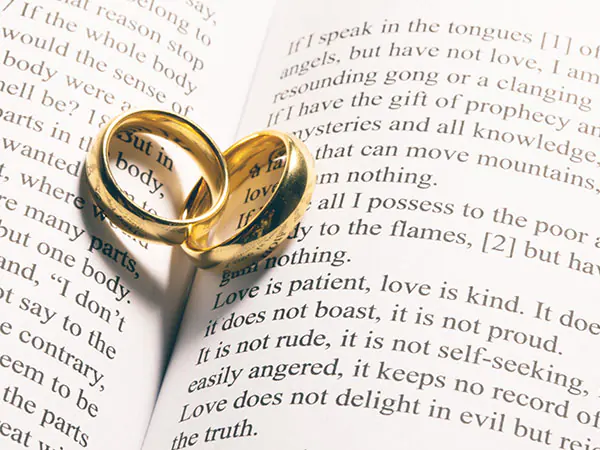
The Marriage of the Lamb
'Prophecy Watch' by StaffAt the marriage of the Lamb, the Bride is granted fine linen, clean and white, a privilege far more beautiful, important, and meaningful than even the loveliest physical wedding gown. Revelation 19:8 identifies this linen as the righteous acts of the saints. The Bride will have made herself ready, refusing to let anything sidetrack her preparation. A study of fine, clean, white linen in the Bible shows that this fabric, or more correctly a spiritual version of it, is worn by angels, by royalty, and by God's priests, and it was used extensively in constructing the Tabernacle. God's children who make up the Bride become worthy to wear it because they become like angels (Matthew 22:30) and become kings, priests, and pillars in God's Temple. The Bridegroom, His garment dipped in blood, will descend to earth with His Bride and His angels, all clothed in fine, white, clean linen (Revelation 19:12-16). Those who wish to wear this raiment must prepare diligently now, since the five foolish virgins, who did not adequately prepare, will not be at the Marriage Supper.
Modesty (Part One): Moderation and Propriety
Feast of Tabernacles Sermon by Martin G. CollinsWe must avoid the world's extremes and sensual excesses in matters of dress and fashion, adopting instead humility, chastity, decency, morality, and self control.
The Priesthood of God (Part Ten) Conclusion
Sermon by John W. Ritenbaugh (1932-2023)As future priests, we are going to be given rigorous, hands-on jobs to teach people righteousness and holiness, distinguishing between the sacred and profane.
Many Are Called, But Few Are Chosen (Part Nine)
Sermon by Martin G. CollinsThe loyalty of the Laodiceans did not extend far beyond loyalty to self. Loyalty and friendship are inextricably bound together.
Letters to Seven Churches (Part Seven): Repentance
Sermon by Richard T. RitenbaughAs High Priest, Christ is putting His people through the paces, tailoring the trials and experiences needed for sanctification and ultimate glorification.
Letters to Seven Churches (Part Six): Sardis
Sermon by Richard T. RitenbaughThe letter to the church in Sardis reads like an obituary, warning us who are alive but lacking zeal to repent and become serious about our calling.
The Priesthood of God (Part Three)
Sermon by John W. Ritenbaugh (1932-2023)Because God is holy, His people must also be holy, displaying the character of God. Holiness designates God-like qualities found in those sanctified by God.