


Filter by Categories
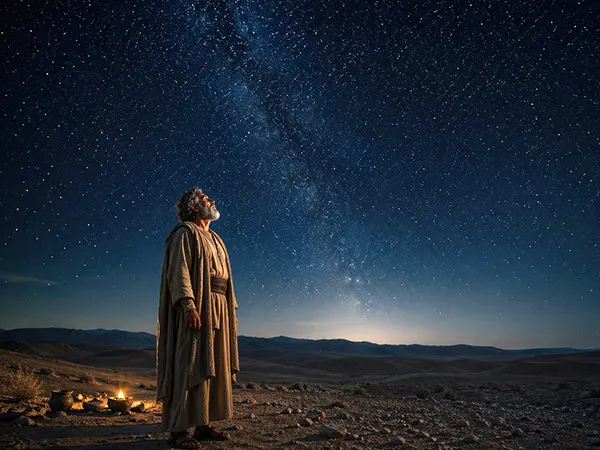
An Unchangeable Promise?
'Ready Answer' by Craig SablichGod's promise to Abraham was a one-sided covenant guaranteed by God alone, who passed between the pieces in Genesis 15 while Abram did not, so it can never be annulled or added to, and the law given 430 years later cannot void it (Galatians 3:15-17). The promise was made to Abraham and to his one Seed, who is Christ, so Christ is the true Heir and the first to receive the eternal inheritance as Firstborn. Because the land was promised forever and Abraham died without receiving it, the promise requires resurrection, so eternal life is built into it. The covenant with Abraham and the New Covenant in Christ are one continuous promise; Jesus came to confirm it, not change it. When a person repents, is baptized, and receives God's Spirit, he is grafted into that promise: "If you are Christ's, then you are Abraham's seed, and heirs according to the promise" (Galatians 3:29). Believers are children of God, heirs of God and joint heirs with Christ (Romans 8:16-17), and the one who overcomes will inherit all things (Revelation 21:7), a fulfillment completed at Christ's return. The inheritance rests on faith in God's promise, as with Abraham, not on law-keeping to earn salvation. Yet genuine faith produces obedience, and those who reject God and His covenant can forfeit what He offers. Hope rests not on how perfectly believers perform but on God's faithfulness.
Knowing God: Formality and Customs (Part Seven)
Sermon by John W. RitenbaughBelievers are heirs of the promises because they are now the Israel of God, a new creation, and the promises made to Abraham, Isaac, and Jacob now belong to the church. Galatians 3:26-29 states that all who are baptized into Christ have put on Christ, and if they are Christ's, they are Abraham's seed and heirs according to the promise, with no distinction of Jew or Greek, slave or free, male or female. Romans 4:13 confirms that the promise that Abraham would be heir of the world came not through the law but through the righteousness of faith. Because one must have eternal life to inherit the promises, believers are also heirs of salvation and co-heirs with Christ, who will inherit the entire earth at the very least. This inheritance is one of many titles God bestows, along with called, chosen, redeemed, saints, bride of Christ, sons of God, and firstfruits. Each carries both privilege and responsibility. Just as ancient Israel received unique privileges and lost the kingdom by failing to bear its fruits, those who have received even greater privileges as inheritors of the promises are obligated to live up to them, resisting sin and enduring to the end as a good witness.
Abraham (Part Four)
Sermon/Bible Study by John W. RitenbaughThose who are in Christ are Abraham's seed and heirs according to the promise (Galatians 3:29). This standing does not rest on blood descent from Abraham but on being in Christ through faith, baptism, and the Spirit, so race, gender, and social status mean nothing. Paul uses Isaac to show the pattern: just as Isaac was born by God's miraculous promise rather than natural processes, so believers become children of Abraham only by God's call, which opens the mind and grants repentance. They are children of promise by election and divine design, not by their own ability. Physical descent alone, like that of the Jews who sought to kill Jesus, proves nothing. Only those who share Abraham's spirit of trusting and submitting to God's word, and who produce Abraham's works, are his true children, rejecting the works of their former spiritual father, Satan. The heirs follow Abraham's pattern: they answer God's "I will" promise by faith, separate from the world, and live as strangers and pilgrims. The inheritance, the earth, is promised yet still possessed by others, so the heirs live unsettled lives, waiting for the city whose builder and maker is God. Abraham cherished his relationship with God above the land or reward, and that friendship, sustained by communication and trust, is what motivates the heirs to obey.
Servant of God, Act II: God's Gift of Faith
Article by Charles WhitakerThe story of Ebed-Melech goes far beyond a historical vignette. His story is an allegory of God's grace to the Gentiles.
The Covenants, Grace, and Law (Part Thirteen)
Sermon by John W. RitenbaughAs we participate in the New Covenant, we go through the stages of justification, sanctification, and ultimately glorification as part of Christ's body.
The Covenants, Grace, and Law (Part Twenty-Seven)
Sermon by John W. RitenbaughThe New Covenant, which writes God's law onto the heart, in no way does away with any aspect of the law. Works do not justify us, they sanctify us.

The Israel of God
Article by Charles WhitakerPaul refers to the church as 'the Israel of God.' Why not 'the Judah of God'? Why did God not inspire Paul to call the church "the Jacob of God"?
Acts (Part Five)
Sermon/Bible Study by John W. RitenbaughThe witness of the apostles, particularly miraculous healings performed in the name of Jesus Christ, brought them into conflict with the Jewish leaders.
Thy Kingdom Come! (Part One)
'Prophecy Watch' by StaffWhile most understand the Kingdom of God represents God's future rule over mankind, many do not realize it also has past and present aspects.