


Filter by Categories
The Meaning of "In Christ"
Feast of Tabernacles Sermon by Richard T. RitenbaughBeing in Christ is central to our salvation now and will be vital to our roles in the Millennium, the Kingdom of God, and into eternity. Without Christ, we would be nothing, as it is this state of being in Christ that makes all the difference. The apostle Paul frequently uses phrases like "in Christ," "in Him," "by Him," "through Him," and "with Him" across his writings, emphasizing that we owe everything to Christ—past actions, present realities, and future promises. Christ is all in all, the essence of everything for us. The concept of union with Christ permeates Paul's letters through direct phrases and metaphors, such as being part of His body with Him as the Head, being clothed with Christ, becoming a new man, being built up as a temple, or being the Bride of Christ, unified as one with Him as the Bridegroom. This idea of union is not minor but a dominant theme in Paul's thought, covering nearly every concept he addresses. This understanding began for Paul on the road to Damascus, where Christ revealed Himself, asking why Paul persecuted Him, not merely His people. This showed Paul that Christ is so closely associated with His followers that what is done to them is done to Him, indicating a profound unity—Christ in them and they in Him, inseparable. This unity is not unique to Paul but stems from Christ's own teachings during His ministry, reflected in the gospels where He speaks of being in us and we in Him, as branches on the vine, sharing in the Father's love as He does. Paul refines this concept of being in Christ, presenting it through various facets like instrumentality, where Christ is the agent through whom God accomplishes His will, reconciling the world and providing grace and salvation. Through participation, we share in Christ's experiences, from death and resurrection to sufferings, following in His steps to achieve the same character image. Identification marks us as Christians, separating us from the world by our association with Christ. Incorporation means becoming part of His spiritual body, absorbed into Him, functioning in various roles within the church, and ultimately unified with Him as one. Being in Christ is the great difference-maker in our lives, both now and eternally. Without Him, there is no election, redemption, new creation, hope, salvation, resurrection, eternal life, glorification, or place in the Kingdom of God. With Him in us and working with us, we grow into His character image and will have what it takes to live and rule with Him in His Kingdom during the Millennium, inheriting all things as firstfruits of His spiritual creation.
Four Views of Christ (Part 7)
Sermon by John W. RitenbaughThe concept of being in Christ underscores a profound unity and shared experience between believers and Jesus Christ. We are baptized by one Spirit into one body, as stated in I Corinthians 12:13, becoming members of His body, the church, which is the fullness of Him who fills all in all, according to Ephesians 1:22-23. This close relationship means that what the Head experiences, the body experiences as well; we tread the same path as He did, with Him as the Archegos, the Trailblazer and Author, guiding us through life's trials and lessons. Being in Christ signifies that we are inside of Him, a part of Him, as emphasized in Ephesians 1:1-7, where we are blessed with every spiritual blessing in the heavenly places in Christ, chosen in Him before the foundation of the world to be holy and without blame. Only because we are in Him do we have redemption through His blood and the forgiveness of sins. This unity is further illustrated in Ephesians 1:10, where all things are gathered together in one in Christ, both in heaven and on earth. Our shared life with Christ is evident in scriptures like Romans 6:6, where our old man was crucified with Him to do away with the body of sin, and Colossians 2:12, where we are buried with Him in baptism and raised with Him through faith. Romans 8:17 highlights that as joint heirs with Christ, we suffer with Him to be glorified together. This intimate connection means we are drawn along the same path toward death—not necessarily martyrdom, but the death of self, which must precede a resurrection to spirit life, as seen in Philippians 3:8-11, where being found in Him leads to knowing the power of His resurrection and the fellowship of His sufferings. The four Gospels—Matthew, Mark, Luke, and John—focus significantly on the crucifixion, death, and resurrection of Christ, underscoring its importance. This central event is not just historical but a pattern for us; as He is, so are we in this world, following the same path of suffering and death to self, which is essential for producing the fruit of God's Spirit and ultimately achieving resurrection to life. Scriptures such as Galatians 2:20, where we are crucified with Christ, and Colossians 3:1-3, where our life is hidden with Christ in God, reinforce this call to die to sin and live in the Spirit, ensuring that if we are truly in Him, we will be resurrected just as He was.
Our Affinity to Christ
Sermon/Bible Study by Richard T. RitenbaughAs Christians, our natural affinities must take a back seat to our chief affinity with Jesus Christ, our Savior and Elder Brother. This likeness to Him should be stronger than any other bond we have with a person, activity, place, or thing. From the very beginning in Genesis 1:26-27, God created man in His own image and likeness, indicating a profound connection in form, shape, mind, personality, and character. This affinity reveals that we are made to reflect Him in many ways, both physically and spiritually. In the New Testament, this concept evolves as we are called to grow in the image of Jesus Christ, focusing on spiritual qualities rather than mere physical resemblance. According to I Corinthians 15:46-49, while we start as physical beings bearing the image of the earthly man, Adam, we are destined to bear the image of the heavenly Man, Christ, in a spiritual body through the resurrection. Romans 8:29-30 further emphasizes that God has predestined some to be conformed to the image of His Son, calling, justifying, and glorifying them in this transformative process. Once called into this process, an automatic affinity with Christ emerges. We become His younger brothers and sisters, destined to share so many of His attributes that, especially in glorification, our resemblance to Him will be unmistakable. Colossians 3:1-4 urges us to set our minds on things above, where Christ is, as our lives are hidden—or enveloped—with Christ in God. This intimate entwining means that, after baptism, our lives are inseparable from His, with Christ as our very life, walking with us step-by-step until we reach the same glorious goal. This affinity is also seen in the symbolism of the wavesheaf and Pentecost offerings, where Christ is the First of the firstfruits, cut from the earth and accepted by God, while we, as a kind of firstfruits, undergo a similar process of refinement through trials to become like Him. I Corinthians 15:20-23 confirms Christ as the firstfruits of the dead, opening the way for others to be resurrected at His coming. James 1:17-18 reinforces that we are a kind of firstfruits of His creatures, produced through a unique process in this world amidst temptations, growing in a manner akin to Christ's own journey. Revelation 14:1-5 highlights the enduring affinity of the 144,000 firstfruits with Christ, standing with Him on Mount Zion, following Him wherever He goes, and being identified as firstfruits to God and the Lamb. Romans 8:12-17 and Galatians 4:3-7 further illustrate our identification with Christ as joint heirs, adopted as sons through His Spirit, inheriting all that He inherits. I Peter 1:3-9 speaks of the living hope and inheritance reserved for us through Christ's resurrection, secured by God's power as we endure trials to become like Him. Hebrews 2:9-18 underscores this intimate connection, showing that Christ, who sanctifies, and we, who are being sanctified, are united as one. He is not ashamed to call us brethren, having shared in flesh and blood to destroy the power of death and aid us in our temptations through His own sufferings. Luke 14:25-27 and Mark 10:35-40 reveal that to be His disciples, we must bear our cross and follow His path of loyalty and endurance, drinking the same cup of suffering He drank to attain glory. I Peter 2:20-21 and 4:12-16 affirm that we are called to suffer as Christ did, following His example, and to rejoice in sharing His sufferings as a sign of God's work in us toward firstfruithood. I John 4:17 states that as He is, so are we in this world, facing similar trials and tests. Philippians 3:8-11 expresses the desire to know Christ, to share in the fellowship of His sufferings, and to be conformed to His death to attain resurrection, valuing nothing above this affinity. Hebrews 11:32-35 shows that many before us endured great suffering for the hope of a better resurrection, yearning to be firstfruits like Christ. Finally, I John 2:28-3:3 calls us to abide in Him, con
The Christian Paradox (Part Two)
Sermon by Richard T. RitenbaughWe have two conflicting natures: a downward-pulling carnal nature versus a divine nature imparted by God's Holy Spirit, continually at odds, seen in Romans 7.
Ambassadors for Christ
Sermon by Martin G. CollinsWe are sojourners, pilgrims, aliens, and ambassadors, living among, yet separate from, the peoples of this present world. We must be loyal to our spiritual family.
Faith and the Christian Fight (Part Six)
Sermon by John W. RitenbaughGod's calling is personal and individual rather than general, opening otherwise closed minds, replacing spiritual blindness with spiritual understanding.
Is America a Christian Nation? (Part One)
Sermon by John W. Ritenbaugh (1932-2023)The founding of the United States and the other nations of modern Israel was not random or accidental, but purposely orchestrated by our Creator.
In Him Was Life
Sermon by Richard T. RitenbaughAlthough we have physical-chemical existence, we do not yet have God's quality of life. The key quality of eternal life is a vibrant relationship with God.
The Second Resurrection and Union With Christ
Feast of Tabernacles Sermon by Richard T. RitenbaughWe are going to have to find ways to make God's way appealing to people of alien cultures, gently bringing them to a tipping point.
Lessons From Roots (Part One)
CGG Weekly by David C. GrabbeFruit is not produced immediately; it is produced only when a plant is both mature and stable enough that mere survival is no longer its top priority.
God In Us
Sermonette by Ronny H. GrahamThe force of the preposition 'in' reveals that the Father loves us to the same degree that He loves Jesus Christ. We must reciprocate their love.
Hebrews (Part Fourteen): Chapter 2, A Mind Bending Purpose (Part Three)
Sermon by John W. Ritenbaugh (1932-2023)Without a meaningful relationship with Christ, God's people cannot possibly bear fruit. Our responsibility is to yield to God's creative work in our lives.
Hebrews (Part Thirteen): Chapter 2, A Mind-Bending Purpose (Part Two)
Sermon by John W. Ritenbaugh (1932-2023)The Jewish converts to the Way, although having had the benefit of Messianic prophecies, did not recognize the powerful significance of Psalm 8.
The Vinedresser - Revisited
Sermonette by Clyde FinkleaDr. Bruce Wilkinson explains that 'takes away' should be more properly rendered 'takes up,' meaning new grape vines are lifted out of the dirt.
The Mystery of the Church (2005)
Sermon by Martin G. CollinsPaul's body analogy illustrates the interconnectedness of all members to Jesus Christ and to each other. Not one is unimportant or useless.
Choosing the New Man (Part Three)
Article by Charles WhitakerWhat or who is the new man? The new man is Jesus Christ Himself, living in us by His Spirit, once we are baptized into Him.
God's Workmanship (Part 2)
Sermon by John W. RitenbaughWorks are not the cause of salvation, but instead are the effect of God's creative efforts at bringing us into His image—a new creation.
The Holy Spirit and the Trinity (Part Five)
Sermon by John W. RitenbaughGod's Spirit is the essence of His mind rather than a third person. With this Spirit, God opens our minds, dwells in us, and transfers His nature to us.
Offerings (Part Seven)
Sermon/Bible Study by John W. RitenbaughIf we want to follow Christ, we must sacrifice, take up our cross, and follow His example of service to God and others.
It's Not About You
Feast of Tabernacles Sermon by Richard T. RitenbaughThe Baby Boomer generation has taken on characteristics of narcissism, self-absorption, and excessive self-centeredness, leading to rampant materialism.
Why Is God Doing This, This Way?
Sermon by John W. Ritenbaugh (1932-2023)We must learn to see ourselves and our function as God sees us—as a distinct, unique entity, a holy people, a special treasure.
Joy: What Is It?
Sermon by Richard T. RitenbaughWithout God's Spirit, the fruit of joy is unattainable. Godly joy buoys people in the midst of grave trials, providing hope for a glorious future.
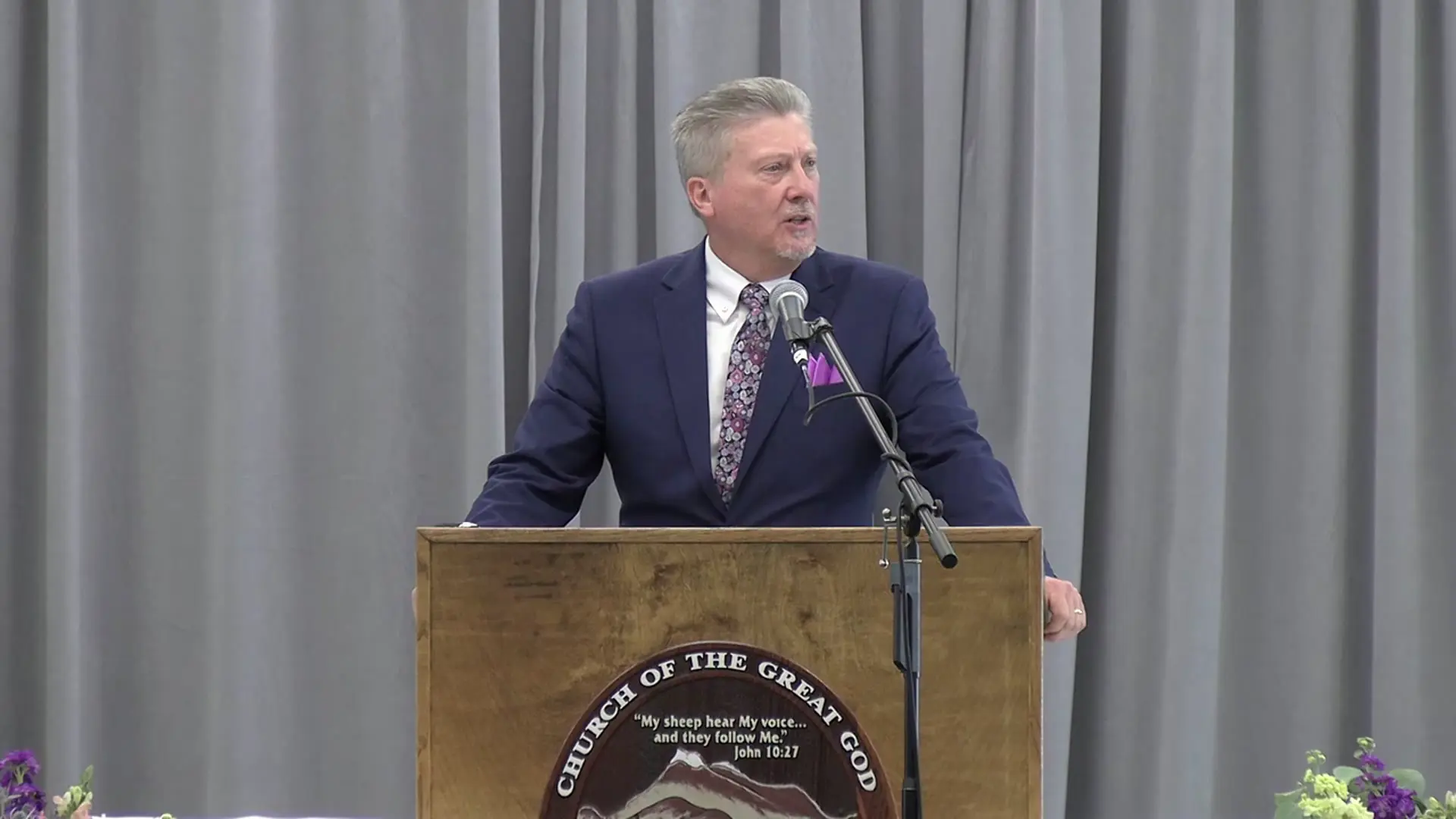
Jesus in the Feasts (Part Five): Tabernacles
Feast of Tabernacles Sermon by Richard T. RitenbaughWe should consider the temporary dwellings as a foreshadowing of Christ as our ultimate Tabernacle—the divine presence with and within His people
Hebrews as a Sermon (Part Two)
Sermon by John W. Ritenbaugh (1932-2023)God designed the sermon of Hebrews to motivate God's people, who are going through the same turmoil as those living in 65 AD, facing persecution from society.
Life Is Service (Part One)
Sermon by Richard T. RitenbaughThough the American mindset does not feel inclined to serve, outgoing service to others yields the maximum joy and fulfillment one can possibly attain.
The Source of Church Characteristics (Part Two)
Sermon by John W. Ritenbaugh (1932-2023)Jesus Christ is the architect of the church, indicating that the institution must take on the characteristics of the Builder, reflecting His character.
All in All (Part 1)
Sermon by John W. Ritenbaugh (1932-2023)The end of the sanctification process is when Christ will have defeated all enemies and put all things under His feet. Then, God the Father will be all in all.
The Talking Blood (Part One)
Feast of Tabernacles Sermon by John W. Ritenbaugh (1932-2023)Christ admonishes His people to prepare for difficult times by cultivating a close relationship with their Savior. Apart from Christ, we can do nothing.
His Eye Is on the Sparrow (Part Five)
Sermon by John W. Ritenbaugh (1932-2023)As the lives of the major biblical figures were predestined, so are our lives. God chooses, moves, and manages the lives of His servants.
The Offerings of Leviticus (Part Four): The Peace Offering
'Personal' from John W. RitenbaughThe peace (or thank) offering was the most commonly given in ancient Israel. It pictures God, the priest, and the offerer in satisfying fellowship.
Sovereignty, Election, and Grace (Part Six)
Sermon by John W. RitenbaughGrace's influence extends beyond justification, into the sanctification stage where the believer yields himself to righteousness, keeping God's commandments.
The Resurrection From the Dead
Sermon by John W. RitenbaughOur lives revolve around the hope of a resurrection from the dead. Hope, deriving from Christ's resurrection, gives faith and love impetus and energy.