


Filter by Categories
Garden of Gethsemane: The Oil Press
Sermonette by Ted E. BowlingThe Garden of Gethsemane has particular significance because it was not only an olive grove, but also the location where olives were pressed into oil.
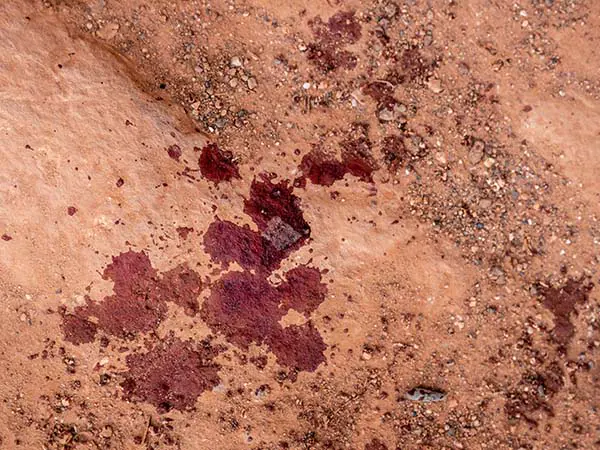
Did Jesus Sweat Blood?
'Ready Answer' by Robin FiskIn Gethsemane Christ prayed in true agony of mind, and His sweat ran off Him in great drops, yet it did not literally become blood. Luke 22:44 says His sweat was "like" or "as it were" great drops of blood, a phrase that marks a comparison and not a literal statement. Luke uses the same picturesque idiom elsewhere in Acts, as when Stephen's face looked like an angel's, scales seemed to fall from Saul's eyes, and Peter saw something like a great sheet. Luke, a physician and the most literary of the gospel writers, describes the sweat as blood-like in the dark of night, and he may also foreshadow the blood Christ would literally shed in the hours ahead. Matthew, Mark, and John say nothing of it, and the claim of hematidrosis is a dubious, rare condition that a healthy Christ would not have suffered. Denying literal bloody sweat does not diminish His anguish. That night He showed the greatest human courage, praying, "Not My will, but Yours, be done," and willingly facing arrest, scourging, crucifixion, and the burden of all human sin. Picturing Him nearly bleeding out from fear fits Satan's counterfeit of a weak Christ, not the true Savior and King.
Jesus' Sufferings on Passover
CGG Weekly by Ronny H. GrahamAfter the Passover meal, Jesus and the disciples walked to the Garden of Gethsemane (Luke 22:39-46). There He endured the mental torment of waiting for the events that were about to begin. Three times He pleaded with His friends to pray with Him for just one hour, yet He had to face the dread of what was coming alone. He knew He had to carry out His purpose alone and that it would be horrifying and painful, yet He urged His friends to pray so they would not fall into temptation. The loneliness of Gethsemane is one of the sufferings of His last hours, and it comes after the betrayal by Judas and just before the arrest. The Jews came for Him there with a great multitude of soldiers carrying swords and clubs (Mark 14:43). Understanding what Jesus went through helps us discern the Lord's body and appreciate what God did for us.
A Look at Christian Suffering (Part One)
CGG Weekly by David C. GrabbeIf we are merely seeking a crown of glory, hoping to skirt by Christ's suffering, we must ask ourselves whether we really accept the Passover cup.
Jesus' Final Human Thoughts (Part Two)
Article by StaffWhat was Jesus thinking about during His last hours as a human? The gospel accounts reveal what Jesus knew about His suffering, death, and resurrection.
Are You Drinking of the Master's Cup?
Article by StaffIn Gethsemane the cup was fresh in Jesus' mind. Just as He had given His disciples a cup to drink, the Father had placed a cup before Him. He prayed, "O My Father, if it is possible, let this cup pass from Me; nevertheless, not as I will, but as You will." In the Old Testament the cup is a metaphor for divine punishment of sin, so His death meant far more than physical torture. Every sin ever committed would be heaped on one sinless Being, and He who had always done the Father's will and been called the beloved Son would experience the Father's overflowing wrath against all sin, including the worst sins. Some of what He suffered was for our sins. Death and the wrath against sin were the climax of His mission as Messiah, and as the hour approached His awareness of that wrath grew more intense. To Him it was an unimaginable horror. In His second and third prayers He changed His words to "if this cup cannot pass away from Me unless I drink it, Your will be done." He accepted that the only way past the ordeal was through it. Even after His arrest He told Peter, "Shall I not drink the cup which My Father has given Me?" His example calls His followers to drink the cup the King has given them, accepting the trials appointed for them.
Jesus' Final Human Thoughts (Part One)
Article by StaffWhat was in Jesus' mind during His final hours as a human being? The Bible shows that Jesus' thoughts were not on Himself or the sins He was bearing.
After the Resurrection
Sermon by Mark SchindlerThe absence of the 100 pounds of aloes, the folded 'turban,' and the rolled away stone indicate that a thorough cleansing and purification had occurred.
Death of a Lamb
Article by StaffSince the church no longer keeps the Passover with the slaughter of a lamb, we miss important and poignant details that could enhance our observance.
Matthew (Part Twenty-Three)
Sermon/Bible Study by John W. RitenbaughThe apostles' inability to drive out the demon teaches that faith is not a constant factor; it will deteriorate if it not exercised through prayer and fasting.
Control and Self-Control
Sermon by Richard T. RitenbaughParadoxically, when we yield to God's sovereignty, He wants to cede control over to us, teaching us to develop self-control as an ingrained habit.
John (Part Twenty-Six)
Sermon/Bible Study by John W. RitenbaughWhile the other accounts of Jesus' trial and crucifixion seem to show passivity, John shows Jesus totally in charge, purposefully and courageously moving.