


Filter by Categories

Is New Year's Eve a Pagan Holiday?
'Ready Answer' by Mike FordThe celebration of New Year's Eve carries deep pagan roots, much like other holidays that have been adapted over time. The origins of these festivities are steeped in traditions that are not aligned with the practices God desires for His people. Historical insights reveal that such celebrations, including the customs of counting down the last seconds of the old year, drinking champagne, and other revelries, stem from ancient pagan practices that have no foundation in God's instructions. God's voice calls His people to come out from such traditions, to avoid the wicked ways of Babylon and the consequences that follow.
The Cross: Christian Banner or Pagan Relic?
Article by Earl L. HennLong before the coming of Christ, pagans used the cross as a religious symbol, employing many variations of its form in the ancient world. According to historian Alexander Hislop, Tammuz was closely linked to the Babylonian mystery religions, which originated with the worship of Nimrod, Semiramis, and her illegitimate son, Horus. The original form of the Babylonian letter T, representing Tammuz, was identical to the crosses seen in much of the world's religious symbolism. Satan the devil, aware long before Jesus was born that He would die by crucifixion, made the cross a popular symbol of worship in an attempt to deceive the world and lead people into following a false Christ. God instructs His true followers to worship Him in Spirit and in truth, calling them to forsake all false religions, rituals, and pagan symbols of worship, including the cross.
Is New Year's Eve Pagan?
Sermonette by Mike FordThe celebration of New Year's Eve carries deep pagan roots, much like the Christmas season, which true Christians often view with concern. Research reveals that New Year's Eve is considered pagan to the core by many, with its origins tied to ancient practices. Historical writings, such as an article by William Ellis in the December 1964 Plain Truth magazine titled "The Truth about New Year's," highlight these pagan connections. Ellis references a book, "4,000 Years of Christmas" by Earl Count, to underscore the festival's beginnings as an adjunct to Christmas, celebrating the rebirth of the sun. Over time, these celebrations incorporated pagan fertility rites, human sacrifices, and even acts of violence against specific communities, including the destruction of homes and places of worship. In modern times, New Year's Eve often serves as an excuse for excessive behavior and foolishness, further distancing it from any sacred purpose.
Satan's Pagan Holy Days
Feast of Tabernacles Sermon by Kim MyersAs young people move into the world, they will encounter pressures from friends, family, and society to participate in satan's counterfeit 'holy days' and mankind's pagan holidays. These celebrations, rooted in ancient practices, stand in stark contrast to God's desires for His people. New Year's, one of the oldest pagan holidays, originated in ancient Babylonia as a celebration of sun-worship, later known as Saturnalia among the Romans, marked by revelry and excess. Christmas, another of satan's 'holy days,' carries pagan elements from Babylonian traditions, such as the worship of the sun god Baal and the incarnate child Tammuz, with customs like the yule log and Christmas tree tied to these ancient beliefs. Easter, celebrated by many as a Christian holiday, derives from the Babylonian day of Ishtar, commemorating the resurrection of Tammuz, with symbols like eggs and rabbits stemming from pagan mystery religions established soon after the Flood by Nimrod and Semiramis. Halloween, often seen as harmless fun, is linked to the Celtic festival of St. Hammond, a time for divinations invoking the devil's help, and is filled with practices God abhors, such as consulting spirits. St. Valentine's Day, rooted in the Roman fertility celebration Lupercalia, promotes customs honoring pagan gods like Venus, with significant cultural emphasis on children through card exchanges and gifts. St. Patrick's Day, originating in Ireland, incorporates pagan symbols like the green man, tied to spring equinox regeneration, alongside revelry that has no connection to God's ways. Tattoos, a modern trend, trace their roots to paganism, demonism, and Baal worship across cultures, often serving as a bridge to the supernatural in historical and contemporary contexts. Birthdays, celebrated widely, stem from pagan astrology and involve customs like candles and wishes meant to connect with gods, with even satanic beliefs holding one's birthday as the holiest day, reflecting self-worship akin to satan's own pride. These pagan practices, often justified as family traditions or fun for children, are used by satan to exploit human love and guilt, drawing even God's people into compromise. God, however, calls His first fruits to separate from these customs, to be different and peculiar, rejecting the mixture of true worship with paganism that has persisted since the rapid fall into idolatry by Nimrod and Semiramis just generations after the Flood.
May Day: A Pagan Sabbath
Sermon by Charles WhitakerMay Day has become a cardinal day for worshipping demons and the greenery of the earth. It is one of Satan's eight pagan holidays that displace God's Holy Days.
Meet the Modern Pagans
Commentary by David C. GrabbeAllowing a freewheeling, inclusive approach to multicultural experiences, the new pagan Druid religion is highly eclectic, rejecting only Christianity.
Christianity Vs. Cultural Paganism
Sermon by Martin G. CollinsSatan deceives by mixing truth with and falsehood, promoting cultural pagans or tares among the wheat or members of the church of God.
Reasons for Not Celebrating Christmas
CGG Weekly by John ReissWhy do we not keep Christmas? Jesus was not born on December 25, during Saturnalia, a pagan festival. It is a commercialized holiday rife with lies.
Syncretismas!
Article by Martin G. CollinsChristmas is a very blatant form of syncretism, the blending of diverse religious practices. The origins of Christmas testify of why we should reject it.

Cogitations on Christmas
Article by Richard T. RitenbaughMost recognize Christmas' pagan origins and its lack of biblical support. These facts should make us consider whether Christians should celebrate it.

So You Plan to Keep Christmas Now?
Article by Mike FordDecorating with evergreens, festivals of lights, and the practice of giving dolls as gifts in the middle of winter all originate in pagan festivals.

The Plain Truth About Christmas
Herbert W. Armstrong BookletDid Christmas come from the Bible or paganism? Here are the origins of the Christmas tree, Santa Claus, mistletoe, the holly wreath, and exchanging gifts.
Christmas and Sun Worship
Sermonette by Mike FordChristmas, Easter, and Halloween all derive from sex, fertility, and sun worship. Christmas traces to the incestuous relationship of Semiramis and Nimrod.
The Origin of the Christian Cross
Commentary by Martin G. CollinsThe symbol of the cross flourished centuries before Christ came on the scene, serving as an initial for Tammuz. God's true church has never used the cross.
What Is the Origin of the Symbol of the Cross?
Bible Questions & AnswersHistory shows that the cross was used by pagans centuries before Christ. The 'Christian' use of the cross did not begin until the time of Constantine.
Is the Cross an Acceptable Symbol?
Sermonette by Mike FordPaganism emerges as the hidden origin behind one of the most widely accepted Christian symbols: the cross. Rather than beginning with Christ's sacrifice, the cross traces back more than 1,500 years before His birth to the Chaldeans and Egyptians, where it existed as the mystic tau, the original form of the letter T, representing the initial of Tammuz, the sun god, also identified with Nimrod. This symbol appears in virtually every ancient religion except Judaism and Islam, revealing it as a pagan emblem absorbed wholesale into professing Christianity rather than a product of true doctrinal synthesis. The historical pathway for this absorption runs through the apostate ecclesiastical system of the mid-third century, when pagans were admitted into the churches without genuine regeneration and were permitted to retain their symbols. The Roman emperor Constantine plays a pivotal role in this narrative. Though credited with a vision leading him to "conquer in the name of Christ," the symbol he actually adopted was the Greek letter chi, the initial for Christ, not a cross, since his pagan troops would have recognized the cross only as a pagan religious symbol. Coins commemorating his victory and eyewitness accounts confirm the X, not the cross, was used. Constantine's subsequent convening of the Nicaean Council in 325 AD, which forged the Catholic Church by blending various religious beliefs, further exposes his continued devotion to sun worship through his religion, Sol Invictus, and his imposition of Sunday worship. The cross itself was not formally introduced into the Catholic Church until 431 AD, placed on steeples in 586 AD, and not fully sanctified until the sixth century, reflecting its persistent pagan stigma. This pattern of idolatry parallels the biblical account of the bronze serpent in Numbers 21, where Israelites, instead of thanking God for deliverance, began worshipping the image itself. This object was preserved for generations until King Hezekiah, doing right in God's sight, broke it to pieces because the children of Israel had continued burning incense to it. The comparison between this bronze serpent and the cross is explicit: both represent tangible objects that displaced worship rightly due to God alone, illustrating a persistent human tendency to need physical focal points rather than relying on God directly. Exodus 20:4-5 provides the governing principle, prohibiting any carved image or likeness and declaring that God is jealous regarding such worship. Even setting aside debates about whether Christ died on a tree, stake, or cross, the central point remains that no biblical connection exists between the Son of God and the sun god Tammuz. Displaying or wearing the cross does not honor Christ, since a pagan symbol cannot honor Him; the meaning of Christ's death lies not in the instrument used but in the reality that He died for the sins of His creation.
Fishy Syncretism
Commentary by Martin G. CollinsAccording to the Catholic Encyclopedia (1913), Volume 4, under the article Dagon, there is a perspective on the Philistine fish god Dagon as an abomination to the God of Israel. God warns His people not to make, wear, or use any symbol, image, icon, or emblem to represent Him or His church, explicitly rejecting symbols like the cross, the fish, and the Triquetra.
Offering Profane Fire
Sermonette by Craig SablichAs the holiday season approaches, the concept of pagan worship often comes to mind, highlighting a stark contrast with God's commanded ways. Biblically, pagan worship isn't just about statues or mythological gods; it encompasses any form of worship foreign to God, not commanded by Him. Scripture uses terms like idols, idolatry, nations, Gentiles, or heathen, and words such as "zir" in Hosea 5:7, meaning strange or profane, and "nakiri" in Ezra 10:2, carrying the idea of foreign or strange, to describe this unauthorized worship. Pagan worship, therefore, includes any practice originating outside God's instruction, even if the intent is sincere. This issue is evident in the story of Nadab and Abihu in Leviticus 10:1, who offered profane fire before the Lord, which He had not commanded. Despite their possible good intentions, they disregarded God's clear instructions, revealing a careless disregard for His Holiness, and faced severe consequences. God determines how He is to be worshiped, and good intentions are not enough. Modern Christianity often deceives by suggesting ancient worship practices were primitive while modern ones are advanced, yet they are the same practices God condemned, just with new names—ancient calendars and festivals blended with borrowed traditions, as warned against in Deuteronomy 12:31-32. Throughout Scripture, God authorizes only one law, one covenant, and one way of worship, as seen in Exodus 12:49 and Isaiah 56, rejecting foreign worship. Yet, modern Christianity often labels obedience to God's law as legalism, embracing man-made holidays and traditions instead. History reveals a shift in authority, with church leaders distancing themselves from anything considered Jewish, replacing God's Sabbath with Sunday worship, Passover with Easter, and redefining obedience, as cautioned in Colossians 2:8. Deuteronomy 12:30 warns against adopting the worship practices of other nations, yet human traditions were inserted into Christianity, blending foreign customs into worship, which Scripture calls strange and abominable. This blending of systems is precisely what the Bible identifies as pagan worship, where Christianity has rejected God's authority for human tradition. It's not about judging sincere believers, but recognizing systems built on foreign traditions that twist or discard God's commandments and authorized methods of worship, rendering them unrecognizable to Him. God's plea in Revelation 18:4 to come out of such systems is a call to return to His true Sabbath and the faith once delivered, walking the path of Abraham, Moses, and the apostles, worshiping on His terms. The foundation of modern Christianity often rests on human tradition rather than God's authority, posing the question of whether to accept the system of Christ or the traditions of men. This is a daily decision to live under God's authority, fully obedient, worshiping according to His way, resisting the nostalgic trappings of the season that attempt to draw us away from Him.

Christmas, Syncretism, and Presumption
'Personal' from John W. RitenbaughChristmas presents a striking illustration of the perversity of human nature, as it reveals a widespread acceptance of paganism despite claims of Judeo-Christian roots. The pagan origin of Christmas is acknowledged by some clergy, yet often dismissed as inconsequential. This syncretistic inclusion of pagan practices dilutes the purity of God-given religion, allowing barriers to fall and absolutes to become passé. The global appeal of Christmas, even in nations far removed from Christian influence like Japan with its Shinto roots, underscores its commercial rather than religious interest, further highlighting the incorporation of pagan elements. Historically, Christmas was added to Christianity as a deliberate ploy to win converts from paganism, a grab for power rather than a reflection of true worship. God nowhere speaks of making Christmas a part of Christianity, nor does He instruct to celebrate His Son's birth; instead, He warns against adding heathen traditions to His worship. Such additions hinder the journey to God's Kingdom, leading people away from the truth and promoting a world that is anti-God and anti-Christ. Scripture clearly shows that adding to or subtracting from God's Word, as seen in the adoption of Christmas, is a snare and vanity, ultimately risking spiritual death. Therefore, it makes a great deal of difference whether or not one keeps Christmas, as it involves practicing a lie by merging foreign practices with the truth without God's permission.

Halloween
Article by Richard T. RitenbaughHalloween is the second-most popular holiday. This night not only lacks biblical foundation, but the Bible warns us against participating in such activities.
Truth-Based Worship Vs Spiritual Confusion
Sermon by Martin G. CollinsGod never accepts worship that comes from human reasoning and the traditions of man. The starting point for worship must always be God and His revelation.
What Do Spires and Steeples Represent?
Bible Questions & AnswersSpires and steeples long predate Christianity. They go back to ancient pagan fertility rites, where the male symbol of fertility was represented as a pillar.
Is the Symbol of the Cross Idolatry? (Part One)
CGG Weekly by Mike FordWill wearing a silver cross around the neck keep a person from harm? Will it stay the hand of Satan? Superstitions about the cross arose long before Christ.
Is Mary Worthy of Worship?
Article by David C. GrabbeThe Catholic Church places great importance on Mary, to the point that many Catholics are pushing for Mary to be recognized as 'Co-Redemptrix!

Be My Valentine?
Article by Mike FordFebruary 14, Valentine's Day, may seem harmless until the truth of its origins comes to light. Here is what lies behind this licentious, pagan day.
Do We Want to Catch 'Olympic Fever'?
Article by StaffAre the Olympics the pure sporting events they are purported to be? This article shows that the Olympic Games have their roots in pagan religion!
The Woman Atop the Beast (Part 1)
'Prophecy Watch' by Richard T. RitenbaughRevelation 17 depicts a fallen woman astride a beast, drunk with the blood of God's saints. Whom does this image represent? History makes the answer plain!
Strategies for Interfacing with Babylon without Becoming Assimilated (Part Five)
Sermon by David F. MaasGod is not a closed triangular Trinity, but a family consisting of God the Father and God the Son, and will include billions of resurrected, glorified saints.
Which God Do You Worship?
CGG Weekly by Richard T. RitenbaughEveryone, it seems, worships the same God — even Jews and Muslims and others — as there are many roads to heaven, right? So the common belief runs.
America's Goddess (Part Two)
Commentary by Martin G. CollinsPresident Grover Cleveland called the Statue of Liberty the United States' "peaceful deity—greater than all gods." Wiccans pray to her as a nature goddess.
The Torment Of The Godly
Feast of Tabernacles Sermon by Charles Whitaker (1944-2021)Both Lot and Ezekiel were tormented by the abominations, sins, and defilement taking place within their culture, polluted with idolatry and paganism.
Prepare to Meet Your God! (Part Five): Religion and Holiness
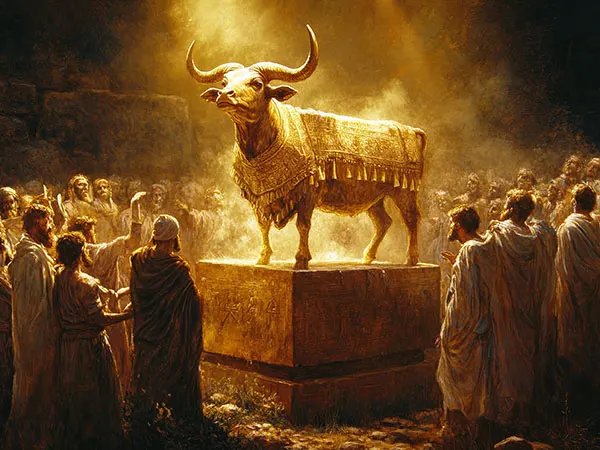
Article by John W. Ritenbaugh and Richard T. RitenbaughThe prophet Amos exposes the ancient Israelites' religion as syncretic, a blend of God's way and paganism, corresponding to this world's Christianity.