


Filter by Categories
Mercy Triumphs Over Judgment
Sermonette by Bill OnisickMercy eclipses any kind of sacrifice one may offer, triumphing over judgement. The leaven of the Pharisees consists of prideful, hypocritical, merciless judgment.

The Beatitudes, Part 5: Blessed Are the Merciful
'Personal' from John W. RitenbaughMercy is a virtue that has gone out of vogue, though it is sometimes admired. Jesus, however, places it among the most vital His followers should possess.
Mercy: The Better Option
'Ready Answer' by John O. ReidIt is easy to fall into the traps of judgmentalism, gossip, and unforgiveness. We must overcome our natural reactions and use forbearance in our relationships.
What Is Propitiation? (Part Two)
Bible Study by Martin G. CollinsChrist's propitiatory sacrifice satisfied both the law and God's holiness, allowing Him to extend mercy to believing, repentant sinners.
Fellowship With God
Sermon by Martin G. CollinsOnly those who have fellowship with God can have any hope, understanding, peace, or rest. The world remains under the sway of Satan, unable to live righteously.

A Hidden Mystery in God!
Sermon by Martin G. CollinsBefore anyone can have fellowship before God, the obstacle of sin must be eliminated, which is a permanent barrier between us and God.
Prepare to Meet Your God! (Part Five): Religion and Holiness
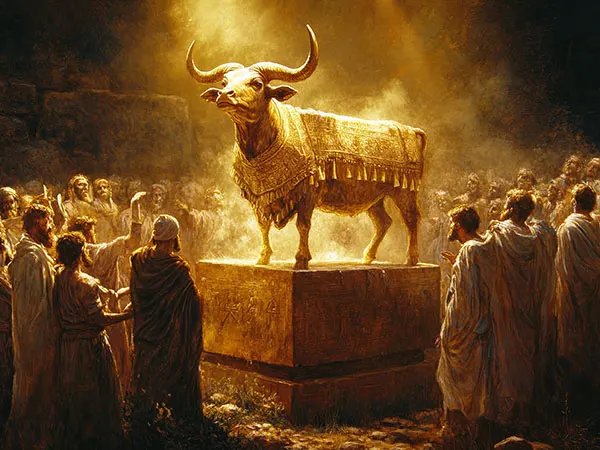
Article by John W. Ritenbaugh and Richard T. RitenbaughThe prophet Amos exposes the ancient Israelites' religion as syncretic, a blend of God's way and paganism, corresponding to this world's Christianity.
Seeking God's Will (Part Four): Sacrifice
Sermon by Richard T. RitenbaughOn the Day of Atonement the high priest took the blood of the Lord's goat, the sin offering for the people, inside the veil and sprinkled it on the mercy seat and before the mercy seat, doing with it as he had done with the blood of the bull. By this blood he made atonement for the Holy Place and the tabernacle of meeting, which remained among Israel in the midst of their uncleanness. Atonement was made on account of the uncleanness of the children of Israel, their transgressions, and all their sins, so the sacrifice covered every category of sin of all the people. The same blood, combined with the bull's blood, was then applied to the horns of the altar and sprinkled on it seven times to cleanse and consecrate it. The priest alone performed this work, and no man could be in the tabernacle while he made atonement. This ritual pictures Jesus Christ, the High Priest, who does all the atoning work. His blood, represented by the goat's blood brought to the mercy seat, covers, cleanses, and sanctifies those who come under it. The second goat, the Azazel goat, then bears the sins away, so that sin is both paid for and removed, bringing reconciliation between God and mankind.
Amos (Part Ten)
Sermon/Bible Study by John W. RitenbaughGod requires a higher standard of righteous behavior from those who have consciously made a covenant with Him and are acquainted with His Law.
Deuteronomy (Part 1) (1994)
Feast of Tabernacles Sermon by John W. RitenbaughDeuteronomy could be considered the New Testament of the Old Testament, serving as a commentary on the Ten Commandments. It gives vision for critical times.
Deuteronomy (Part 1)
Feast of Tabernacles Sermon by John W. RitenbaughDeuteronomy is the heartbeat of the Old Testament and the constitution of Israel. It is a condensed form of the entire Bible, quoted 195 times in the New Testament.
Amos (Part Nine)
Sermon/Bible Study by John W. RitenbaughAncient Israel regarded Bethel, Gilgal, and Beersheba as a sacred shrines, but were not becoming spiritually transformed as a result of pilgrimages.
Hebrews (Part Ten)
Sermon/Bible Study by John W. RitenbaughEverything about the Priesthood of Christ is superior to the Levitical system, which only served as a type of the access to God that Jesus would fulfill.
Does God Forbid All Images?
CGG Weekly by Richard T. RitenbaughMade in God's image, human beings have the same drive to imagine, create, innovate, and express their designs in the works of their hands.
A Day Without Work
Sermon by Richard T. RitenbaughRefraining from work on the Day of Atonement symbolizes our inability to atone for our sins. We, humble and poor in spirit, depend upon God for everything.
Deuteronomy Opening
Feast of Tabernacles Sermon by John W. RitenbaughThe book of Deuteronomy is addressed to the Israel of God, a group of God's called out ones who have been convicted that the Law has not been done away.
Eden, The Garden, and The Two Trees (Part Three)
Feast of Tabernacles Sermon by John W. RitenbaughJesus' crucifixion took place outside the camp of Israel, just outside the border of the Garden of Eden, the general area where the Miphkad Altar stood.
To Do Your Will, O God!
Sermon by Martin G. CollinsThe Mercy Seat is the solid gold covering of the ark of the covenant, about a yard long, topped at either end by a cherub whose wings stretch inward and meet over the top. The ark stood in the Holy of Holies of Israel's wilderness tabernacle and held the stone tablets of the law. Symbolically it was God's earthly dwelling place, with God between the outstretched arms of the cherubim above the Mercy Seat. Only the high priest could enter, and only once a year, on the Day of Atonement, because sinful men who came into God's holy presence would be consumed. As God looks down from the Mercy Seat, He sees His broken law beneath Him, so the picture shows that His holiness must judge sin and that sinners face His judicial wrath. On the Day of Atonement the high priest sprinkled the sacrificial blood on the Mercy Seat, between God's presence and the law, according to precise regulations, and violating them meant death. The picture then changes from wrath to mercy, because God's wrath against sin is satisfied and the sinner is spared. The animal blood could not remove sin, but it pointed forward to Jesus Christ, whose death propitiated God's wrath. God demonstrated this by tearing the temple veil from top to bottom, opening the way into His presence to all who believe in Christ.
The Promises of God
Sermon by John O. ReidIn this time of confusion and rapid change, we have a desperate need for something solid to hold onto. Some of the most secure things are the promises of God.
John (Part Twenty-Seven)
Sermon/Bible Study by John W. RitenbaughJesus Christ remained totally in control of the events of His trial, including His own prediction that He would be crucified under Roman law.
Approaching God Through Christ (Part Six)
Sermon by Richard T. RitenbaughThe altar of incense in the Tabernacle was designed to create a pleasing odor, representing the sweet aroma of Jesus Christ, which covers our uncleanness.
Parable of the Good Shepherd (Part Two)
Bible Study by Martin G. CollinsIn John 10, Jesus characterizes Himself as the 'Good Shepherd' who loves and cares for His sheep. This is shown in His providential leadership of His church.