


Filter by Categories
Deuteronomy 16, Passover, and the Night to be Much Observed
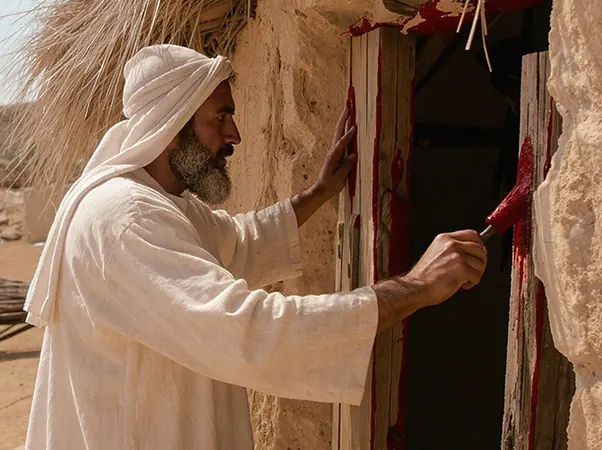
Sermonette by John W. RitenbaughPassover is approaching, and with it, the Night to be Much Observed and the Days of Unleavened Bread. In Deuteronomy 16:1-8, the term Passover appears, but it does not fit the context of the chapter, which focuses on the Days of Unleavened Bread and specifically the Night to be Much Observed. The instruction in Deuteronomy 16:2 to sacrifice from the flock and the herd is incorrect for Passover, as Exodus 12:3-5 specifies that the Passover lamb must be a year-old male without blemish, taken from the sheep or goats, not cattle. Furthermore, Deuteronomy 16:2 directs the sacrifice to be made where the LORD chooses to place His name, while Exodus 12:6-7 commands the Passover sacrifice to be done at home, with the blood applied to the doorposts and lintel of the houses. Deuteronomy 16:5 reinforces this distinction by stating that the sacrifice must not be made within one's gates but at the designated place, contradicting the Passover requirement to observe it at home. Additionally, Deuteronomy 16:7 uses a Hebrew word meaning to boil, whereas Exodus 12:9 explicitly instructs that the Passover lamb must be roasted, not boiled or eaten raw. The context of Deuteronomy 16:3-6 ties the sacrifice to remembering the day Israel came out of Egypt, which Numbers 33:3 identifies as the 15th day of the first month, not the 14th day of Passover. Exodus 12:21-22 further clarifies that after killing the Passover lamb and applying its blood, the Israelites were to remain in their houses until morning, making it impossible to associate the Passover with the departure on the 15th. Thus, the sacrifice described in Deuteronomy 16 cannot be the Passover lamb, as it aligns with the Days of Unleavened Bread rather than the distinct observance of Passover.
Is the Passover Just a Sin Offering? (Part Two)
Article by David C. GrabbeThe Passover lamb served as the central element of the annual observance, functioning not merely as a blood sacrifice but as the basis for a specially prepared meal that every Israelite household was to eat. God instructed each household to select a lamb on the tenth day of the month, ensuring sufficient meat for all participants and prohibiting any waste, with remains to be burned by morning. The lamb was to be roasted whole in fire, eaten that night with unleavened bread and bitter herbs, and consumed while dressed for immediate departure, with staff in hand and sandals on feet. This emphasis on eating the lamb appears repeatedly throughout both Old and New Testament passages, distinguishing the observance from a sin offering. The blood of the lamb, applied to the doorposts and lintel, functioned as a sign of life and protection rather than atonement. It marked the houses so that God would pass over them during the judgment on Egypt's firstborn, redeeming Israel from Pharaoh's bondage. This redemption stemmed from God's covenant with Abraham, by which He chose to spare and deliver the nation despite its idolatry, overlooking sins rather than providing forgiveness through the blood. The blood thus represented God's pledge to redeem His firstborn nation and fulfill promises of deliverance and possession of the land, not the payment of a life-debt for sin. This understanding of the Passover lamb reveals multiple facets in Christ's sacrifice, extending beyond propitiation to include redemption and covenant faithfulness.
Passover (Part Four)
Sermon by John W. RitenbaughIn the discussion of God's ordinances, it is evident that the observance of Passover had been neglected and replaced by other traditions. The timing of the Passover lamb's sacrifice is crucial, as established in Exodus 12, where the lamb was to be killed at ben ha arbayim, which is the twilight period at the beginning of the fourteenth day of the first month, following sunset, or ba erev. This timing is significant, ensuring that the events of Passover commence at the start of the day rather than at its end. Regarding the specifics of the first Passover, several key elements are highlighted. The lambs were killed at the beginning of the fourteenth day, during the twilight period of ben ha arbayim, as confirmed by the usage of the Hebrew term "ad," indicating up to a specific point in time, marking the start of the day. The lambs were killed at the houses of the Israelites in Goshen, not in Rameses or in tents, emphasizing that the Passover was observed in their individual homes as repeatedly noted in Exodus 12 with the term "bayith," meaning house, used multiple times to underscore this location. The process of killing, roasting, eating, and burning the leftovers of the Passover lamb took approximately 8 to 9 hours, spanning from about 6:00 p.m. at sunset on the fourteenth day until between 2:00 and 3:00 a.m. This timeline places all activities within the fourteenth day, countering claims that suggest a later timing extending into the fifteenth day. The Israelites remained in their houses in Goshen throughout the night of the fourteenth, not departing immediately after the Death Angel passed at midnight, adhering strictly to the command to stay indoors until morning, or boqer, which follows the night period of lailah.
The Lamb of Revelation
Sermonette by David C. GrabbeIn Revelation, John refers to Christ as the Lamb more than any other designation because of His role of Redeemer, which is different from a sin offering.

Passover: An Extraordinary Peace Offering
Sermon by David C. GrabbeThe Passover lamb, selected on the tenth day and prepared for a household meal, formed the central element of the Exodus observance. God directed that it be roasted whole in fire with its head, legs, and entrails, eaten with unleavened bread and bitter herbs while the participants stood ready for departure, and fully consumed or burned by morning. Its blood applied to the doorposts served as the sign by which the Lord passed over the houses, sparing the Israelite firstborn from the plague that struck Egypt. This act constituted an exemption or pretermission rather than atonement, as the Scriptures describe it in terms of purchase and redemption from Pharaoh, not cleansing from sin. Even though the Israelites harbored idols, God overlooked their transgressions to fulfill His covenant with Abraham, demonstrating mercy and initiating fellowship with a people He chose to deliver. This emphasis on eating distinguishes the Passover lamb from the sin offering, which focused solely on propitiation for unintentional sins and permitted priestly consumption only in limited cases. The lamb was shared by the circumcised household in homes, roasted rather than boiled, and required ceremonial cleanliness beforehand, patterns that align instead with the peace offering. The peace offering pictured a communal meal celebrating God's prior favor and the resulting harmony between Himself, the priest, and the offerer. Likewise, the Passover lamb provided a sacrificial meal that joined participants with God in acceptance and well-being, foreshadowing the New Covenant fellowship later instituted by Christ. At His final Passover, Jesus identified the bread as His body, symbolizing the sinless life that sustains eternal fellowship, and the wine as His blood of the new covenant, ratifying the relationship that brings both forgiveness and the pledge of ultimate completion. The Passover lamb thus points beyond the payment for sin to the ongoing redemption that will be fulfilled when believers receive incorruptible life in the Kingdom, uniting them with the living Savior and with one another through the shared meal of covenant peace.
Listen To The Lamb's Voice
Sermon by Mark SchindlerThe movie Ben-Hur captures the essence of the time and ministry of Christ. By letting go of anger and hatred, we take on the yoke of Jesus Christ.
Deuteronomy 16:1-8
Sermonette by John W. RitenbaughDeuteronomy 16:1-8 refers to Unleavened Bread rather than Passover (a scribal error, perhaps referring to the season). Ten clues clear up this misconception.
Don't Leave the House!
Sermon by John W. RitenbaughAs part of Christ's body or household, we have a responsibility to stay attached to the spiritual organism and to respond to the head.
Matthew (Part Twenty-Seven)
Sermon/Bible Study by John W. RitenbaughJesus' triumphal entry into Jerusalem fulfilled prophecies. The crowds welcoming Jesus were actually choosing the Paschal Lamb of God on Abib/Nisan 10.