


Filter by Categories
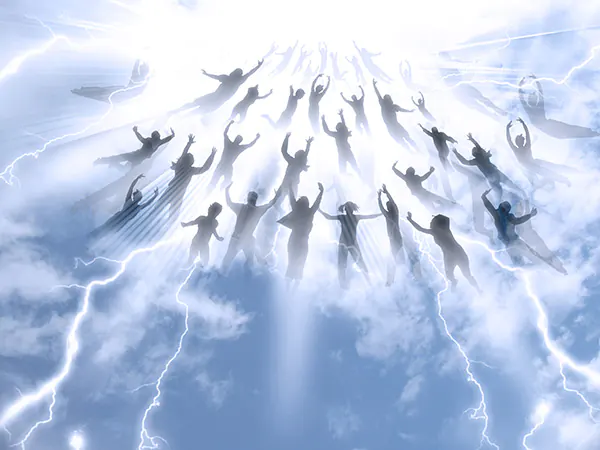
Caught Up in a Lie: The Rapture's Deceitful Origins
'Prophecy Watch' by Charles WhitakerIntellectual dishonesty emerges as a central thread in tracing how the Rapture doctrine came to distort Protestant theology, most explicitly in the handling of Margaret MacDonald's 1830 vision. When an influential 1861 account of her utterances was published, two sections were purposefully omitted, sections that would have demonstrated she actually understood the rapture as the general resurrection, in keeping with historic Protestant belief, rather than as a separate pre-Tribulation event. This deliberate suppression of material that contradicted the emerging doctrine led researcher Dave MacPherson, in his work The Rapture Plot, to conclude that the pre-Tribulation Rapture concept arose not primarily from misreading Scripture but from outright suppression of truth by unscrupulous churchmen. These figures violated basic standards of honest scholarship: they omitted clearly relevant passages, plagiarized source material, and altered quotations to fit their theological agenda. MacPherson's blunt assessment, that many clergy promoting this teaching were not merely mistaken but blatant deceivers, underscores that the issue was not innocent error but calculated manipulation of evidence. This pattern of dishonesty extends to Cyrus Scofield himself, whose personal history reveals a pattern of deception that colors the credibility of his theological work. Scofield fabricated credentials, attaching the unearned title "Doctor of Divinity" to his name despite no record of any institution granting him such a degree, and most scholars believe he supplied false information to biographers and to Who's Who. This willingness to misrepresent facts about his own qualifications parallels the deeper theological dishonesty embedded in his Reference Bible, particularly his treatment of law and grace. Scofield's note on Galatians 3 exemplifies this: after correctly acknowledging that the law is "holy, just, good and spiritual," he then reverses course, declaring the law "a ministry of condemnation, death, and the divine curse." This internal contradiction reflects the same lack of intellectual integrity found in the suppression of MacDonald's testimony, an unwillingness to let evidence, whether scriptural or historical, stand without manipulation when it threatens a preferred doctrinal system. The consequence of this dishonesty is far-reaching: through Darby's dispensationalism and Scofield's popularization of it, antinomianism gained widespread traction, teaching that God's law was something to be discarded rather than obeyed. What began as selective omission and fabricated credentials thus hardened into a theological framework that shaped how countless Christians came to view God's law as a curse rather than a blessing, illustrating how intellectual dishonesty at the level of historical record and personal credibility can propagate into doctrinal error affecting generations of belief.
Mr. Darby, Mr. Scofield, and God's Law
Sermonette by Charles Whitaker (1944-2021)Several destructive heresies have crept into Western religious culture, including the rapture lie, the dispensationalist theory, and the immortality of the soul.
Wisdom and Foolishness
Commentary by John W. Ritenbaugh (1932-2023)Intellectual dishonesty appears in claims that God is unnecessary, even while acknowledging that His nonexistence cannot be proven. Such assertions rest on the law of gravity as sufficient explanation for the universe creating itself, yet they avoid any inquiry into the origin of that law, the expanse of heaven, the heavenly bodies, or time itself. This stance amounts to sheer intellectual vanity posing as supreme understanding, employed to evade submission to the Creator, together with a dogged foolishness dressed in fine intellectual clothing that refuses to admit the presence of someone greater who made all things. It is an emperor-has-no-clothes situation, the precise opposite of design-based reasoning offered by Isaac Newton and Albert Einstein, who saw the same laws as evidence of God's existence. The dishonesty is deliberate. Those who advance it know better, for God has plainly shown His invisible attributes, eternal power, and divine nature through the things that have been made. By their unrighteousness they suppress this truth, urged on by vanity or ego, and publicly declare what contradicts what they have been shown. Scripture states that they have no excuse. God will hold them accountable, for He has revealed Himself to them and they have turned their backs on that revelation, choosing instead statements that suppress what they know to be true.
Many Excuses
Sermon by John W. RitenbaughIntellectual dishonesty arises when individuals or institutions employ spin, half-truths, and twisted reasoning to conceal reality and justify actions that contradict divine standards. This practice begins with governments and media that present prearranged narratives designed to shape public perception, as seen when reports blame victims rather than perpetrators for violence. Examples include attributing Muslim riots to Danish cartoons or French policies, Palestinian terror to Israeli strength, and urban unrest to police rather than the initial lawbreakers, thereby excusing wrongdoing under the false principle that two wrongs make a right. Such reasoning extends into personal and religious spheres, where the carnal mind generates defenses to avoid accountability. People construct justifications from sensory impressions or selective interpretations, as Eve did before eating the forbidden fruit or as modern observers do when claiming sincere intent permits worship on their own terms. This mirrors Cain's response and the reactions of those who accused Jesus of demonic influence despite knowing His works were good. In each case, the guilty party shifts blame to the righteous to clear a path for further sin. The pattern appears clearly in refusals to keep God's commandments. Despite Christ's sinless example, His explicit commands to observe the law, and the biblical definition of sin as transgression, individuals offer layered excuses such as grace eliminating obedience or the law being merely a shadow. These rest on the underlying enmity of the carnal mind against divine requirements. Intellectual dishonesty reaches its extreme when elites suppress evident truths about creation to promote evolution, denying the Designer whose existence the universe itself declares. Scripture counters this by demanding alignment with God's plumb line of truth. Justifications are permissible only when they are accurate and do not authorize revenge or attack. Believers must therefore examine themselves honestly, refrain from hasty self-defense, and trust God's righteous judgment rather than excusing conduct that deviates from His Word. This discipline prevents escalation into broader conflict and maintains the integrity required for genuine relationship with Him.
Can Theology Define God's Nature?
Article by Earl L. HennHuman reason and logic are practically useless as tools in determining the nature of God. Only the Bible gives a complete revelation of God.