


Filter by Categories
Israel's New Crisis
'WorldWatch' by David C. GrabbeThe Muslim Brotherhood is treated as the inherently anti-Israel root of the largest faction in Egyptian politics, and therefore a threat to the Egypt-Israel peace treaty in force since 1978-79. After Hosni Mubarak's removal, Egypt's still-intact military regime wants to keep the treaty because it is not ready for another war with Israel. The promised parliamentary elections, however, risk empowering Islamists in government. If the regime appears to side with Israel, popular protests could intensify and pressure the military. Either way, Islamists in Egypt could undermine the treaty, which is a major pillar of Israel's national security. This fits a wider shift in the Middle East from secularism, especially the old Pan-Arab movement, toward Islamism. Secular governments sit atop restive Islamist populations who see no common interest with Israel, including its right to exist.
An Israel-Turkey Reconciliation?
'WorldWatch' by Richard T. RitenbaughThe rise of the Muslim Brotherhood in Cairo marks a significant turning point in Israel's regional security position, contributing to the broader picture of Israel finding itself increasingly isolated amid a hostile Islamic environment. Prior to the Arab Spring and the ousting of Egyptian President Hosni Mubarak, Israel could reasonably depend on Egypt to honor the Camp David Accords, a peace framework established during the Carter Administration that had long served as a buffer against radical Arab aggression along Israel's southern border. This arrangement provided Israel with a measure of security that allowed its leadership to focus attention on more distant but greater threats emanating from Baghdad and Tehran, rather than worrying constantly about its immediate neighbors. With the Muslim Brotherhood now ascendant in Egyptian politics, however, that former sense of semi-security has vanished. This shift represents one of several regional changes that have compounded Israel's vulnerability, alongside a Palestinian population with a longer leash than before, a Jordan that was once nearly neutral toward Israel, and ongoing instability involving Syria and Hezbollah. Though none of these actors currently possess the strength to pose a serious military threat to Israel on their own, the concern is that they would converge like a pack of hyenas should they perceive weakness or fear on Israel's part. This development is framed within a larger narrative describing Israel as an island surrounded by a seething Islamic sea, armed and militarily superior yet uneasy in its confidence due to the erosion of former regional alliances and diplomatic buffers. The Muslim Brotherhood's rise in Egypt is presented as emblematic of the broader process of Islamization sweeping the Middle East, a trend that has also transformed Turkey, once a close military and strategic ally of Israel, into a nation whose ruling party, though officially describing itself as center-right, has roots firmly planted in the pro-Islamic camp. This regional shift toward greater Islamic influence has fundamentally altered the strategic calculations that once allowed Israel to feel secure, replacing former partnerships and buffer zones with heightened uncertainty and the loss of allies who might have helped ease Israel's growing isolation in a rapidly changing and increasingly radicalized Middle East.
The Greatest Threat
'WorldWatch' by David C. GrabbeTo Israel's south, Egypt has experienced an internal power struggle between its ruling military regime and the Muslim Brotherhood. This tension carries significant weight for Israel's security, since the peace treaty between Israel and Egypt has long served as a cornerstone of Israeli national stability, and the Egyptian military has shown interest in preserving that treaty. However, as the Muslim Brotherhood continues to grow in influence and political clout, Israel must reckon with the possibility that Egypt could once again become a hostile neighbor rather than a stabilizing peace partner. This development is one of several regional shifts stemming from the unrest of the Arab Spring that have caused Israel to reassess threats to its security from all directions, alongside instability in Syria, foreign policy changes in Jordan and Turkey, and the ongoing Palestinian intifada. This geopolitical concern is presented as part of a broader pattern in which Israel finds itself surrounded by growing uncertainty on its periphery. Yet despite the seriousness of these external pressures, including the rise of the Muslim Brotherhood in Egypt, the disintegration of the al-Assad regime in Syria, and the looming influence of Iran, none of these represent the greatest threat facing the modern state of Israel. That threat, described as being "off the radar of most," is the danger of forgetting God, just as the ancient kingdom of Judah did before its conquest and captivity by Babylon. The connection drawn is that modern Israel, much like ancient Judah, tends to seek security through political alliances, treaties, and support from powerful patrons rather than relying on God. The mention of the Muslim Brotherhood's rise, therefore, functions as one example among several regional developments illustrating the political and military uncertainties Israel faces. These external threats, while real, are framed as secondary to the deeper spiritual issue: a nation more concerned with political maneuvering and foreign relationships than with faithfulness to God. Historically, when Israelites were faithful to God, they were strong politically and militarily, but when they forsook Him, subjugation followed. The unrest tied to groups like the Muslim Brotherhood, then, is used to underscore the instability of relying on shifting political alliances rather than divine reliance, reinforcing the overarching message that the real danger to Israel today, as in antiquity, is not military or political but spiritual: the forgetting of God who determines whether a nation rises or falls.
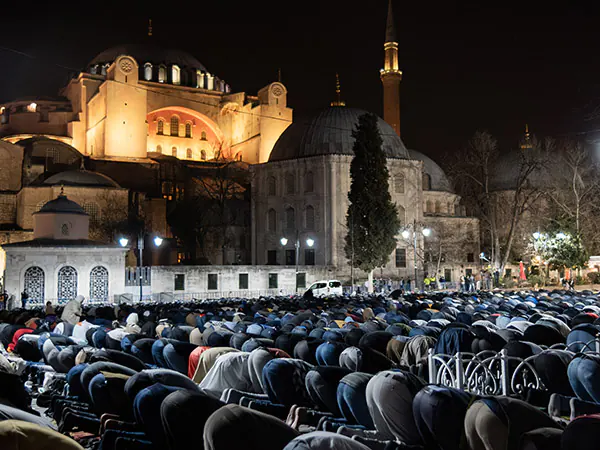
Islam on the March (Part Two): Reviving the Ottoman Empire
'WorldWatch' by Joseph B. BaityThe Ottoman Empire was once considered the power center of the Islamic world. If Turkey's president, Recep Tayyip Erdogan, has his way, it will be again.
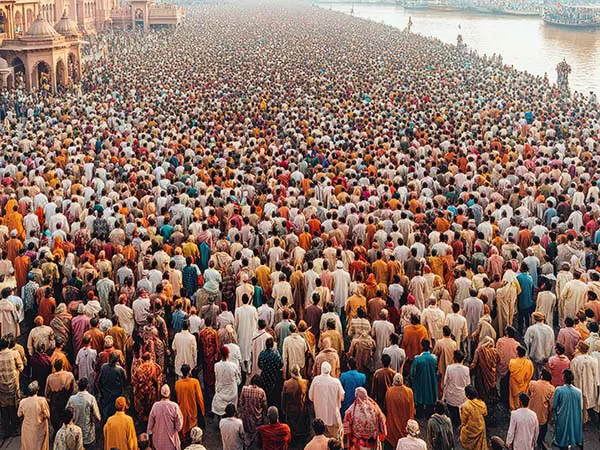
Islam on the March (Part One): The West
'WorldWatch' by Joseph B. BaityIslam is on the rise in America just 25 years after 9/11. Muslims advocating Sharia law are growing in numbers and political influence from New York to Texas.