


Filter by Categories
Does Luke 9:50 Contradict Luke 11:23?
Bible Study by Martin G. CollinsJesus Christ declares in Luke 9:50, "He that is not against us is on our side," while in Luke 11:23, He states, "He who is not with Me is against Me." A superficial reading of these statements, both related to casting out demons, might suggest a contradiction. However, understanding the audience and context of each account resolves any apparent conflict. In Luke 9:49-50, Christ speaks in an intimate setting to His disciples, responding to John's concern about someone outside their group casting out demons in His name. Christ instructs them not to forbid such actions, as those who perform miracles in His name are unlikely to soon speak evil of Him. In contrast, in Luke 11:14-23, He addresses a hostile crowd, including Pharisees who accuse Him of casting out demons by the power of Beelzebub. Christ counters by highlighting the absurdity of such a claim, asserting that in the battle between the Kingdom of God and satan, there is no neutral ground. His statements, when viewed in their respective contexts, reveal a harmonious message: while there is no middle ground in the spiritual conflict, one must exercise caution in judging others' actions to discern the spirit behind them.
Faith Without Works
'Ready Answer' by StaffEvery single word, phrase, sentence, and paragraph written in God's Word, the Holy Bible, is important. Some compare passages like Ephesians 2:8-9, which states that salvation comes by grace through faith and not by works, with James 2:14-26, which emphasizes that faith without works is dead, and declare that the Bible contradicts itself. They question how it can be the inspired Word of God if such contradictions exist. True spiritual understanding, however, reveals that the Bible does not contradict itself on the subject of faith and works, nor anywhere else. There is no contradiction between the opinions of Paul and James on this matter. Paul, in Ephesians 2:8, says that faith is required, and in verse 10, states that good works are also required, as God has prepared us to walk in them. James, in the second chapter of his epistle, asserts that faith and works are inseparable, illustrating that faith apart from works is barren, unproductive, and ineffective. Thus, both faith and works are essential; faith without works is dead, while faith with works leads to eternal life.
How Does Faith Establish the Law?
Sermonette by David C. GrabbeThe book of Romans is like a song in which some lyrics are popular but others are unfamiliar and hummed through, obscuring the overall message.
What Kind of Faith is Required for Salvation?
Herbert W. Armstrong BookletThere is no contradiction in Scripture! The assertion that faith and works are at odds is a misunderstanding. Scripture reveals that faith without works is dead, as James 2:20 states, emphasizing that a dead faith cannot save a soul. James further illustrates this with Abraham, who was justified by works when he offered Isaac, showing that faith wrought with works, and by works, faith is made perfect (James 2:21-24). We are saved by faith, but it is a living faith, one that is completed through works. The purpose of the law is not to justify or cleanse, but to provide the knowledge of sin, as Romans 3:20 explains. By the law, we understand what sin is, for sin is the transgression of the law (I John 3:4). The law acts as a spiritual mirror, revealing the dirt on our hearts, but only the blood of Christ can wash it away. Thus, there is no contradiction in the teaching that we are not justified by the deeds of the law, but by faith in Christ, while still being called to obey the law through faith. Some argue that it is impossible to keep the commandments, claiming faith voids the law. Yet, Scripture counters this deception with Romans 3:31, declaring that faith does not make void the law, but establishes it. Jesus Himself taught that to enter into life, one must keep the commandments (Matthew 19:17). While with men this is impossible, with God all things are possible (Matthew 19:25-26). It takes faith in the power of God to make obedience possible, showing that a living faith and perfect obedience go hand in hand. The notion that one can believe in Christ and worship Him while disregarding His commandments is also addressed. Christ warns that not everyone who calls Him Lord will enter the kingdom of heaven, but only those who do the will of His Father (Matthew 7:21). He further states that worship is in vain when it is based on the commandments of men rather than God's law (Mark 7:7-8). Such a dead faith, devoid of obedience, cannot save, proving again that there is no contradiction in Scripture's call to both faith and works.

How Does Faith Establish the Law? (Part One)
'Ready Answer' by David C. GrabbeContradictions in Scripture, as some allege, often arise from a superficial understanding of the writings of Paul, particularly in the book of Romans. Nominal Christianity tends to emphasize certain verses that seem to suggest God's law is no longer binding, especially concerning the seventh-day Sabbath, while glossing over passages where Paul upholds the law. Due to the structure of Romans, Paul appears to contradict himself by exploring one aspect of an issue in one passage and then addressing another aspect in the next, returning to the initial point later. However, God's Word cannot be broken, and these apparent contradictions are not real but stem from misinterpretation by the untaught and unstable. Peter warns that some of Paul's teachings are hard to understand, and misusing them can lead to destruction and apostasy, as it causes individuals to disregard God's established standards. Thus, a diligent and comprehensive approach is necessary to grasp the full meaning of Paul's writings, ensuring one does not fall into the error of selectively interpreting Scripture to justify ignoring certain commandments.
Was Paul a False Apostle?
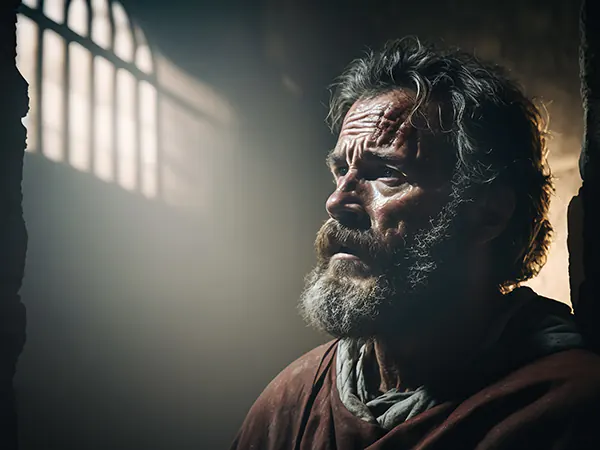
'Ready Answer' by David C. GrabbeThe allegation of contradiction in Scripture often centers on the authenticity of Paul's writings and apostleship. Peter, in his endorsement, calls Paul a beloved brother and acknowledges the wisdom given to him by God, placing Paul's epistles alongside other Scriptures. Despite noting that some of Paul's writings are hard to understand and prone to misinterpretation by the untaught and unstable, Peter does not label him a false apostle. Instead, he warns of the destruction that comes from misunderstanding, not from Paul's teachings themselves. If Paul were untrustworthy, Peter's validation would also be called into question, as would the reliability of others who support him, spreading a faith-destroying contagion. John, as the last original apostle, offers no warning against Paul or his teachings, despite addressing false teachers in his epistles. Similarly, Jude's letter, focused on false teachers, indirectly identifies Paul as an apostle of Jesus Christ without criticism. Luke, in the book of Acts, directly names Paul as an apostle, documenting his commission from the Lord to bear His name before Gentiles, kings, and the children of Israel. Luke's accounts of Paul's miracles and preaching further affirm his authenticity. If Paul is deemed untrustworthy, Luke's writings, including his gospel and Acts, would also be suspect, undermining significant portions of Scriptural narrative. The integrity of Scripture hinges on accepting or rejecting Paul's contributions. Subtracting his writings, along with the endorsements of Peter, Jude, and Luke, would radically alter faith, much like adding traditions or apocryphal works distorts understanding. God's Word must be taken as a whole, without adding or subtracting, to avoid corrupting faith through selective belief or rejection of its parts.
James and Unleavened Bread (Part One)
Sermon by Richard T. RitenbaughThe discussion on alleged contradictions in Scripture emphasizes that there is no true conflict between the teachings of Paul and James. Scripture cannot be broken, as Jesus Himself declared, and thus the Bible remains trustworthy and pure as the unleavened bread of truth. The apparent differences between Paul and James are reconciled by understanding their distinct focuses within the process of salvation. Paul addresses the initial stage of justification by faith, where God legally declares a person righteous upon their conversion and baptism, imputing Christ's righteousness to them. James, however, speaks to the subsequent stage, where justification is evidenced through works, demonstrating the reality of that faith to others. This is illustrated by the analogy of a walnut: God sees the potential tree within the seed at the moment of justification, while the visible growth and fruit—representing works—later confirm that initial faith. Using examples like Abraham, whose faith was credited as righteousness long before his willingness to sacrifice Isaac showed the maturity of that faith, it becomes clear that works do not earn justification but rather manifest it. Thus, the teachings of Paul and James complement each other, affirming that faith and works together reflect the complete Christian journey toward becoming acceptable in God's sight.
Does the Bible Contain Discrepancies?
Bible Study by Martin G. CollinsThe Bible, as inspired by God, is often viewed by nonbelievers as full of contradiction and error, though such a perspective stems from a lack of guidance from its Divine Author. Even for God's elect, certain passages may initially seem to conflict with others due to spiritual confusion, misunderstanding, or honest misinterpretation. These alleged discrepancies in Scripture can pose challenges, but they often arise from cultural and linguistic differences between the modern West and the ancient Middle East, the diverse styles of over thirty authors spanning nearly two thousand years, and the evolving nature of language. Additionally, God's truth can be paradoxical, as He both reveals and conceals His wisdom, sometimes through parables, leaving certain mysteries unexplained by design. Satanic influence and human nature further complicate understanding by exploiting these complexities, fostering translator bias, transcription errors, and confusing translations. As Christians, we must strive for a deeper understanding of God's inspired Word through faith and effort, recognizing these difficulties and anticipating satanic attempts to obscure truth, so as to avoid misconceptions and provide ready answers to those who inquire.
The Necessity of Biblical Infallibility
CGG WeeklyThe authority of the Bible has been under constant assault, with attacks beginning within a century of its circulation through the early church. Learned men have adapted its teachings to human philosophical systems, and satan has worked to undermine our estimation of the Bible. A significant manifestation of biblical skepticism in contemporary thought is the belief that the Bible should be read metaphorically rather than literally. Supporters of this metaphoric approach argue that a figurative reading makes the Bible relevant across centuries, yet this reasoning contains faults. The Bible's truths are eternal, but only by understanding the literal event can we grasp these truths. Assuming the Bible is not literal places authority in human authors and readers over God, reducing the Bible to mere literature and emphasizing individual interpretation over intrinsic value. This leads to readings conforming to personal perspectives rather than the Bible shaping the reader's perspective. If God's authority is ranked below human interpretation, the reader will believe in a false conception of God. Figurative interpretation may appeal to those who wish to align the Bible with personal opinions, but it is a form of idolatry. The Bible must be read as absolutely true to serve as the sure foundation of belief in God, uniting the body of Christ rather than splintering it through varying interpretations. Reducing the truth of God's Word to metaphor destroys the foundation of Christianity, as our knowledge of God and Jesus Christ, revealed through Scripture, would lack authoritative basis. God's Word is perfect and complete, and despite satan's efforts to sow doubt, we can trust in its infallible nature.
The Covenants, Grace, and Law (Part Twenty-Nine)
Sermon by John W. RitenbaughThe notion of contradictions in Scripture regarding the law is a misunderstanding that must be addressed with clarity and precision. Scripture cannot be broken, as it holds no contradictions in God's Word. Jesus Christ Himself declared that not one jot or tittle would pass from the law, affirming its enduring relevance. Yet, some assert that the law is done away with, creating an apparent conflict. If the law were abolished through Jesus' death and the New Covenant, then sin would cease to exist, rendering Christ's sacrifice meaningless for those living after His death. However, clear statements in Scripture assert that Christians are not to sin, which is defined as breaking God's laws. Therefore, sin and God's law, which reveals what sin is, must still exist. It cannot be both ways; if the law were done away, there could be no sin, making it illogical to claim that acts like murder or adultery are still wrong without a law to define them as such. The assertion that the law is abolished is incorrect, as it contradicts the consistent message of Scripture that the law remains a guide for identifying sin and righteousness.
The Covenants, Grace, and Law (Part Twenty-Five)
Sermon by John W. RitenbaughIn addressing the alleged contradictions in Scripture, particularly between Galatians 2:16 and James 2:21-24, it becomes evident that these passages are not in conflict but are complementary when properly understood. Galatians 2:16 states that a man is not justified by works of law, except through faith in Jesus Christ. This does not dismiss the importance of works but emphasizes that works without faith in Him are of no avail. Works coupled with faith in Jesus Christ are indeed valuable and necessary. James 2:21-24 reinforces this by illustrating that faith without works is dead. It highlights Abraham's justification through works when he offered Isaac, showing that faith and works together perfect one's belief. Whether for justification or sanctification, faith must be accompanied by works to be alive and effective. The apparent contradiction arises from misinterpretation, not from the Scriptures themselves. Since Jesus Christ declared that Scripture cannot be broken, these verses must align. The truth is that justification involves both faith in Him and works as evidence of that faith. Works alone, without faith in Jesus Christ, cannot justify, but God expects those who have faith in Him to keep His law, as works demonstrate the reality of one's faith. Thus, faith and works are not contradictory but are essential partners in the life of a believer, provided they are rooted in faith in Jesus Christ.
Is God's Inspiration of the Bible Imperfect?
Sermon by Martin G. CollinsCritics often claim that the Bible is riddled with discrepancies and contradictions, asserting that these alleged errors undermine its credibility. They point to differences in accounts, such as the varying genealogies of Jesus Christ in Matthew and Luke, or the differing reports of the women at His tomb in the gospels, suggesting that at least one version must be incorrect. Additionally, skeptics highlight supposed inconsistencies in the creation narrative between Genesis 1 and 2, where the order of events appears reversed, and in other passages where statements seem to oppose each other, like the teachings on poverty and riches in various scriptures. However, these apparent contradictions are not errors but are part of a purposeful design by God. The differences in Genesis 1 and 2, for instance, arise from a general account in the first chapter and a more detailed, non-chronological focus on man in the second, complementing rather than conflicting with each other. Similarly, variations in gospel accounts of the resurrection reflect distinct perspectives that together provide a fuller picture, stimulating deeper thought and inquiry. God has designed His Word to appear discrepant to the unconverted mind, as His ways and thoughts are higher than human understanding, encouraging believers to search out truth and meditate on His wisdom. These alleged discrepancies serve multiple purposes. They stimulate mental engagement, coaxing readers to contemplate and seek deeper understanding. They lead believers to value the Spirit over the letter of the Scriptures, focusing on essential truths rather than mere form. They also act as a test of moral character and faithfulness, revealing the sincerity of the reader's heart, while providing stumbling blocks for those intent on criticism. Furthermore, these difficulties illustrate analogies between the Bible and nature, both bearing the imprint of God's design despite apparent conflicts, showing His infinite wisdom and purpose. Ultimately, there are no true discrepancies or valid contradictions in the Bible. God has given His Word in the form He intended, perfect according to His will and plan for mankind's salvation. Every difficulty is capable of a fair and reasonable solution when approached with a humble and reverent heart, enhancing perception of God's truth and strengthening faith.
Was Paul a False Apostle?
Sermonette by David C. GrabbeAn increasing number of people believe Paul was not a real apostle, but an imposter, trying to seduce people to stop keeping God's laws.
Tested: Our Trust in God's Promises
Sermonette by Austin Del CastilloThere is an apparent contradiction between God's promises to protect and heal, and the persecution, health crises, and death that we all experience.
Our Trusted Source of Truth (Part Two)
Sermon by Richard T. RitenbaughOver the last century, a surge in Biblical criticism, rooted in human suppositions, has eroded trust in God's Word. Many, including millions of mainstream Christians, now view Scripture as merely human writings preserved by tradition, dismissing divine authorship as laughable and denying its authority or relevance. Critical scholars base their approach on two rational premises: treating the Bible as any other ancient book and rejecting anything beyond the physical senses, thus excluding God from consideration. This method applies a scientific lens to matters of faith, pushing God out of the equation entirely. These scholars hold the Bible to a far higher standard than other ancient texts. When they encounter a variant—a mere difference between texts—they seize upon it, declaring it an error and proof of human origin, arguing that a perfect God would not allow mistakes. They may also find a manuscript omitting a verse or passage and insist the added text is inauthentic, demanding it be stricken from Scripture. Yet, with works by authors like Homer or Plato, they dismiss similar variants as simple copyist errors, revealing their inconsistent and harsher scrutiny of the Bible. Despite such criticism, the Bible's text is extraordinarily well attested. With 5,838 Greek manuscripts of the New Testament alone, nearly 6,000, the sheer volume ensures reliability, allowing scholars to reconstruct the original text with confidence due to the high agreement among documents. Compared to other ancient works like Homer's *The Iliad*, with 1,758 manuscripts, the New Testament surpasses all in quantity and proximity to the original writings, with some copies dated as early as 50 or even 25 years after composition. Including manuscripts in other languages like Syriac, Arabic, Ethiopic, Latin, and Coptic, the total reaches about 24,000 ancient copies, providing an unparalleled foundation of 2.6 million pages of evidence. Even if all Bibles vanished, the entire New Testament could be reconstructed from the writings of early Church Fathers, who quoted it extensively—about one million times, with 43% of those quotations in manuscripts before 250 AD, within 150 years of the originals. Variants exist, but 80% are minor spelling differences, and less than 1% are considered meaningful, none altering core meaning or doctrine. Scholars estimate the New Testament's accuracy between 98.33% and 100%, a reliability unmatched by any secular ancient writing, as noted by F.F. Bruce. The Old Testament's accuracy is similarly confirmed by the Dead Sea Scrolls, aligning closely with current Hebrew texts. This preservation across history points to a divine hand ensuring the transmission of His Book, affirming that we can trust God's Word as essentially unchanged and reliable for guidance.
Can We Win People For Christ?
'Ready Answer' by David C. GrabbeThe Scripture, as affirmed by Jesus Christ in John 10:35, cannot be broken, reflecting the consistent and magnificent character of God. When apparent incongruities arise in the Scriptures, the flaw lies in our understanding, not in God's provision. If a single doctrine is altered or misapplied, the unified whole of true beliefs begins to unravel, as seen in the interconnected teachings of God's calling, the resurrections, and the gospel of the Kingdom. Misunderstanding God's exclusive role in calling individuals, as stated in John 6:44, can disrupt the coherence of related doctrines. Certain passages, such as I Corinthians 9:19-22, might seem to suggest that individuals like Paul sought to win others for Christ. However, Paul's efforts were focused on fostering human connections and avoiding unnecessary offense, not on converting or opening minds to God, which remains solely God's prerogative. Similarly, in I Peter 3:1, the gaining of an unbelieving spouse by a godly wife pertains to improving the human relationship, not to spiritual conversion. Even the perfect example of Christ did not convert all who encountered Him, underscoring that a good example alone cannot bring about salvation unless God initiates the call. In I Corinthians 9:22, when Paul speaks of saving some, he does not refer to eternal salvation or justification, as no man possesses the power to justify or impart true belief. The Greek word sozo, translated as save, primarily means to make safe and can denote physical deliverance or protection. Paul's intent was to build positive rapport through self-denial, potentially aiding others by preaching truth that might stir repentance in specific areas, thus providing a form of temporary safety or deliverance. However, this does not equate to bringing individuals into a relationship with God, a process reserved for Divine initiative.

The Model Prayer (Part Eight): Testing and Deliverance
Bible Study by Richard T. RitenbaughThe traditional wording of Jesus' Model Prayer in Matthew 6:9-13, specifically "And lead us not into temptation, but deliver us from evil," has been criticized by some modern translators for its imprecision and for creating an apparent biblical contradiction. This phrasing seems to conflict with James 1:13, where it is stated that God does not tempt anyone, as opposed to the implication in the prayer that God might lead someone into temptation. Scholarly debates over the translation of this request reveal that the Greek verb eisphero, translated as "lead," literally means "to bring or carry into," and differs from the more intentional term ago, which is not used here. The word "temptation," from the Greek peirasmos, more broadly means a test or examination, suggesting Jesus intended a plea like "Do not bring us to hard testing" rather than implying God tempts us. This resolves the contradiction by aligning the prayer with the understanding that God tests His people to strengthen faith, not to entice them into sin. In the second part of the couplet, "but deliver us from the evil one," the Greek term alla introduces a strong contrast to the preceding request. The word for deliverance, ryomai, conveys rescue from severe danger, often from a powerful opponent. The phrase ho ponēros, typically translated as "evil" or "the evil one," likely refers to Satan, the Adversary, giving the request a sense of seeking rescue from a mighty spiritual foe. Thus, the complete request can be understood as, "Do not bring upon us sore testing, but rather rescue us from our mighty Adversary."
Should Passover Be Observed for Seven Days?
CGG Weekly by David C. GrabbeThe words in Ezekiel's Millennial vision seem to say that the Passover should be observed for seven days. However, this contradicts other clear scriptures.
The Gap Theory
Sermonette by John ReissThe discussion of alleged contradictions in Scripture centers on the opening verses of Genesis and the timeline of creation. Between the conclusion of Genesis 1:1 and the continuation in verse 2 lies an interpretive question concerning the duration covered by the biblical record of the heavens and the earth. One proposed resolution, known as the gap theory, posits an indefinite period separating these statements. This view holds that God first created a perfect and complete universe, subsequently placed Lucifer in authority over the earth for an extended but unspecified era, and later confronted a rebellion that reduced the planet to a state of waste and desolation. The renewal of the earth and the formation of mankind then occurred approximately six thousand years ago, aligning the scriptural chronology with the record preserved in Psalm 104. Proponents note linguistic features preserved in the Masoretic text, including a pause marker after Genesis 1:1 that supports rendering the opening of verse 2 as "but" rather than "and." They further observe that the Hebrew term rendered "was" in Genesis 1:2 is elsewhere translated "became," permitting the reading that the earth became without form and void. Additional support is drawn from the consistent biblical portrayal of God's work as perfect and from passages such as Isaiah 45:18 and Jeremiah 4:23, which indicate that the condition described as tohu and bohu resulted from subsequent judgment rather than from the original creative act. This understanding is contrasted with young-earth interpretations that insist Scripture permits no extended interval and that any accommodation to geological or astronomical data constitutes an unwarranted adjustment of the text. The material maintains that the gap framework removes any genuine contradiction between the biblical account and the physical evidence of an ancient cosmos while preserving the literal sense of the creation narrative. In doing so, it upholds the principle that controversy serves truth when it leads to a coherent reading of the whole of Scripture.