


Filter by Categories
Can Theology Define God's Nature?
Article by Earl L. HennThroughout the centuries, the nature of God has been a matter of great controversy in Christian churches. Theology, in its strictest sense, is an academic discipline, derived from the Greek Theos (God) and logos (study or discourse), representing humanity's reasonings and conclusions about God arranged in a systematic and formal way. It employs a disciplined system of logic to reach conclusions that many theologians view as unassailable due to their apparent logical consistency. By this process, men believe they can attain knowledge of God's nature that could not be gained solely by studying the Scriptures. Typically, theologians start with a biblical premise and follow logical steps to reach conclusions, often stepping outside the Bible and arriving at ideas that may contradict what God reveals in His Word. Such reasoning frequently relegates biblical references that oppose these conclusions to metaphors or explains them away. The flaw in this approach is that it exalts human reasoning above the divinely inspired Word of God. God condemns human intellectual vanity, showing that His knowledge, understanding, and wisdom far surpass any human capacity. He reveals His truth not to the wise and learned of this world, but to the humble and unlearned, as Jesus Christ affirmed when He thanked the Father for hiding these things from the prudent and revealing them to babes. The limitation of theology lies in applying human logic to the spirit world, a dimension beyond our understanding, where physical world reasoning does not hold. Human minds, finite in scope, cannot comprehend the infinite nature of God or reduce Him to mere logical constructs. Theology, therefore, is deemed worthless in truly elucidating God's nature, as human reasoning apart from divine revelation only clouds spiritual truths. The revealed Word of God remains the sole source of knowledge about Him, and all understanding must be based on the Bible alone, without reliance on speculative human logic.
The Trinity and the Holy Spirit (Part Two)
Sermon by John W. Ritenbaugh (1932-2023)Elohim, as a plural noun, designates more than one personality and should be translated as Gods in the plural. Of the two clearly revealed members of Elohim, only One has communicated directly with mankind, and this is the One who became the Man, Jesus of Nazareth. He preached the gospel, revealing much more fully Elohim's character, mind, and purpose. He lived without sin, becoming mankind's Savior as the perfect sacrifice for the payment of man's sins. Elohim is, in reality, a designation of a kind, a genus, a family, an institution, a kingdom consisting at present of two personalities termed as the Father and the Son. The God kind is the creating-ruling One, or Family, that has brought this entire creation into existence for a specific purpose. Elohim's creating did not end with the physical creation of Adam and Eve but shifted toward spiritual creation, with Jesus Christ designated as the second Adam, the beginning of the spiritual kind. Elohim's oneness is as a harmonious institution, a family, a kingdom, a government that, in contrast to mankind's chaos, has holy character, speaking and acting with one mind in love and tender concern. There is structure, order, and government within Elohim, where the Father is greater than the Son, and the Son always does what pleases the Father, working as separate, distinct personalities in complete harmony and accord.
The Holy Spirit
Sermon by John W. RitenbaughElohim, as revealed in the Bible, consists of more than one Person within its framework, yet this institution speaks with one voice, unified in agreement of character, mind, and purpose. The oneness of Elohim is not a mysterious commingling but a harmony among distinct Personalities. Elohim is in the process of expanding its numbers, and we, as children of God, can be considered part of the God family, with the potential to be added to its ranks. Within Elohim, there is government, where the Son submits to the Father, acknowledging that the Father is greater and carrying out the operations assigned by Him, always doing what the Father gives Him to do. The concept of a closed Godhead, as understood by some, implies that no one can be added to it, which conflicts with the biblical indication of our destiny as part of the God family. Changing a major doctrine like the nature of Elohim disrupts the interlocking nature of biblical teachings, necessitating adjustments across many related beliefs, resulting in a cascade of doctrinal changes. The Bible's doctrines fit together like a picture puzzle, and when correct, they present a perfect picture of God, His nature, and what He is doing. Regarding the Holy Spirit, the Bible does not contain a clear statement establishing it as a third personality within the God family. In numerous instances where the Father and the Son are mentioned as Personalities in the God family, the Holy Spirit is conspicuously absent, even in contexts where one might expect its inclusion if it were a co-equal personality. Scriptures repeatedly highlight only the Father and the Son in greetings, authority structures, and roles within the God family, suggesting that the Holy Spirit is not recognized as a personality by the apostles or by Jesus Christ Himself during His teachings. The Holy Spirit is often referred to with masculine pronouns in translations due to grammatical necessity, which can make it appear as a personality performing actions like teaching or guiding. However, similar personifications are used for inanimate objects throughout the Bible, such as the heavens rejoicing or mountains singing, indicating that such language does not necessarily imply personality. Furthermore, comparisons of the Holy Spirit to wind, water, or oil—none of which possess personality—reinforce the understanding that it is an impersonal power or force emanating from God, used to accomplish His will across His creation. Specific verses often cited to support the Holy Spirit as a personality do not inherently indicate such a status when examined in context. The mention of the Holy Spirit alongside the Father and the Son in certain passages does not, by itself, establish it as a person; rather, it often reflects the means or power through which God operates. The Holy Spirit is described as the power by which God is omnipresent and able to affect events anywhere, emanating from His mind to guide and influence, but not as a distinct personality with attributes like the Father or the Son, who express personality through forms and emotions akin to ours as beings created in His image.
God Is . . . What?
Booklet by John W. RitenbaughJesus' testimony reveals that He came to show the Father to humanity. When Philip asked to see the Father, Jesus responded, Have I been with you so long, and yet you have not known Me, Philip? He who has seen Me has seen the Father; so how can you say, 'Show us the Father'? Through Jesus' revelation and the words of prophets and apostles, a clear understanding emerges of what is necessary to know about God concerning salvation. The inspired revelation portrays two distinct Personalities, both called God, working in harmony to accomplish creation and other divine works. Jesus, as the Word, carried out creation under the authority of another Being, also God, indicating their separate identities yet unified purpose. Scriptures highlight Jesus as divine by nature, alongside another Personality also called God, showing their distinct yet cooperative existence. In the Garden of Gethsemane, Jesus prayed, Father, if it is Your will, take this cup from Me; nevertheless not My will, but Yours, be done, demonstrating two individual wills within one harmonious Family, where One submits to the Other. Jesus Himself stated, My Father is greater than I, affirming their equality as God but distinction in authority. The use of plural pronouns like Us and Our in Genesis further supports the concept of two divine Personalities working as one. Regarding visibility, Jesus declared that no one has seen the Father or heard His voice at any time, yet many in history interacted with God, such as Moses and Abraham. The conclusion drawn is that they saw the One who became Jesus, not the Father, indicating two Personalities in the God Family. Jesus' mission included declaring the Father, whose existence was only hinted at before His ministry. The physical relationship between the Father and Jesus, with the Father impregnating Mary through His Holy Spirit, further illustrates their distinctiveness, as Jesus is called the only begotten of the Father, implying two separate Beings. Additional evidence of their separateness appears in Jesus' resurrection and ascension. A distinct Being must have resurrected Him, as He could not do so Himself, and He ascended to sit at His Father's right hand, showing He did not ascend to Himself. Jesus prayed for believers to be one with the Father as He and the Father are one, indicating distinct Personalities yet united in nature, mind, and Family. This oneness will reach its fullness when believers inherit His Kingdom, retaining individuality within the divine Family, just as the Father and Son remain distinct. The overwhelming evidence portrays God as one Family, working to bring many into itself, transforming division into divine unity.
Mightier Than the Sword (Part Two)
Commentary by John W. Ritenbaugh (1932-2023)Apostate philosophers such as Thomas Aquinas sought to elevate human reason above the knowledge of God, compartmentalizing secular from sacred knowledge.
Forms vs. Spirituality (Part 5)
Sermon by John W. RitenbaughThe Acts 15 decision did not do away with God's law, but solved the question of circumcision and the misconception that it was a recipe for salvation.
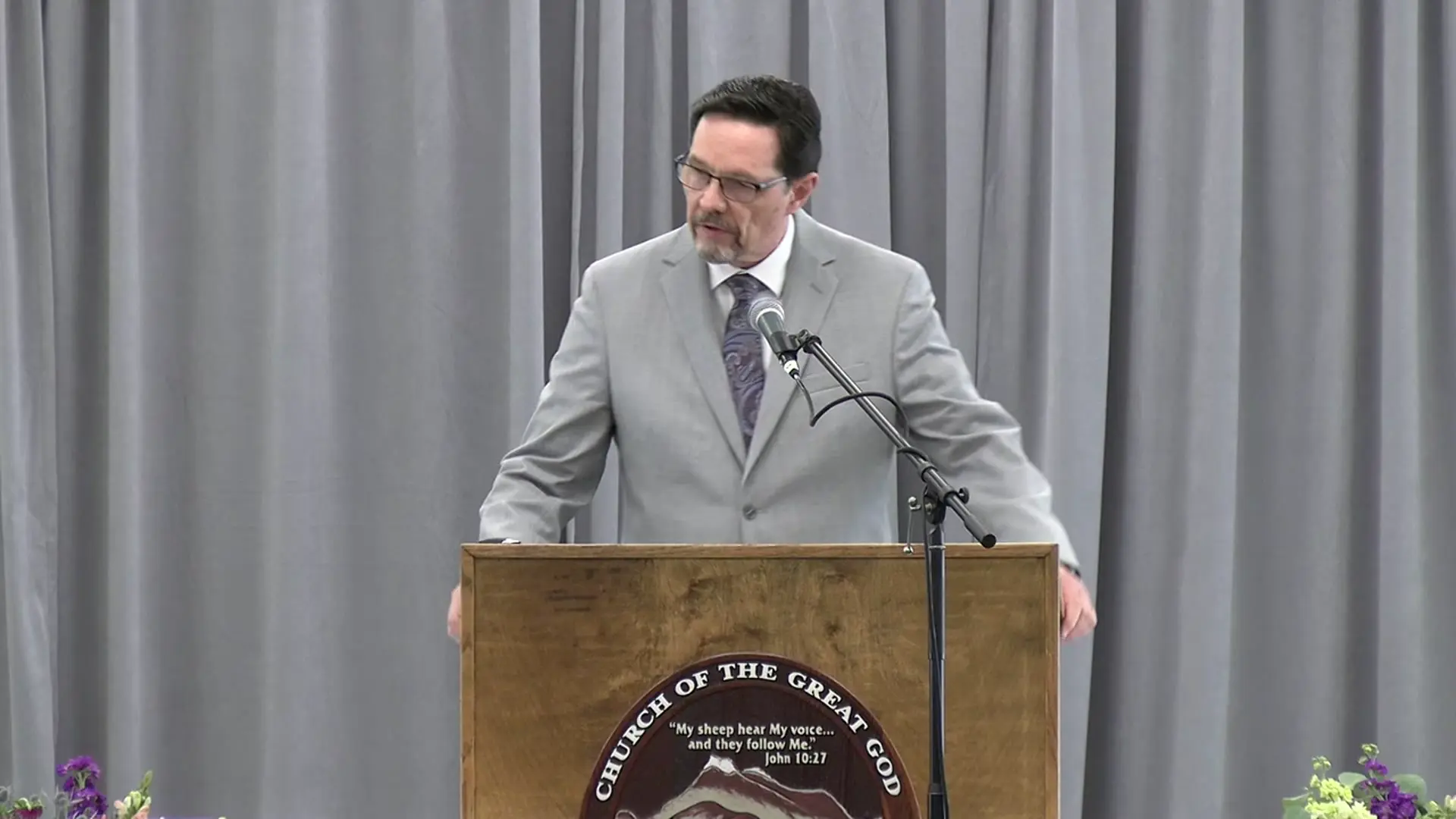
The Radiance of God's Glory
Feast of Tabernacles Sermon by Martin G. CollinsThe so-called Age of Enlightenment replaced divine revelation with carnal human reason, replacing God's true light with Satan's counterfeit 'illumination.'
Dead Prophets' Society
CGG Weekly by Mike FuhrerToday's hollowed-out nominal Christianity asserts that, if one wants Christian doctrinal proof, go to Jesus and Paul, not Moses, David, or the prophets.
Remaining Unleavened
Sermon by Richard T. RitenbaughOur carnal natures must be displaced by God's Holy Spirit, motivating us to refrain from causing offense, but freely forgiving others as God has forgiven us.
Gluttony: A Lack of Self-Control (Part Two)
Article by Martin G. CollinsAt its base, gluttony is nothing more than a lack of self-control. But there is also a more spiritual side to this prevalent sin.