


Filter by Categories
The Saudi Arabian Makeover
'WorldWatch' by Richard T. RitenbaughSaudi Arabia, often overlooked by prophecy students who focus on Israel and Jerusalem, is emerging as a significant force in the turbulent Middle East under Crown Prince Mohammad bin Salman, who holds multiple top posts and is seen as the power behind his aging father, King Salman. Some prophecy enthusiasts have already labeled him the Antichrist. Since taking office, he has pursued sweeping reform, vowing to return the kingdom to moderate Islam and to crush extremism, which he blames on rigid doctrines adopted after the 1979 Iranian Revolution. He has partly broken the longstanding alliance between hardline clerics and the House of Saud, jailed more than 200 elites on corruption charges, and launched a military intervention in Iran-backed Yemen and a blockade of Qatar. Socially, he has lifted bans on women driving and attending sports stadiums, loosened guardianship laws, created a center to vet the sayings of Muhammad, and promoted public entertainment such as concerts, cinemas, and a planned theme park, since bored youth are drawn to extremism. The centerpiece is economic: diversifying away from oil dependence, which requires social and religious reform to attract Western investment and depends heavily on the planned partial sale of Saudi Aramco. Obstacles include a poor work ethic fostered by government handouts, heavy regulation, and resistance to change. He may rule for a generation, but hardline conservatives are expected to counter-punch, possibly through terrorism against the Saudi state, which would further heighten tension in the Middle East.
The Saudi Arabian Makeover
Commentary by Richard T. RitenbaughSaudi Arabia is undergoing sweeping change under Crown Prince Mohammed bin Salman, who at 32 is also Deputy Prime Minister, Defense Minister, and the power behind his father, King Salman. Some prophecy watchers have already tabbed him as the anti-Christ. He vows to return the kingdom to a moderate Islam open to the world, blaming thirty years of rigid doctrine adopted in reaction to the Iranian revolution. He has broken the alliance between hardline clerics and the House of Saud, jailed some two hundred elites on corruption charges in a Riyadh hotel, lifted the bans on women driving and entering stadiums, scaled back guardianship laws, and created an Islamic Center to certify the authentic sayings of Mohammed. Because seventy percent of Saudis are under thirty and many are bored enough to drift toward extremism, concerts and movie theaters are now allowed. He is also more aggressive abroad, launching a major intervention in Yemen against Iranian-backed separatists and blockading Qatar for its dealings with Iran and Islamist groups. His economic goal is to end near-total dependence on oil, which supplies 90 to 95 percent of revenue. Obstacles include a poor work ethic bred by socialist-style handouts, heavy regulation, and resistance to change. Much depends on selling 5% of Saudi Aramco in the largest public offering in history. He may rule for a generation, but entrenched hardliners may answer with extremism and terrorism inside the kingdom.
The Fractured Middle East
'WorldWatch' by David C. GrabbeSaudi Arabia is a Sunni nation where Wahhabism, a fundamentalist strand of Sunni Islam, predominates. Wahhabism at least partially influences Al Qaida, Hamas, and the Taliban. Sunni Islam makes up some 85-90% of Muslims worldwide, and its division from the minority Shi'a, which rests on the question of who is Muhammad's rightful successor, is a major factor in why Middle Eastern Muslim nations act and react as they do. Saudi Arabia is among the countries where this sectarian division plays out. When Hezbollah, a militant Shi'ite group backed by Iran, attacked Israel, a Sunni cleric in Saudi Arabia declared a fatwa against Hezbollah, condemning any Muslim who fought for it. Sunni Arabs see Hezbollah's attacks as threatening the status quo because they represent an increasingly powerful Iran. Though Arabs have no love for Israel, they harbor grave concerns over Iran becoming a regional hegemon. Westerners who view Islam as a unified front miss these divisions, and Saudi Arabia's place within them shows the fractured nature of Islam.
The Burning Middle East: Revolution or Power-Grab?
'WorldWatch' by David C. GrabbeWhile the geopolitics of North Africa and the Middle East have not substantially changed, Iran may benefit the most from the ongoing turmoil.
Germany's Dilemma
'WorldWatch' by David C. GrabbeGermany is an industrial powerhouse, the richest economy in Europe, but it must prop up several poor-performing economies throughout the rest of the EU.
Islam on the March (Part Two): Reviving the Ottoman Empire
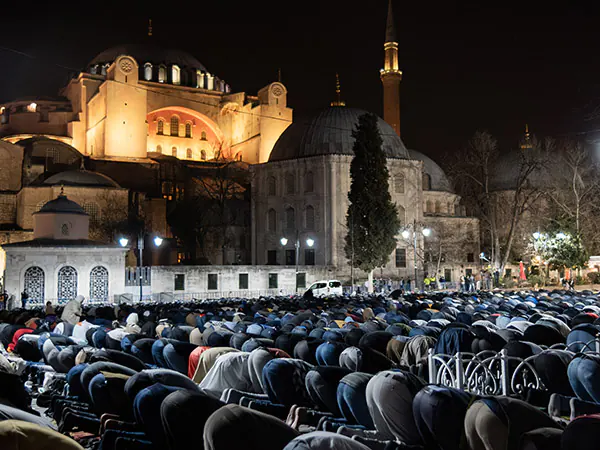
'WorldWatch' by Joseph B. BaitySaudi Arabia is a partner in a new mutual defense pact with Turkey and Pakistan, similar in nature to NATO, which Erdogan has just signed. The agreement advances Erdogan's ambition to make Ankara a powerhouse across the entire territory of the old Ottoman Empire. Saudi Arabia contributes vast financial resources and influence across the Arab and Muslim worlds, assets Turkey could not easily replicate on its own, while Pakistan adds its implicit nuclear deterrent and military capabilities. Egypt has been floated as a possible new member. The pact will help counterbalance Iranian regional power, but it also positions Turkey as the military and political leader of a Sunni ring of fire and advances Erdogan's vision of a modern Ottoman sphere of influence. According to Chaim Silberstein of the Jerusalem Center for Applied Policy, it helps Erdogan cement his position as hegemon in the Middle East and resolves two obstacles to claiming leadership of the Muslim world: that he is neither a descendant of the Prophet Muhammad nor an Arab. Saudi Arabia's role is therefore part of a larger Turkish effort to extend influence over Jerusalem, the Middle East, and former Ottoman lands. Since the Ottomans took Mecca and Medina in 1517, those Islamic holy cities, now in Saudi Arabia, helped ground the Ottoman claim to the caliphate.
All About Edom (Part Two)
'Prophecy Watch' by Richard T. RitenbaughEsau was prophesied to be the father of a nation, Edom, and the Bible gives us plenty of clues about the character of his descendants.
Ishmael
Sermonette by Richard T. RitenbaughTo this day, a perpetual conflict exists between Ishmael's offspring and Isaac's offspring, with the Ishmaelites determined to wipe Israelites off the earth.
Liberalism and Education (Part Three)
Commentary by John W. Ritenbaugh (1932-2023)Muslims, duplicating the methods of the leftists, are attempting to control the direction of American education, establishing centers for Islamic Studies.
The Fifth Seal (Part One)
'Prophecy Watch' by Richard T. RitenbaughFollowing the Four Horseman of the Apocalypse is the Fifth Seal, depicting souls under the altar crying out to God for vengeance. Here is what it means.
The Present and Future Crisis (Part One)
Sermon by John W. RitenbaughWe need to exercise diligence, acquiring economic stability by submitting to God's counsel, sacrificing now before forces usurp our economic substance.