


Filter by Categories
The Geopolitics of Israel
'WorldWatch' by Richard T. RitenbaughA nation's geography significantly constrains its policy choices, particularly in international relations, defining the essence of geopolitics. The location of a nation—whether landlocked or coastal, in the northern or southern hemisphere, Eastern or Western, at high or low latitude—and its geographical features such as mountains, rivers, coasts, deserts, and forests, largely dictate its responses to events and crises. Factors like mineral wealth, arable land, and natural harbors also influence these decisions. While geopolitics is not an exact science, as nations occasionally act unpredictably, it offers a framework for understanding their choices. For example, a vast nation like Russia, lacking natural barriers to invasion, seeks to establish buffer states along its western and southern borders to deter aggression, explaining its dominance and intervention in neighboring countries like Belarus, Ukraine, Georgia, and Kazakhstan. The land of Israel, central to biblical narratives, is equally shaped by its geography and resultant geopolitical realities. Its size, shape, topography, and climate influence the actions of its rulers and the strategies of its enemies. Throughout history, during periods of independence—from Joshua's invasion to Judah's defeat by Nebuchadnezzar, from the return under Zerubbabel to the destruction of Jerusalem by Titus in AD 70, and in its modern state since 1948—Israel has struggled to maintain autonomy amidst external imperial ambitions and internal tensions, a situation rooted in its unchanging geography. Typically extending from southern Lebanon and the northern hill country to the Negev in the south, Israel's borders have rarely expanded far beyond this core area, even under strong leaders like David or Solomon, a pattern that persists today. Deserts provide protective buffer zones for Israel from the southwest, southeast, and east, limiting threats from Egypt, Arabia, and approaches via Eilat/Aqaba, though modern air forces reduce these barriers' effectiveness. The eastern desert and Jordan River further complicate attacks from that direction, especially if Israel controls Judea and Samaria. However, Israel's greatest vulnerability lies in the north, where few natural barriers exist, making it the primary route for historical invaders like the Assyrians, Babylonians, Greeks, and Romans. The chokepoint between Mount Hermon and the Sea of Galilee offers some defense through direct confrontation or guerrilla tactics, but a decisive victory for an invader in the northern valleys could expose the rest of the land. Imperial powers have long coveted Israel due to its position as part of a land bridge connecting Africa, Asia, and Europe, placing it at a critical convergence zone in the Eastern Hemisphere. Control of this narrow strip facilitates swift troop and supply movements along the eastern Mediterranean coast and secures vital maritime shipping lanes. As a crossroads of three continents, the land is fiercely contested. Internally, Israel's geography fosters diverse populations—coastal merchants, northern farmers and warriors, southern herdsmen and fighters—creating domestic tensions that challenge national unity. When divisions are minimal, Israel stands strong against foreign threats, but deep internal rifts increase its vulnerability to being overrun. Even now, coalition governments are often necessary to maintain stability against neighboring threats.
A Battle Group for Eastern Europe
'WorldWatch' by Richard T. RitenbaughVisegrád, a medieval castle and town in Hungary, was the site of significant fourteenth-century meetings among the monarchs of Poland, Hungary, and Bohemia to secure peace and alliance against Habsburg Austria. In 1991, the name Visegrád Three was revived by Czechoslovakia, Hungary, and Poland to enhance their economies and EU membership prospects, later becoming the Visegrád Four (V4) after Czechoslovakia split into the Czech Republic and Slovakia in 1993. All four nations joined the EU in 2004 and have since developed vibrant free-market economies, comprising Europe's seventh-largest and the world's thirteenth-largest economy. On May 12, 2011, the Visegrád Group announced the formation of a battle group, independent of NATO, to be ready by 2016 and commanded by Poland, with joint military exercises supported by the NATO Response Force starting in 2013. This militarization during an economic downturn is driven by their geographic position between Germany and a resurgent Russia, with Poland particularly vulnerable due to its history of conflict on its plains. The other V4 states also have histories as buffer zones between hostile powers. Recent trends amplify these concerns, with Russia's growing influence since the Soviet Union's fall, evident in its 2008 campaign against Georgia, and backed by energy wealth, making Moscow a renewed threat. In the west, the EU's economic struggles, except for Germany, have dimmed prospects for further integration and heightened unease about German dominance. The V4 nations also view their battle group as a precaution against potential EU fractures due to mounting debt and defaults. Additionally, the V4 nations question NATO's ability to defend against aggression, given the U.S.'s reduced commitment to European security under a 2010 strategic concept and the weakened state of European military forces. Similar concerns are shared by northern nations forming the Nordic Battle Group, fearing Germany, Russia, EU instability, and U.S. distraction by its own crises. There are signs the Visegrád Group seeks to expand southward to Romania and Bulgaria, and possibly northward to Lithuania and Latvia, reflecting Eastern Europe's nervousness and the formation of sub-alliances against surrounding instability.
Cold War Redux?
'WorldWatch' by Richard T. RitenbaughIn December 1991, the collapse of the Soviet Union led Moscow to ground its air force due to a lack of resources and willpower to project power. As Russians turned inward, the nation experimented with democracy, faced internal power struggles, and eventually, under Vladimir Putin, reverted to a strongman style of governance. Putin has since restored Russian influence, challenging both small and great nations. In 2008, he secured a military victory over Georgia, gaining control over Abkhazia and South Ossetia under the pretext of supporting Russian separatists. In 2014, Russia annexed Crimea after it broke away from Ukraine, and Putin has vowed to prevent a military defeat of ethnically Russian partisans in eastern Ukraine, despite protests and sanctions from America and the European Union. Putin has also warned the U.S. against intervention in Syria, asserting Russia's readiness to respond, and defied America by granting asylum to Edward Snowden. In response to the European Union's energy policies, he redirected natural gas pipelines through Turkey instead of Ukraine, forcing European nations to seek alternative import solutions. More alarmingly, Putin has threatened cyberattacks if NATO builds up forces in the Baltic States and hinted at nuclear escalation if NATO challenges his annexation of Crimea. Russian officials have warned of forceful responses, including nuclear action, if Western nations attempt to reclaim Crimea or arm Ukraine, citing similar conditions in Lithuania, Latvia, and Estonia with significant ethnic Russian populations. Russia's aggressive actions have persisted, with NATO warplanes scrambling 400 times in 2014 to counter increased Russian air incursions, a level unseen since the Cold War. Incidents include Russian military aircraft spotted near Lithuania, intercepted bombers near Swedish islands, and submarine suspicions near Stockholm. Russia's ambassador warned Denmark of potential nuclear targeting if it joined NATO's missile defense. Moscow has bolstered its Arctic military presence with new submarines, bases along its northern coast, and reactivation of Soviet-era facilities near Finland. In response, Norway is increasing military spending and restructuring its forces, while Finland considers joining NATO, a previously unthinkable move now gaining support. Russia's return to Cold War behavior has forced European neighbors to adopt a more vigilant stance, highlighting the current weakness of U.S. responses to Putin's bold belligerence.
Germany Ascendant
'Prophecy Watch' by Richard T. RitenbaughGermany, once divided and weakened by the Cold War between the United States and the Soviet Union, has emerged as a significant power in Europe since reunification. For over 40 years, Germany was split, with West Germany prospering while East Germany struggled under Soviet control. Following the fall of the Berlin Wall and the collapse of the Soviet Union, Germany reunited and has successfully integrated East and West, achieving economic parity and moving its government from Bonn to Berlin. With the largest population and strongest economy in Europe, Germany now dominates financial markets, leads in promoting the euro, and drives economic integration. Its financial center, Frankfurt, commands attention across Europe and increasingly the world, positioning Germany to flex more than just economic muscle and potentially influence or direct global events. Historically, Germany and Russia have shared a complex relationship marked by both conflict and attraction, with numerous pacts made and broken over centuries. A notable example is Hitler's 1939 Non-aggression Pact with Stalin, which had significant global impact. Currently, Germany is negotiating an economic deal with Russia that could carry political consequences, potentially shifting the balance of European power toward Germany. On December 12, 2000, German and Russian economic ministers met in Berlin to discuss converting a substantial portion of Russia's $14 billion debt to Germany into equity in Russian companies, making Germany a major shareholder in Russian industry. If finalized, this deal could be a step toward a closer political partnership, enhancing both nations' geopolitical standing, weakening American influence in Europe, and strengthening Germany and Russia as leaders on the world stage. Moscow and Berlin recognize that this growing cooperation will bolster their potential and advance their political interests.
NATO: In Search of a Mission
'WorldWatch' by David C. GrabbeNATO was built on Cold War geopolitics: to keep the Russians out of Europe, the Americans in, and the Germans down. Europe needed a security guarantee against Soviet and Warsaw Pact forces that held a large numerical advantage, and America's promise of retaliation supplied it cheaply, which let Europeans fund welfare states instead of large defense budgets. The U.S. wanted to be in because its grand strategy is to prevent any unified power from arising in Eurasia. A Russia that combined Europe's technology, ports, and resources with its own could threaten America. NATO, like the European Union, also lashed Germany to its neighbors so that it could not make war on them again. Since the Soviet collapse, the alliance has lacked a unifying threat, and its members have developed separate priorities. The U.S. fights militant Islam abroad, while most Europeans treat terrorism as a law-enforcement matter. Eastern Europeans fear a resurgent Russia, while Western and Southern Europeans do not. Germany has become Europe's strongman and, burdened by bailing out weaker EU members, has turned toward Russia. Russia supplies about 40% of its natural gas and offers labor through relocated production, since Germany's population is declining. Berlin aims to give Russia enough of a stake in the European economy that it will not challenge European security. Russia is therefore no longer out of Europe, and Germany is no longer down. France and Germany's willingness to entertain a Russian proposal for a new European Security Treaty shows they no longer see NATO as serving their interests, and the alliance may be nearing its end.
Geopolitics: Scope and Limitations
'WorldWatch' by Richard T. RitenbaughInternational relations are convoluted enough to make the mind swim. Geopolitics is perhaps the most conservative method of making some sense of the world.
Franco-German Divergence
'WorldWatch' by David C. GrabbeWorld news, events, and trends highlighting biblical prophecy for March-April 2005: Franco-German Divergence.
Global Financial Instability
'WorldWatch' by David C. GrabbePredicting economic activity is about as tricky as forecasting the weather. Even so, the stage is set for economic instability around the world.
A Threat in Central Asia
CGG Weekly by Richard T. RitenbaughWe would be wise to keep an eye on the Shanghai Cooperation Organization over the next few years.
Germany's Dilemma
'WorldWatch' by David C. GrabbeGermany is an industrial powerhouse, the richest economy in Europe, but it must prop up several poor-performing economies throughout the rest of the EU.
Japan: Rising Tensions With China
'WorldWatch' by Richard T. RitenbaughJapan and China have been hostile since antiquity, each at times regarding the other as barbarian, and their rivalry has run from medieval struggles over Korea through Japanese piracy and two wars in 1894 and 1937. The recent reversal of fortunes, with China's economy now second in the world and Japan's third after two decades of paralysis, makes China's economic, demographic, and military power an existential threat in Japanese eyes. Only 6% of Chinese and 5% of Japanese view the other favorably. Yet 23,000 Japanese companies employ ten million Chinese workers, and Japan needs the Chinese market even as it hedges by investing in Southeast Asia, where heavy Chinese involvement makes maritime clashes more likely. Tensions are at a high: China's extended Air Defense Identification Zone over the East China Sea and Prime Minister Abe's visit to Yasukuni Shrine, along with harsh rhetoric on both sides, raise the risk that a trigger-happy pilot could ignite a larger conflict. No diplomatic channel exists to prevent misunderstandings. Both governments know war is against their interests, but prolonged tension boosts their leaders' domestic standing. Japan's navy remains superior to China's and could curb Beijing's ambitions without direct U.S. involvement, though America might lose control of its ally. A tit-for-tat relationship is most likely, military conflict is a longshot, and Japan's renewed nationalism will probably push Abe to bypass or revise the ban on using force in international disputes.
The Awakening Bear
'WorldWatch' by David C. GrabbeRussian President Vladimir Putin is turning his nation's interests outward—and that does not bode well for international relations.
The Culture War and the Cartoon Ruckus
'WorldWatch' by David C. GrabbeThe initial reaction to the cartoons was mild and non-violent. That it took five months for rage and offense within the Muslim world to be stirred.
Age of Empires
'WorldWatch' by Richard T. RitenbaughThe United States used to be the world's superpower and policeman. Today, however, new powers are rising to fill the vacuum created by America's retreat.

Who Is America's Greatest Enemy?
'WorldWatch' by Richard T. RitenbaughThe United States stands weakened by worldwide conditions, but its foreign enemies cannot match its power. Its real foe lies much closer.

Is China's Threat a Mirage?
'WorldWatch' by Richard T. RitenbaughA highly placed Chinese official made a point of telling the U.S. Treasury Secretary that China is no threat to the United States. This may be true—for now.
The Dream of a United States of Europe
'WorldWatch' by David C. GrabbeBirth rates, defense expenditures, welfare spending vs. wealth creation — everything we use to gauge the health of empires suggests that Europe's fire has gone out.
The Rise (Again) of Nations
'WorldWatch' by Richard T. RitenbaughThe last few decades have seen the rise of globalism as a prime factor in international relations. But the pendulum is swinging back toward nationalism.
Is France Ditching the EU?
'WorldWatch' by David C. GrabbeThe EU has reached a tipping point, where a Franco-German veto could be overridden by the other nations. Will this turn of events sour France on the EU?
Anti-Americanism Abroad
'Prophecy Watch' by Richard T. RitenbaughGod prophesies that Israel will be conquered in the end time. Could anti-American sentiment, especially in Europe, be the beginning of the end?
The Lisbon Treaty and the Future of Europe
'WorldWatch' by David C. GrabbeWhat are the ramifications of an EU with the power and authority to act as a cohesive whole? Will the members choose to act in a united fashion?

Turkey: A Resurging Pivotal Power
'WorldWatch' by David C. GrabbeWhen Turkey develops economically, it develops militarily. It then becomes the leading power—in many regions. That is what it means to be a pivotal power.
So Long, Western Alliance?
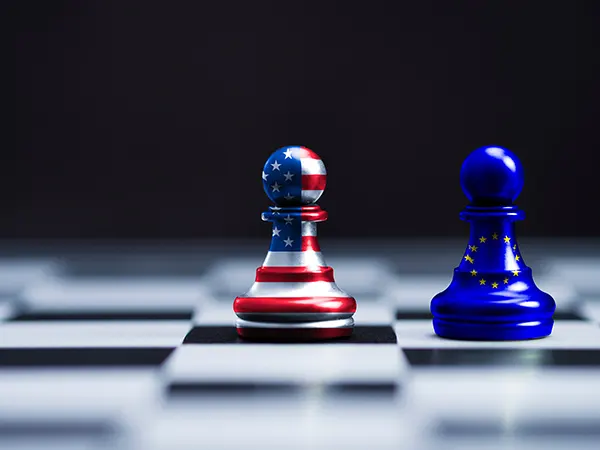
'WorldWatch' by Richard T. RitenbaughThe release of the 2025 National Security Strategy (NSS) by the Trump administration serves as a revealing case study in the shifting geopolitical relationship between the United States and Europe. Presented as a candid roadmap for American strength and influence, the document assesses global realities without diplomatic softening, and its section on Europe proved especially provocative. European leaders reacted with sharp criticism, insecurity, and accusations, with one French analyst describing the NSS's treatment of Europe as "three pages of vitriol." The core grievances centered on the NSS's blunt critique of European governance: widespread censorship of free speech, misguided immigration policies, suppression of political opposition, demographic decline, economic stagnation, erosion of national identity and self-confidence, and weakened national defense. Taken together, the NSS warns that these trends threaten Europe with "civilizational erasure," suggesting the continent could become "unrecognizable" within twenty years, potentially undermining the reliability of European nations as military and economic allies. German officials dismissed these criticisms as ideological rather than strategic, and many European leaders accused the administration of downplaying the threat from Russia while pressuring Ukraine, framing this as favoritism toward Russia at Europe's expense. Yet the NSS's assessment reflects the cumulative effect of decades of policy choices, including open borders, reduced military spending, heavy regulation, progressive social agendas, and the political marginalization of dissenting voices. Rather than reversing course, some European leaders, such as European Commission President Ursula von der Leyen, have proposed expanding legal immigration pathways as a solution to illegal immigration, a response likened by critics to reducing murder rates by legalizing killing. The NSS explicitly states that America's goal is to help Europe correct its trajectory, recognizing that a strong Europe is necessary for effective cooperation and mutual defense against adversaries. However, it raises a pointed question: if certain NATO member nations become majority non-European within a few decades due to unchecked migration, will their populations still identify with the founding values and alliance commitments established after World War II? This observation drew accusations of racism and xenophobia against President Trump, yet it functions as both a warning and an encouragement for Europe to stabilize itself so the transatlantic alliance can endure. This geopolitical trajectory connects to a broader prophetic understanding that the modern nations of Israel will undergo the Great Tribulation, described as "the time of Jacob's trouble" (Jeremiah 30:7), culminating in military defeat and captivity. Human migration is identified as one significant factor, among other political and cultural weaknesses, contributing to this destabilization. The ongoing demographic and cultural transformation of Europe, if unaddressed, may fracture the historic bond between Europe and the United States, leaving European nations vulnerable to being overcome individually by their enemies. The durability of the Western Alliance is therefore presented as a development worth close and continued observation.

The Final Frontier?
'WorldWatch' by Joseph B. BaityThe space race began less than seventy years ago, and now humanity stands on the brink of space-based weaponry and its potential for disaster on Earth.
An Islamist Vision
'WorldWatch' by David C. GrabbeThe Gulen Movement is a shadowy Islamic sect and political organization whose aim is to overthrow secularism and return Turkey to its Islamic roots.
Is Obama Redistributing Power?
'WorldWatch' by Richard T. RitenbaughBarack Obama's stated desire is to redistribute from those who have to those who do not, and this time he is redistributing international power.
Rudderless Leadership in U.S. Foreign Affairs
'WorldWatch' by Richard T. RitenbaughWith one look at American activity on the world scene, an observer is struck by the lack of coherence of this administration's foreign policy.
The Axis of Evil and the Western Coalition
'WorldWatch' by David C. GrabbeGod warned ancient Israel against putting their trust in alliances with other peoples. If only the modern nations of Israel would heed His counsel!
What's in It for Us?
CGG Weekly by Richard T. RitenbaughIf a person has a firm grasp on the principle of self-interest and what a nation considers to be good for it, he can forecast what a nation will do.
The Paradox of U.S. Power and Defeat
'WorldWatch' by David C. GrabbeSince World War II, the U.S. has rarely fought a successful military action, be it Korea, Cuba, Vietnam, Iran, or Iraq, yet it stands as a lone superpower.
A Growing Divide
'Prophecy Watch' by Richard T. RitenbaughAmerica and Europe have been moving away from each other politically, economically, and culturally. How does this affect our understanding of prophecy?
The Beast and Babylon (Part One)
'Personal' from John W. RitenbaughEurope is not uniting as we once thought it would. How does this affect our interpretation of the prophecies?
Once Again, Britain Dominates Europe
'WorldWatch' by Richard T. RitenbaughGreat Britain has a history of playing the balance-of-power game to keep any Continental state or empire from becoming strong enough to threaten Britain.
The Whole World is Writhing
Commentary by John W. Ritenbaugh (1932-2023)Wherever secularism has gained ascendancy, it has attempted to bully and harass the religious elements of society by the tyranny of political correctness.
Going Nuclear
CGG Weekly by Richard T. RitenbaughDo not be distracted by the antics of rogue states, as they are somewhat predictable. The trick is not to miss the elephant in the living room.
The Saudi Arabian Makeover
Commentary by Richard T. RitenbaughWatchers of world events should look beyond Israel to the wider Middle East, especially Saudi Arabia, where Crown Prince Mohammed bin Salman, age 32, holds the posts of Deputy Prime Minister, Defense Minister, and head of the royal court and economic council, and is the power behind his father, King Salman. He is pursuing a sweeping reform program to return the kingdom to a moderate Islam open to the world, which he blames the hardline doctrines adopted in reaction to the Iranian revolution for suppressing. He has broken the old alliance between hardline clerics and the House of Saud, jailed some two hundred elite figures on corruption charges, lifted bans on women driving and on movie theaters, and moved to certify the sayings of Mohammed to curb extremism. He is also more aggressive abroad: Saudi Arabia launched its largest-ever military intervention in Yemen against Iran-backed separatists and blockaded rival Qatar for dealing with Iran and Islamist groups. This comes as protests and riots shake Iran. His economic goal is to end near-total dependence on oil, which supplies 90 to 95 percent of revenue, and the planned sale of 5 percent of Saudi Aramco, expected to be the largest public offering in history, underpins it. Obstacles include an entrenched poor work ethic bred by government handouts, heavy regulation, and resistance to change. He may rule for a generation, but entrenched religious and governmental hardliners will likely counterpunch, possibly through terrorism inside the kingdom. Some prophecy watchers have already labeled him the anti-Christ.
Israel at a Crossroads
'Prophecy Watch' by Richard T. RitenbaughThe State of Israel has come to a point in its history when it must take a hard look at where it wants to go in the next few years.

The Pragmatic Japanese
'WorldWatch' by Richard T. RitenbaughJapan has a history of abrupt changes in policy when the geopolitical situation alters against their self-interests. It is starting to do so once again.
The Greatest Threat
'WorldWatch' by David C. GrabbeDespite the instability of its neighbors, Egypt and Syria in particular, Israel's greatest threat is an internal problem: its relationship with God.

Brexit (Part Two): Exposing the Divide
'WorldWatch' by Joseph B. BaityAs reactions to the Brexit vote run the gamut from applause to denunciation, one fact shines through: The vote exposes just how divided this world is.
An Israel-Turkey Reconciliation?
'WorldWatch' by Richard T. RitenbaughIsrael stands isolated on an island in a seething Islamic sea, confident in its military superiority yet uneasy, because the Arab Spring has stripped away former advantages. Egypt under the Muslim Brotherhood can no longer be relied on to honor the Camp David buffer. Palestinians have a longer leash and are held back mainly by internal conflict. Jordan, Syria, and Lebanon are not strong enough to be serious threats, but they would descend like hyenas on any sign of Israeli weakness and fear. The United States, once solidly behind Israel, now ignores it during crises and then applies strong-arm pressure, as when Obama forced Netanyahu to apologize and promise compensation to Turkey for the 2010 flotilla raid, handing Turkey a diplomatic victory. Israel's alliance with Turkey in the 1990s anchored a peace-through-strength strategy, but Turkey has since become more Islamic under Erdogan, whose rhetoric against Israel has escalated. Even after the apology, talks stalled over compensation amounts and the admission of wrongdoing. Any restored ties will differ from the old strategic partnership, since eastern Mediterranean gas reserves and Israel's closer ties to Cyprus and Greece add tension. Still, both nations share interests: limiting radical Islam, preventing Syrian spillover and chemical weapons reaching Hezbollah, countering Iran's nuclear ambitions, and maintaining regional stability as pro-Western democracies. Seizing the chance to rebuild ties would ease Israel's isolation.
Globalism (Part Five): Globalism's Teeth
'Prophecy Watch' by Charles WhitakerGlobalism is not just an economic phenomenon, but it is also a strong political and military movement—and America's military gives it its teeth.
Blood and Soil: The Persistence of Anti-Semitism
'Prophecy Watch' by Charles WhitakerWhy has anti-Semitism remained a part of this world's way of thinking? Recent history shows that anti-Semitism has morphed into new expressions of an old evil.

New Fractures in the 'Special Relationship'
'WorldWatch' by Richard T. RitenbaughSparks are flying between President Joseph Biden and Prime Minister Boris Johnson. These cracks in the Special Relationship come at an inopportune time.
Today's Christianity (Part Three): Southern Christianity's Impact on America
'Prophecy Watch' by Charles WhitakerThough secularists tried to use immigration policy to sideline Christianity, it backfired. God has used their scheme to accomplish His own purposes.
The World's Need for Atonement
CGG Weekly by Richard T. RitenbaughAccording to the liberal media, all we have to do is get world leaders in one room, and after a few handshakes and a couple of beers—voila! World peace!
Crisis? What Crisis?
CGG Weekly by Richard T. RitenbaughWe would recognize something as horrible as the Great Depression, right? We would know if we had entered the Crisis! But would we?
Japan: Rising or Setting Sun?
'Prophecy Watch' by Richard T. RitenbaughJapan, among the top economies of the world, has been in deep recession for nearly a decade. Can she recover? What is in store for her in the end time?
The Wars of Israel and Judah
CGG Weekly by David C. GrabbeWhere God's people are concerned, military might is far less of a factor in the outcome of a war than morality. Do we still have God's favor?
Globalism (Part Twelve): It Shall Never Be
'Prophecy Watch' by Charles WhitakerThough the nations of this world are pushing for global economics and government, God's Word shows that mankind will NOT succeed.
The Burning Middle East: Revolution or Power-Grab?
'WorldWatch' by David C. GrabbeWhile the geopolitics of North Africa and the Middle East have not substantially changed, Iran may benefit the most from the ongoing turmoil.