


Filter by Categories
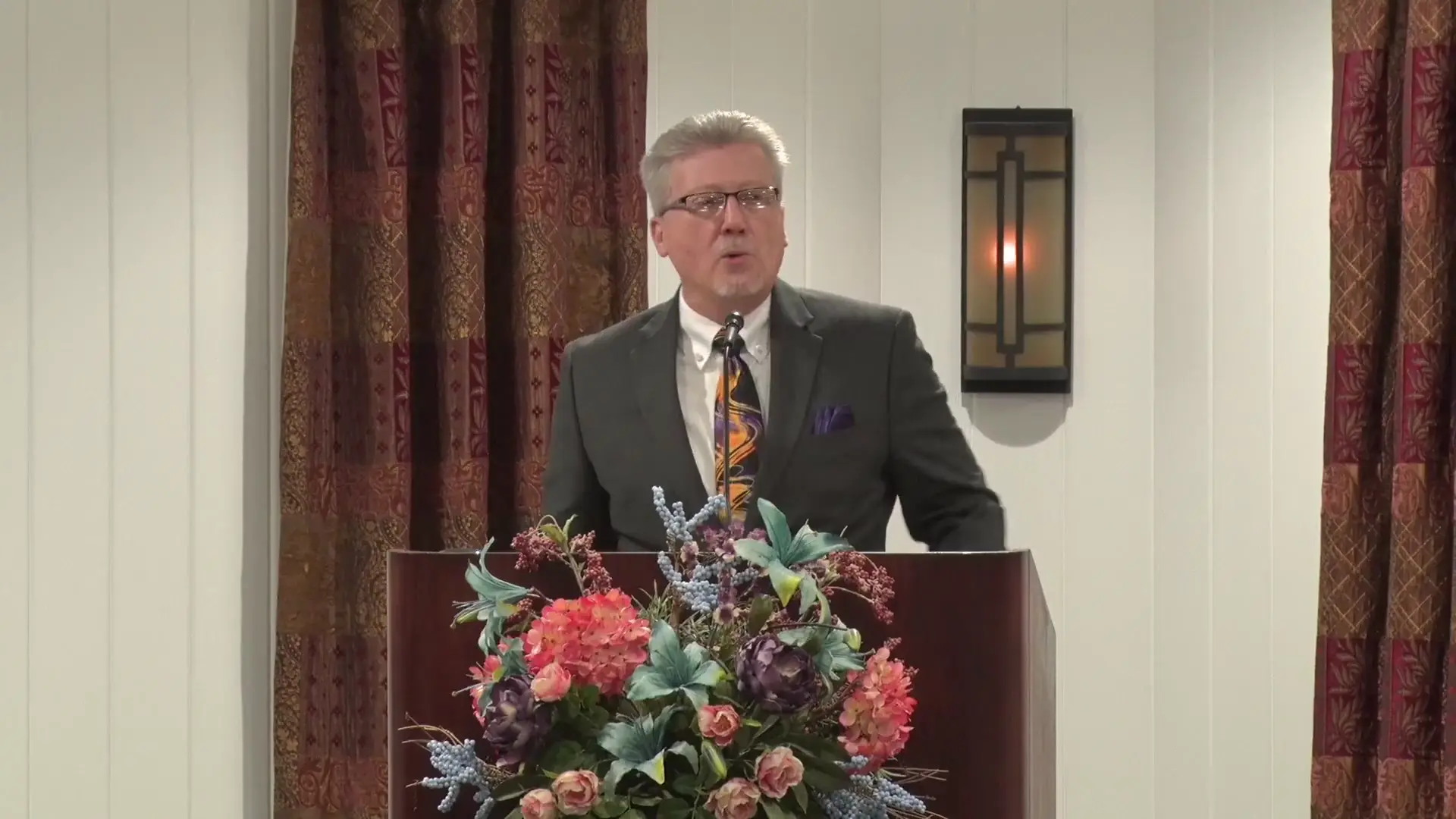
Joshua's Four Miracles (Part Two)
Sermon by Richard T. RitenbaughThe conquest of Canaan under Joshua is a second type of the Christian's journey of sanctification, a do-over after the wilderness generation died in unbelief. Joshua, a faithful servant who left nothing undone of what God commanded, is a clear type of Christ, who likewise came to do the Father's will and conquered sin and Satan. Yet Joshua is no perfect type. His treaty with the Gibeonites in Joshua 9 shows that human leaders are fallible, can be fooled by appearances and slick words, may fail to seek God first, and must live with the consequences of bad decisions. One error did not disqualify him, because God does not discard a faithful servant over a single mistake. The book's miracles show that God is a divine warrior who fights for His people: the crossing of the Jordan, the fall of Jericho, the hailstones, and the long day. The hailstones at Beth Horon were God's judgment on the wicked Amorites, whose iniquity had run its course, and they teach that judgment belongs to God, not to us. The sun standing still teaches that God answers prayer and supplies what light represents, such as knowledge, wisdom, and faith, so that we can overcome sin. Because God keeps every promise, as Joshua 21:43-45 records, believers can go forward and conquer.

Joshua's Four Miracles (Part One)
Feast of Tabernacles Sermon by Richard T. RitenbaughThe conquest under Joshua is a second type of the Christian journey, a better do-over of the wilderness trek. The exodus generation failed through unbelief and disobedience and died in the wilderness, never entering God's rest (Hebrews 3-4). The generation that crossed the Jordan was far more faithful, and Joshua 24 and Judges 2 say it served the Lord all the days of Joshua and the elders who outlived him. Their conquest was incomplete, and Hebrews 4 shows that even they did not enter God's true rest, which remains future. The book therefore pictures the fight of faithful, obedient believers, especially later-generation Christians, who overcome obstacles on the way to full possession of the Kingdom inheritance (Revelation 21:7). Joshua, bearing the same name as Jesus, is a type of Christ: Spirit-filled, courageous, obedient to God's Word, and finishing what he starts. Four miracles show what God does to aid His people: the Jordan crossing, the fall of Jericho, the hailstones, and Joshua's Long Day. The Jordan crossing, at flood stage and following the ark, is a type of baptism. It exalted Joshua, assured Israel that God would drive out their enemies, witnessed God's might to the nations, and taught Israel to fear God forever. Jericho's walls fell as Israel marched, praised, and obeyed. God fights our battles when we trust and follow Him rather than rushing ahead. The devoted things forbidden as spoil represent the world's treasures. Achan's sin shows that bringing them into the church contaminates the whole body.

Joshua 22: The Altar of Witness
Sermon/Bible Study by Richard T. RitenbaughMisinterpreting the altar of witness as an act of apostasy, the western tribes assembled for civil war based on unverified reports — gossip and tale-bearing.
We Will Serve the Lord!
Sermon by Martin G. CollinsThe book of Joshua covers about twenty-five years of Israel's conquest and settlement of the land God promised to Abraham, and it demonstrates God's faithfulness to that promise by leading Israel into Canaan as He had led them out of Egypt. Its central message is that God, not Joshua or Israel's soldiers, wins the victories: the Jordan parts, Jericho's walls fall, hailstones and the standing sun at Aijalon defeat the southern coalition, and the land is divided among the tribes. Joshua, trained as Moses' servant and filled with God's Spirit, is a type of Christ, the conquering commander who brings His people into their inheritance; the names Joshua and Jesus both mean God's salvation. The closing chapters (22-24) hold Joshua's three farewell charges, which share one point: remember what God has done, then obey and love Him. Obedience means keeping all the law of Moses, and love means walking in God's ways and holding fast to Him. Joshua warns against intermarriage with unbelieving Canaanites and against mixing true and false worship, since Israel's later history of idolatry proves the danger. He calls the people to choose, a continuing choice, summed up in "as for me and my house, we will serve the Lord." Israel served God throughout Joshua's lifetime and that of the elders who outlived him, showing how far a faithful leader's influence reaches. The book is authoritative Scripture, and its lessons apply to believers today.

The Divine Warrior
Sermon/Bible Study by Richard T. RitenbaughThe Book of Joshua centers on Israel's conquest of Canaan, with warfare as a dominant theme. Most of the miracles in Joshua are directly tied to battles, emphasizing military conflict. Even the crossing of the Jordan River, though not a battle itself, can be viewed as a strategic military maneuver, an invasion involving the entire people, including the fighting men from Reuben, Gad, and the half-tribe of Manasseh who crossed over to fight. The only significant section not focused on war is the division of the land, detailed in Joshua 13 through 21, which outlines territorial boundaries and reflects the people's pride in their newly conquered territory. In Joshua 5:13-15, a pivotal encounter occurs where Joshua meets a Man, identified as the Lord, fully equipped as a warrior with a drawn sword, ready for battle. This figure, appearing as the Commander of the army of the Lord, asserts His supreme authority over Israel's military endeavors, reminding Joshua that He is the ultimate leader. Joshua, initially uncertain of the Man's identity, eventually recognizes Him and falls on his face in worship, acknowledging His divine presence as the ground is declared holy. This encounter underscores the theme of divine warfare, portraying God as the ultimate warrior leading Israel to victory.

Spiritual Strongholds (Part One): Obedience
Sermon by Martin G. CollinsThe book of Joshua holds profound significance for God's people, from ancient Israel's initial arrival in Canaan to the present day. It recounts the historical and spiritual events surrounding Israel's capture and settlement of the land of Canaan, highlighting God's faithfulness in fulfilling His promises to the patriarchs—Abraham, Isaac, and Jacob—to bless their descendants and make them a great nation within a close covenant relationship with Him. The narrative covers diverse topics such as land, leadership, the book of the law, covenant, God's war, judgment, mercy, divine sovereignty, and human responsibility. In Joshua 5, the Lord emerges as the divine Warrior leading His people into the Promised Land. The account details the crossing of the Jordan River and the consecration of the people and army across earlier chapters, culminating in Joshua's encounter with the Commander of the Lord's army near Jericho. This figure, identified as a Man with a drawn sword, reveals Himself as the Commander, prompting Joshua to fall on his face in worship. This Commander, understood to be the Lord Jesus Christ, assumes command of Israel's armies for the seven-year campaign in Canaan, supported by a spiritual host of angels assisting in battles. The exchange between Joshua and the Commander before the assault on Jericho is striking. When Joshua asks if the Commander is for Israel or their enemies, the response is neither, emphasizing that He is there to command the Lord's armies and carry out God's plan, not to align with human causes. This underscores that Joshua must follow the Commander's lead in God's cause. The scene concludes with Joshua bowing before Him, receiving instructions akin to those given to Moses at the burning bush, affirming the holiness of the ground due to God's presence. Throughout the book, God's faithfulness and the people's response are evident. Despite the land being a gift from God, obedience to His commands remains crucial, though Joshua and Israel occasionally falter. The conquest of Jericho, a formidable fortress, exemplifies this dynamic. Facing high walls and strategic challenges, Joshua relies on the divine strategy provided by the Commander. The people follow God's command to march silently around the city for six days, and on the seventh day, they circle it seven times before the walls fall at the sound of trumpets and a shout, demonstrating God's power and their obedience. Jericho's destruction marks it as the first city taken in Canaan, dedicated entirely to God with no spoils taken by the Israelites, except for Rahab and her family, spared for her faith. The preparation for this victory involved silence, obedience, and perseverance, reinforcing the necessity of following God's instructions to the end. However, the subsequent defeat at Ai in Joshua 7 reveals the consequences of sin within the camp. Achan's disobedience in taking forbidden spoil from Jericho leads to Israel's loss, highlighting corporate responsibility for individual sin and God's serious view of transgression. After judgment on Achan, God's blessing returns, and Ai is conquered. Joshua's military strategy, inspired by God, involves sudden strikes, psychological warfare, speed, surprise, and terror, showcasing divine guidance in warfare. The book of Joshua serves as a bridge between wandering and settlement, preparation and possession, illustrating the continuity of God's power, covenant, and judgment. It reveals a pattern of blessing, sin, judgment, and renewed blessing upon repentance, underscoring God's consistent dealing with His people and the unchanging nature of His holiness and love.

Spiritual Strongholds (Part Two): Faithful Trust
Sermon by Martin G. CollinsThe Book of Joshua recounts significant events in the Israelite conquest of Canaan, highlighting the consequences of obedience and disobedience to divine instruction. In Joshua 7, the initial attempt to defeat the city of Ai failed due to Achan's disobedience in stealing and hiding spoil, resulting in a costly defeat for Israel. This event underscores the importance of addressing sin to restore favor with God. Following this judgment, God awakens Joshua from dejection and commands a second march against Ai with a larger force, as detailed in Joshua 7:6. The eighth chapter describes the successful defeat of Ai, achieved through explicit divine instructions and strategic planning, demonstrating the benefits of heeding God's guidance. Joshua encourages the people not to be dismayed, affirming God's steadfast presence despite their prior sin, and after judgment, blessing is restored. The narrative continues with the renewal of the covenant on Mounts Ebal and Gerizim after the victories at Jericho and Ai, as recorded in Joshua 8:30-35. This ceremony, fulfilling earlier commands through Moses, involves reading the law, constructing an altar on Mount Ebal for sacrifices, and reciting blessings and curses, emphasizing the principle of blessing for obedience and cursing for disobedience. The altar on Mount Ebal, the mountain of curses, serves as a solution for sinners acknowledging their need for atonement. In Joshua 9, the Israelites encounter the Gibeonites, who deceive them by pretending to come from a distant land to secure a treaty. The Israelite leaders, failing to seek God's counsel, make a peace treaty with them, only to discover three days later that the Gibeonites are nearby neighbors meant to be destroyed under divine command. Despite the deception, the leaders honor the oath made in God's name, sparing the Gibeonites but assigning them to menial service, partly at the altar of the Lord. This incident illustrates the lasting consequences of neglecting divine guidance, yet also shows a form of inclusion as the Gibeonites remain loyal to Israel for centuries, contributing to significant historical moments within the nation.
A Leader in Every Man!
Sermon by Martin G. CollinsThe Book of Joshua presents a detailed account of Joshua's leadership as he guided the Israelites into the Promised Land. Following the death of Moses, Joshua assumed command with a divine commissioning, supported by God's repeated calls to be strong and courageous. God assured Joshua of His unfailing presence, promising never to abandon him, and provided a threefold encouragement: the promise of the land, the power of His Word through obedience to the law of Moses, and the assurance of His constant presence. These assurances were vital as Joshua faced the daunting task of conquering Canaan, a land of fortified cities and vigorous warriors in mountainous terrain. Joshua's preparation for leadership was extensive, spanning forty years of training under Moses. His story begins in Exodus, where he first appears as a military leader in the battle against the Amalekites, learning that victory comes from God's blessing. At Mount Sinai, Joshua witnessed God's holiness, shaping his understanding of sin's abomination among God's people. As one of the twelve spies sent into Canaan, Joshua, alongside Caleb, stood firm in faith, trusting God's promises despite the majority's fear of giants and fortified cities. His commissioning as Moses' successor further confirmed his role, endowed with God's Spirit for righteous leadership. Throughout the Book of Joshua, his adherence to God's written law is emphasized. God instructed him to keep the law ever in his mouth, to meditate on it day and night, and to obey it fully, ensuring success in the conquest. Joshua's life demonstrated this obedience, leading to victories and a successful career. In his farewell address, he urged the Israelites to submit to God's authoritative revelation, a call tragically ignored by succeeding generations who fell into moral and spiritual relativism. The Book of Joshua also highlights the conflict between true and false worship. Joshua was commanded to destroy the Canaanites due to their pagan practices, yet traces of false religion persisted, tempting the Israelites. In his moving farewell speech, Joshua warned against worshipping false gods and challenged the people to remain faithful to the Lord their God who delivered them, emphasizing that one cannot serve both false gods and remain loyal to God.
Does Doctrine Really Matter? (Part Six)
Sermon by John W. RitenbaughThe Book of Joshua provides significant insight into the adherence to God's commands as the Israelites entered the Promised Land under Joshua's leadership. God gave Joshua explicit instructions not to deviate from His law, emphasizing strict obedience. The people held Joshua in high reverence, almost to the point of worship, recognizing his dedication to serving God with all his heart throughout his life. Only one minor fault is noted, when he failed to seek God's counsel in the matter with the Gibeonites, relying instead on the advice of his elders. In Joshua 5, a critical examination reveals no record of a wave sheaf offering being made when the Israelites entered the land. Despite the mention of circumcision and the observance of Passover, there is no indication of any offerings, including the wave sheaf, burnt, meal, or drink offerings. This absence is significant, as the wave sheaf offering is closely associated with the Days of Unleavened Bread. The lack of mention, combined with the fact that Israel had no harvest of their own to offer—consuming instead what the Canaanites had sown—undermines any assumption that such an offering occurred. Furthermore, Deuteronomy 12 specifies that offerings were to be made only at a central place of worship designated by God, which was not established until the land had rest, approximately seven years after the events of Joshua 5, at Shiloh in the territory of Ephraim. Joshua, known for his unwavering commitment to God's law, would not have permitted an offering in violation of these instructions. The requirement that the wave sheaf offering must come from seed sown by the Israelites themselves could not have been met at that time, as they had just entered the land and had no crops of their own. Thus, Joshua 5 cannot be used as evidence to support alternative explanations for the timing of Pentecost or the wave sheaf offering.
Preparing While Waiting For God
Sermon by Martin G. CollinsThe Book of Joshua serves as a bridge between the period of preparation in the wilderness and the time of settling in the land, much like the Book of Acts connects the life and ministry of Jesus Christ with the unfolding life of the church. At the outset of Joshua, after the Israelites crossed the Jordan River into Palestine, one might expect an immediate advance against the fortified cities while the inhabitants were still unsettled by the unexpected crossing. However, God instructed them to wait and consecrate themselves, dedicating four days to this purpose. They crossed the Jordan on the tenth day of the first month, waited in Gilgal, observed the Passover, circumcised those born in the wilderness, and completed other preparations until the fourteenth day. This period of waiting, rather than immediate action, mirrors times in life when delay and preparation are necessary under God's guidance.