


Filter by Categories
Is There a True Church?
Sermon/Bible Study byGod's true church cannot be found without revelation nor can one join the organization; God calls and places each member in its appropriate place in the Body.
What Is the Church?
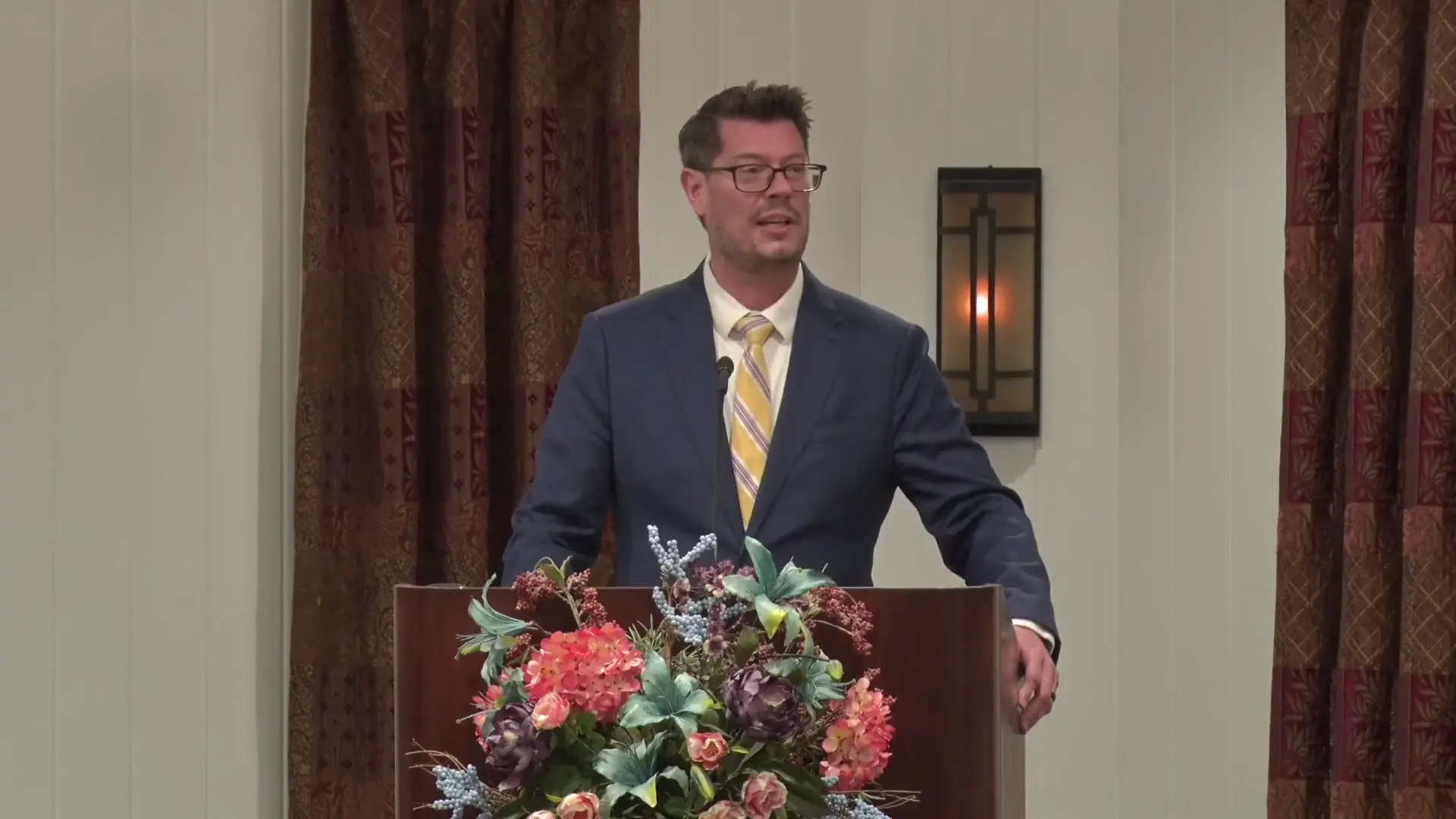
Sermon by Ryan McClureThe concept of the church extends beyond a mere building; it is defined as a body or assembly of Christian believers. This assembly, referred to as ecclesia in the Bible, signifies a called-out congregation of people spiritually drawn by God, emphasizing their communal life and worship. Jesus Christ Himself introduced this term, declaring in Matthew 16:18 that He will build His church on a solid foundation, asserting His ownership and promising that it will not be overcome by any force. This church is not a human institution or physical structure but belongs to Him; He builds it, sustains it, and leads it as the chief cornerstone. The church comprises those whom God has called, as seen in John 6:44, where no one can come to Christ unless drawn by the Father. This calling results in a transformation, moving individuals from darkness into His marvelous light, as described in I Peter 2:9-10. Members of this assembly are a chosen generation, set apart to proclaim His praises. The process involves repentance, baptism, and receiving the Holy Spirit, as highlighted in Acts 2:36-39, uniting believers in doctrine and fellowship. As the Head of the church, Christ establishes the guidelines for worship and living, instructing true worshipers to honor the Father in spirit and truth, as stated in John 4:23-24. Believers are called to align their lives with His commandments, showing love for Him by keeping His word, as emphasized in John 14:15 and 23-24. The church serves as a training ground where this assembly learns to overcome their former ways, putting on a new nature created in righteousness and holiness, as taught in Ephesians 4:20-24. Ultimately, the church is an assembly of God's called-out people, led by Christ, who follow His teachings and strive to overcome the world. It is not defined by human preferences or lists of desired attributes but by adherence to His Word and guidance, preparing believers for roles in His coming Kingdom.
The Purpose of the Church
Feast of Tabernacles Sermon by John W. RitenbaughThe church is often misunderstood as a mere building, but it is far more than that. It is described in a faint metaphorical sense as a building, with believers as living stones being built into a spiritual house, a holy priesthood to offer spiritual sacrifices acceptable to God through Jesus Christ. Scriptures portray the church as God's building, with Jesus Christ as the chief cornerstone, and the whole structure being fitted together into a holy temple, a dwelling place of God in the Spirit. This building is unique, alive, and designed by a master designer as a spiritual habitation, distinct from any ordinary structure made of concrete or steel. Beyond the building metaphor, the church is more frequently depicted as a living body, specifically the body of Christ. Christ is the head, seated far above all powers, with all things under His feet, guiding the church which is His body. This body is a living organism, composed of various parts gathered from different places, connected and functioning together under His direction. Each part contributes to the growth and edification of the body in love, equipped by apostles, prophets, evangelists, pastors, and teachers to reach the unity of faith and the fullness of Christ. The body is not static like a building but moves and operates, carrying out its purpose. The church as the body of Christ unites both Gentiles and Israelites into one new man, breaking down walls of separation through His sacrifice on the cross, reconciling them to God in one body. There is one body and one Spirit, emphasizing the unity of the church as a spiritual organism, bound by common elements that draw its members together. This body exists wherever these unifying elements are found, not confined to a single corporate organization, but alive and directed by its head, Jesus Christ, to fulfill a specific function.
Unity and Division: The Blessing and the Curse (Part One)
'Ready Answer' by Charles WhitakerUnity is fundamental to Christianity, and God facilitates the extraordinary peace that Christ has bequeathed by calling us into a unified body. As Paul admonishes the Colossian church, let Christ's peace control you, for God has called you into this peace by bringing you into one body. This tight coupling of Christ's gift of peace with unity reflects the many believers forming one body, as Christ anticipated in His prayer. Paul further uses the analogy of the body to illustrate the unity of the church in his remarks to the people of God in Rome and Corinth, emphasizing a lack of friction or competition between the parts that make up the whole. In contrast, division within the church, sown by the adversary, manifests as factions and schisms, showcasing human nature at work among Christians. Such divisions emerge where God's people are not fully committed to living His way of life, reflecting a lack of repentance within a congregation.
Jesus Christ: First Savior, Second High Priest, Third King
Sermon by John W. RitenbaughThe church is described as the Body of Christ, a profound metaphor indicating that it completes or fills out Christ. As the Head, He directs the Body to carry out His will, suggesting that Christ perceives Himself as incomplete until the process of adding members to His Body is fully realized. Each person added to this Body moves Christ and His purposes toward completion, as the total number of church members is not yet reached. This intimate union means that Christ is boundlessly united by spiritual love with every member of the church, serving as a major source of confident hope that He can enable us to persevere until we join Him in the Kingdom of God. Christ has been given universal authority by the Father to use the church as His Body, including each individual member, as He sees fit in any situation and at any time, without needing further permission. This authority extends over all things in heaven and on earth, with nothing to restrain Him from taking action for His purposes, whether involving entire nations, angels, or any individual within the church. Each member is placed and used within His Body as it pleases Him, functioning like individual cells linked and directed by the Head to act according to His commands. The analogy of a husband and wife becoming one further illustrates the depth of Christ's love for the church. Just as a husband loves his wife as his own body, Christ loves the church, having given Himself for her to sanctify and cleanse her, presenting her as glorious and without blemish. This unity with every cell within His Body can be counted on to work for our eternal benefit, showcasing the boundless love and commitment Christ has for His church.
Don't Leave the House!
Sermon by John W. RitenbaughThe church is portrayed as a living body, a dynamic organism with Christ as its Head. In I Corinthians 12:12-13, it is clear that just as a body is one with many members, so is Christ's body, the church, unified despite its diversity. All are baptized by one Spirit into this single body, emphasizing unity across differences. Verses 24-27 further illustrate that God has composed the body so that every part cares for the others; if one suffers, all suffer, and if one is honored, all rejoice, showing the interconnectedness of each member as the body of Christ. Ephesians 1:21-23 establishes Christ's authority over all, with Him as the Head of the church, which is His body, the fullness of Him who fills all. This vital relationship means the body cannot function without its Head, and the Head requires the body to operate, highlighting mutual dependence. Ephesians 4:3-6 urges the body to maintain unity in the Spirit, emphasizing one body, one Spirit, one hope, one Lord, one faith, one baptism, and one God, reinforcing the singular, cohesive nature of the church. Each member bears individual and corporate responsibility to respond to the Head's commands, ensuring the body's well-being. The church is not merely an institution but a society living in vital connection with Christ, filled with His own life. This connection demands that every part strives for unity, as disunity risks being cast off, much like the body rejects what does not belong. Through this metaphor, the church is seen as solidly locked into a singular purpose, striving to align with the mind of its Head.
Unity (2006)
Sermon by John W. RitenbaughLike the symphony orchestra, only as an instrumentalist submits to the leader, working with the other members of the ensemble, can unity be accomplished.

Biblical Symbolism (Part Four)
Bible Study by Richard T. RitenbaughUnderstanding biblical symbols gives a reader insight into what God is teaching His people through common metaphors. It also aids in opening up prophecy.
Together We Stand - But on What?
Sermon by Martin G. CollinsPaul, using the body analogy in I Corinthians, focuses on the need for unity and inter-relatedness by concentrating upon sound doctrine.
Don't Go Out of the House!
Sermon by John W. RitenbaughThe term house can mean structure, family, kingdom, or church of God. The instruction to us personally is to not leave the church or fellowship of faith.
Four Views of Christ (Part 7)
Sermon by John W. RitenbaughOur lives parallel what Christ experienced: crucifixion, burial, resurrection, and glorification. The death of self must precede resurrection and glory.
Many Are Called, But Few Are Chosen (Part Six)
Sermon by Martin G. CollinsLike the four groups of seeds exposed to various qualities of soil, many have heard the true gospel, but few have remained faithful after the onslaught of hardship.
Government (Part Six)
Sermon by John W. RitenbaughThe ministry's authority consists of teaching, edifying, and equipping the members for sainthood, but not to wield dictatorial power over their lives.
Hope to the End
Sermon by John W. RitenbaughPeter, while warning about impending suffering, nevertheless distinguishes himself as the apostle of hope, keeping our minds on what is to be rather than what now is.

The Lord's Nourishing and Cherishing
Sermon by Martin G. CollinsThe marriage covenant must be elevated to the stature of Christ and the church. A caring husband must love his wife as he nourishes his own physical body.

Reflections on the COVID-19 Pandemic
Sermon by David C. GrabbeLessons learned from COVID, as well as possible reasons God allowed or caused the pandemic to sweep through the church and wreak havoc on Feast observance.