


Filter by Categories

The Harvesting of the Firstfruits
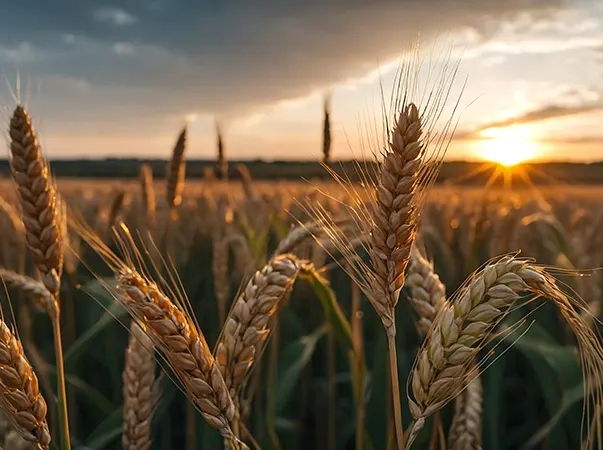
'Prophecy Watch' by Bill KeeseeThe harvest of firstfruits is Christ's early harvest of those He calls into His church, who become His Bride. It parallels Israel's spring grain harvest, which began with the wavesheaf, fulfilled by Christ as the first of the firstfruits, and culminated at Pentecost. Ancient barley harvesting suggests how the harvest unfolds. Grain was cut while still white, before it was fully ripe, so that it would not fall from the husk. Christ's words in John 4:35, that the fields are already white for harvest, point to this timing. The cut stalks were bound into sheaves and stood together in shocks to dry and mature off the ground, then carried to the threshing floor, threshed, and winnowed. Revelation 14:14-16 shows Christ with a sharp sickle reaping the harvest of those who are His. A separate grape harvest by an angel, crushed in God's winepress, is one to avoid. If the analogy holds, the cutting may have begun when the church fractured and people left apostasy in stages. The sheaves may be the small groups meeting each Sabbath, and the shocks the scattered fellowships that sustain them while they mature. Christ guards the grain so none is lost (John 6:39). The threshing floor may represent the Place of Safety, where trials shake believers from their self-centered shells and merge them into unity, with group affiliations no longer mattering. Winnowing is the resurrection, which purifies the firstfruits. Tares are removed in stages as Christ's return nears. Grain left in the field corners, gleaned by the poor, may be those left outside the Place of Safety to serve the spiritually hungry in the Great Tribulation, proving themselves faithful even at the cost of their lives. This reading is speculation, but if the harvest has begun, the wait is short and patience is required.
God's Spiritual Harvest
Sermon by Martin G. CollinsThe Harvest of Firstfruits holds a central place in understanding God's plan as revealed through His holy days. Leviticus 23:9-21 outlines the wave sheaf offering, a significant event marking the beginning of the spring harvest with an omer of barley, known as the first of the firstfruits. Each Israelite with a harvest was required to present this offering, which a priest would wave before God for acceptance, signifying a thankful acknowledgment of God as the Giver of the harvest and dedicating it to Him. This period of harvest, culminating in Pentecost, also called the Feast of Weeks, emphasizes the firstfruits of God's Kingdom. The wave sheaf offering, representing a small initial harvest, initiates the count to Pentecost, which concludes the early harvest. On the 50th day, special offerings are brought, including two wave loaves baked with leaven, waved before God as a picture of His gracious acceptance of fallible human beings into His Kingdom. The entire 50-day period from the wave sheaf to Pentecost portrays God's work with His firstfruits, starting with the acceptance of Jesus Christ as the perfect sacrifice and High Priest, and extending to the time when all His brothers and sisters fully enter His Family. Pentecost serves as a reminder that the church represents only the first small harvest of those called to salvation out of the world, a unique opportunity to prepare for the coming Kingdom of God through the power of His Holy Spirit.
The Endurance of the Firstfruits (Part One)
CGG Weekly by David C. GrabbeThe day of Pentecost, also known as the Feast of the Firstfruits and the Feast of Weeks, holds a unique place among the annual holy days as it requires counting to determine its date each year. This counting, from the day after the Sabbath when the sheaf of the wave offering is brought, involves tallying seven complete Sabbaths, a process that carries a sense of recording and recounting as one progresses toward the feast. The Feast of Weeks draws attention not just to a single day, but to the entire duration of time leading up to it, emphasizing the growth process between when God accepts the Wavesheaf on our behalf and when He harvests us. The fifty days of the count symbolize the years of spiritual growth, representing the time during which He is spiritually perfecting us. Pentecost, as a feast day, is a celebration of success, acknowledging the completion of a task well done, much like rejoicing over a successful harvest after hard work and risk. We celebrate, in advance, the success of this spiritual harvest, confident and joyful that He will complete the work He has started in us.
The Endurance of the Firstfruits (Part Two)
CGG Weekly by David C. GrabbeThe Parable of the Sower and the Seed exemplifies a number things that can happen to prevent us from having a place in God's spiritual harvest.
Holy Days: Pentecost
Bible Study by Earl L. HennThe Feast of Pentecost pictures the harvest of firstfruits, God's elect in this age. On it, God sent His Spirit to aid them in their spiritual growth.
Pentecost's Two Leavened Loaves (Part Four)
CGG Weekly by David C. GrabbeThe Pentecost offering of two loaves contains the idea of difference, while the New Testament Pentecost in Acts 2 shows differences being divinely overcome.

The Wavesheaf Offering
'Personal' from John W. RitenbaughMost know little about the wavesheaf offering, even though it represents one of the most significant acts: the resurrection and ascension of Christ!

The Two Wave Loaves of Pentecost
Sermon by David C. GrabbeThe offerings of the Old Testament are like divine parables, acted out to teach about the Messiah, unveiling a beautiful picture once we understand the symbols.
Why Count Fifty Days?
Sermon by Richard T. RitenbaughThe Bible has much to say about the number fifty, such as counting 50 days to Pentecost, the measurements of the Tabernacle, and the 50 year Jubilee.
Pentecost, Consistency, and Honesty
Sermon by John W. RitenbaughThe firstfruits harvest begins with the Wavesheaf, which the priest waved before God on the day after the weekly Sabbath that falls within the Days of Unleavened Bread (Leviticus 23:9-16). It was accompanied by a burnt offering of a lamb, a grain offering, and a drink offering, and no one could eat of the new harvest until it was made. Pentecost, the fiftieth day, is the Feast of Weeks or Firstfruits, and it completes the harvest that Wavesheaf Day began. Both are harvest celebrations. Because Pentecost has no fixed date, it must be counted each year, beginning on the Sunday after that weekly Sabbath and counted inclusively in the Hebrew manner, so it always falls on a Sunday. Jesus is the first of the Firstfruits and the reality of the Wavesheaf. He rose and ascended to the Father to be accepted on Sunday morning, the day after the weekly Sabbath (John 20; I Corinthians 15:20). The offering had to be grain the Israelites had sown themselves (Exodus 23:16), because an offering that costs the offerer nothing is unacceptable (II Samuel 24:23-24). It also had to be free of heathen corruption (Leviticus 22) and be made at the Tabernacle (Deuteronomy 12). Therefore Israel made no Wavesheaf offering in Joshua 5, and eating the old corn of Canaan does not alter the counting rule.
Boaz and Pentecost
Sermon by Richard T. RitenbaughThe name of Boaz (a type of Christ) appears many times more than Ruth (a type of the church), indicating Christ's intense work on behalf of the church.
Countdown to Pentecost 2001
'Personal' from John W. RitenbaughHow does one count to Pentecost when Passover is on a weekly Sabbath, making the Last Day of Unleavened Bread the only other available Sabbath to begin the count?

The Appointed Weeks of Pentecost
Sermon by David C. GrabbeEach day in the count is a reminder to consider what we are sowing and what we are cultivating because it will assuredly come to fruition and then evaluation.
Psalms: Book Two (Part One)
Sermon by Richard T. RitenbaughThe Pentecost season generally corresponds to Book II of the Psalms, Exodus, and the story of Ruth. Major themes include exile, separation, and redemption.
Principled Living (Part Six): Becoming Holy
Sermon by Richard T. RitenbaughPentecost forces us to stand out from the crowd, separated as firstfruits for sanctification and holiness. God has called us to be different.

Did Israel Offer the Wavesheaf in Joshua 5?
Article by David C. GrabbeFor decades, the church of God has struggled with counting Pentecost, especially in years when Passover falls on a Sabbath. Does Joshua 5 hold the key or not?
Pentecost and Hope
Sermon by Richard T. RitenbaughSimeon's life serves as a precursor to that of God's called-out ones, demonstrating the elements necessary to bring a person to spiritual maturity.
Themes of Ruth (Part Three): Redemption
Sermon by Richard T. RitenbaughJesus redeemed us with His shed blood from the penalty of our sins, but He also works as our High Priest, continually redeeming us until we are resurrected.
God's Investment in You
Sermon by Mark SchindlerGod wants to protect His investment in us, calling those whom He knows will exercise the zeal, and willingness to sacrifice, to complete the project.