


Filter by Categories
Passover (Part Two)
Sermon by John W. RitenbaughThe Passover is named for the passing over of the Israelites, who remained in their homes while the Death Angel moved through Egypt. This event, distinct from the sacrifice, defines the day, as the sacrifice itself came to be named because of God's passing over. Passover and the Days of Unleavened Bread are two separate memorials of closely occurring but distinct events, to be observed on separate days, with Passover on the fourteenth and the first day of Unleavened Bread on the fifteenth, as God's Word clearly commands. The significance of God's passing over is central to understanding the purpose of Passover. It is not merely about the killing of the lamb, but encompasses a series of detailed instructions that must be followed. These include selecting the lamb, killing it, applying the blood to the doorposts and lintel, roasting it in fire, eating it in haste, and not leaving the house until morning. Even after the Death Angel passed over, further actions were required to complete the keeping of Passover, showing that God's commands remained unchanged even after the immediate danger had passed. God's purpose in the Passover, highlighted by His passing over the Israelites, emphasizes a lifelong process of obedience, not just a singular act of sacrifice. Eating and drinking of the Passover, as commanded, signifies this ongoing commitment. God's Word remains firm that unless one partakes as instructed, there is no life in them, underscoring the importance of adhering strictly to His commands regarding this event.
Passover (Part Four)
Sermon by John W. RitenbaughIn the context of observing God's ordinances, the significance of timing and location during the first Passover is paramount. God's instructions were clear that the Passover lamb was to be killed at ben ha arbayim, the twilight period following sunset, marking the beginning of the fourteenth day of the first month. This timing ensured that the entirety of the Passover events occurred on the fourteenth, distinct from the Feast of Unleavened Bread on the fifteenth. The lambs were killed at the houses of the Israelites, located in the land of Goshen, not assembled in Rameses or dwelling in tents. God's command emphasized the importance of remaining in their houses, as He would pass over the doors marked with blood to protect those within from the destroyer. The repeated mention of houses in the scriptures underscores that the Passover was to be observed in their homes in Goshen, a specific area distinct from other parts of Egypt, where God made a difference between His people and the Egyptians. At midnight on the fourteenth, the Death Angel passed over the houses of the Israelites, sparing them while striking the Egyptians. This event was accompanied by a great cry throughout Egypt, indicating the immediate and painful impact of the deaths. The Israelites, in fear and obedience to God's command, stayed in their houses throughout the night of the fourteenth, not daring to leave until morning, defined as boqer, the period following the night, lailah. God's instruction was to remain in their homes until boqer, ensuring no confusion or premature departure, aligning with the natural signal of dawn visible to all.
Passover (Part Three)
Sermon by John W. RitenbaughThe Passover is named for God's passing over the children of Israel while they remained in their houses. This significant event, marking God's protection over His people, is specifically noted to have occurred in their homes, not in tents or gathered elsewhere. This detail underscores the personal and intimate nature of God's deliverance as the Israelites were spared during this divine act. The importance of this setting in their houses is highlighted as a key element in understanding the circumstances of the Exodus and the departure of the children of Israel from Egypt.
Passover (Part One)
Sermon by John W. RitenbaughThroughout the history of God's church, in both Old and New Covenant times, the observance of Passover has been a primary target of attack. Satan seeks to undermine this festival, recognizing its profound significance to God's purpose. The Passover is foundational to the covenant relationship between God and His people. In the Old Covenant, God initiated His relationship with Israel through the Passover event. In the New Testament, Jesus Christ established the New Covenant on the night of His last Passover, introducing new symbols to commemorate His sacrifice as the true Passover Lamb. The importance of Passover is evident in its role as the beginning of eternal life. Without the sacrifice of Jesus Christ as mankind's Passover, there is no remission of sins and no forgiveness by God the Father. As John 1:29 declares, Jesus is the Lamb of God who takes away the sin of the world, a sacrifice capable of atoning for all sins of mankind throughout history. This sacrifice, planned from the foundation of the world as seen in Revelation 13:8, enables God to pass over the sins of all who accept it by faith. The term Passover itself is derived from the event of God passing over the houses of the Israelites in Egypt, sparing them while striking the Egyptians, as described in Exodus 12:24-27. This event, not the exodus from Egypt, is what the Passover commemorates. Leviticus 23:5-6 clearly distinguishes the Lord's Passover on the fourteenth day of the first month at twilight from the Feast of Unleavened Bread beginning on the fifteenth day, marking two separate festivals for two distinct events. Jesus Christ, as our Passover, was sacrificed for us, as stated in I Corinthians 5:7, purging the infection of sin from those who accept His sacrifice in faith. His death, a voluntary and perfect offering as highlighted in Hebrews 7:26-27 and Hebrews 10:10, is sufficient for all time, sanctifying believers and setting them apart for God's holy purpose. On the night of His last Passover, Jesus instituted the new symbols of bread and wine, representing His body and blood, commanding His followers to partake in remembrance of His death, as recorded in Matthew 26:26-28. The proper keeping of Passover is a matter of life and death, just as it was in the Old Testament when God passed over the homes of the Israelites. John 6:53-57 emphasizes that unless one eats the flesh and drinks the blood of the Son of Man, there is no life in them, underscoring the necessity of annual reaffirmation of the covenant through Passover to continue in a relationship with Christ. Without God's passing over, Israel would not have started on the road to their inheritance, and similarly, believers must reaffirm this covenant yearly to progress toward salvation. Jesus further illustrates the essential nature of Passover observance in John 13:8-15, stating that without participating in the act of footwashing, one has no part with Him, linking it with partaking of the bread and wine as integral to the New Testament Passover. Acts 4:10-12 reinforces that salvation comes only through Jesus Christ, the cornerstone, making the true keeping of Passover vital for eternal life.
Is the Passover Just a Sin Offering? (Part Two)
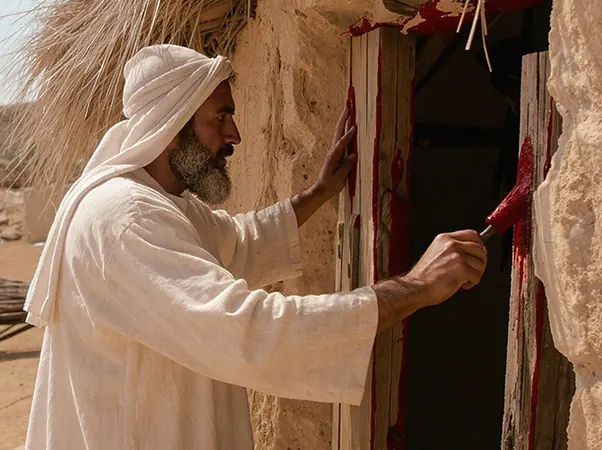
Article by David C. GrabbeGod passed over the houses of the children of Israel in Egypt on the night He struck the Egyptians, sparing the Israelite firstborn from the destroyer because of the blood on the doorposts and lintel. This passing over constituted an exemption, expressed by the Hebrew term pecach, in which God omitted any mention of Israel's idolatry and other sins rather than providing atonement or legal justification for them. The blood served as the sign of the life of the lamb given to redeem those within each house from Pharaoh's legal claim and bondage, not as a symbol of sins forgiven. God acted in this manner because of His covenant with Abraham, which obligated Him to preserve and deliver Abraham's descendants despite their grievous rebellion. He remembered that covenant when He heard Israel's groaning, chose to spare them for the sake of His name, and thereby fulfilled His earlier promises that the nation would come out of Egypt with great possessions. This redemption established Israel as His firstborn nation, an act of mercy and grace in which He protected and purchased His people from their oppressor while executing judgment on Egypt. The emphasis throughout the instructions and later explanations remains on this deliverance and exemption, with the blood representing God's pledged protection and faithfulness rather than any payment for sin.
Why We Observe Passover and the Days of Unleavened Bread
Sermon by John W. RitenbaughWe keep Unleavened Bread because of what God did to bring us out of sin (typified by Egypt). While God compels us to make choices, He is with us all the way.

A Hidden Mystery in God!
Sermon by Martin G. CollinsBefore anyone can have fellowship before God, the obstacle of sin must be eliminated, which is a permanent barrier between us and God.
Unity (Part 8): Ephesians 4 (E)
Sermon by John W. RitenbaughThe group that one fellowships with is less important than the understanding that there is one true church, bound by a spiritual, not a physical unity.