


Filter by Categories
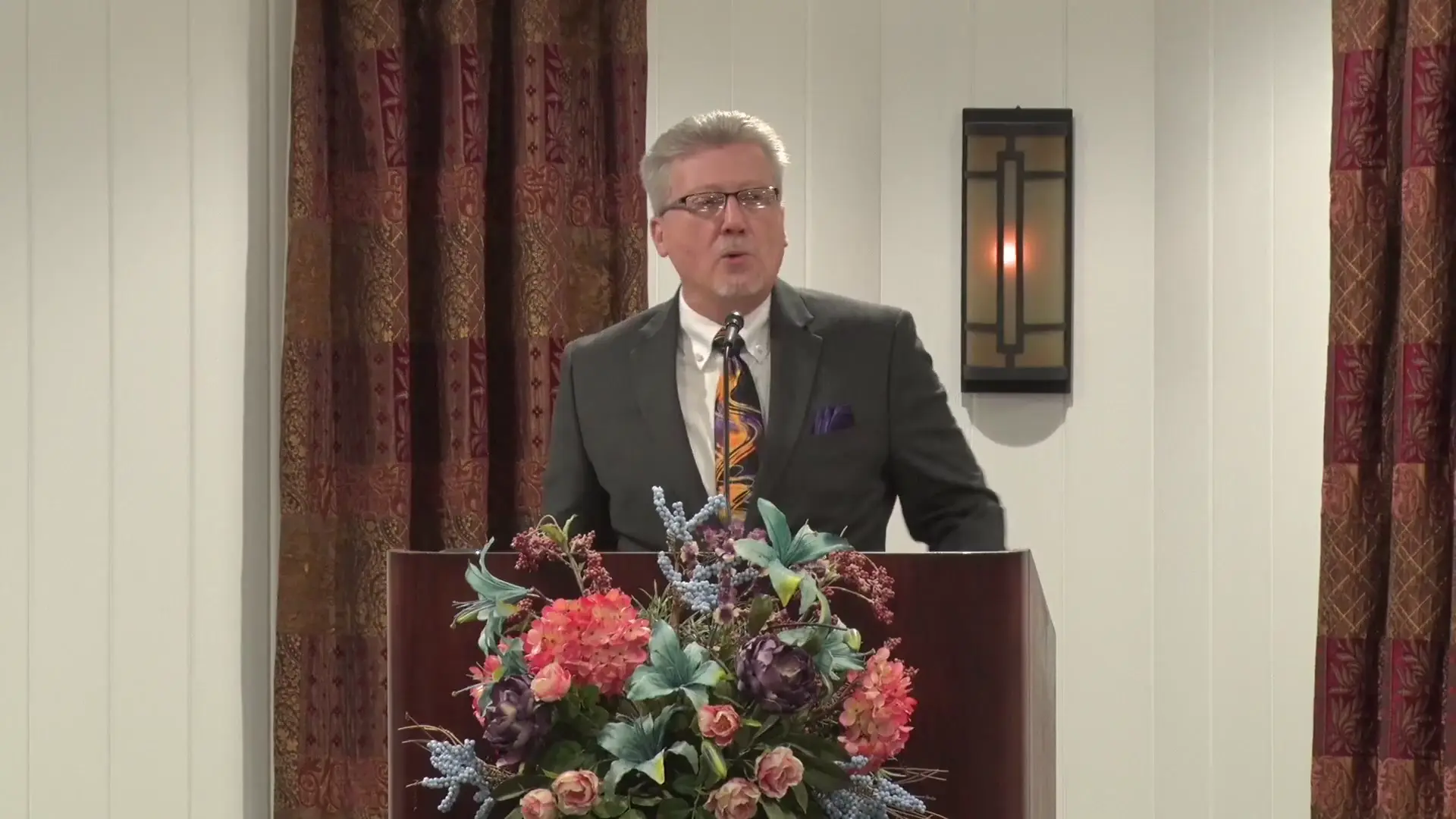
Joshua's Four Miracles (Part Two)
Sermon by Richard T. RitenbaughJoshua emerges as a central figure in the conquest of Canaan, embodying a profound example of faithfulness and leadership. As the Lord commanded Moses His servant, so Moses commanded Joshua, and so Joshua did, leaving nothing undone of all that the Lord had commanded Moses. His steadfast obedience is evident in Joshua 11:15, where he is commended for his unwavering commitment to God's directives. At the end of his life, as recorded in Joshua 24:29-31, Joshua, the son of Nun and servant of the Lord, died at the age of one hundred and ten, and Israel served the Lord all the days of Joshua and the elders who outlived him, reflecting the high regard for his leadership and the faithfulness of that generation. Despite his exemplary record, Joshua's humanity is revealed in the incident with the Gibeonites in Joshua 9, where he and Israel were deceived into making a treaty without consulting God. This mistake highlights the fallibility of even the most faithful human leaders, showing that they can be misled by outward appearances and fail to seek divine guidance on significant matters. The consequences of this decision, as seen in Joshua 9:18-27, lingered for generations, demonstrating that leaders and congregations must live with the results of their errors, yet God did not disqualify Joshua for this single misstep, acknowledging his overall record of faithful accomplishments. Joshua's role as a leader is further illustrated through the miracles associated with the conquest. In Joshua 10:1-11, during the battle at Gibeon, Joshua led a sudden march from Gilgal, and the Lord routed the Amorites with a great slaughter, casting down large hailstones that killed more enemies than the Israelite swords, underscoring God's direct intervention. Additionally, in Joshua 10:12-14, Joshua spoke to the Lord, requesting the sun to stand still over Gibeon and the moon in the valley of Aijalon, and the Lord granted this extraordinary extension of daylight to ensure a complete victory over the Amorite armies, proving that He fought for Israel. Through these events, Joshua's leadership is marked by both divine support and human imperfection. His prayerful dependence on God, as seen in the miracle of the long day, shows that God hears and responds to human pleas with miraculous provision. Ultimately, as recorded in Joshua 21:43-45, the Lord fulfilled His promises through Joshua's leadership, giving Israel the land, rest, and victory over their enemies, with not a word failing of all that He had spoken. Joshua stands as a model of striving to fulfill God's commands, despite occasional failures, encouraging a persistent pursuit of obedience and trust in divine assistance.
Joshua and the Gibeonites (Part Two)
CGG Weekly by David C. GrabbeJoshua, a faithful leader of Israel, encountered a significant challenge with the Gibeonites, a people from a large city in the future land of Benjamin, who deceived him and the Israelites to secure a covenant of peace. Despite his otherwise outstanding record of following God, Joshua and the Israelite leaders failed to seek God's counsel when making this agreement, as noted in the critical moment when they took provisions from the Gibeonites without consulting the Lord. This lapse led to the Gibeonites becoming protected slaves, bound to cut wood and carry water, though their deception was later discovered. Joshua and the Israelites expressed more frustration over the Gibeonites' trickery than their own mistake of not seeking divine guidance, acting instead on their own understanding. This incident set a regrettable precedent, turning aside God's clear command to drive out all inhabitants of Canaan. Although Joshua faithfully destroyed other cities and nations as God instructed after this event, the exception made for the Gibeonites had long-term consequences. After Joshua's death, the Israelites began to abandon their conquest, opting to enslave rather than expel the Canaanite descendants, citing Joshua's earlier decision as justification. This failure to fully obey God's command allowed evil to persist, leading to Israel's perpetual struggle with recognizing and addressing evil, a problem that began with the Gibeonites and spread over time.
Joshua and the Gibeonites
Sermonette by David C. GrabbeThe Gibeonites' pretense of coming from a distant land resulted in their slavery. Yet, through their influence, they contributed to Israel's destruction.

Joshua's Four Miracles (Part One)
Feast of Tabernacles Sermon by Richard T. RitenbaughThe journey of the children of Israel from slavery in Egypt to the crossing of the Jordan marks a significant transition, paralleled by the conquest of the Promised Land under Joshua's leadership. This new generation, unlike their rebellious fathers who perished in the wilderness, demonstrated greater faithfulness. Joshua, the son of Nun, led them with divine authority, as seen in his death at one hundred and ten years old, buried in Timnath Serah in the mountains of Ephraim. During his lifetime and that of the elders who outlived him, Israel served the Lord, reflecting a commendable devotion as recorded in Joshua 24:29-31 and Judges 2:7-10. Joshua, full of the spirit of wisdom as Moses had laid hands on him, was God's chosen leader, a type of Jesus Christ, sharing even the same name. The Lord spoke directly to Joshua after Moses' death, commanding him to lead the people across the Jordan into the land promised to their fathers, assuring him of His presence and success as long as he remained strong, courageous, and obedient to the law (Joshua 1:1-9). Joshua's unwavering commitment is evident in Joshua 11:15, where he left nothing undone of all that the Lord had commanded Moses. Under Joshua's guidance, the Israelites experienced miraculous events that underscored God's power and support in their conquest. The crossing of the Jordan River, at the height of its flood, was a pivotal moment where the waters stood still, allowing the people to cross on dry ground as the priests bore the ark of the covenant (Joshua 3:1-6, 14-17). This miracle exalted Joshua in the sight of Israel, assured them of God's presence to drive out their enemies, witnessed His might to the world, and taught them to fear the Lord forever (Joshua 3:7-10, 4:14, 21-24). Another significant event was the fall of Jericho, where obedience to God's instructions led to the walls collapsing after the Israelites marched around the city, blew trumpets, and shouted on the seventh day (Joshua 6:12-21). This miracle emphasized the importance of following God's commands precisely, trusting Him to fight their battles, and avoiding the cursed things of the world, which were devoted to destruction, to prevent contamination within the community. Though the conquest under Joshua was incomplete, this generation fared far better than their predecessors. Joshua's leadership, marked by strength, courage, and adherence to God's law, mirrors the greater leadership of Jesus Christ, guiding His people through their spiritual journey toward the Kingdom of God.
Trumpets and the Fall of Jericho
Sermon by Richard T. RitenbaughJoshua emerges in the narrative as the newly appointed leader and judge of Israel following Moses' death, having already demonstrated faithfulness as a spy alongside Caleb during the earlier reconnaissance of Canaan. He receives direct commissioning from the Commander of the Lord's army, identified as the One who became Jesus Christ, who appears with a drawn sword to signal impending personal judgment on Jericho. Joshua immediately recognizes his subordinate position, prostrating himself in worship and addressing the divine figure as his Master while inquiring about orders for his servant. This encounter supplies the precise instructions for the seven-day encirclement of the city, including the positioning of armed men, seven priests with shofars of jubilee before the ark, and the final long blast followed by the people's shout that causes the walls to crumble upon their foundations. Joshua transmits these commands without alteration, maintaining silence among the forces until the appointed moment and ensuring only warriors participate in the marches. His leadership produces the complete overthrow of Jericho, its king, and its mighty men, with the city devoted to destruction except for Rahab and her household, who are spared because of her faith and protection of the spies. Throughout, Joshua functions as a type of Jesus Christ in humility and service, while the Commander represents the divine Judge who comes to establish the inheritance. These events, marked by trumpet blasts, shouting, and the ark's presence, parallel the seventh trumpet of Revelation, when Christ returns to judge the nations, deliver the saints their reward, and inaugurate the Millennium as the antitype of Israel's possession of the land.
We Will Serve the Lord!
Sermon by Martin G. CollinsJoshua was deeply devoted to God and a loyal servant of Moses. After Moses died, Joshua assumed leadership of Israel and directed the crossing of the Jordan River on dry ground when the priests carrying the Ark of the Covenant entered the water. He led Israel in the conquest of the Promised Land, beginning with the encirclement of Jericho, whose walls collapsed after seven days. On one occasion he commanded the sun and moon to stand still, and God heeded that command for an entire day so that Israel could complete its victory. Joshua first appears in the biblical record during the second month after the exodus, when Moses appointed him to command Israel's forces against the Amalekites at Rephidim. There Joshua learned that victory depended not on military strategy but on God's intervention. He accompanied Moses partway up Mount Sinai, remained at the base camp for forty days while Moses received the law, and later guarded the tabernacle when it was moved outside the defiled camp. When two elders prophesied apart from the tabernacle, Joshua urged Moses to stop them, but Moses corrected the underlying jealousy and expressed the desire that all God's people might receive His Spirit. As one of the twelve spies sent into Canaan, Joshua, together with Caleb, brought back a faithful report and urged immediate possession of the land. God Himself declared that Joshua was filled with the Spirit, and Moses publicly laid hands on him to confirm that appointment. After forty years of wilderness wandering, Joshua, now eighty-five, received God's charge to be strong and courageous, to meditate continually on the book of the law, and to lead Israel across the Jordan. He obeyed the commander of the Lord's army at Jericho, executed the southern and northern campaigns, allotted the land to the tribes, and established cities of refuge and the Levitical order with the same precision that marked his military leadership. Near the end of his life Joshua delivered successive charges to the returning eastern tribes, to Israel's elders and officials, and finally to the entire nation at Shechem. In each address he rehearsed God's mighty acts, required wholehearted obedience to the law of Moses, warned against intermarriage with the remaining Canaanites, and called the people to choose once and for all whom they would serve. He concluded with the declaration that he and his house would serve the Lord. Although Paul does not name Joshua among the heroes of faith in Hebrews 11, the record presents him as a man whose unwavering loyalty to God prepared him for leadership, whose example of faith caused Jericho's walls to fall, and whose final exhortations underscore that true service to God requires both obedience and love.
The Faith of Israel
Sermonette by David C. GrabbeJoshua chapter 5 records the restoration of the covenant relationship between God and Israel through the circumcision of the males who had grown up during the wilderness years. This act renewed the sign of the Abrahamic covenant that had been neglected, enabling the people to keep the Passover and removing the reproach of Egypt that had left them in a condition of estrangement similar to their bondage. The event occurred on the eve of Passover, exactly forty years after the Exodus, and it marked the point at which God began to fulfill His promise to bring Abraham's descendants into the land. Joshua chapter 6 then shows the immediate outworking of that restored relationship. God gave precise instructions involving seven priests, seven trumpets, and seven circuits of Jericho on the seventh day, after which the walls fell. The use of jubilee trumpets proclaimed liberty and the return of Abraham's children to their inheritance rather than mere conquest. Before the walls collapsed, God declared that He had already given the city, underscoring that the victory was accomplished by His power alone. This sequence demonstrates that the faith exercised at Jericho reversed the unbelief that had caused the previous generation's rejection. The same generation that crossed the Red Sea by faith had later tested God ten times, resulting in forty years of knowing His rejection. Now, through renewed covenant obedience and the faith supplied by God, the nation was placed back on the path of inheritance. The events of Joshua 5 and 6 thus connect the deliverance from Egypt with entry into the Promised Land, illustrating how God's purposes advance through the faith He provides after periods of estrangement.
To the Third and Fourth Generation
Sermonette byWhen we yield to God, He no longer holds us accountable for the misdeeds of our ancestors. His mercy comes on those who love Him and keep His commandments.
A Leader in Every Man!
Sermon by Martin G. CollinsJoshua exemplifies the transformation of a boy into a good man and effective leader through decades of preparation under Moses. God trained him for forty years, during which Joshua demonstrated consistent faithfulness in battle against the Amalekites, at Mount Sinai, and as one of only two spies who trusted God's promise concerning the land. These experiences taught him that victory depends on God's blessing rather than human strength alone, that flagrant sin must be rejected, and that the majority is not always right when it turns from God. At age eighty-five Joshua received the command to lead Israel across the Jordan. God assured him three times to be strong and courageous, grounding that call in the promise of the land, the power of the written law that Joshua was to speak, meditate upon, and obey, and the unfailing presence of the Lord. Joshua responded by assuming command without presumption, ordering the people to prepare, and worshiping the Commander of the Lord's army at Jericho. He led with unselfish precision in dividing the land, establishing cities of refuge, and ordering the Levitical service. The text presents Joshua's life as the pattern for men whom God calls to leadership in the home and church. His combination of military skill, reverence for God's Word, and reliance on divine presence shows how a man fulfills the responsibility to guide others, reject the world's values, and prepare for the coming Kingdom.
Do You See God in Deuteronomy?
Sermon by John W. Ritenbaugh (1932-2023)Moses commanded Joshua at that time, declaring that his eyes had seen all the Lord had done to Sihon and Og, and affirming that the Lord would do likewise to every kingdom through which Israel would pass. Moses instructed Joshua not to fear those nations, because the Lord Himself would fight for him. When Moses pleaded to cross the Jordan and view the land, the Lord refused the request and directed Moses to ascend Pisgah, view the land from afar, and then charge Joshua with leading the people across to possess it. This directive established a clear transition in leadership. Moses' role of guiding Israel through the wilderness concluded, while Joshua's calling to secure and settle the land commenced without overlap or rivalry. God thereby prevented any potential interference with Joshua's work and removed the risk that the people would venerate Moses, whose popularity and unique prophetic stature could have led to idolatry. The change also served as a warning that sin receives no exemption on account of personal greatness, reinforcing that judgment operates without respect of persons. In the broader message, this sovereign ordering of leadership underscores the necessity of fighting for the inheritance, maintaining unity within the body, and offering spiritual sacrifices that strengthen the whole people as they advance toward the promise.

Spiritual Strongholds (Part Two): Faithful Trust
Sermon by Martin G. CollinsIn the book of Joshua the leader receives divine awakening after the costly defeat at Ai and is commanded to lead all the people of war in a second attack upon the city. God guarantees victory over the king, people, and land of Ai and directs a strategy of ambush rather than total miraculous intervention, requiring strict adherence to every instruction. Joshua conveys assurance of the Lord's steadfast presence, reminding the nation that although sin had broken faith with the covenant, judgment upon that sin opens the way for renewed blessing. After the victory he leads the people to Mount Ebal, constructs an altar of whole stones, offers burnt and peace offerings, inscribes a copy of the law, and oversees the public reading of blessings and curses before the entire assembly. These actions fulfill the commands given through Moses and visibly restore the covenant relationship. When the Gibeonites later approach under false pretenses, Joshua and the leaders examine their provisions yet omit any inquiry of the Lord, resulting in an oath that must be honored despite the deception. The narrative shows that Joshua's obedience brings success and covenant renewal while neglect of divine counsel produces enduring consequences, illustrating the principle that blessing follows faithful adherence to God's word and that the Lord remains the rear guard of His people when they walk in trust and repentance.
The Stones of the Jordan
Feast of Tabernacles Sermon by Clyde FinkleaAn overlooked prophecy in Matthew 3:7-9 refers to the stones placed in the Jordan River by the priests in Joshua's time, inscribed with the law of God.

Leadership and Covenants (Part Two)
'Personal' from John W. RitenbaughJoshua stands as a prime example of the leadership God seeks, one who consistently followed divine direction while guiding others. Chosen by God as an Ephraimite rather than Aaron or Moses' own children, Joshua remained at Moses' side from Israel's departure from Egypt until Moses' death. He accompanied Moses on Mount Sinai, waited through the entire period of forty days, led the Israelites to victory over the Amalekites, and stayed steadfast even when the nation rejected Moses' leadership, risking his life to uphold God's way. After receiving authority to succeed Moses, Joshua continued to demonstrate humility by submitting to the Commander of the Lord's army. The record notes that Israel served the Lord throughout Joshua's days and those of the elders who outlived him and had witnessed God's works. This pattern of faithful following produced effective shepherding that influenced an entire generation. In the larger development of leadership qualities, Joshua illustrates how God prepares individuals through service under proven leaders, training them to lead by example rather than self-interest, so that they in turn help others remain aligned with divine standards.
Numbers (Part Three): Poised at the Jordan
Feast of Tabernacles Sermon by Richard T. RitenbaughThe last chapters in Numbers describe a lengthy holding pattern in which not much seemed to happen. We must have patience as we wait for the Kingdom of God.
Deuteronomy (Part 3)
Feast of Tabernacles Sermon by John W. RitenbaughOur goal shouldn't merely be to be saved, but to finish the spiritual journey God has prepared for us, developing the leadership to help those who follow.