


Filter by Categories

The Lamb of Revelation (Part One)
'Prophecy Watch' by David C. GrabbeIn the book of Revelation, Jesus Christ is predominantly referred to as the Lamb, a title used twenty-eight times, highlighting His identity amidst visions of beasts, plagues, and destruction. Despite the apocalyptic context of judgment and ruin, He is consistently called the Lamb, a term that contrasts with the expected imagery of power and wrath, prompting a deeper exploration of its significance. This title differs from the passive, suffering Lamb of His first coming, as seen in prophecies where He remained silent before His shearers, offering no defense or retaliation against injustice. The use of lambs in Scripture extends beyond sin offerings to various purposes, including redemption, particularly evident in the Passover and the law of the firstborn in Exodus. God claimed Israel as His firstborn, redeeming them from Pharaoh through the Passover lamb, symbolizing an exchange of life due to a prior claim of ownership rather than atonement for sin. This redemption theme is reinforced in the requirement to redeem every firstborn male with a lamb, emphasizing God's ownership over His people. Redemption also applies to believers, as seen in the New Testament where Christ's blood redeems from the penalty of sin and rescues from the power of death held by the devil. This act buys back and liberates, ensuring that death no longer holds ultimate sway due to the promise of resurrection. Furthermore, there is a future redemption needed, beyond mere forgiveness, to transform the sinful nature and fully liberate from the flesh, enabling a life worthy of God's Kingdom and reflecting His complete image and likeness.

The Lamb of Revelation (Part Two)
'Prophecy Watch' by David C. GrabbeJesus Christ is referred to as the Lamb in Revelation more frequently than by any other name or title, emphasizing His role in redemption. Before the instructions for sin offerings were given, God commanded the Israelites to use a lamb to redeem their firstborn males, buying them back from Him who claimed them for Himself. This theme of redemption, which involves transferring ownership, aligns closely with the events depicted in Revelation. In the heavenly vision, the scroll, bearing the characteristics of a title deed for all creation, can only be taken and opened by the Lamb that had been slain. This Lamb, with seven horns symbolizing perfect strength and power, and seven eyes connected to the removal of Israel's iniquity and the restoration of true worship, embodies the essence of redemption. When the theme of redemption is applied to the mentions of the Lamb in Revelation, the imagery becomes clear. The Lamb's blood has redeemed individuals, forming them into a kingdom of priests, and He begins opening the seals not as a sin offering but as a redeemer claiming what belongs to Him. The scope of His redemption extends beyond Israel or the church, portraying Jesus Christ as the Creator, Heir, and Owner of all things. Despite resistance, as seen in the cataclysms following the opening of the seals, He ultimately succeeds, with angels proclaiming that the kingdoms of this world have become the kingdoms of our Lord and of His Christ, and He shall reign forever and ever. All human governments have been purchased, and all that remains is for the Lamb to redeem what is lawfully His. The Lamb, though not violent by nature, is filled with wrath as a jealous God, zealous for what He possesses, which can include tremendous destruction when necessary. His focus is not on providing atonement but on demonstrating ownership and realigning His creation with His government. On Mount Zion, the Lamb stands with 144,000 redeemed from the earth and from among men, singing before Him. Before the final judgments, those victorious over the beast sing the song of Moses and the song of the Lamb, echoing God's redemption of Israel from Egypt. In the closing chapters of Revelation, the Lamb and His Bride reflect a story of redemption, as Jesus Christ, the firstborn from the dead, is the Lamb of redemption. In the future, He will redeem what is His, including the church, Israel, Jerusalem, the Land of Promise, and all who have not rejected Him, as the whole creation groans awaiting the final redemption through His powerful work.
Is the Passover Just a Sin Offering? (Part Two)
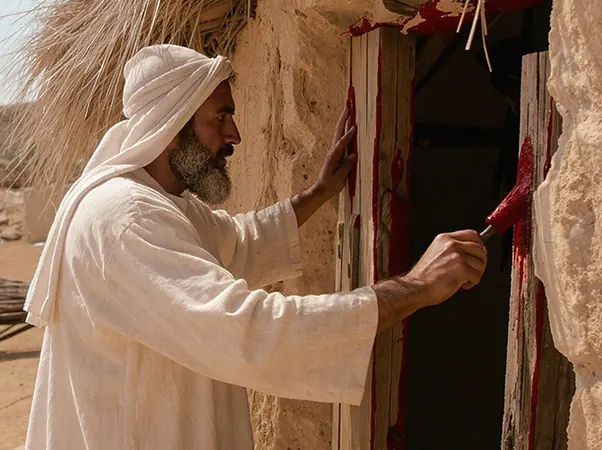
Article by David C. GrabbeThe Passover lamb served as the means of Israel's redemption from bondage to Pharaoh rather than as a sin offering for the forgiveness of sins. God instructed each household to select, prepare, and eat a lamb whose blood applied to the doorposts would mark the homes He would pass over during the judgment on Egypt's firstborn. This blood functioned as a sign of life and protection, demonstrating God's pledge to spare and deliver His people rather than symbolizing atonement. The emphasis throughout the instructions falls on consuming the specially roasted lamb as a meal eaten in haste, underscoring its role in the act of redemption. Scripture consistently presents the Exodus Passover in terms of purchase or redemption from Pharaoh's legal claim on the Israelites, not in terms of cleansing from sin. Because of His covenant with Abraham, God chose to exempt Israel, overlooking the idolatry present among them and delivering the nation as His firstborn. The blood on the doorposts therefore represented the lamb's life given to redeem those within each house, securing their separation from Egyptian judgment and their release from slavery so that God's promises to the patriarch could be fulfilled.

Passover: An Extraordinary Peace Offering
Sermon by David C. GrabbeThe Passover sacrifice is basically unconnected with atonement, but represents the peace and security which attends fellowship with God because of His acceptance.
The Spring Holy Days
Sermonette by Ryan McClureWe need to probe into the deeper meaning of the Spring holy days more than we have previously because God's wisdom is unsearchable.
Why the Transfiguration?
Sermonette by Richard T. RitenbaughPeter, James, and John heard the Father's praise of Jesus, declaring Him to be more important than the law (Moses) and the prophets (Elijah).