


Filter by Categories
Redeemed, But Waiting for Redemption
Sermonette by David C. GrabbeRedemption has past, present, and future aspects, and believers who have been redeemed from the law's curse and are continually redeemed through Christ's blood still await final redemption. Romans 8:23 calls this "the redemption of our body," when corruptible flesh, which houses the law of sin and death, is raised incorruptible and death is swallowed up in victory. Redemption from the death penalty does not by itself make anyone fit for immortal life. Flesh and blood cannot inherit the Kingdom, so a complete change of nature is required before believers are fully manifest as God's children. Ephesians 4:30 and 1:13-14 describe the Holy Spirit as the seal until "the day of redemption" and as a down payment, better than "guarantee," on the inheritance, which are the firstfruits of a much larger portion to come. Because the Spirit can be grieved and quenched, as Saul's example shows and David's fear implies, the firstfruits can be squandered through willfulness or carelessness. Luke 21:25-28 places this redemption at Christ's return, when He transforms the lowly body into conformity with His glorious body. Believers will then be freed from everything oppressive, including ill health, both deaths, and inner corruption. Future redemption is also promised to physical Israel and Judah, who will be brought into the New Covenant. Passover looks ahead to this fulfillment in the Kingdom, as Jesus' words in Luke 22:16 and Paul's "till He comes" show.
Themes of Ruth (Part Three): Redemption
Sermon by Richard T. RitenbaughThe concept of redemption carries a future dimension, reflecting a process that extends beyond the past and present into what is yet to come. As seen in Luke 21:27-28, Jesus speaks of His return, declaring that when the Son of Man comes in a cloud with power and great glory, it signals that redemption draws near. This indicates a future culmination where believers look up and lift their heads in anticipation of final deliverance. This future aspect of redemption aligns with the ongoing nature of spiritual growth and transformation. Just as God is continually drawing individuals out of worldly bondage toward His freedom, there is an expectation of a complete redemption at the resurrection. This ultimate redemption will align believers fully with His character, achieving a state of perfection and acceptance as His own. The process, evident in the expectation of Christ's return, underscores that redemption is not merely a singular event but a journey reaching its fulfillment in the future, when believers will be fully saved and transformed.

The Lamb of Revelation (Part One)
'Prophecy Watch' by David C. GrabbeIn most minds, lambs do not correspond to ideas of wrath and judgment, but the Lamb of God in Revelation is just that as our almighty Redeemer.

The Lamb of Revelation (Part Two)
'Prophecy Watch' by David C. GrabbeIn Exodus 13, lambs redeem the firstborn. The Lamb of God delivers sinners from the death penalty, but another redemption will occur at Christ's return.

Passover: An Extraordinary Peace Offering
Sermon by David C. GrabbeThe Passover sacrifice is basically unconnected with atonement, but represents the peace and security which attends fellowship with God because of His acceptance.
Is the Passover Just a Sin Offering? (Part Four)
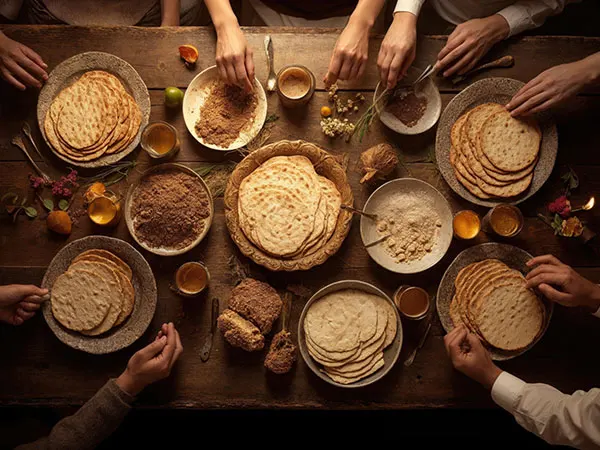
Article by David C. GrabbeJesus says that the Passover will be fulfilled in God's Kingdom, and His inclusion of bread in the service points to the nature of the redemption process.

Our Uniqueness and Time
'Personal' from John W. RitenbaughOur special position before God gives us an equally unique opportunity that we do not want to squander.
Uniqueness and Time
Sermon by John W. RitenbaughOur unique calling makes us a special possession of God. Sealed with a downpayment of God's Spirit, we have the obligation to glorify God by obedience.
The End
Feast of Tabernacles Sermon by Richard T. RitenbaughNoah's flood was an end, the temple's destruction was an end, Christ's second coming will be an end, and the Last Great Day will be an end and a beginning.
Do You Really Want Just Any Eternal Life?
Sermon by Martin G. CollinsWe have a natural desire for eternal life, but living endlessly would not be a blessing if our circumstances were miserable. Eternal life means quality of life.