


Filter by Categories
Redeemed, But Waiting for Redemption
Sermonette by David C. GrabbeRedemption, meaning rescue from the power of something oppressive, is not a single event but has past, present, and future aspects, just as Israel's Passover redemption from Egypt was only the beginning of her relationship with God. In the past, Christ redeemed us from the curse of the law (Galatians 3:13; 4:4-5) by paying the ransom with His perfect life, which corresponds to justification. God's law itself is not the curse; it is the law of liberty that shows how to stay free, while breaking it brings death and other curses. In the present, redemption continues through Christ's priestly mediation (Ephesians 1:7), but only for those who remain "in Him" by abiding in Christ and keeping His words; willful, practiced lawlessness ends that ongoing redemption. God does not always rescue from every circumstance, since some trials benefit us, but He most wants to redeem us from every lawless deed (Titus 2:14). In the future, redemption comes with the redemption of the body (Romans 8:23) at Christ's return, when corruptible flesh is changed to incorruptible spirit and we are fit to inherit the Kingdom. The Holy Spirit is the down payment sealing us until that day, yet it can be grieved and quenched, as Saul's example shows. Like salvation, we have been redeemed, are being redeemed, and await final redemption. Passover looks forward to that completion in the Kingdom.

Passover: An Extraordinary Peace Offering
Sermon by David C. GrabbePassover's theme is redemption, and redemption is a process rather than a single event. This is why Scripture speaks of it in both the past tense (Romans 3:23-25; Ephesians 1:7; Colossians 1:14) and the future tense (Luke 21:28; Romans 8:23-25; Ephesians 1:13-14; 4:30). The sin offering has already been fulfilled in Christ's death (Hebrews 7:27; 9:12-14; 10:12), and believers have been redeemed from the death penalty. But they still await redemption from the corrupted fleshly nature that incurs that penalty, the "body of death," so that they can fully manifest the image of their Creator (Titus 2:11-14). Final redemption comes at the resurrection, when the incorruptible nature is received (I Corinthians 15:50). That is why Jesus said He would not eat the Passover again until it is fulfilled in the Kingdom of God (Luke 22:16). The Exodus Passover pictured the beginning of this process, since Israel was purchased from Pharaoh and God passed over their sins in mercy rather than atoning for them. Forgiveness then comes within the New Covenant, entered through repentance and baptism, and not before it. The covenant's blood is God's pledge to make faithful believers spiritually complete (Hebrews 13:20-21). When that completion occurs, Passover will be fulfilled.
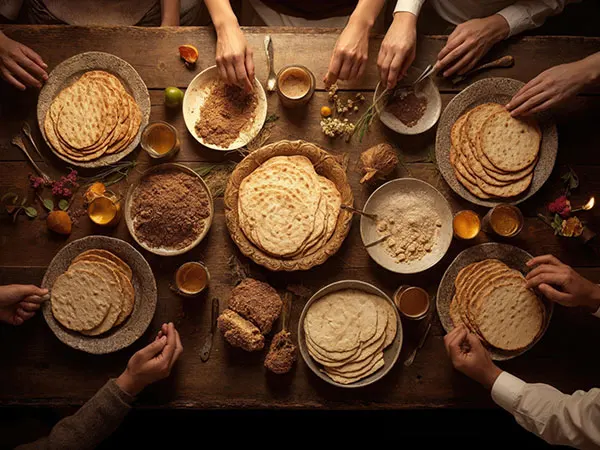
Is the Passover Just a Sin Offering? (Part Four)
Article by David C. GrabbeRedemption begins with Christ's sacrifice but is not complete until believers put on incorruption in His Kingdom. The Exodus Passover's major theme was redemption: God bought back His firstborn nation from Pharaoh's bondage, and the New Testament Passover follows that pattern. One redemption occurs when we accept Christ's atoning sacrifice as our sin offering, and there redemption and atonement overlap. Scripture also foretells a future redemption at Christ's return, when God resurrects or changes the faithful. Paul speaks of eagerly waiting for "the redemption of our body," and the Holy Spirit seals us "for the day of redemption" (Romans 8:23-25; Ephesians 4:30). This is why Jesus said He would not eat the Passover again until it is fulfilled in the Kingdom of God. Passover commemorates not only a past event but what that event set in motion. Having our past sins paid for would not by itself make us worthy of immortality, because without a replacement of our fundamental nature we would defile the Kingdom upon inheriting it. Flesh and blood cannot inherit God's Kingdom. God's plan is to redeem mankind from the death penalty and also from a sinful nature, this "body of death." Final redemption comes when we fully take on our Creator's incorruptible nature, with minds like His, and at that point the Passover is fulfilled. In the meantime, Christ lives in us as we partake of the living bread, and we are saved by His life.
Themes of Ruth (Part Three): Redemption
Sermon by Richard T. RitenbaughRedemption functions as an ongoing process with distinct past, present, and future dimensions rather than a single event. In the past, Christ redeemed believers from the curse of the law by becoming a curse for them. In the present, He continues to redeem them from every lawless deed while purifying them as His own special people zealous for good works, repeatedly drawing them out of worldly slavery as they stumble, repent, and reestablish themselves in freedom. In the future, their full redemption will arrive at the return of the Son of Man. This same pattern appears throughout the book of Ruth, where the theme surfaces in multiple episodes before its climax in chapter 4, illustrating that redemption, like justification, sanctification, and salvation, unfolds across time. The wave loaves offered at Pentecost, baked with leaven yet accepted as firstfruits, represent people who have been redeemed from sin, sifted through trials and heat, justified, sanctified, and prepared for priestly service. Initial redemption establishes a legal standing before God through the blood of Christ, placing believers in a new category as His special people. From that position God works to redeem their minds and character, buying back the corruption absorbed in former lives and aligning them with the mind of Christ until they reach complete maturity and are waved before Him as acceptable. Boaz's instruction, provision, and eventual acquisition of Ruth demonstrate this progressive work of drawing a foreigner into the community of God's people, supplying sustenance, guidance, and ultimately full belonging. The entire sequence begins with the voluntary death of the Creator to secure release from the world and advances through sustained effort until the redeemed stand complete, glorified, and ready for eternal service.

The Lamb of Revelation (Part One)
'Prophecy Watch' by David C. GrabbeIn most minds, lambs do not correspond to ideas of wrath and judgment, but the Lamb of God in Revelation is just that as our almighty Redeemer.

The Lamb of Revelation (Part Two)
'Prophecy Watch' by David C. GrabbeIn Exodus 13, lambs redeem the firstborn. The Lamb of God delivers sinners from the death penalty, but another redemption will occur at Christ's return.
The Lamb of Revelation
Sermonette by David C. GrabbeIn Revelation, John refers to Christ as the Lamb more than any other designation because of His role of Redeemer, which is different from a sin offering.
Salvation: The Path to God's Kingdom (Part One)
CGG Weekly by John ReissGod's plan of salvation has past, present, and future aspects, and each has its own rewards. The Bible uses 'salvation' and its related words just over 600 times.

Our Uniqueness and Time
'Personal' from John W. RitenbaughOur special position before God gives us an equally unique opportunity that we do not want to squander.
Uniqueness and Time
Sermon by John W. RitenbaughOur unique calling makes us a special possession of God. Sealed with a downpayment of God's Spirit, we have the obligation to glorify God by obedience.
The Awesome Cost of Salvation
Sermon by John W. RitenbaughWe need to be sobered at the awesomeness of the cost to set us free from sin—what the Creator endured. We have been purchased, and are obliged to our Purchaser.
By This We Know Love!
Sermon by Martin G. CollinsAs God's people keep God's law in its spiritual intent, they begin to think like the Father and His Son, both of whom habitually do good.
Psalms: Book Two (Part One)
Sermon by Richard T. RitenbaughThe Pentecost season generally corresponds to Book II of the Psalms, Exodus, and the story of Ruth. Major themes include exile, separation, and redemption.
The Fourth Commandment (Part 2)
Sermon by John W. RitenbaughThe Sabbath reminds us that God is Creator and that we were once in slavery to sin. The Sabbath is a time of blessing, deliverance, liberty, and redemption.
Beating the Rat Race (Part Five)
CGG Weekly by Richard T. RitenbaughIf we will simply sit still, be patient, and let events run their course without trying to interfere in them, we will soon learn how God works.