


Filter by Categories
Was Jesus Christ's Body Broken? (Part Three)
CGG Weekly by David C. GrabbeJesus Christ's sacrifice was a voluntary act of supreme victory, not a defeat. He held His head up until the end, bowing it only when He gave up His spirit, having finished perfectly what the Father had given Him to do. He died after living a completely sinless life, fulfilling the sin offering, and gave Himself in complete devotion to the Father, up to His death. He served humanity to the utmost and poured Himself out, reconciling God and men to make harmony and fellowship possible. His crucifixion was not a defeat; though marred beyond recognition, Jesus Christ remained unbroken. Through the Passover, symbolized by bread and wine, we unite with Him in a sacrificial meal, sharing in communion and fellowship. The bread, broken for sharing, represents His living flesh, a symbol of life and eternal vitality, not death or a broken body. He described Himself as the living bread that came down from heaven, offering eternal life to those who partake of it. Thus, eating the bread symbolizes taking in and being joined to His sinless, living life, abiding in Him as He abides in us.
Jesus Christ's Trial (Part One)
Sermon by Martin G. CollinsJesus Christ's sacrifice was marked by His voluntary surrender, demonstrating His complete control over the events of His arrest in the Garden of Gethsemane. He delayed in the Garden as the arresting party approached, then went forth to meet them, willingly giving Himself up. Even at the moment of arrest, He displayed power over the soldiers, showing that no amount of weapons or troops could have forced Him if He had been unwilling to die. His death was not coerced; He could have walked away as He had on previous occasions, but He chose to submit to save us. This voluntary act was further evidenced when He declared His divine identity with the words "I Am," causing the arresting party to draw back and fall to the ground, overwhelmed by His presence. Through this, He made it clear that He was more than man—God manifested in flesh—and that His death was a deliberate choice for our salvation.
Knowing Christ (Part 2)
Sermon by John W. RitenbaughChrist's sacrifice began with His voluntary decision to relinquish the power, glory, and privileges of His office as Creator and second in command of the universe. He placed everything on the line, knowing that sin would end all, and therefore trusted the Father to save, empower, strengthen, and sustain Him through every step. This voluntary act extended through subjection to place and time, service as the Messenger of the covenant, and preparation as mankind's sinless Savior and High Priest. He learned obedience through suffering that completed Him for a role He had never held before. Scripture presents Him as the archegos who went before, setting the pattern others must follow. Though possessing perfect understanding of every consequence, He still summoned courage to face rejection, persecution, and the cross, praying that the cup might pass yet concluding, "Nevertheless, not My will, but Your will be done." Philippians 2:5-8 records that He made Himself of no reputation, took the form of a servant, and became obedient unto death, even the death of the cross. This voluntary surrender constituted Him a living sacrifice whose entire life, not merely His crucifixion, pleased the Father as a sweet-smelling savor. The same principle now requires Christians to present their bodies and minds as living sacrifices, walking in love, offering praise, serving others, and remaining willing to suffer for righteousness' sake. Because Christ first chose this path, believers gain access to the Father and are equipped to function as a spiritual priesthood whose sacrifices, though imperfect, are accepted through Him.
The Sacrifices of Leviticus (Part 2)
Sermon by John W. RitenbaughJesus Christ's sacrifice is presented as voluntary at its very foundation, rooted in the design of the burnt offering described in Leviticus 1. This offering, unlike the trespass and sin offerings, was a sweet savor to God, meaning it was not given because of sin but represented complete, wholehearted devotion. It was offered "of his own free will," a phrase that can also be translated "for his acceptance," indicating that the offering was voluntary on the part of the offerer, just as Christ's sacrifice was voluntary on His part. No one forced Him to become the sacrifice; He volunteered to the Father, saying, in effect, "I will go. I will be the sacrifice." Nobody had to compel Him, for He acted out of love for His creation. This voluntary nature is confirmed in Philippians 2:5-8, where Christ, being in the form of God, "made Himself voluntarily of no reputation," taking the form of a bondservant and becoming obedient even to death on the cross. This mindset of voluntary self-surrender is what believers are called to emulate, working out their own salvation with fear and trembling as God works in them to will and to do His good pleasure. The voluntary aspect connects directly to the broader teaching that Christ's sacrifice was not merely His death for sin, but His entire life lived in total, willing devotion to God from beginning to end. Ephesians 5:1-2 shows that Christ "loved us and given Himself for us, an offering and sacrifice to God for a sweet-smelling aroma," language that points not to the crucifixion but to the manner in which He lived. He was a sacrifice from the beginning, not just at the end, giving Himself continually in service, as depicted in the tireless, laboring servant portrayed in the Gospel of Mark. This voluntary self-giving is what qualified Him to also be the Redeemer through His death. His perfect life, freely and willingly offered, satisfied God's holy requirement, and this satisfaction is the true meaning of "atonement" in the burnt offering—not a covering for sin, but a pleasing fulfillment of devotion that brought God satisfaction, since God is not only satisfied by death for sin but even more so by a life of willing obedience. This voluntary devotion is meant to be paralleled in believers' lives. Just as the Israelite was not compelled to bring the burnt offering, so believers are not forced into obedience by God, but are led by His Spirit into truth, making their own choices to present themselves as living sacrifices, as Paul urges in Romans 12:1-2. Every time a person willingly obeys God's instructions rather than following human nature, that person offers a voluntary, living sacrifice, following the same pattern of surrender that Christ established. Thus, Christ's voluntary sacrifice—both in His life and His death—becomes both the basis of acceptance before God and the pattern believers are called to imitate through their own voluntary, daily surrender.
Principled Living (Part One): Imitating Christ
Sermon by Richard T. RitenbaughFollowing Jesus requires absolute commitment, often involving sacrifice and discomfort. We must be willing to give up family and societal ties for God's sake.
Preternatural, Natural, Unnatural, Supernatural (Part Three)
Sermon by John W. Ritenbaugh (1932-2023)Christ's life and death were supernatural in that He had God's Spirit from the beginning, giving Him power over things, as well as undeniable logic.
According to His Pleasure
Sermon by Martin G. CollinsGod 'took pleasure' in Christ's being bruised, not in the pain and suffering that His Son endured, but in the ultimate goal of adding to His Family.
Peace, Peace (Part One): Peace with God
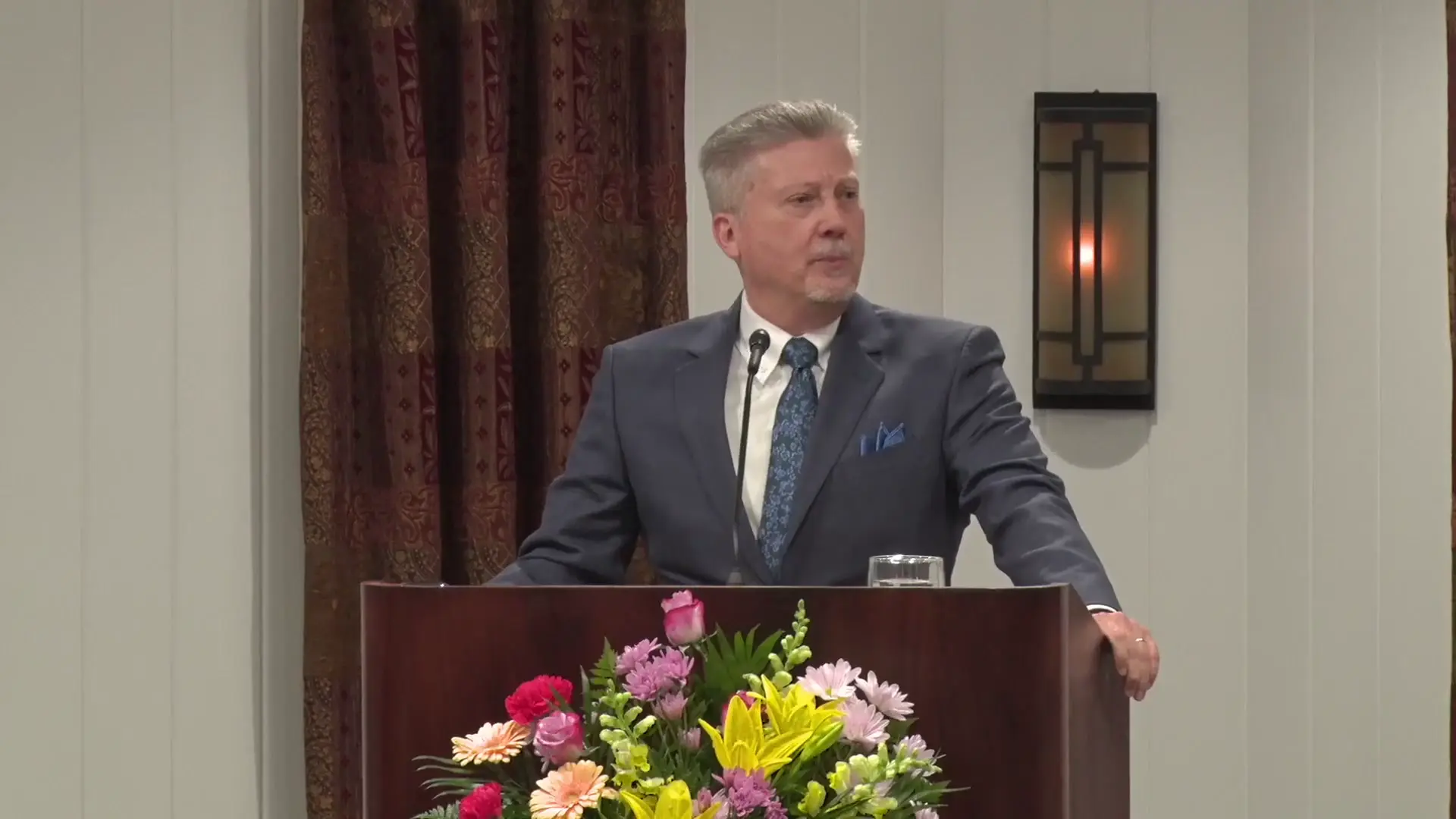
Sermon by Richard T. RitenbaughJesus Christ's sacrifice was a voluntary act of profound love and purpose, planned from the foundation of the world. As Revelation 13:8 declares, He is the Lamb slain from the foundation of the world, indicating that His redemptive mission was not a last-minute decision but a deliberate choice made before humanity's fall. The Father and the Son, in Their foresight, knew the carnal nature of mankind would lead to sin, and thus, the Son volunteered to break the impasse between a holy God and sinful humanity, offering Himself to pay the price of redemption. In John 1:29, John the Baptist proclaims Jesus as the Lamb of God who takes away the sin of the world, a truth Jesus never contradicted. Throughout the Gospel of John, Jesus clearly states His purpose, as seen in John 3:14-17, where He speaks of being lifted up so that whoever believes in Him may have eternal life, reflecting God's love in giving His only begotten Son. In John 10:11 and 14-15, He identifies Himself as the good shepherd who gives His life for the sheep, emphasizing His personal commitment to their salvation. Further, in John 10:17-18, He asserts that no one takes His life from Him, but He lays it down of Himself, having the power to lay it down and take it up again, a command received from His Father, underscoring the voluntary nature of His sacrifice. In Matthew 20:20-28, Jesus connects leadership with service and sacrifice, using His own life as the ultimate example. He did not come to be served but to serve and to give His life as a ransom for many, illustrating that true godly leadership is shown in sacrificial service, even to the point of enduring the most agonizing death on the cross. This act of volunteering from the highest position in the universe to serve humanity broke the deadlock of sin, paying the seemingly impossible price to free captives from their guilt. Isaiah 53 vividly portrays this suffering Servant who bore the iniquities of many, was wounded for our transgressions, and by whose stripes we are healed, with the chastisement for our peace upon Him. This sacrifice restored sinners not just to legal innocence but to the ability to have a relationship with God, removing the chasm sin had created. Isaiah 61:1-2 further reveals His mission to preach good tidings, heal the brokenhearted, proclaim liberty to captives, and open the prison to those bound, accomplishing reconciliation through His voluntary act. Through His death, as described in Colossians 2:13-14, Jesus took the record of our sins, which was against us, and nailed it to the cross, covering our guilt with His blood. This act of substitution allowed for forgiveness and the possibility of peace with God. As Romans 5:1 states, having been justified by faith, we have peace with God through our Lord Jesus Christ, a peace made possible only by His willing sacrifice. Ephesians 2:14-16 reinforces that He Himself is our peace, breaking down the wall of division and enmity through His flesh, creating the conditions for reconciliation. Finally, Isaiah 9:6-7 heralds Him as the Prince of Peace, whose government and peace will have no end, a testament to the enduring impact of His voluntary sacrifice for humanity's redemption.
Pride, Humility, and Fasting
Sermon by John W. RitenbaughIsaiah 53:4 reveals that when Jesus "was afflicted," the Hebrew word anah appears in the niphal stem, making the verb reflexive—meaning Jesus voluntarily submitted to His affliction rather than having it imposed upon Him against His will. This grammatical distinction perfectly harmonizes with John 10:17-18, where Jesus declares that He lays down His life for the sheep of His own accord, and that no man takes it from Him. The implication is significant: Jesus could have avoided the suffering altogether. There may have been another path available to Him, a way to escape the pain of crucifixion and beating, yet He chose instead to submit Himself to it. This voluntary submission is illuminated by the account of Jesus' struggle in prayer, where He asked God three times whether there might be some other way to accomplish the Father's purpose without such suffering. God remained silent in response to these requests, and Jesus, perceiving that this silence indicated the Father's will, submitted Himself to the crucifixion and all the pain that accompanied it. In this sense, God left the decision up to Jesus regarding what He would do, and Jesus, in setting the example for all who would follow Him, effectively inflicted the pain upon Himself by voluntarily submitting to what He understood the Father wanted accomplished. This voluntary self-affliction connects directly to the broader theme of self-inflicted pain versus God-inflicted pain, a distinction crucial to understanding the Day of Atonement. While God sometimes directly inflicts pain to humble people and shape them—as seen with Israel in the wilderness—there is also a category of self-imposed affliction, expressing sorrow and often accompanied by fasting, which believers willingly undertake. Jesus' example stands as the ultimate demonstration of this principle: rather than pain being forced upon Him without His consent, He chose to embrace suffering as an act of submission to God's will. The connection to the Day of Atonement's command to "afflict your souls" becomes clear through this lens. Just as Jesus voluntarily submitted to affliction rather than resisting it, believers are called to voluntarily submit themselves through fasting and self-affliction on this solemn day. This self-imposed discipline mirrors the pattern Christ established—a willing submission to discomfort for a greater purpose, namely the humbling of pride that stands as the primary barrier to being at one with God. Jesus' voluntary sacrifice thus becomes both the means of atonement and the pattern for the humility that atonement requires, demonstrating that true submission to God's will, even through suffering, must ultimately be chosen rather than merely endured.

Patriotism, the Summer Soldier, and Our Times (Part Two)
Sermon by John W. RitenbaughIn terms of patriotism to God's Kingdom, Jesus set the standard higher than anyone else, sacrificing His life for everyone, even before the Father called them.
Our Bread of Life
Sermon by Richard T. RitenbaughThe world is confused on the timing of Christ's death and resurrection. It becomes clear by a proper understanding of the holy days, preparation days, and Sabbaths.