


Filter by Categories

Holy Days: Passover
Bible Study by Richard T. RitenbaughThe Passover is a meal of fellowship and peace, not primarily a sin offering. The lamb did more than supply blood; it was a distinctive meal, and Scripture is conspicuously silent about forgiveness or atonement in connection with the Old Testament Passover. It speaks instead of purchasing or redeeming Israel from Pharaoh. The blood on the doorposts represents the life of the lamb given to buy back those within the house, not a covering for sin. The instructions for Passover do not harmonize with those for a sin offering (compare Exodus 12 with Leviticus 4 and 6). Of all the offerings, Passover most closely resembles the peace offering of Leviticus 7, which pictures a worshiper and the priest in secure fellowship with God over a shared meal because He has bestowed His favor. Jesus' Passover meal with His disciples carries the same themes: oneness with the Father, love and fellowship, peace, and joy, never their sins (John 13-17; Luke 22:14-18; I Corinthians 10:16-17). Christ's sacrifice for sin is commemorated on the Day of Atonement. At the start of the holy day season, God directs attention to the ongoing fellowship He initiates with His called-out people, through whom He makes peace by covenant. Christ, our Passover, became the peace offering. Believers share unleavened bread and wine, symbols of His body and blood, as a memorial of His death, preceded by footwashing as an act of humble service. The Passover is thus a solemn yet joyful celebration of the peace and well-being found in Christ.

Is the Passover Just a Sin Offering? (Part One)
Article by David C. GrabbeThe Passover is not a sin offering and is not about sin or its payment. It symbolizes the fellowship and peaceful abundance God's people now have with Him because of His covenant. Atonement, by contrast, pictures complete cleansing from sin, so the two festivals do not duplicate each other; their themes touch, but they picture different gifts God gives through His Son. Jesus kept the Passover with His disciples as the fourteenth of Abib began, as God commanded Israel (Exodus 12:6), and Luke 22:15 shows He observed it before He suffered. He was crucified afterward, late in the afternoon of the fourteenth, not at the Passover lambs' slaughter and not on the Day of Atonement. His death aligned instead with the sealing of the Abrahamic covenant in Genesis 15, on which the New Covenant is based. His death therefore inaugurated the New Covenant, as Hebrews 9:16-17 teaches: a testament takes force only at the death of the testator. As covenant victim, Christ gave a divine pledge of loyalty to those who enter the covenant, a role distinct from His role as the ultimate sin offering. Those who keep the Passover are eternally reminded of God's faithfulness. Because lambs served many different symbolic roles in the sacrificial system, the Passover lamb must be understood by its own context rather than lumped in with the sin offering.

Is the Passover Just a Sin Offering? (Part Three)
Article by David C. GrabbeThe Passover is foremost a meal shared by a household, not a sin offering, and it most resembles the peace offering. Like the peace offering, it was eaten the same day, with nothing left until morning, and it required ceremonial cleanliness and circumcision beforehand. The peace offering (shelem) pictures fellowship with God, a shared meal in which all parties are at peace because God has already bestowed His favor. It is eucharistic, expressing thanks rather than propitiation. The Exodus Passover fits this pattern: God exempted Israel and passed over them out of covenant loyalty to Abraham, not by receiving payment for their sins. He thereby initiated fellowship with a sinful nation. The head, legs, and entrails, which a sin offering burns outside the camp, are eaten in the Passover, symbolizing thoughts, actions, and emotions consumed by the relationship God offers. The first recorded Passover is Melchizedek's bread and wine for Abraham, a meal of blessing and fellowship in which sin goes unmentioned. Christ's last Passover continues this pattern. He fervently desired to share it with His disciples, and the occasion was fellowship, not sin or forgiveness. He said He would not eat it again until it is fulfilled in the Kingdom of God. That fulfillment is not the sin offering, which He has completely fulfilled, but redemption, which remains to be completed.

Passover: An Extraordinary Peace Offering
Sermon by David C. GrabbePassover is a covenant fellowship meal, not a sin offering. The instructions center on eating the lamb, and nothing in any Old Testament Passover mentions forgiveness or atonement. God passed over Israel's sins and exempted them (pesach), purchasing them from Pharaoh as an act of mercy and covenant loyalty to Abraham. In its details the Passover differs from the sin offering in who eats, how the meat is prepared, where it is eaten, and the requirement of prior cleanliness, and it most resembles the peace offering, or communion sacrifice, which shows peace already granted and a shared meal with God. Christ's Passover with His disciples carries the same themes: fellowship, peace, joy, and oneness with the Father, with no mention of their sins. The bread symbolizes Christ's living, sinless body, by which God accepts us and which strengthens us spiritually. The wine is the blood of the New Covenant, a pledge of life and of God's faithfulness to complete those who remain loyal. Forgiveness comes within the covenant, not before it, since God makes covenants with those whose sins He has passed over. Because redemption is an ongoing process, Passover will be fulfilled only when believers are resurrected and complete in the Kingdom. As a sacrificial meal, it joins participants in communion with God and with one another in the one bread.
Is the Passover Just a Sin Offering? (Part Four)
Article by David C. GrabbeThe Passover Jesus kept before His betrayal was a fellowship meal on the eve of the sealing of a much-anticipated covenant, just as the bread and wine shared by Melchizedek and Abraham were a fellowship meal on the eve of God's covenant with Abraham (Genesis 14:18; 15). Like the Exodus Passover, it centered on eating, which separates it from the sin offering. The bread and wine are the original elements of that covenant fellowship meal, and the New Testament Passover shares the bread first, then the wine. Bread in Scripture signifies fellowship, friendship, and the sharing of providence from above, and it is often tied to a covenant (Isaiah 55:3). In the Passover, the unleavened bread represents Christ's living body and sinless life, which believers take in as they are joined to Him. Eating it symbolizes the living Savior abiding in us and us in Him, so the meal is about the ongoing relationship, not the payment for sin. Jesus' death paid the penalty and reconciles us, but we are saved by His life (Romans 5:10). The Passover also looks forward, since Jesus said it will not be fulfilled until the Kingdom, when redemption is completed and believers take on His incorruptible nature and enjoy unhindered fellowship with Him.

The Bread and Wine of Passover
Sermon by David C. GrabbePassover, as a covenant meal, holds profound significance as a ritual instituted by God, uniting participants with Him and with each other. It centers on a shared meal, emphasizing eating, particularly the bread and wine, which symbolically join us with Christ, the object of the sacrifice. This act fosters thankful and peaceful fellowship, making us one with God and with fellow partakers through the shared bread, which represents Christ. The Passover meal resembles a peace offering, symbolizing a state of fellowship and gratitude for God's acceptance and provision, rather than an attempt to make peace or atone for sins. It reflects a sense of well-being, akin to the Hebrew concept of shalom, encompassing the presence of all that is good and the absence of all that is not. The bread and wine of Passover are deeply tied to covenantal themes, echoing the fellowship meal between Melchizedek and Abraham on the eve of God's covenant with Abraham. This connection underscores God's mercy in overlooking Israel's sins for the sake of His covenantal faithfulness. The timing of Christ's sacrifice aligns with the Abrahamic covenant, marking a significant step forward in its fulfillment, upon which the New Covenant is based. The wine, representing Christ's blood, symbolizes the New Covenant, sealed not with the blood of sin offerings but with blood from peace and burnt offerings, signifying a relationship of satisfaction and wholehearted devotion. This covenant includes remission of sins but extends beyond to a personal knowledge of God and a transformative fellowship, promising eternal life and perfection. Passover is not merely a memorial of past events but also forward-looking, pointing to the future fulfillment in the Kingdom of God. It commemorates Christ's death that sealed the covenant while celebrating the ongoing spiritual abundance and hope due to God's faithfulness. The act of partaking in the bread and wine is a continual process, reflecting an abiding relationship with Christ, where His life is shared with us, imparting true well-being that the world cannot offer. Thus, Passover stands as a solemn yet joyful celebration of peace, acceptance, and communion with God through Jesus Christ, grounded in His grace and covenantal promise rather than atonement for sin.
Is the Passover Just a Sin Offering? (Part Two)
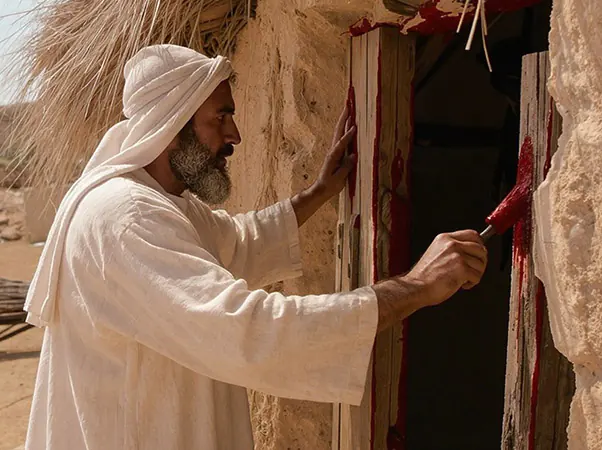
Article by David C. GrabbeThe Passover observance centers on a covenant meal in which a lamb is specially prepared and eaten by Israelite households on the designated night. God directs that the lamb be selected according to household size, roasted whole without boiling, consumed with unleavened bread and bitter herbs, and finished entirely before morning, with participants dressed for immediate departure. This meal, rather than serving primarily as a sin offering, functions as the means by which God redeems Israel from Pharaoh's claim upon them as His firstborn nation. The blood applied to the doorposts acts as the sign of this redemption, representing the life of the lamb pledged in covenant faithfulness to secure protection and deliverance. God remembers His earlier covenant with Abraham, Isaac, and Jacob, choosing to exempt and spare the households marked by the blood rather than execute judgment upon them alongside the Egyptians. This act underscores that the Passover meal seals the relationship by which God purchases Israel out of bondage to fulfill His promises of nationhood and inheritance. The repeated scriptural emphasis on eating the Passover reinforces its identity as a covenant meal that affirms God's pledge to redeem and protect His people, distinct from later provisions for atonement.
Passover (Part One)
Sermon by John W. RitenbaughThroughout history, the Passover has been a significant observance for God's people, both in the Old and New Covenant times, often coming under attack. It holds a central place in God's purpose, marking the foundation of the covenant relationship with His people. In the Old Covenant, God initiated this relationship with Israel on the Passover, while in the New Covenant, Jesus Christ established a renewed relationship on the night before His crucifixion by introducing new symbols to commemorate His sacrifice as the true Passover Lamb. The importance of Passover is evident as it represents a matter of life and death. Without the sacrifice of Jesus Christ as the Passover Lamb, there is no remission of sins, and eternal life cannot begin. Properly keeping the Passover is essential, as it reaffirms the covenant relationship with God and Jesus Christ annually. This observance is not merely a ritual but a vital renewal of the believer's connection with God through Christ's sacrifice. Jesus Christ commanded His followers to partake of the new symbols representing His body and blood as a solemn memorial of His death. Each occasion of this memorial serves as a renewal of the New Covenant relationship, emphasizing the necessity of continuing in this practice to maintain life in Him. The Passover's significance is underscored by the understanding that without it, Israel would not have escaped Egypt, nor would believers today start on the path to their spiritual inheritance. This annual reaffirmation is a crucial part of the process leading to salvation.
King of Peace: Meal with His Friends
Sermon by Mark SchindlerThe Passover serves as a commanded annual memorial of the covenant made at baptism to live as Christ lives when buried with Him in the waters of baptism. This memorial requires participants to celebrate the peace offering as a shared meal with the King of Peace. The peace meal renews the vow to remain faithful to Him and to each other while being eaten together with thanksgiving. Abraham participated in a type of this shared peace meal with the King of Peace upon returning from battle. The meal provided an example of commitment to the way of peace rather than reliance on personal strength. The main focus of the Passover remains the peace meal shared with the Father, the Son, and one another in unity. Participants must examine themselves to determine if they truly live as friends of the King of Peace with outgoing concern for every member of the Body of Christ.
Remember Me (Part Two)
CGG Weekly by Ronny H. GrahamIf an unbeliever partakes of the Passover, he will indeed be held accountable due to his unworthiness, but how much more will God hold a believer accountable?
Remember Me (Part One)
CGG Weekly by Ronny H. GrahamFor the most part, Passover is not about us: It is a solemn assembly to remember Jesus Christ and what He has done for us in laying down His life.
Was Jesus Christ's Body Broken? (Part Three)
CGG Weekly by David C. GrabbeThe Passover is a sacrificial meal that joins the participant in fellowship with the object of the sacrifice, just as pagan sacrificial meals join people to idols or demons (I Corinthians 10:16-21). Eating the bread and drinking the cup are acts of communion, meaning sharing, participation, and fellowship, and they unite us with Jesus Christ. The bread is broken only so that all can share it. It remains one bread because we are one body, Christ's unbroken and undivided body, which we gather to share. His body was not broken, since His death was a supreme victory in which He fulfilled every offering: sin, burnt, grain, drink, and peace. The wine pictures His shed blood, and the slain lamb pictures His death. The bread, however, symbolizes life, the substance of vitality and strength. In John 6 Jesus calls Himself the living bread and ties eating His flesh to eternal life and abiding in Him. Partaking of the bread therefore takes in His sinless, devoted life, not a dead body. Baptism into His death must come first, but we are saved by His life (Romans 5:10). Because only sinless flesh has blood that can pay the death penalty, we are accepted into God's presence on the basis of that flesh (Hebrews 10:20). At Passover we eat living bread to continue our connection to the living Savior abiding in us and to the others who partake with us.
Hope to the End
Sermon by John W. RitenbaughPeter, while warning about impending suffering, nevertheless distinguishes himself as the apostle of hope, keeping our minds on what is to be rather than what now is.
Hebrews (Part Three): Who Was Jesus? (cont.)
Sermon by John W. Ritenbaugh (1932-2023)John identifies Christ as co-eternal with the Father, equal in character, but subordinate in authority. Christ's sonship was unique; He was the 'only Begotten Son.'
Being a Christian
Sermon by Clyde FinkleaMicah provides a formula for being a Christian: 1.) Doing justly, 2.) Exercising mercy and 3.) Walking humbly. These demand total commitment, not a pretense.